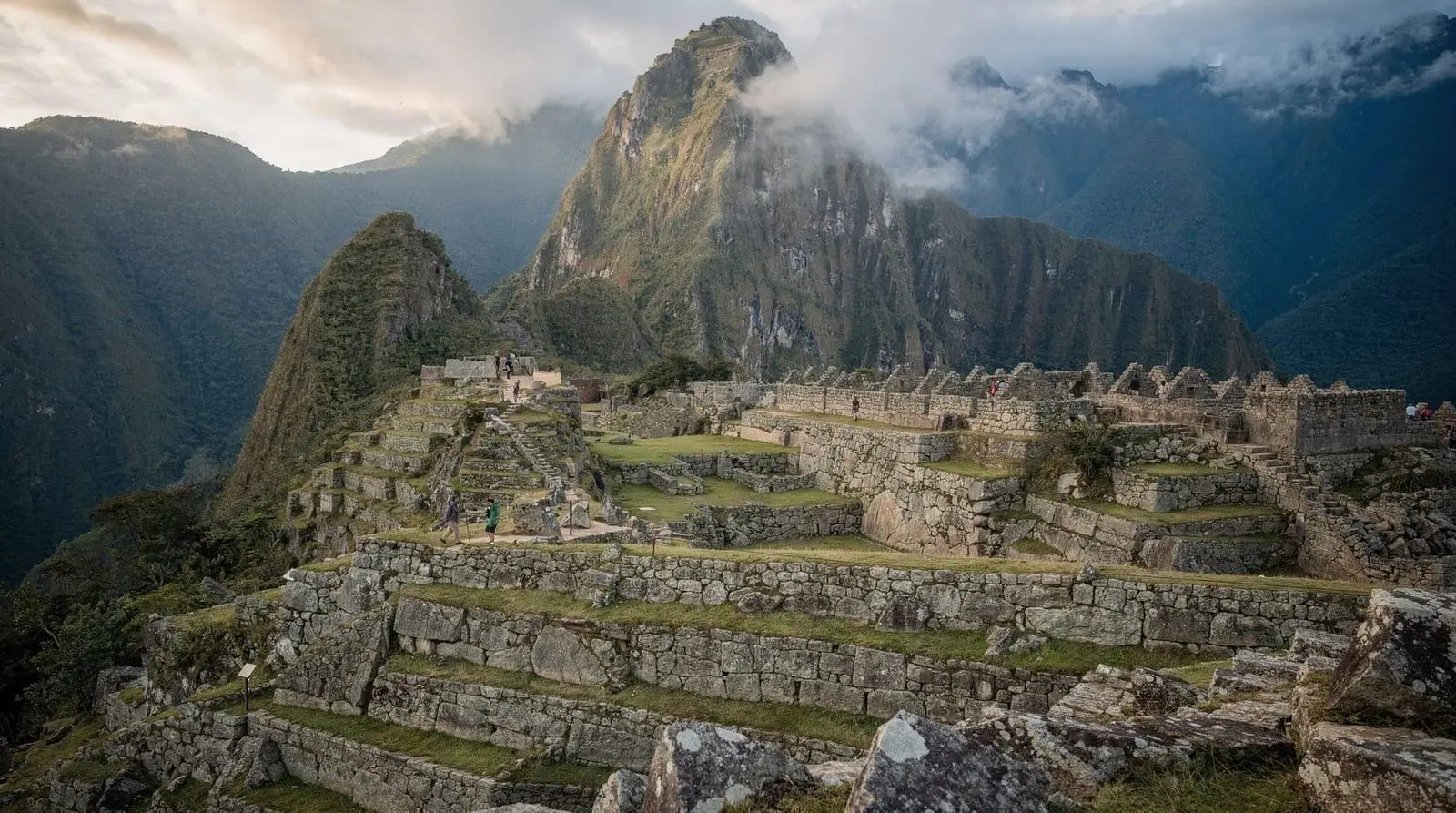
How many days do you need in Peru?
Cusco: Machu Picchu + Tourist Train + Entrance Ticket
How many days do you need to visit Peru?
Plan a minimum of 7 days for a focused Cusco–Machu Picchu loop, 10–14 days for the classic Lima–Cusco–Titicaca–Arequipa circuit, and 18–21 days if you want to add the Amazon, the south coast, or northern Peru. Peru is large and internal flights eat half-days, so budget more time than the map suggests.
Why Peru takes longer than the map suggests
Peru looks compact on a world map. It is not. The country covers 1.28 million square kilometres — larger than France, Spain, and Germany combined — and the terrain ranges from sea-level desert coast to 4,000 m Andean passes to dense Amazon lowland. The headline sights are scattered across all three zones, and the only fast way between most of them is a domestic flight that swallows the better part of a day once you account for airport transfers, check-in, and the inevitable LATAM or Sky Airline delay.
The single biggest mistake first-time planners make is treating Peru like a city break that happens to have a famous ruin attached. They book five days, lose one to the flight in, one to the flight out, half a day each to altitude and travel logistics, and arrive at Machu Picchu exhausted and behind schedule. This guide gives you honest minimums by trip type so you can decide how much time the country actually demands.
A second factor that inflates your day count: altitude. Cusco sits at 3,400 m. Most travellers arrive from sea-level Lima, and you cannot safely treat the first day at altitude as a sightseeing day. You need a buffer. We cover this in detail in our altitude and acclimatisation guidance, but for planning purposes: assume one to two of your “Cusco days” are partly absorbed by acclimatisation.
| Country size | 1.28 million km² — bigger than France, Spain and Germany combined |
| Focused minimum | 7 days (Cusco–Machu Picchu loop only) |
| Recommended | 10–14 days (classic southern circuit) |
| Full experience | 18–21 days (add Amazon, coast or north) |
| Biggest time sink | Internal flights and altitude acclimatisation, not distance on the map |
The honest minimum: 5–7 days (Machu Picchu loop)
If you have only a week — and many people flying from Europe or North America genuinely do — you can build a satisfying, focused trip around the Cusco region alone. Trying to add a second region in seven days is where trips go wrong.
A realistic seven-day skeleton:
- Day 1 — Arrive Lima, overnight near the airport or in Miraflores. Rest, hydrate, eat ceviche.
- Day 2 — Morning flight to Cusco (about 1h25). Transfer straight down to the lower Sacred Valley (2,800 m) — it is gentler on the lungs than sleeping in Cusco itself on night one. Easy afternoon.
- Day 3 — Sacred Valley sights: Pisac, Ollantaytambo, the salt pans of Maras and Moray.
- Day 4 — Train from Ollantaytambo to Aguas Calientes; afternoon or following-morning entry to Machu Picchu.
- Day 5 — Cusco city: Qorikancha, Sacsayhuamán, San Blas.
- Day 6 — Buffer day or one high-altitude day trip (now that you are acclimatised) such as Rainbow Mountain or Humantay Lake.
- Day 7 — Fly Cusco–Lima, connect home.
If you genuinely only have five days, cut the buffer day and the Cusco-city day and accept that you are doing the absolute core. For the logistics of getting to the citadel without a trek, the Machu Picchu day trip with tourist train and entrance ticket bundles the train, bus, and ticket so you are not chasing three separate bookings under time pressure.
Who this length suits: time-poor travellers, repeat visitors returning for a specific trek, or anyone treating Peru as one leg of a wider South America trip. For the full picture, see our two-week itinerary before you commit to the short version — many people find an extra week is worth rearranging work for.
The classic circuit: 10–14 days
This is the length most experienced Peru travellers recommend, and the one our two-week itinerary guide is built around. Ten to fourteen days lets you add a southern loop to the Cusco core without rushing.
The standard “southern Peru” circuit:
- Lima (2 nights) — arrival buffer plus food.
- Cusco + Sacred Valley + Machu Picchu (5 nights) — the anchor, with proper acclimatisation built in.
- Lake Titicaca / Puno (2 nights) — reached by the scenic Route of the Sun bus from Cusco or a short flight via Juliaca. The Route of the Sun bus from Cusco to Puno turns the transfer day into a sightseeing day with stops at Andahuaylillas and Raqchi.
- Arequipa + Colca Canyon (3 nights) — Peru’s elegant white-stone city plus the deepest canyon and the most reliable condor viewing in the country.
That is roughly 12 nights, with two travel days folded in. With a full fourteen days you can slow each block down or swap the Titicaca leg for a 3–4 day Amazon extension out of Puerto Maldonado and the Tambopata reserve.
The key constraint: every region change in this circuit is either a flight or a long bus. Cusco to Puno is around 6–7 hours by the tourist bus; Puno to Arequipa is another 5–6 hours; Arequipa back to Lima is a flight. Do not try to do all four regions in ten days — you will spend a third of your trip in transit. If you only have ten days, run Lima + Cusco + one of Titicaca or Arequipa, not both.
For travellers nervous about altitude, note that this circuit stays high for over a week: Cusco (3,400 m), Puno (3,800 m), and Arequipa (2,335 m). Read our best time to visit and altitude notes before locking in the order — most people do Cusco first because it is the gentlest on-ramp.
The full experience: 18–21 days
Three weeks is when Peru stops being a circuit and starts being a country. With 18–21 days you can keep the southern loop and add a genuinely different region — the choice is between the Amazon, the south coast, and northern Peru, and that choice defines the character of your trip. We unpack the trade-off in our north vs south Peru comparison and lay out a full day-by-day plan in the three-week itinerary guide.
A three-week structure usually looks like:
- Week 1 — Lima, Cusco, Sacred Valley, Machu Picchu (the non-negotiable core).
- Week 2 — The southern loop: Lake Titicaca, Arequipa, Colca Canyon.
- Week 3 — One major addition. The popular choices:
- Amazon — fly to Puerto Maldonado for a 3–4 night lodge stay in Tambopata, or go deeper from Iquitos into the Pacaya-Samiria reserve. The Tambopata 4-day Amazon rainforest tour is the standard accessible-jungle option.
- South coast — Paracas, the Ballestas Islands, the Nazca Lines, and the Huacachina sand-dune oasis, all within a few hours of Lima.
- Northern Peru — Chachapoyas, the Kuélap fortress, Gocta waterfall, and the Moche pyramids around Trujillo and Chiclayo. See our northern Peru route guide.
Who this length suits: anyone who can take the time. Three weeks is the difference between ticking off Machu Picchu and actually understanding Peru’s coast-mountain-jungle geography.
How much time each region really needs
Use these as honest minimums when you build your own plan. They assume you have already acclimatised where relevant.
| Region | Honest minimum | Comfortable |
|---|---|---|
| Lima | 2 nights | 3–4 nights (food focus) |
| Cusco city | 2 nights | 3 nights |
| Sacred Valley | 1 night | 2–3 nights |
| Machu Picchu | 1 night (Aguas Calientes) | 2 nights |
| Lake Titicaca / Puno | 1 night | 2 nights (homestay) |
| Arequipa | 2 nights | 2–3 nights |
| Colca Canyon | 1 night | 2 nights |
| Amazon (Tambopata) | 3 nights | 4 nights |
| South coast (Paracas/Nazca) | 2 nights | 3 nights |
| Northern Peru | 4 nights | 6–7 nights |
The northern circuit looks disproportionately time-hungry because the roads are slow and the sights are spread out — that is exactly why it stays uncrowded. If you only have a fortnight, the north is the region to save for a return trip.
Travelling with children or a group
Family trips and larger groups generally need more days per region than the solo-traveller minimums above, for reasons that compound: children acclimatise unpredictably and tire faster on the high-altitude day trips, group logistics (restaurant bookings, transport for six rather than two) take longer to arrange each day, and everyone benefits from a slower pace with genuine rest built in rather than back-to-back early starts.
Add at least one extra night to the Cusco and Sacred Valley block if travelling with young children, and consider skipping the hardest single-day excursions (Rainbow Mountain, Humantay Lake) in favour of the gentler Sacred Valley day, which delivers scenery and Inca sites without the altitude gain. Groups splitting between multiple activity levels — some wanting treks, others preferring museums and markets — also do better with more slack in the schedule, since not every day needs to be a group activity.
Solo travellers and couples, by contrast, can generally run closer to the honest minimums throughout this guide, since there is no group logistics tax and plans can be adjusted hour to hour if altitude or weather intervenes. If you are travelling alone and healthy, the 7-day and 10-day figures above are realistic rather than optimistic; add days for personal preference (slower mornings, more food stops) rather than out of necessity.
Day-counting traps to avoid
The “arrival day” is not a real day. A flight that lands at 2 pm gives you an afternoon, not a day. Long-haul arrivals into Lima often land late at night, costing you the next morning to sleep.
The Machu Picchu day is logistically dense. Train times, bus queues at Aguas Calientes, and timed entry slots mean the citadel visit eats more clock than the time you actually spend at the ruins. Booking a structured option like the 2-day, 1-night Sacred Valley and Machu Picchu tour by train removes most of the timing risk, but it still consumes two calendar days.
Internal flights are half-day events. Even a 75-minute Lima–Cusco hop means a transfer to the airport, two hours of buffer, the flight, and a transfer at the other end. Domestic delays are common — our domestic flights guide explains why you should never book a same-day international connection out of Lima after a Cusco flight.
Bus legs are long but scenic. The Cusco–Puno and Puno–Arequipa runs are 5–7 hours each. They are comfortable on Cruz del Sur-class buses and genuinely beautiful, but they are full days. See the bus travel guide for the routes worth doing overland versus flying.
So, how many days should you book?
- One week: Cusco region only. Lima buffer, Sacred Valley, Machu Picchu, one high day trip. Do not add a second region.
- Ten days: Add Titicaca or Arequipa to the Cusco core — not both.
- Two weeks: The full southern circuit (Lima, Cusco, Titicaca, Arequipa, Colca). This is the recommended length for most first-timers.
- Three weeks: Southern circuit plus one major region — Amazon, south coast, or north.
When in doubt, take the extra week. Peru is a long flight for most visitors and the marginal cost of more days on the ground is small compared with the cost of getting there. Browse ready-made plans on our itineraries hub, price your trip with the cost guide, and use the planning tools to map your own version.
First-timers vs return visitors
The right length also depends on whether this is your first Peru trip or a repeat visit. First-timers should lean toward the 10–14 day classic circuit rather than the 7-day minimum — Machu Picchu, Titicaca and Arequipa together give a far more complete picture of the country than Cusco alone, and most people only make this trip once. Return visitors who have already done the classic circuit get the most out of a focused 7–10 day trip built around one region they missed — the Amazon, northern Peru, or a specific trek like Salkantay or Choquequirao. If you are unsure which camp you are in, default to more time: nobody finishes a Peru trip wishing they had booked fewer days, but plenty wish they had booked more.