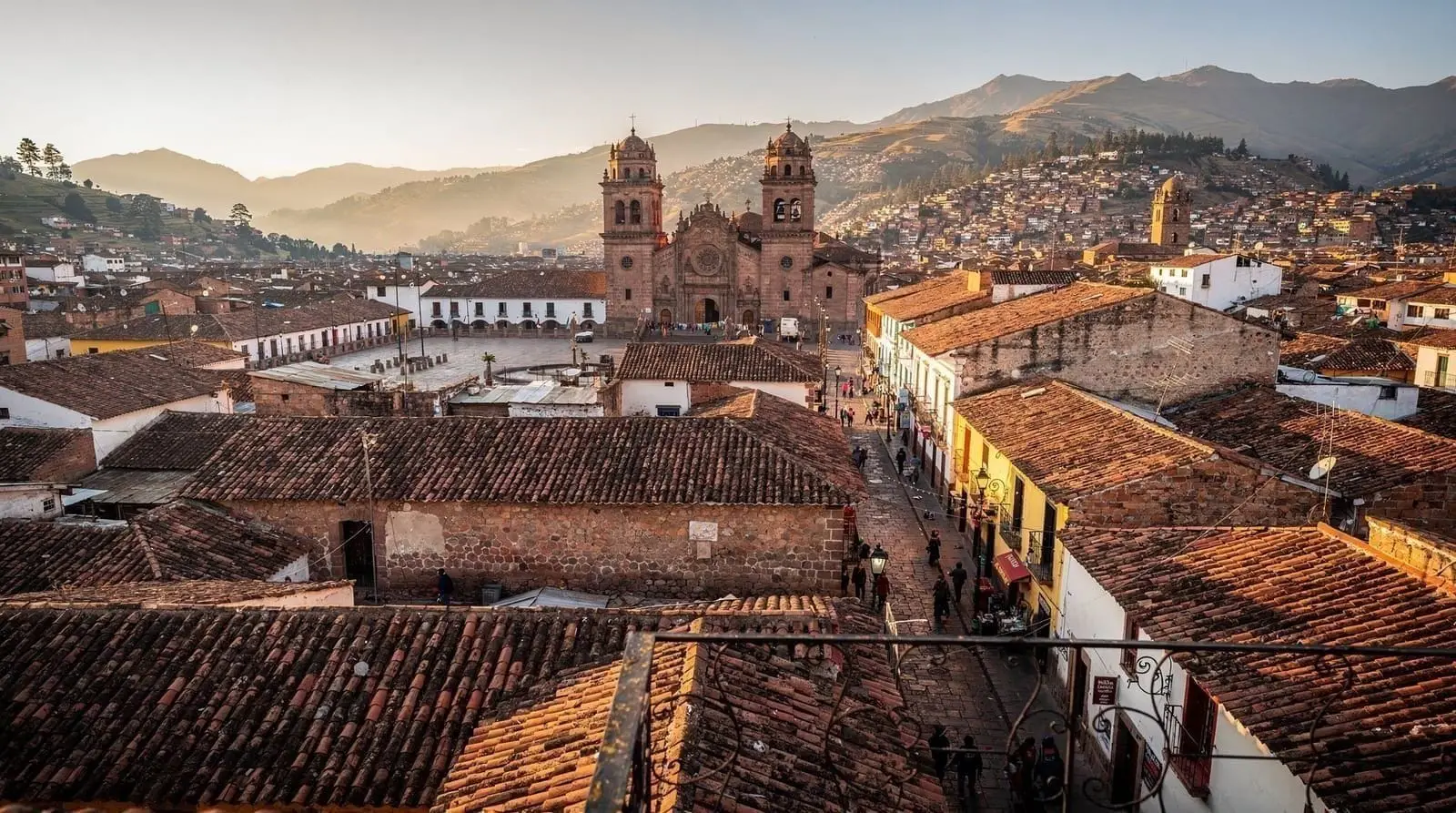
Cusco
Plan Cusco honestly: how to handle 3,400 m altitude, the boleto turístico explained, real prices in soles, and which sights deserve your days.
Cusco: Half-Day City Tour with Sacsayhuaman and Q’enco
Quick facts
- Country
- Peru
- Altitude
- 3,400 m / 11,150 ft
- Currency
- Peruvian sol (S/) — USD accepted at a poor rate
- Best for
- Inca and colonial history, gateway to Machu Picchu, food, acclimatisation
Why Cusco asks for patience before it rewards you
Most travellers arrive in Cusco with a single goal in mind — Machu Picchu — and treat the city as a checkpoint to clear as fast as possible. That instinct is exactly backwards. Cusco sits at 3,400 m (11,150 ft), high enough that flying in from sea-level Lima and immediately charging up a flight of cobbled stairs leaves a measurable number of visitors short of breath, headachy, and occasionally vomiting on their first night. The city is not a quick stop. It is the place where your body adjusts so that the rest of your Andean trip works at all.
| Where | Southern Peruvian Andes, 3,400 m |
| Time needed | 3–4 days minimum (including acclimatisation) |
| Cost | Boleto turístico S/130 (10 days) or S/70 partial circuits |
| Getting there | Direct flight from Lima (~1h20) to Alejandro Velasco Astete (CUZ) |
| Best time | May–September (dry season, cold clear nights) |
It is also, on its own merits, one of the most rewarding cities in South America. For roughly a century before the Spanish arrived in 1533, Cusco was the political and ceremonial capital of the Inca empire — Tawantinsuyu, the “land of the four quarters.” The Spanish did not raze it; they built directly on top of it, dropping baroque churches and tiled mansions onto Inca foundations whose dry-stone masonry has survived earthquakes that cracked the colonial walls above. You walk past that layering constantly here. A 500-year-old wall of impossibly precise polygonal stones turns a corner and becomes the base of a souvenir shop.
This guide treats Cusco as a base of three to four nights, the realistic span you need to acclimatise, see the city’s core, and stage day trips to the Sacred Valley, Rainbow Mountain, and Machu Picchu. It is honest about the boleto turístico, the altitude, and the handful of tourist traps that catch first-timers.
Altitude first: the rule that shapes everything
Cusco’s elevation is the single most important planning fact, and the one most often underestimated. At 3,400 m the air holds roughly 35 percent less oxygen than at sea level. Soroche — altitude sickness — does not care about your fitness. Marathon runners get it; sedentary travellers sometimes sail through. It is unpredictable, and the only reliable defence is time and pacing.
The counter-intuitive itinerary trick: if your schedule allows, go to the Sacred Valley first. Towns like Urubamba (2,870 m) and Ollantaytambo (2,790 m) sit several hundred metres lower than Cusco. Sleeping a night or two down there before coming up to the city is genuinely easier on your body than the reverse. Many experienced operators now build itineraries this way.
If you must start in Cusco, the practical rules for the first 24–36 hours:
- Do nothing strenuous on arrival day. No Sacsayhuamán climb, no uphill walking. Drop your bags, rest, and let your body register the elevation.
- Hydrate aggressively — three or more litres of water a day. Dehydration mimics and worsens altitude symptoms.
- Skip alcohol for the first day or two. A celebratory pisco sour on night one is the classic mistake.
- Eat light. Heavy meals divert oxygen-hungry blood to digestion.
- Mate de coca (coca-leaf tea) is offered free in most hotel lobbies. It helps mildly with symptoms; it is legal and culturally normal in Peru, though note it can trigger a positive drug test for cocaine metabolites for a few days afterwards.
- Soroche pills (acetazolamide / Diamox) are prescription drugs taken a day before ascent. Talk to a doctor at home rather than buying them over the counter on arrival.
Symptoms to watch: a thumping headache, nausea, dizziness, and breathlessness at rest are common and usually pass within a day or two. Confusion, an inability to walk a straight line, or a wet cough are red flags for the dangerous forms (HACE/HAPE) and warrant immediate descent and medical attention. Pharmacies on Avenida El Sol sell oxygen canisters; several clinics offer oxygen on call to hotels.
For a deeper dive into medication timing, red flags, and a day-by-day acclimatisation plan, the dedicated altitude sickness guide and Cusco acclimatisation plan go well beyond what fits here. If you are weighing whether to base yourself in Cusco or lower down in the valley for your first nights, the Cusco altitude vs Sacred Valley guide walks through both options side by side.
The boleto turístico, demystified
Newcomers lose more money to confusion over the boleto turístico del Cusco (BTC) than to almost anything else. Read this section before you buy a single ticket.
The boleto turístico is a bundled pass covering sixteen sites in and around Cusco, including Sacsayhuamán, Qenqo, Puka Pukara, Tambomachay, several Sacred Valley ruins (Pisac, Ollantaytambo, Chinchero, Moray), and a cluster of city museums. Crucially, most of these sites have no individual ticket — the BTC is the only way in.
There are two main versions:
- Full boleto turístico (BTG): S/130 for adults (about $35), valid 10 days, covers all 16 sites.
- Partial boletos (circuits): S/70 each (about $19), valid 1–2 days, each covering a sub-group of sites. Circuit I covers the four ruins immediately above Cusco (Sacsayhuamán, Qenqo, Puka Pukara, Tambomachay).
There is a student discount (S/70 full) for holders of an ISIC card under 26. Bring cash in soles — many ticket booths do not take cards, and the line moves faster with exact change.
| Ticket | Price | Validity | Covers |
|---|---|---|---|
| Full BTG | S/130 (~$35) | 10 days | All 16 sites |
| Partial circuit | S/70 (~$19) | 1–2 days | One sub-group (e.g. Circuit I: the four ruins above town) |
| Student (ISIC, under 26) | S/70 | 10 days | Same as full BTG |
The full guide to which circuit covers which sites, and how to avoid buying the wrong one, is in the boleto turístico explained guide and the Cusco tourist ticket guide.
What the boleto does not cover, and what visitors most often assume it does:
- Qorikancha — the Inca Temple of the Sun. Separate entry, around S/15.
- Cusco Cathedral — separate religious-circuit ticket, around S/40.
- Machu Picchu — entirely separate national-park ticketing system. Do not expect the boleto to apply.
The honest takeaway: if you plan to do a city tour, the four ruins above town, and a Sacred Valley day, the full BTG pays for itself. If you are only seeing one cluster, buy the relevant partial circuit. Either ticket can be purchased at the COSITUC office on Avenida El Sol or at the gate of the first site you visit.
A workable three-day plan
Day 1: arrival and gentle orientation
Fly in, check in, and resist the urge to do anything ambitious. Once you have rested a few hours, the historic centre is the perfect low-effort first outing — it is mostly flat around the Plaza de Armas, and you can wander without climbing. Sit in the square, take in the floodlit cathedral after dark, and have an early, light dinner. The arcades around the plaza hide a famous tourist-pricing trap: balcony restaurants charge double for the view. Walk one block off the square and prices halve.
A licensed half-day city tour the next morning is the most efficient way to see the anchor sites with context. The half-day Cusco city tour covering Sacsayhuamán and Qenqo bundles transport up to the ruins above town with a guide, which spares you the steep walk and the boleto-booth queue on a still-acclimatising body.
Day 2: the layered city — Qorikancha, San Blas, San Pedro
Start at Qorikancha, the Inca Temple of the Sun whose curved golden walls became the foundation of the Santo Domingo convent — the single clearest illustration of how the Spanish built on, rather than erased, the Inca city. Allow 60–90 minutes.
From there, climb gradually into San Blas, the artisan quarter of steep cobbled lanes, workshops, and viewpoints. Go slowly; the gradient is real at this altitude. A focused walking tour of the old core and the artisan barrio, like the Cusco city centre and San Blas walking tour, helps you read the doorways and stonework you would otherwise stroll straight past.
Finish at San Pedro market for a cheap, excellent lunch among the juice stalls and caldo de gallina counters — the most honest, least touristy meal in the city centre.
Day 3: the ruins above town and beyond
With two days of acclimatisation behind you, the four upper ruins are now comfortable. Sacsayhuamán — the colossal zigzag fortress-temple — is a 30-minute uphill walk or a short taxi from the Plaza de Armas, and the rest of Tambomachay, Qenqo and Puka Pukara lie along the road above it. The Qorikancha and Sacsayhuamán city tour stitches them together if you would rather not arrange taxis and timing yourself.
From Day 4 onward, Cusco becomes a launchpad: the full-day Sacred Valley circuit, Rainbow Mountain, Humantay Lake, or the train to Machu Picchu.
Eating in Cusco
Cusco’s food runs from S/6 market soups to ambitious novoandina tasting menus, and the gap in value is enormous if you know where to look.
Markets and menús: The almuerzo menú — a set lunch of soup, main, and a drink — runs S/10–18 in everyday restaurants away from the plaza. San Pedro market is the cheapest sit-down option, with frutado juice blends for S/6–10 and a hearty caldo for around S/8.
Cuy and alpaca: Roast guinea pig (cuy) is the regional ceremonial dish; expect S/45–70 for a whole one, and order it ahead as it takes time. Alpaca steak is leaner and more accessible, appearing on most mid-range menus for S/30–45.
Mid-range and special: Cicciolina (Calle Triunfo 393, upstairs) is a long-running favourite for tapas and pasta in a beamed colonial room. Chicha por Gastón Acurio brings the celebrated chef’s regional Cusqueño cooking to a handsome plaza-adjacent space; budget S/60–110 a head. Pacha Papa in San Blas does a proper clay-oven cuy in a courtyard.
Cook it yourself: A market-to-table class is one of the better-value cultural half-days here. The San Pedro market tour and Peruvian cooking class walks you through unfamiliar Andean produce before you cook a three-course meal — useful early in your stay for learning what you are looking at on every menu afterwards. A dedicated cooking class comparison, covering the half-dozen operators running similar formats around town, is in the Cusco cooking classes compared guide if you want to weigh options before booking.
Coffee and drinks: Cusco has a genuine specialty-coffee scene now, largely built around beans from the nearby jungle-edge provinces (La Convención, Quillabamba). Expect S/8–15 for a well-made pour-over or flat white in the cafés around San Blas — a welcome change from instant coffee, which is still oddly common in cheaper spots despite Peru growing excellent beans. For evenings, the bars around Plaza Regocijo and Calle Suecia are calmer than the Plateros strip if you want a pisco sour without the backpacker-bar noise.
The chocolate-and-pisco trap: Around the Plaza de Armas, touts hand out flyers for “free” chocolate-making or pisco workshops that turn into hard-sell shopping stops. The ChocoMuseo on Calle Garcilaso is a legitimate, transparent operation; treat unsolicited street offers with caution.
Getting around and getting in
From the airport: Alejandro Velasco Astete (CUZ) is barely 10 minutes from the centre. An official taxi to the Plaza de Armas runs S/20–30; airport-area drivers quote higher, so agree the fare before getting in or book through your hotel.
Taxis in town: Cusco has no widespread metered taxis. Fixed in-town fares are roughly S/8–12 for a short hop and S/15 to the ruins above town. Apps like InDriver and Cabify operate and remove the haggling. Avoid flagging unmarked cars late at night.
Walking: The centre is compact but steep and cobbled. Wear shoes with grip — the polished stones are slick when it rains, which it does often in the November–March wet season. Pace yourself on the climbs even once acclimatised; the combination of altitude and steep cobblestone streets is more tiring than it looks on a map.
Onward transport: Trains to Machu Picchu (PeruRail, IncaRail) leave mainly from Ollantaytambo in the Sacred Valley, not Cusco itself, so factor in the 1.5–2 hour transfer. Buses to Puno and Lake Titicaca run the scenic Route of the Sun; long-distance buses use the Terminal Terrestre south of the centre.
Money, safety, and practicalities
Money: ATMs from BCP, Interbank, and Scotiabank cluster on Avenida El Sol and around the plaza; they dispense soles and sometimes dollars. Pay in soles, never accept dynamic currency conversion, and keep small notes for markets and taxis. USD is accepted by tour operators but at a rate around 3.55 when the bank rate is nearer 3.70 — you lose money paying in dollars. Withdraw larger amounts less often to reduce per-transaction ATM fees, and use machines inside banks or malls rather than free-standing street units where skimming devices occasionally appear.
Safety: Cusco is generally safe for visitors by Latin American city standards. The real risks are opportunistic: pickpocketing in San Pedro market and crowded plaza events, and tipsy late-night incidents around the Plateros and Procuradores bar strip. Keep your phone out of sight on the street and use app taxis after dark.
Unlicensed street tour sellers (“taxi tour” touts working outside the plaza and near hotels) are a persistent nuisance rather than a safety risk, but they can pressure inexperienced travellers into overpriced or unreliable bookings for Rainbow Mountain, the Inca Trail or Sacred Valley tours. Book through your accommodation or a known operator instead of a tout on the street; the unlicensed tour agencies guide explains the common tactics in more detail.
Connectivity: A Claro or Entel SIM with a month of data costs S/20–35, sold at the airport and in pharmacies. Hotel Wi-Fi is generally fine but can struggle in thick-walled colonial buildings.
Where to base yourself: San Blas suits travellers who like being on a hill among cafés and workshops and do not mind the extra climb back to their hotel each evening; the streets immediately around the Plaza de Armas put you closer to everything but come with more street noise; and San Cristóbal or Recoleta, slightly further out, are quieter while still walkable. Wherever you stay, ask about the walk back uphill before booking — it matters more here than in most cities given the altitude.
Best time: The dry season (May–September) brings reliably clear days and cold, sometimes near-freezing nights — pack layers. The wet season (November–March) is greener and quieter but afternoon downpours are routine, and the Inca Trail closes for maintenance every February.
How Cusco fits a longer Peru trip
Cusco is the hinge of almost every southern Peru itinerary. A typical sequence runs Lima for food and gateway, then Cusco for acclimatisation and the city, then the Sacred Valley and Machu Picchu, with optional add-ons of Rainbow Mountain, Lake Titicaca and Arequipa. For full multi-day routings, browse /itineraries/; for deeper planning on tickets, weather, and altitude, see /guides/ and the trip-planning tools at /tools/.
Frequently asked questions about visiting Cusco
How many days do I need in Cusco?
Plan a minimum of three nights, and four if you can. The first day is for acclimatising to 3,400 m and should be low-effort. Two more days cover the city core, the ruins above town, and an easy day trip. If you are also doing the Sacred Valley and Machu Picchu, treat Cusco as your base across a week-long southern Peru loop.
Is altitude sickness in Cusco serious?
For most people it is a temporary discomfort — headache, breathlessness, poor sleep — that eases within a day or two of resting, hydrating, and avoiding alcohol. It is unrelated to fitness and largely unpredictable. Severe forms are rare but real; confusion, loss of coordination, or a wet cough require immediate descent and medical care. Acclimatising properly is the whole reason to spend your first days slowly.
Do I need the boleto turístico?
If you plan to visit Sacsayhuamán, the ruins above town, and any Sacred Valley sites, yes — most of those sites have no separate ticket and can only be entered with the boleto. The full pass is S/130 (about $35) for 10 days. If you are only seeing one cluster, a partial S/70 circuit is cheaper. Note that Qorikancha, the cathedral, and Machu Picchu are all ticketed separately.
Should I go to the Sacred Valley before or after Cusco?
Where your schedule allows, the Sacred Valley first is the smarter choice for acclimatisation — Urubamba and Ollantaytambo sit several hundred metres lower than Cusco, so a night or two down there eases the adjustment before you come up to the city. Many seasoned itineraries are now built this way.
Is Cusco safe for tourists?
Yes, with normal urban caution. The main risks are pickpocketing in crowded markets and around plaza events, plus the usual late-night issues near the bar strip. Keep valuables out of sight, use app-based taxis after dark, and avoid unmarked street cars at night. Violent crime against tourists is uncommon.
What is the cheapest way to eat well in Cusco?
The set lunch menú — soup, main, and drink for S/10–18 — in everyday restaurants a block or two off the Plaza de Armas, and the cooked-food stalls inside San Pedro market, where a filling caldo or juice runs S/6–10. Avoid the balcony restaurants on the square, which charge a premium for the view.
Can I see Machu Picchu as a day trip from Cusco?
It is possible but long. Trains depart mainly from Ollantaytambo in the Sacred Valley, so a day trip means an early road transfer, a train, the site visit, and the return — a 14-plus-hour day. Most travellers stay a night in Aguas Calientes instead. See /destinations/machu-picchu/ for the realistic logistics.
Top experiences
Bookable activities with verified prices and instant confirmation on GetYourGuide.


