Huacachina
Peru's desert oasis: dune buggy rides, sandboarding at sunset, and honest tips on what Huacachina is really like.
Huacachina: Sandboarding and Dune Buggy Tour at Sunset
Quick facts
- Country
- Peru
- Altitude
- 390 m (1,280 ft)
- Currency
- Peruvian sol (S/) — USD widely used
- Best for
- Dune buggies, sandboarding, desert sunsets, Instagram
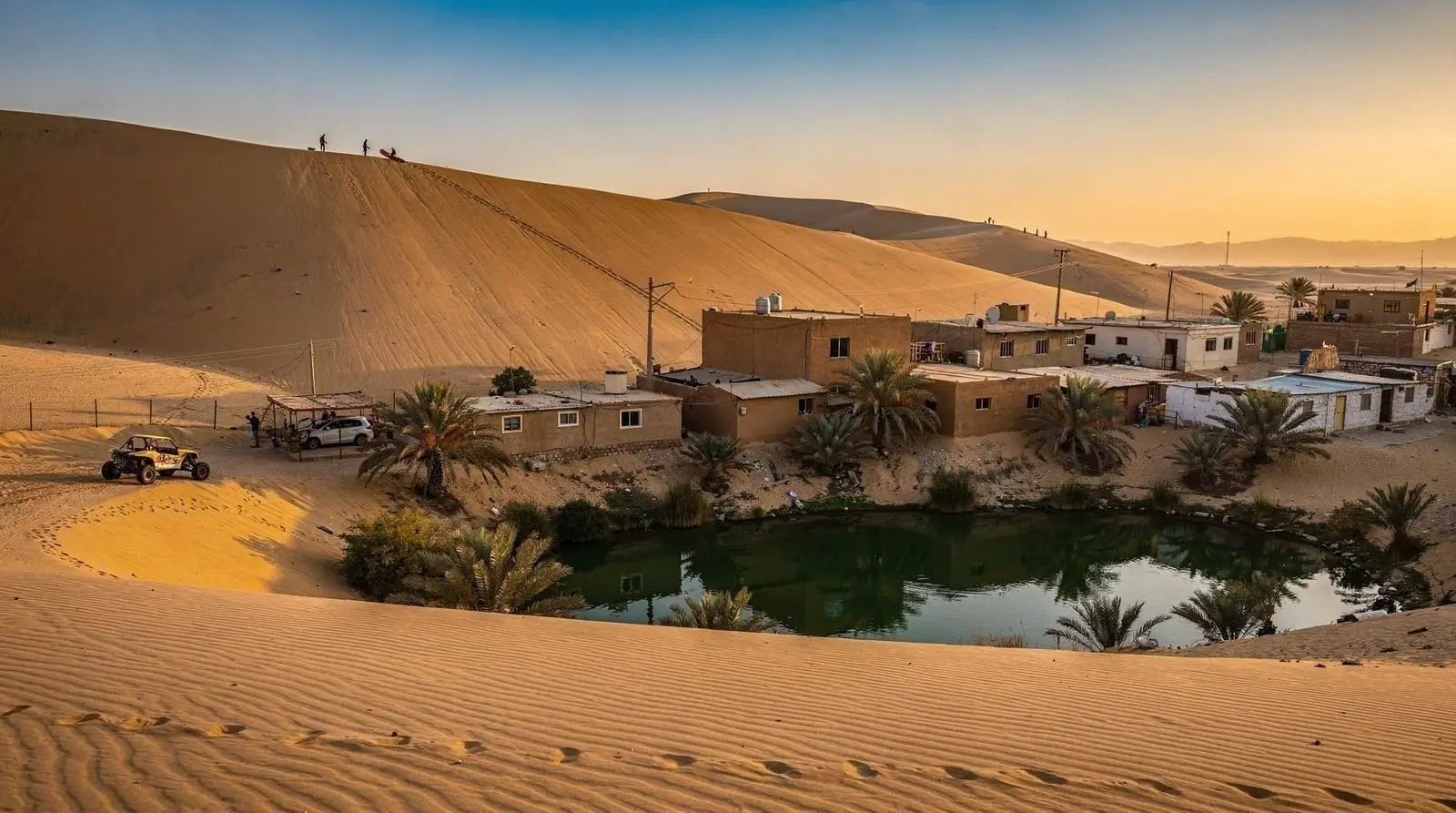
There is a small circular lagoon in the middle of the Peruvian desert, ringed by palm trees, hemmed in on all sides by dunes the size of small mountains. Photographs of Huacachina look like they have been composited from two different landscapes. The lagoon is real, the palms are real, the dunes are very real — and the dune buggy that will launch you up the face of a 200-metre sand wall at 6pm is also real, and somewhat terrifying, and completely worth it.
Huacachina is touristy. There is no use pretending otherwise. The lagoon is ringed by hostels, restaurants playing reggaeton, and buggy operators competing for your business. Backpackers far outnumber local Peruvians on any given afternoon. If you arrive expecting a serene, undiscovered oasis, you will be disappointed. If you arrive expecting a genuinely fun, visually spectacular desert playground with some of the best sandboarding on the continent, you will have a great time.
| Where | 5 km outside Ica city, south coast Peru |
| Cost | Around S/40–70 / about $11–19 for the buggy-and-sandboard circuit |
| Time needed | 1 day; overnight optional for sunset plus a morning activity |
| Getting there | Bus from Lima to Ica (4.5–5 hrs), then a S/8–10 taxi to the oasis |
| Best time | April to November (dry season); sunset sandboarding runs year-round |
The dune buggy experience
The standard afternoon activity is a two-to-three hour circuit by dune buggy — an oversized go-kart with fat tyres that can climb 50-degree sand faces without breaking a sweat. Buggies seat six to ten passengers plus a driver who has almost certainly been doing this for years and considers a vertical sand wall a perfectly normal driving surface.
The route leaves from the oasis, climbs immediately into the dunes, and loops through a series of peaks offering panoramic views over the entire Ica valley. At several stops, passengers are given sandboards — flat wooden boards coated in wax — and pointed down slopes ranging from beginner-friendly ramps to genuinely steep descents that require both commitment and a willingness to eat some sand. The activity ends at a high dune facing west, timed to coincide with sunset. The light on the dunes at that moment is extraordinary.
Prices run S/40–70 per person (approximately $11–19 USD) for the standard buggy-plus-sandboarding circuit. Operators line the main strip around the lagoon. Quality varies: the difference between a good operator and a cheap one is mainly the age and maintenance of the buggy, the skill of the driver, and whether the boards have been recently waxed. Book through your hostel for a vetted option, or with established operators like Huacachina Buggies or Sandboard Peru.
Huacachina: Sandboarding and Dune Buggy Tour at SunsetFor a slightly different experience that includes a picnic stop in the dunes, the following tour adds a leisurely element to the adventure:
Huacachina: Picnic, Dune Buggy Ride and SandboardingSafety and what to expect
Dune buggies go fast over steep terrain and passengers are not strapped in with racing harnesses. Minor bumps and bruises happen. Serious accidents are rare but not unheard of. Wear closed shoes rather than flip-flops (sand in your face at speed is unpleasant), keep your hands inside the buggy on climbs, and follow the driver’s instructions. If a deal looks suspiciously cheap, the buggy is probably poorly maintained.
Sandboarding itself is low-risk on the gentler slopes. The steeper runs look terrifying and feel exhilarating — you gain speed faster than you expect, and the correct stopping technique involves dragging your feet, not standing up. Experienced staff demonstrate first and stay at the bottom to help. If you fall, you fall into sand, which is forgiving.
The lagoon and the village
Huacachina technically sits 5 km outside Ica city, though the sprawl has effectively merged them. The lagoon itself is small — you can walk around it in 20 minutes. The water is greenish from algae, so swimming is not advised (and most operators actively discourage it). The appeal of the lagoon is entirely visual: the reflection of palm trees in still water against a backdrop of ochre dunes is one of the iconic images of Peru.
The village around the lagoon has maybe 100 permanent residents and significantly more hostel beds. Prices are higher than Ica city for the same food and accommodation, purely because of the setting. A beer by the lagoon at sunset costs S/12–18; a meal at a lagoon-facing restaurant costs S/35–60. If budget matters, eat and drink in Ica and come to Huacachina for the activities.
Is one day enough?
Almost certainly yes. Most travellers who stay overnight do so because they want to catch sunset the first evening, sleep, and do a morning activity the next day — usually a Nazca trip. The oasis itself is small enough to exhaust in a few hours. The dune buggy circuit is the main event; once you have done it, there is not a great deal more to see unless you want to do sunrise sandboarding or a longer guided dune hike on your own.
For travellers doing Huacachina as part of a broader south-coast circuit, see the Paracas and Nazca itinerary guide and the things to do on the south coast.
Day trips from Huacachina
Huacachina’s real value is as a base. Ica is 10 minutes by taxi (S/8–10) and worth a half-day for the pisco bodegas. Nazca is 2 hours south and easily combined as a full-day trip including an overflight or ground visit. Paracas is about 1.5 hours north and pairs well with a morning departure. The full south-coast circuit — Lima, Paracas, Huacachina, Ica, Nazca — is doable in 4–5 days.
From Ica or Huacachina, a full-day tour can cover Paracas and the Ballestas Islands in addition to the dune activities:
From Ica or Huacachina: Dune Buggy at Sunset & SandboardingOther activities: beyond the buggy
Sandboard rental: If you want to sandboard independently without a buggy tour, boards are available for hire from lagoon-side shops for S/10–15 per hour. The nearest dunes are accessible on foot within 5 minutes. The independent option suits those who prefer their own pace over the group buggy experience, though you miss the farther, higher dunes reached by vehicle.
Sunrise dunes: The buggy operators focus on sunset, which makes sunrise a relatively quiet window. The dune directly behind the northern end of the lagoon is a 20-minute climb and commands a view of the whole oasis at first light. It is one of the genuinely peaceful moments available at Huacachina — before the reggaeton starts and the buggies rev up.
Astronomy: Huacachina sits in the Atacama’s northern fringe, one of the driest environments on Earth, with minimal light pollution. Clear nights (most of the year in the dry season) reveal the Milky Way without optical aid. Several tour operators in Ica run stargazing excursions to the dunes combining astronomical briefings with pisco sours — not rigorous but genuinely good fun.
Paddleboats and kayaks: The lagoon has rental paddleboats for S/10–15 for 30 minutes, available from the eastern end of the oasis. It is a sedate activity compared to the dunes, but the view of the palms and sand walls from the water at golden hour is entirely different from the view from the shore — and genuinely lovely.
What Huacachina looks like in reality
The photographs do not lie but they do omit. The lagoon is genuinely that beautiful. The palms are genuinely that tall. The dunes are genuinely that enormous. What photographs do not show is the row of hostels pressed up to the water’s edge, the smell of two-stroke from the buggy garage that operates from 9am, and the group of gap-year travellers playing card games at 2pm. None of this is a reason not to go; it is simply context for managing expectations.
The experience that matters — watching the late-afternoon sun flatten the shadows across the dunes, cresting a 200-metre sand face at speed, sliding back down on a waxed board while trying not to eat half the Peruvian desert — is exactly as good as people say it is. Go in knowing what Huacachina is, and you will enjoy it more than those who arrive expecting something it is not.
Swimming at the lagoon: Officially discouraged; practically, many travellers wade in at the lagoon’s edge, particularly at the small beach area near the hostel strip. Full swimming is not recommended due to algae and murky water, but the temperature is invitingly cool on hot afternoons.
Getting to Huacachina
From Lima, buses to Ica (4.5–5 hours, S/40–80 semi-cama) depart from the Javier Prado terminal area. Cruz del Sur, Oltursa, and Flores serve this route. From the Ica bus terminal, a taxi to Huacachina is S/8–10. Do not get off at the roadside “Ica” stop on the Panamericana — insist on the terminal or the oasis depending on your preference.
From Paracas, shared colectivos run to Ica regularly (1–1.5 hours, S/10–15) from just outside the reserve entrance. From Nazca, buses or colectivos north to Ica take 2–2.5 hours.
Huacachina in context: the south coast circuit
Huacachina occupies the central position in the south coast loop. Coming from Lima, most travellers stop at Paracas first (Ballestas Islands, reserve), then transfer to Ica or Huacachina directly. From Huacachina, the logical next step is Nazca — either as a day trip (early departure, back by evening) or as an overnight continuation southward. The circuit runs cleanly in either direction, though Lima → Paracas → Ica/Huacachina → Nazca is the most logical northward-to-southward flow.
Travellers with a week on the south coast can add the Pisco city stop (colonial architecture, seismic history) between Lima and Paracas, explore the Ica bodegas in more depth, and extend to Arequipa and the Colca Canyon after Nazca. For a joined-up route, see the south coast itineraries section and the dune buggy guide for more detail on operators and what to expect on the sand.
Practical planning
Accommodation: The oasis has backpacker hostels from S/60/night in dorms to mid-range doubles at S/200–350. Desert Nights and Wild Rover are popular mid-range options with pools. Book ahead for weekends and Peruvian holidays.
Heat: At 390 m, Huacachina is hot. Summer (December–March) temperatures can exceed 35°C. Bring sun protection and carry water on any time you leave the lagoon area. The buggies provide no shade.
Cash: Bring soles. There is one ATM in the village (Scotiabank) that runs out regularly on weekends. Top up in Ica before you arrive.
Photography: The classic shot — oasis from the dunes — requires climbing about 20 minutes up the nearest dune behind the hostels. Go in the late afternoon for the best light. The buggy tour also stops at viewpoints specifically designed for photos.
Frequently asked questions about Huacachina
Is Huacachina really the only natural oasis in South America?
It is frequently claimed to be, and no competing claim has solid evidence. The lagoon is fed by a natural freshwater spring from the Andes, though water levels have dropped significantly over decades due to agricultural extraction from the surrounding aquifer. The springs are supplemented with pumped groundwater to maintain the lagoon level today.
Is sandboarding difficult?
On gentle slopes, no — it is accessible to anyone in reasonable physical condition. The steeper runs require some nerve and a willingness to fall. Lying down on the board (like a toboggan) is easier than standing for beginners, and lying down on the steep runs is still genuinely fast and fun.
How much does the dune buggy tour cost?
Typically S/40–70 per person (about $11–19 USD) depending on the operator and whether extras like a picnic are included. This covers 2–3 hours of riding and multiple sandboarding stops. Prices have crept up since 2020; be suspicious of offers below S/35.
Can I do Huacachina as a day trip from Lima?
Yes but it is a long day — 4.5 hours each way by bus means roughly 9 hours of travel for a few hours at the oasis. Some operators offer Lima day tours that bundle Paracas and Huacachina in a single very full day. An overnight stay is much more relaxed and allows the sunset buggy circuit.
Is the lagoon safe to swim in?
Most operators and local authorities advise against it. The water has high algae levels and an indeterminate mix of irrigation runoff. Wading at the edge is common; actual swimming is not.
What should I wear for sandboarding?
Light clothes you do not mind getting sand in. Closed shoes or trainers — not sandals. Sun protection. Goggles are sometimes available from operators but are not standard issue; sunglasses help. Bring a change of clothes as sand gets everywhere.
Is Huacachina worth visiting?
Yes, with realistic expectations. It is touristy, small, and the lagoon itself is underwhelming if you have seen similar oases elsewhere. But the dune buggy circuit at sunset is genuinely one of the more fun things you can do on a Peru trip, the visual spectacle is hard to match, and the access to Ica, Paracas, and Nazca makes it a logical hub for the south coast.
Top experiences
Bookable activities with verified prices and instant confirmation on GetYourGuide.
