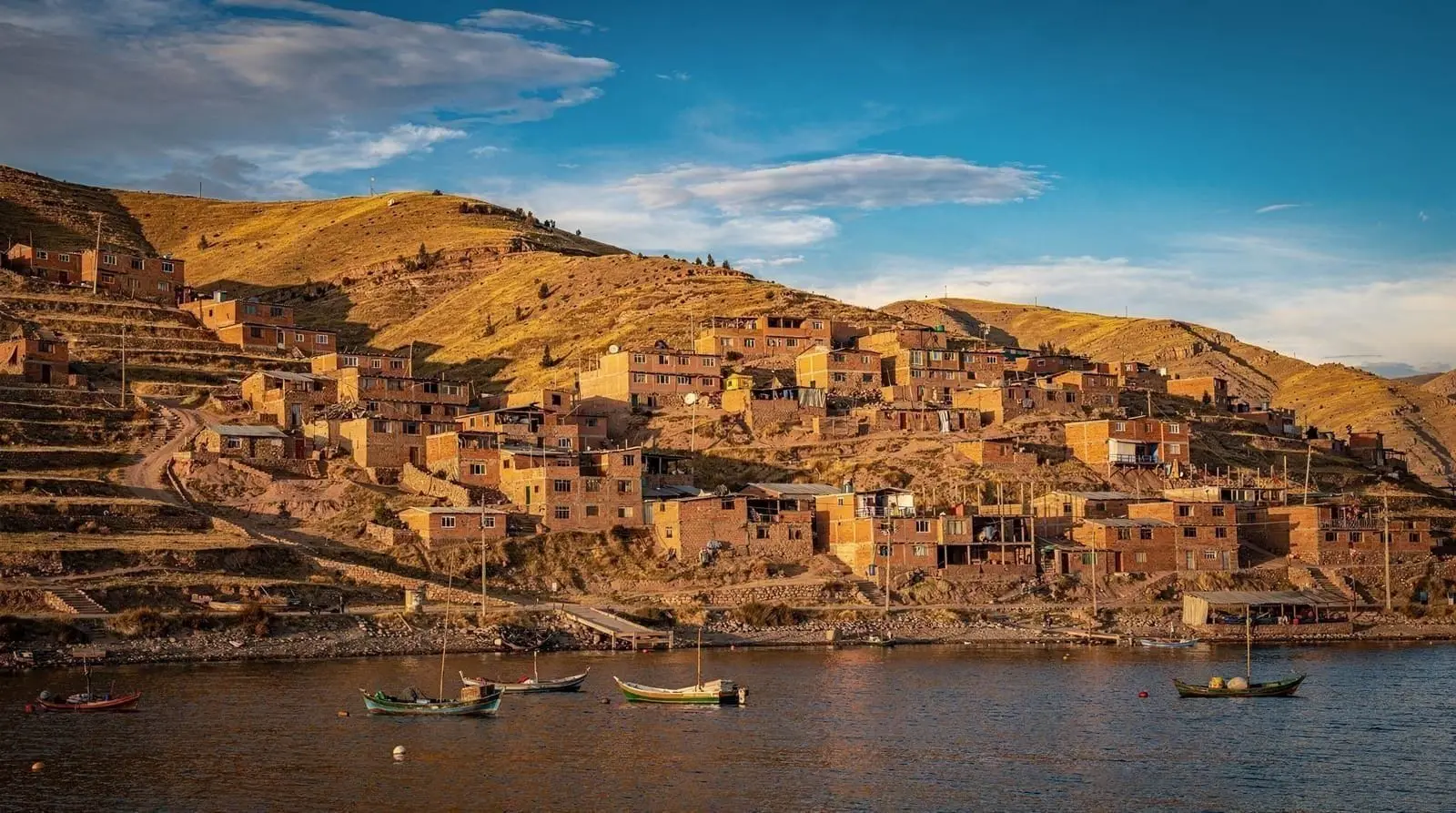
Puno
Puno sits at 3,800 m on Lake Titicaca: how long to stay, altitude reality, what the lake tours actually deliver, and how to plan the Cusco crossing.
Puno: Full-Day Tour of Lake Titicaca and Uros & Taquile
Quick facts
- Country
- Peru (Puno region)
- Altitude
- 3,800 m / 12,470 ft — higher than Cusco
- Currency
- Peruvian sol (S/) — carry small notes for the islands
- Best for
- Lake Titicaca access, island homestays, the Cusco–Puno overland route
Should you actually stay in Puno?
Puno is not a city most travellers fall in love with. It is a working highland port town that exists, from a visitor’s point of view, almost entirely as the launch point for Lake Titicaca. The lake is the reason you come; Puno is the place you sleep, eat and buy a bus ticket while you reach it. Set that expectation early and you will leave satisfied rather than disappointed.
The honest plan is one to two nights. One night is enough if you arrive in the afternoon, take a full-day Lake Titicaca excursion the next morning, and continue onward that evening or the following day. Two nights makes sense if you want an overnight island homestay (which means leaving on day two and returning on day three) or if you are still acclimatising. Puno’s single biggest planning factor is not what to see in town — it is the altitude.
| Where | Puno region, southeastern Peru, on Lake Titicaca |
| Cost | Around S/100-160 / $27-43 for a full-day lake tour |
| Time needed | 1-2 nights |
| Getting there | Bus from Cusco (~10 hrs) or Arequipa (~5-6 hrs); fly into Juliaca |
| Best time | May to October (dry, cold, clear); Candelaria peaks early February |
For the wider planning picture, the Cusco to Puno transport guide compares every route in detail, and the Lake Titicaca wildlife guide is worth a look before your lake excursion.
The altitude reality you must plan around
Puno sits at roughly 3,800 m / 12,470 ft. That is meaningfully higher than Cusco at 3,400 m, and dramatically higher than Arequipa at 2,300 m. If Puno is your first high-altitude stop in Peru — for example if you fly into Juliaca and bus straight down — you are very likely to feel it: shortness of breath on stairs, a dull headache, broken sleep, and reduced appetite for the first day.
The practical rules are simple and worth following:
- Arrive already acclimatised if you can. Spending two or three nights in Cusco first, or routing up gradually from Arequipa, makes Puno far more comfortable than arriving cold from sea-level Lima.
- Take the first afternoon slow. Do not schedule a strenuous activity for the day you arrive. Drink water, eat lightly, and let your body adjust.
- Coca tea (mate de coca) is offered everywhere and many travellers find it helps with mild symptoms. It is legal and normal in Peru.
- Acetazolamide (Diamox) is the standard preventative medication; ask a doctor before your trip if you have a history of altitude problems.
- Avoid alcohol on your first night. A celebratory beer at 3,800 m hits harder and worsens sleep and headaches.
The nights are cold — frequently near or below freezing in the dry season (May to August). Hotel heating in the budget and mid-range tiers is inconsistent, so pack a warm layer for sleeping and confirm heating when you book.
Getting to Puno
From Cusco (overland): This is the classic approach, around 380 km. Three options:
- Tourist bus with stops — the most rewarding way to travel. The route passes Andahuaylillas church, Raqchi, the La Raya pass (4,335 m), and Pukará across roughly ten hours, with a buffet lunch included. The Route of the Sun bus from Cusco to Puno with guided stops turns the transfer day into a sightseeing day rather than dead time on the road.
- Direct night or day coach — Cruz del Sur and similar lines run direct in 6–7 hours for less money but with nothing to see.
- The Andean Explorer train — a luxury option (10+ hours) priced for a splurge, not for budget travellers.
From Arequipa: Around 5–6 hours by bus (Julsa, Power, Cruz del Sur), climbing from 2,300 m to 3,800 m. Buy a reputable line and travel by day for the scenery.
By air: The nearest airport is in Juliaca, about 45 minutes north of Puno by road. Flights connect to Lima and occasionally Cusco. Juliaca itself is a chaotic transit town with no reason to linger — arrange a transfer straight to Puno.
To Bolivia: Puno is the standard jumping-off point for Copacabana and La Paz, crossing at the Kasani / Yunguyo border. Several daily buses make the run in around 3–4 hours to Copacabana.
A note on connections: whichever direction you are travelling, build in a buffer day either side of a border crossing or a long overland leg. Bus schedules in this part of Peru and Bolivia are generally reliable, but altitude fatigue slows everyone down, and a rushed connection at 3,800 m is a worse experience than a spare afternoon in a town you did not plan to linger in.
What there is to do in Puno town itself
Honestly, not much, and that is fine. The town’s compact centre can be walked in an hour or two:
- Plaza de Armas and the Cathedral — the colonial heart, worth a short stroll. The cathedral’s stone façade dates to the mid-18th century.
- Jirón Lima — the pedestrian street running off the plaza, lined with restaurants, pizzerias, tour agencies and souvenir shops. This is where you will eat and book.
- Mirador Kuntur Wasi — a hilltop viewpoint reached by a steep stairway (take it slowly at this altitude) with a condor monument and a sweeping view over the lake and the red-roofed town. Best at sunset.
- Casa del Corregidor — a 17th-century house, now a café and cultural space, one of the oldest civil buildings in Puno.
The genuine highlight near town is Sillustani, a pre-Inca burial site of cylindrical funerary towers (chullpas) on a peninsula above Lake Umayo, about 35 km northwest. Half-day tours run from Puno in the afternoon and are a good use of an arrival-day half-day once you have rested. Entry is around S/15 / about $4.
The lake excursions — set your expectations honestly
This is what you came for, and it deserves a frank briefing. The standard product is a boat tour to two or three island groups on Lake Titicaca: the floating Uros reed islands, plus Taquile and sometimes Amantaní.
On the Uros islands: these floating reed platforms are real, inhabited, and historically remarkable — but the standard tour stop has become heavily commercialised. You will get a short reed-construction demonstration and then a fairly pointed invitation to buy handicrafts or pay extra for a reed-boat ride. None of this makes Uros fake; people genuinely live there. But go in understanding that the half-hour visit is a managed, transactional experience, not an undisturbed cultural encounter. Bring small soles if you want to buy or tip, and decide your spending in advance rather than under pressure.
On Taquile and Amantaní: these are real inhabited islands with terraced farms and a slower rhythm. Taquile Island is known for its UNESCO-recognised textile tradition; Amantaní is the usual base for overnight homestays. Both involve real walking at altitude — Taquile’s stairs from the dock to the village climb several hundred steps above 3,800 m, which is genuinely demanding.
The day-tour and homestay options each suit different travellers — full breakdown on the Lake Titicaca page.
A full-day boat tour covering Uros and Taquile typically costs S/100–160 / about $27–43 plus the island entry fees (around S/10–20 collected on each island). The full-day Lake Titicaca tour to Uros and Taquile bundles the boat, the guide, the island fees and lunch on Taquile into one booking, which removes most of the haggling at the dock.
If you are short on time, a Uros and Taquile speedboat tour covers the same islands in noticeably less time on the water — useful if you have an afternoon bus to catch but a poorer choice if the slow boat ride is part of what you want.
Where to eat in Puno
Puno’s food leans hearty and warming, which suits the cold. Trout (trucha) farmed in the lake is the regional staple and is excellent — order it grilled (a la plancha) rather than deep-fried. Alpaca steak appears on most tourist menus and is lean and worth trying.
- Mojsa (Jirón Lima 635, on the plaza) — a reliable mid-range spot for trout, alpaca and quinoa dishes; budget S/35–55 for a main.
- La Table del’Inca — a small French-Peruvian fusion restaurant with a set menu; book ahead.
- Balcones de Puno — touristy but features live Andean music and dance in the evenings, fine for a one-off cultural dinner.
- Mercado Central — for cheap, authentic lunches (caldo, trout, quinoa soup) at S/8–15 if you want to eat where locals do.
Be cautious with raw and cold dishes if your stomach is still adjusting to altitude and a new diet; warm cooked food is the safer bet on your first day.
Where to stay in Puno
Most hotels cluster within walking distance of the Plaza de Armas and Jirón Lima, which is convenient for restaurants and tour agencies but means noise from bars on weekend nights. A second cluster sits closer to the port, a short taxi or a 10-15 minute walk from the centre, quieter but further from the pedestrian street. Budget guesthouses run S/60-100 for a double; solid mid-range hotels with reliable heating run S/150-280. Whichever you choose, confirm heating specifically when booking — many budget rooms rely on extra blankets alone, which is not enough on the coldest nights.
If an overnight homestay appeals, read a first-hand account in the Lake Titicaca homestay diary before booking — it sets expectations on the basic facilities and the genuine warmth of the host families more honestly than most tour listings do. Bring a padlock for hostel-style lockers, and pack earplugs if you land a room facing Jirón Lima on a Friday or Saturday night.
Puno during Candelaria
If you visit in early February, you will collide with the Fiesta de la Virgen de la Candelaria — one of South America’s largest folk festivals, with thousands of dancers, brass bands and elaborate costumes filling the streets for two weeks. It is spectacular, but it means full hotels at double prices, booked-out transport, and a town in near-constant celebration. Plan accommodation months ahead if this is your window, or avoid early February if crowds and noise are not your thing.
Practical information
Money: ATMs cluster around the Plaza de Armas and Jirón Lima (BCP, Interbank, Scotiabank). Carry plenty of small-denomination soles for the islands, where change is scarce and cards are not accepted.
Connectivity: Mobile coverage (Claro, Entel) is reliable in town and patchy on the lake. Hotel Wi-Fi is generally adequate for messaging, less so for video.
Warm clothing: Non-negotiable. Even in the dry season, nights drop below freezing and the wind off the lake is sharp. A windproof layer, hat and gloves are worth packing.
Sun protection: At 3,800 m the UV is intense even when the air is cold. Sunscreen, sunglasses and a brimmed hat matter more here than the temperature suggests.
SIM cards and connectivity: If you need a local SIM for the wider trip, buy it in Cusco or Lima before arriving — Puno has outlets but selection and stock are more limited. Claro generally has the best coverage on the lake itself, useful if you are doing a homestay and want to check in with family back home.
Where Puno fits in a Peru trip
Puno is rarely a destination in isolation — it is a hinge point. The most common routings are Cusco → Puno → Arequipa (or the reverse), or Puno as the bridge to Bolivia. See how it connects to the rest of the country in the itineraries hub, and use the planning tools to sequence the altitude legs sensibly. For neighbouring destinations, read the Lake Titicaca and Taquile Island pages, then the Arequipa and Colca Canyon guides for the onward leg south.
Frequently asked questions about Puno
How many days do you need in Puno?
One to two nights for most travellers. One night covers a full-day lake tour if you arrive the afternoon before. Add a second night if you want an overnight island homestay or need extra time to acclimatise to the 3,800 m altitude.
Is Puno worth visiting, or just the lake?
The lake is the draw; the town is a functional base rather than a sight in itself. Puno is absolutely worth visiting for Lake Titicaca, Sillustani and the overland route, but manage your expectations about the town centre, which you can see in a couple of hours.
How bad is the altitude in Puno?
At 3,800 m, Puno is higher than Cusco and most travellers feel it — breathlessness, mild headaches and disturbed sleep are common on the first day. Acclimatising in Cusco first, taking your arrival day slowly, staying hydrated and avoiding alcohol all help significantly.
Are the Uros floating islands a tourist trap?
Partly. The islands and the people are real, but the standard tour stop is heavily commercialised, with handicraft sales and paid reed-boat rides built into a short visit. It is still worth doing once if you understand the format in advance; bring small soles and decide your spending before you arrive.
How do I get from Cusco to Puno?
The most rewarding option is a tourist bus with guided stops along the Route of the Sun, taking around ten hours with lunch and several archaeological stops included. Direct coaches do the run in 6–7 hours, and the luxury Andean Explorer train is a splurge alternative.
Can I do a Lake Titicaca homestay from Puno?
Yes. The two-day option overnights with a host family, usually on Amantaní, and is the most immersive way to experience the lake’s island communities. It typically combines Uros, Amantaní and Taquile across two days.
Is Puno safe for tourists?
Generally yes, with normal city precautions. The centre around the Plaza de Armas and Jirón Lima is well-trafficked and busy into the evening. As with any Peruvian tourist town, keep valuables out of sight in crowds and use registered taxis at night rather than hailing unmarked cars off the street.
Top experiences
Bookable activities with verified prices and instant confirmation on GetYourGuide.
