Lima
Plan your Lima stay honestly: the best neighborhoods, where to eat ceviche, what to skip, and how long you really need in Peru's sprawling capital.
Lima: City Tour, Larco Museum and Huaca Pucllana
Quick facts
- Country
- Peru
- Altitude
- 154 m / 505 ft (sea level city)
- Currency
- Peruvian sol (S/) — USD widely used
- Best for
- Gastronomy, pre-Columbian archaeology, colonial history, coastal walks
Is Lima worth two or three days?
Yes — and probably more than you were expecting. Lima has a reputation as a grey transit city that travellers grudgingly pass through on the way to Cusco or Machu Picchu. That reputation is a decade out of date. The city’s food scene now routinely places three or four restaurants in the world’s top fifty. Its coastal cliffs shelter a string of charismatic neighbourhoods — Miraflores, Barranco, and San Isidro — that together form one of South America’s most walkable urban coastlines. And embedded in the middle of the modern city, a 1,500-year-old adobe pyramid still receives visitors every evening by torchlight.
Two days is the honest minimum for a meaningful experience. Three days lets you add Pachacámac and an evening in the colonial centre without feeling rushed. If you are flying in from long-haul and then continuing to Cusco, build in a spare night as a buffer: Lima’s airport is 45–60 minutes from Miraflores in light traffic, and Andean altitude sickness is measurably worse if you fly straight through with jet lag.
| Where | Central Peruvian coast; base in Miraflores or Barranco |
| Cost | Around S/25–40 lunch, S/15–35 taxis around town, S/50–90 airport transfer |
| Time needed | 2–3 days |
| Getting there | Jorge Chávez International Airport (LIM), 45–60 min from Miraflores |
| Best time | November to April for clear skies; May–October (garúa) for lower prices and quieter sights |
Getting your bearings
Greater Lima is home to roughly 11 million people and sprawls across 43 districts. For visitors, three areas matter:
Historic Centre (Centro Histórico) — the Spanish colonial heart, UNESCO-listed, about 12 km northeast of Miraflores. The Plaza Mayor, the Convento de San Francisco with its bone-filled catacombs, and the Palacio de Gobierno all sit within a short walk of each other. The centre is worth a half-day visit but is not where you stay: most good hotels are in Miraflores or Barranco.
Miraflores — the upscale coastal cliff district where most first-time visitors base themselves. Clean streets, Larcomar shopping mall cantilevered over the ocean cliffs, a dense cluster of cevicherías and Japanese-Peruvian (Nikkei) restaurants, and the Huaca Pucllana pyramid right in the middle of residential streets. See the full guide at /destinations/miraflores/.
Barranco — the bohemian southern cousin of Miraflores, 15 minutes by taxi (~S/15 / about $4). Brightly painted 19th-century republican mansions, artisan galleries, street murals, and Lima’s best bar strip. Worth at least an afternoon and an evening. Full guide at /destinations/barranco/.
The garúa reality check: Between roughly May and October, Lima sits under a persistent coastal fog called the garúa. The sky is not dramatically stormy — it just stays a flat grey-white, and temperatures stay around 14–16 °C. Views from the cliffs are obscured and photos come out flat. This does not make Lima a bad destination in winter; prices are lower, restaurants are quieter, and the food is just as good. But if you want to photograph that cinematic cliffside sunset, plan your Lima leg for November through April.
Day 1: Historic centre and Miraflores
Morning: the colonial centre
Take a taxi (~S/30–35 / about $8–9) or the Metropolitano bus from Miraflores to the historic centre. Start at the Plaza Mayor and walk southeast to the Convento de San Francisco (S/15 / about $4 entry). The catacombs beneath the church hold the arranged bones of roughly 25,000 people and are genuinely striking — not macabre kitsch but a sobering window into colonial Lima’s burial practices.
A guided historic centre walking tour with pisco sour tasting covers the main sights in three hours with a licensed guide explaining the murals, religious art, and colonial architecture in context. It ends with a pisco sour workshop — useful if you have never made one and want to do it properly.
Budget S/25–40 for a solo light lunch in the centre. La Lucha Sanguchería at Jirón de la Unión has excellent Peruvian sandwiches (butifarra, chicharrón) for around S/18–22.
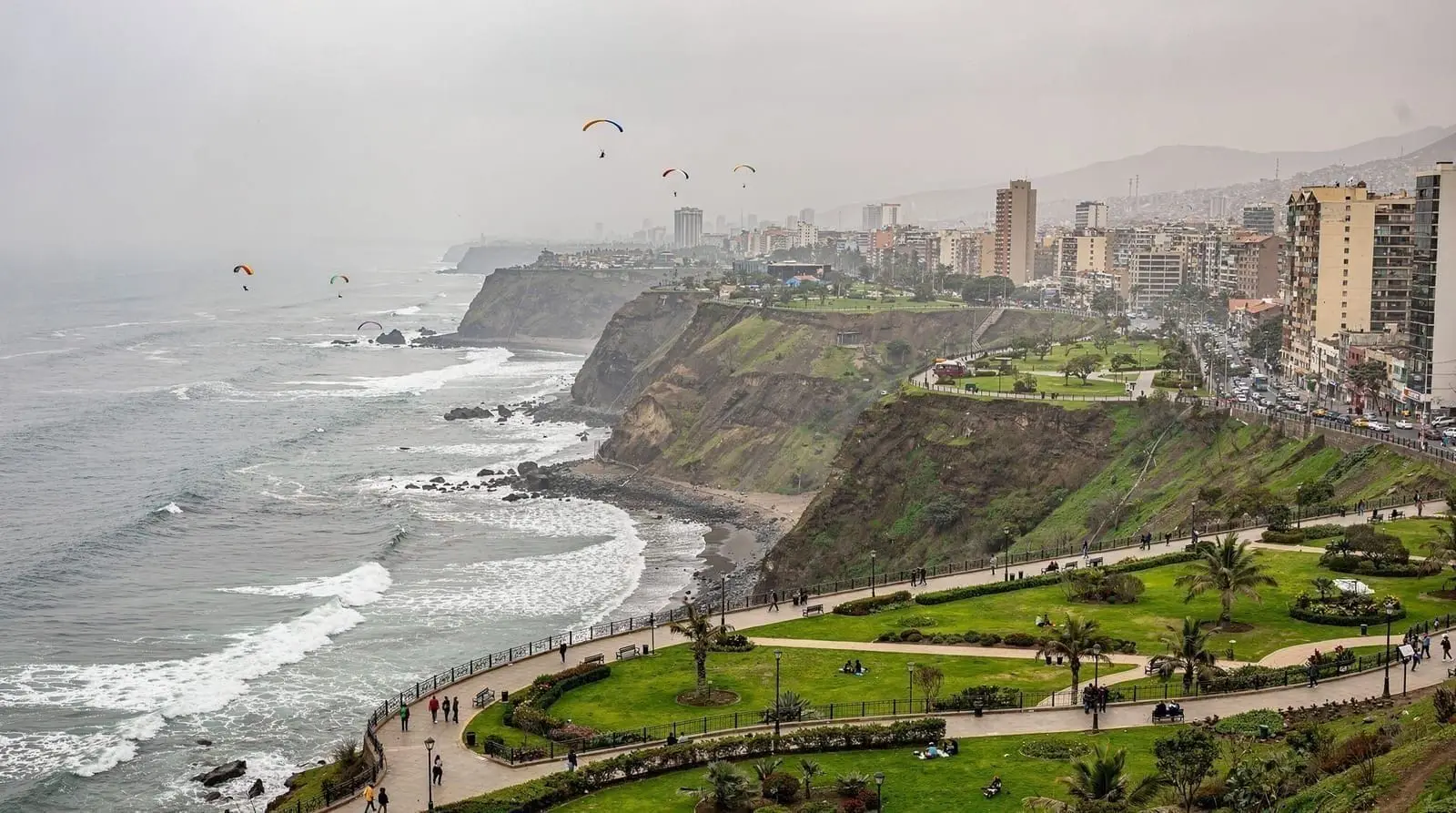
Those paragliders launching from the cliffs are easy to book yourself — the tandem paragliding flight over Costa Verde in Miraflores includes video of the flight, a good souvenir of the coastline you have just been walking.
Afternoon: Huaca Pucllana
Back in Miraflores, the Huaca Pucllana archaeological site (General Borgoño block 8, Miraflores) is one of the most unexpected sights in Lima: a fully excavated Lima Culture pyramid from around 400 CE, surrounded on all sides by apartment blocks and restaurants. Entry is S/15 / about $4, guided tours run every 30–40 minutes, and the evening torchlit visits (from 7 pm) are particularly atmospheric.
For a deeper look with expert commentary, the private Huaca Pucllana tour with entry tickets is excellent value — a trained archaeologist walks you through the stratigraphy, the Wari occupation layer, and the sacrificial finds in a way the standard audio guide cannot match.
Evening: Larco Museum or Parque Kennedy
If you have a third day and want to leave Larco for Day 2, spend the early evening at Parque Kennedy in the heart of Miraflores — Lima’s social hub, full of stray cats (they have been there for decades and are fed by the municipality), street food vendors, and locals on evening walks. Continue down Avenida Arequipa for dinner at any of the cevicherías along the strip. La Mar (Av. La Mar 770) is world-famous and worth queuing for; budget S/60–90 for a full lunch or dinner.
A critical note on ceviche timing: in Lima, ceviche is strongly associated with lunch rather than dinner. Most dedicated cevicherías open around noon and close by 4 pm. You can get ceviche at dinner, but the selection is narrower and the freshness is not identical. Plan your ceviche meal as a proper midday sit-down.
Day 2: Larco Museum, food tour, and Barranco
Morning: Museo Larco
The Museo Larco (Av. Bolívar 1515, Pueblo Libre — about 20 minutes west of Miraflores by taxi, ~S/20 / about $5) holds one of the world’s finest collections of pre-Columbian gold and ceramic art. The notorious “erotic ceramics” room always generates attention, but the standout galleries are the storerooms where thousands of non-displayed Moche ceramics are visible on open shelving — an honest representation of the museum’s excess collection that no purpose-built display case could replicate.
Entry: S/35 / about $9. The garden café serves a solid Peruvian lunch for S/40–55. Allow two to three hours.
The Lima city tour combining Larco Museum, Huaca Pucllana, and the colonial centre is the best value full-day option if you want a guide throughout — it covers the three anchor sights of Lima in a single sweep without the logistics of individual taxis.
Afternoon: Larcomar and the cliff walk
Return to Miraflores and walk the Malecón Cisneros — the clifftop promenade running two kilometres above the Pacific. On clear days (November–April) you can see container ships anchored offshore and paragliders launching from the cliffs. The views from the love park (Parque del Amor) with its Gaudí-inspired mosaic wall are worth the walk regardless of season.
Larcomar (Malecón de la Reserva 610) is built into the cliffside and has better views than a typical mall. The food court is fine for a quick break; the main reason to walk through is the architecture and the vista from the terrace.
Evening: Barranco dinner and bar hop
Take a taxi or the electric bus south to Barranco — the ride is 15–20 minutes and costs S/15–20 / about $4–5. The Puente de los Suspiros (Bridge of Sighs) and the viewpoint below it are Lima’s most photographed spot. Walk from there along Calle Domeyer and then down to the Plaza de Barranco for pre-dinner drinks.
Barranco is best explored with a guide who knows which galleries are currently open and which bars are worth the queue. The gourmet food tour by night through Miraflores and Barranco hits the ceviche bars, craft cocktail spots, and artisan food stalls that are hard to find on a first visit.
Day 3 (optional): Pachacámac and magic water circuit
Morning: Pachacámac
The Pachacámac archaeological complex sits 31 km south of Miraflores (45–60 minutes by taxi, ~S/50–60 one way, or on a guided tour). It is among the largest ancient cities on the Pacific coast of South America, with temples from multiple cultures spanning roughly 1,000 years of continuous occupation. Plan two to three hours on site. Full details at /destinations/pachacamac/.
Evening: Magic Water Circuit
The Circuito Mágico del Agua in Parque de la Reserva (Av. Petit Thouars, La Victoria) is a laser and water-fountain show that runs from 7 pm on Wednesdays to Sundays. Entry is S/8 / about $2. It is not a sophisticated cultural experience, but it is cheerful, popular with local families, and makes for a pleasant final evening in Lima. The magic water circuit with dinner and folklore show combines the fountains with a seated Peruvian dinner and regional dance performances — a more structured option if you prefer not to navigate independently.
Getting around Lima
Taxis: Never take unlicensed taxis from the street in Lima — door-to-door scams and short-change incidents are well documented. Use the Taxi Beat, InDriver, or Cabify apps, all of which show a fixed fare before you confirm. Typical fares: Miraflores to colonial centre S/25–35; Miraflores to Barranco S/15–20; Miraflores to airport S/50–70.
Metropolitano: Lima’s express bus corridor runs along Paseo de la República from the historic centre south through Miraflores. The fare is S/3.50 / under $1 with a rechargeable card (available at stations). It is genuinely faster than taxis along that corridor during peak hours.
Ridesharing warnings at the airport: Jorge Chávez International Airport (LIM) is in Callao, approximately 45–60 minutes from Miraflores in normal traffic. Official taxi counters at the arrivals hall (domestic and international) charge a flat S/70–90 / about $18–24 for Miraflores; negotiate or pre-book a reputable service rather than accepting offers from unlicensed drivers in the arrivals hall.
Where to eat in Lima
Lima’s gastronomic reputation is well earned. The basics:
Ceviche: Order it at lunch. Budget S/35–60 for a full plate at a good cevichería. Punto Azul (Calle San Martín 595, Miraflores) is a reliable choice for solo travellers with no reservation; Pescados Capitales is worth booking for a special meal.
Nikkei (Peruvian-Japanese): The Japanese immigrant community arrived in Lima from the 1890s and their culinary influence is embedded in the city’s restaurant culture. Maido (Miraflores) is consistently ranked one of the world’s best restaurants. A tasting menu runs S/350–500 / $90–135 per person; book six to eight weeks ahead.
Market food: Mercado Surquillo (one block from Av. Paseo de la República in Surquillo, 10 minutes from Miraflores) is where Limeño cooks shop. The stalls in the inner market sell cooked lunches for S/12–18 and the produce selection gives you a crash course in Andean and Amazonian ingredients.
Peruvian food tour: The Lima ultimate Peruvian food tour is a three-hour walk across Miraflores markets, traditional huariques, and juice bars — practical for orienting yourself on your first full day before you start eating independently.
Practical information
Money: Withdraw soles from ATMs at BCP, Scotiabank, or Interbank (lower fees than Banco de la Nación at the airport). Avoid dynamic currency conversion — always pay in soles. USD is accepted at most hotels and tour operators but at a rate of around 3.55–3.65 when the official rate runs around 3.70.
Safety: Miraflores and Barranco are considered the safest districts for tourists. Keep phones out of sight on the street, do not use your phone while standing on a pavement, and do not take unlicensed taxis. Pickpocketing is common on public transport and in the colonial centre.
Altitude acclimatisation: Lima sits at sea level. If you are continuing to Cusco (3,400 m), your first day or two in Lima is your last chance for rest and hydration before altitude stress. Avoid alcohol the day before flying to Cusco.
Connectivity: Most cafés and hotels have solid Wi-Fi. A local SIM (Claro or Entel) costs S/20–30 / about $5–8 for a month of mobile data, available at the airport or at any pharmacy.
Day trips from Lima
Pachacámac — 31 km south, 45–60 min. One of the coast’s largest pre-Columbian cities. Half-day or full day. Details at /destinations/pachacamac/.
Paracas — 260 km south, 3.5–4 hours by bus (Cruz del Sur, S/45–70). Pelican-filled bay, sea lions on the Peninsula reserve, and the jumping-off point for the Ballestas Islands. Doable as an overnight from Lima.
Huacachina — 306 km south, about 4.5 hours by bus. The famous sandboard oasis lagoon, usually combined with Paracas on a two-day south coast trip.
Ica — 305 km south, 4 hours. Peru’s wine and pisco heartland, close to the Nazca lines if you are willing to extend to a two-night trip.
For a fuller overview of how Lima fits into a longer Peru itinerary, see /guides/peru-2-week-itinerary-guide/ or browse /itineraries/.
Frequently asked questions about Lima
How many days do you actually need in Lima?
Two full days is a workable minimum if you focus on one or two anchor sights per day and eat well. Three days lets you add Pachacámac and leaves room for weather delays or a long leisurely lunch. Four or more days is only worth it if you are specifically interested in Lima’s food scene — in which case you could happily spend a week eating your way through the city’s restaurants.
Is Lima safe for tourists?
Miraflores and Barranco are generally safe walking neighbourhoods during the day and evening. The historic centre requires normal urban caution — keep valuables out of sight and use app-based taxis rather than flagging taxis on the street. Late-night street walking anywhere in Lima is not advisable. Do not let safety concerns prevent you from visiting; millions of tourists pass through Lima every year without incident.
What is the garúa and does it ruin the trip?
The garúa is Lima’s seasonal coastal fog, persistent from roughly May to October. The sky goes grey-white, temperatures drop to around 14–16 °C, and cliff views become obscured. It does not rain heavily but the air is damp. Lima’s food, museums, and culture are completely unaffected by the garúa. If photography is your priority, visit November through April when skies clear consistently.
When is ceviche served in Lima?
Ceviche in Lima is culturally a lunch dish, typically served from noon to around 4 pm. Many dedicated cevicherías close after the lunch service. You can get ceviche at dinner in many restaurants, but the selection shrinks and some places only serve it fresh-made during lunch hours. Plan your ceviche experience as a proper midday meal.
Which neighbourhood should I stay in?
Miraflores is the standard choice for first-time visitors: central, safe, well-connected by bus and taxi, with restaurants, supermarkets, and the coastal walk all within walking distance. Barranco is more atmospheric and suited to travellers who want boutique hotels and a neighbourhood feel, but is slightly further from the historic centre and has fewer early-morning dining options. San Isidro is the business district — quieter, good hotels, convenient but less characterful.
How do I get from the airport to Miraflores?
Use an app-based taxi (Taxi Beat, InDriver, Cabify) or the official airport taxi counters in arrivals. Expect S/60–90 / about $16–24 and a journey of 45–60 minutes in normal traffic, longer during rush hour (7–9 am, 5–8 pm). Do not accept offers from unlicensed drivers inside the terminal. The Metropolitano bus does not connect to the airport directly.
Can I visit Lima without speaking Spanish?
Yes, though you will have a better experience with a few phrases. Miraflores restaurant and hotel staff generally speak some English. Outside the main tourist zones, Spanish is essential. Your phone translation apps will carry you through most situations; learning “la cuenta, por favor” (the bill, please) and “cuánto cuesta” (how much does it cost) will help everywhere.
Top experiences
Bookable activities with verified prices and instant confirmation on GetYourGuide.


