Peru trip cost guide 2026: real budgets in soles and dollars
Lima: Ultimate Peruvian Food Tour
How much does a trip to Peru cost in 2026?
Budget travellers spend around US$40–55 a day, mid-range travellers US$90–140, and comfortable mid-luxury US$220–350. The single biggest one-off cost is the Machu Picchu day, which runs US$160–260 per person once the train, entry and shuttle are added up.
What Peru really costs once you add it all up
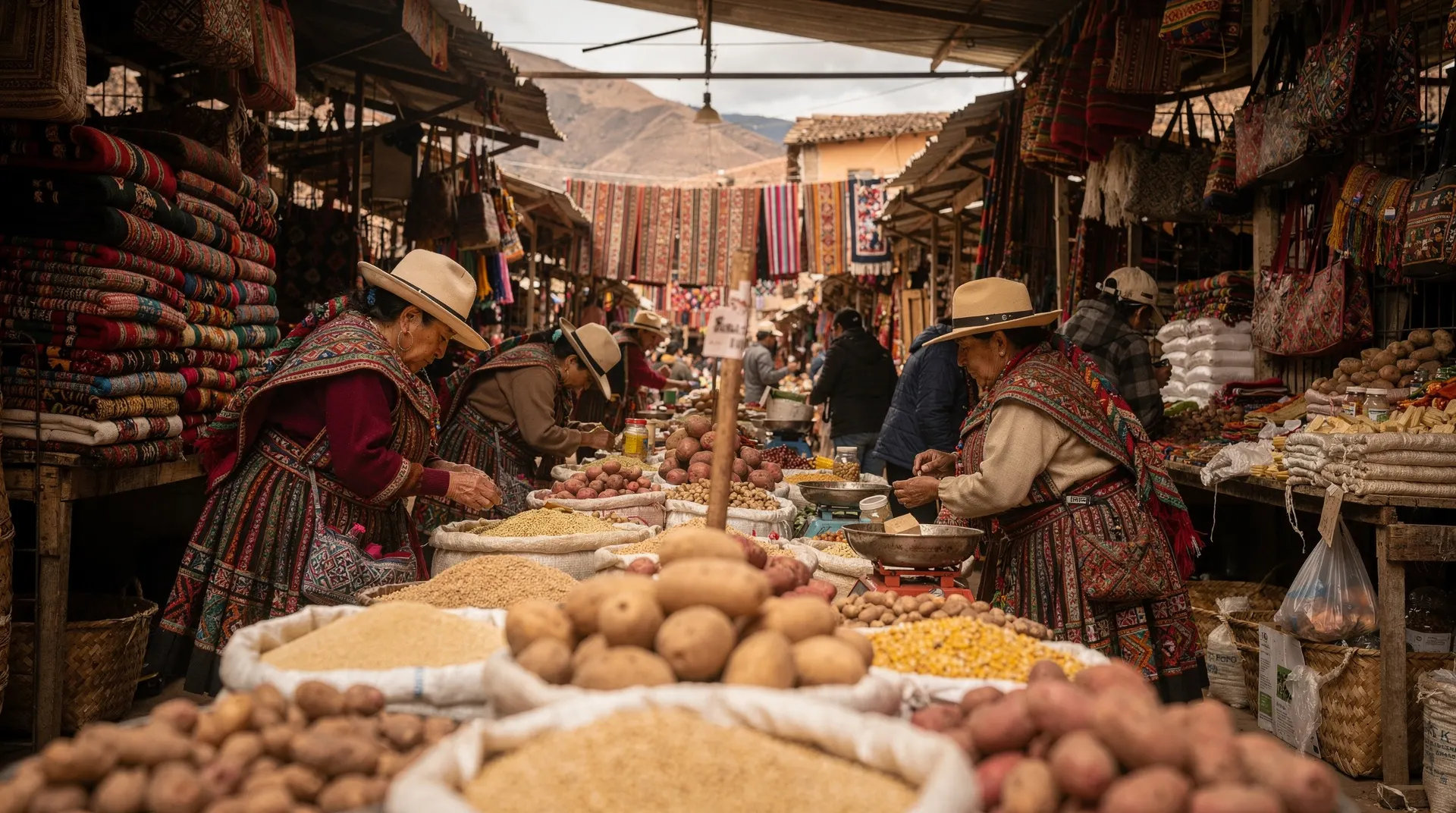
Peru has a split personality when it comes to money. The everyday economy — markets, set lunches, local buses, neighbourhood hostels — is genuinely cheap by North American or European standards. The tourist economy that sits on top of it is not. A bowl of soup at a Cusco market costs S/8; the train that carries you the last 30 kilometres to Machu Picchu can cost more than a domestic flight. Understanding which side of that divide each expense falls on is the key to building a budget that survives contact with reality.
This guide breaks Peru into three honest spending tiers and gives real 2026 prices in soles (S/) with US dollar equivalents at roughly S/3.70 to the dollar. Exchange rates move, so treat the dollar figures as a guide and the soles figures as the harder number. Whatever tier you land in, the Machu Picchu day is the one cost that does not scale down much, so it gets its own section.
| Backpacker | Around US$40–55/day |
| Mid-range | Around US$90–140/day |
| Luxury | Around US$220–350+/day |
| Machu Picchu day | Around US$160–260/person, all-in |
| Best time to save | Shoulder season (Apr–May, Sep–Oct) |
The three budget tiers at a glance
Backpacker — about US$40–55 per day. Dorm beds, set-menu lunches, street food, public and long-distance buses, free walking tours, and self-guided sightseeing. You skip most organised day tours and pick one or two splurges.
Mid-range — about US$90–140 per day. Private rooms in good guesthouses or three-star hotels, à la carte restaurants for one meal a day, a mix of buses and the occasional internal flight, and a handful of guided tours. This is where most independent travellers land.
Comfortable to luxury — about US$220–350+ per day. Four- and five-star hotels, private guides and transfers, internal flights as the default, the Vistadome or Hiram Bingham train, and fine dining in Lima. Above US$400 a day you are into bespoke lodge territory in the Amazon and Belmond-level hotels.
These figures exclude two things you should budget separately: international flights to Peru, and the Machu Picchu day. Add both on top.
Cusco specifically deserves its own budget thinking, since it is where the widest range of prices exist side by side — a backpacker can sleep, eat and see the sights for a fraction of what a five-star traveller spends on the same circuit. The Cusco on a budget guide and the luxury Cusco guide go deeper on each end of that range, and the Cusco trip planning guide ties the logistics together.
Accommodation: what a bed costs
Prices vary by city. Cusco and Lima’s Miraflores are the most expensive; smaller towns like Huaraz, Arequipa and Puno are cheaper for equivalent quality.
- Hostel dorm bed: S/30–55 (US$8–15) a night. Cusco’s San Blas hostels sit at the upper end; coastal and northern towns at the lower.
- Private double in a budget guesthouse: S/90–160 (US$24–43).
- Solid three-star hotel: S/200–380 (US$54–103). A clean, central, breakfast-included room in Cusco or Miraflores.
- Four-star: S/450–750 (US$120–200).
- Five-star and design hotels: S/900–2,500+ (US$240–675). Lima’s Belmond Miraflores Park and Cusco’s Monasterio occupy the top of this range.
A practical note: book Cusco and Aguas Calientes accommodation early for the dry-season peak (June to August). Prices in those two places can double during the Inti Raymi festival week in late June.
Food: from S/12 lunches to tasting menus
This is where Peru rewards the budget traveller. The menú del día — a set lunch of soup, a main and a drink — is the single best-value meal in the country at S/12–20 (US$3–5) in most towns, slightly more in tourist centres. Markets like Cusco’s San Pedro or Lima’s Surquillo serve cooked lunches for even less.
- Market or menú lunch: S/12–20 (US$3–5).
- Mid-range restaurant dinner, mains: S/30–55 (US$8–15) per person.
- Cevichería sit-down in Lima: S/45–80 (US$12–22) for a full plate.
- Nikkei or fine dining tasting menu (Maido, Central, Astrid y Gastón): S/350–700 (US$95–190) per person, before wine pairings. Book Central and Maido six to eight weeks ahead.
- Pisco sour at a bar: S/22–35 (US$6–9). A bottle of pisco from a supermarket: S/35–60.
A food tour is a useful first-day orientation if you want to learn what to order before you start eating independently. The Lima ultimate Peruvian food tour walks you across markets and traditional huariques over about three hours.
Alcohol is one of the more elastic parts of a food budget: a pisco sour runs S/15–25 in an everyday restaurant but S/30–50 in a Miraflores cocktail bar with a view, and a supermarket bottle of pisco to make your own at S/35–60 is a fraction of the bar-by-bar cost over a two-week trip.
Transport: the cheap part and the not-cheap part
Getting around Peru cheaply means using buses; getting around quickly means flying. The trade-off is covered in detail in the domestic flights guide and the bus travel guide, but here are the headline costs.
- City taxi (app-based): S/8–25 (US$2–7) for most urban rides. Always use Cabify, InDriver or Uber rather than flagging street taxis.
- Long-distance bus, economy: S/40–90 (US$11–24) for routes like Lima–Paracas or Arequipa–Puno.
- Premium overnight bus (Cruz del Sur, Oltursa): S/90–200 (US$24–54) for fully reclining seats on routes like Lima–Cusco or Lima–Arequipa.
- Domestic flight (LATAM, Sky, JetSMART), booked ahead: US$45–110 one way for Lima–Cusco or Lima–Arequipa; last-minute fares climb to US$150–250.
- The Ruta del Sol bus from Cusco to Puno with stops at Andahuaylillas, Raqchi and La Raya pass turns a transfer into a sightseeing day. The Route of the Sun bus from Cusco to Puno with stops is a good-value alternative to flying that leg.
The Machu Picchu day: budget it separately
This is the expense that breaks naive budgets. Even done as cheaply as possible, the Machu Picchu day runs US$160–260 per person, and the comfortable version is US$350–500+. Here is why, broken into its parts for a standard day visit from Cusco via Machu Picchu:
- Entry ticket (boleto): S/152 (about US$41) for the standard adult circuit; more for combined Huayna Picchu or Huchuy Picchu circuits. Buy through the official government channel and book weeks ahead in peak season.
- Train round trip (Ollantaytambo to Aguas Calientes): US$60–150 for the Expedition or Vistadome service. PeruRail and Inca Rail both run this leg. The luxury Hiram Bingham is US$500+ one way.
- Shuttle bus up to the citadel: US$24 round trip.
- Transport from Cusco to Ollantaytambo: S/15–40 by colectivo or private transfer.
- A guide at the site: S/120–200 shared among a small group, or included on a packaged tour.
The budget alternative is the “by car” route via Hidroeléctrica and a walk along the railway to Aguas Calientes, which packaged operators sell as a two-day trip for around US$150–200 all in. It trades time and comfort for cost.
Tours and entrance fees
Peru’s headline sights are reasonably priced individually, but day tours in the Cusco region add up fast because there are so many of them.
- Cusco city tour (Sacsayhuamán, Qenqo): S/60–120 (US$16–32) plus the S/130 boleto turístico that covers multiple sites.
- Sacred Valley full-day tour: S/90–180 (US$24–49).
- Rainbow Mountain day trip: S/90–160 (US$24–43) including transport, breakfast and lunch.
- Lake Titicaca Uros and Taquile day tour from Puno: S/90–150 (US$24–41).
- Colca Canyon two-day tour from Arequipa: S/180–350 (US$49–95).
- Nazca Lines overflight: US$80–120 from the local aerodrome.
The boleto turístico in Cusco (S/130 for the full ten-day version) is mandatory for many Sacred Valley and Cusco-area sites and is not included in most tour prices, so add it to your Cusco budget. The boleto turístico explained guide breaks down the partial-circuit options if you do not need the full ten-day pass.
Nazca is the other cost that surprises first-timers: the overflight itself is US$80–120, but transport to and from the aerodrome, and whether it is worth doing at all if you are prone to motion sickness, are questions the is the Nazca flight worth it guide answers honestly.
Sample 12-day budgets
To turn these numbers into a real total, here is what a classic 12-day Lima–Cusco–Machu Picchu–Arequipa–Puno loop costs at each tier, excluding international flights.
Backpacker, 12 days: roughly US$650–850. Dorms, set lunches, buses for the long legs, one internal flight, self-guided sightseeing, and the budget Machu Picchu route.
Mid-range, 12 days: roughly US$1,500–2,200. Private rooms, a mix of flights and premium buses, several guided day tours, the Vistadome train, and à la carte dinners.
Comfortable to luxury, 12 days: roughly US$4,500–8,000+. Four- and five-star hotels, private guides and transfers, all internal flights, and fine dining in Lima.
For help turning a budget into a route, see how many days you need in Peru and the two-week itinerary guide, or browse ready-made routes at /itineraries/.
Money-saving tactics that actually work
- Eat the menú del día at lunch and treat dinner as the optional splurge. This single habit halves most food budgets.
- Book internal flights three to six weeks ahead. LATAM, Sky and JetSMART fares roughly double in the final fortnight. See the flights guide.
- Take overnight premium buses on long legs to save a hotel night and a daytime flight. The bus travel guide covers which operators are worth the seat.
- Buy the Machu Picchu entry and train as early as possible — peak-season availability drops and last-minute travellers get pushed onto pricier services or later trains.
- Travel in shoulder season (April–May or September–October) for lower hotel prices and thinner crowds while still mostly avoiding the heaviest rains. See the best time to visit Peru.
- Pay in soles, never dollars, at restaurants and shops, and decline dynamic currency conversion at card terminals — the markup is steep.
Hidden costs people forget
A few line items reliably ambush first-time visitors:
- Cusco’s boleto turístico (S/130) on top of individual tour prices.
- Departure and domestic airport fees are usually included in modern ticket prices, but some smaller-operator domestic fares add them at booking.
- Altitude medication and coca products — minor, but budget S/20–40 for soroche pills or oxygen if you are sensitive to altitude.
- Tipping — not obligatory but expected for guides and drivers; budget S/20–50 per person per full-day tour.
- Tap water is not drinkable — factor in bottled water or a filter bottle.
- ATM fees of S/15–25 per withdrawal, which is why larger, less frequent withdrawals beat many small ones.
- Tipping guides and drivers, which is expected though not obligatory — budget S/20–50 per person per full-day tour, split between guide and driver where both are present.