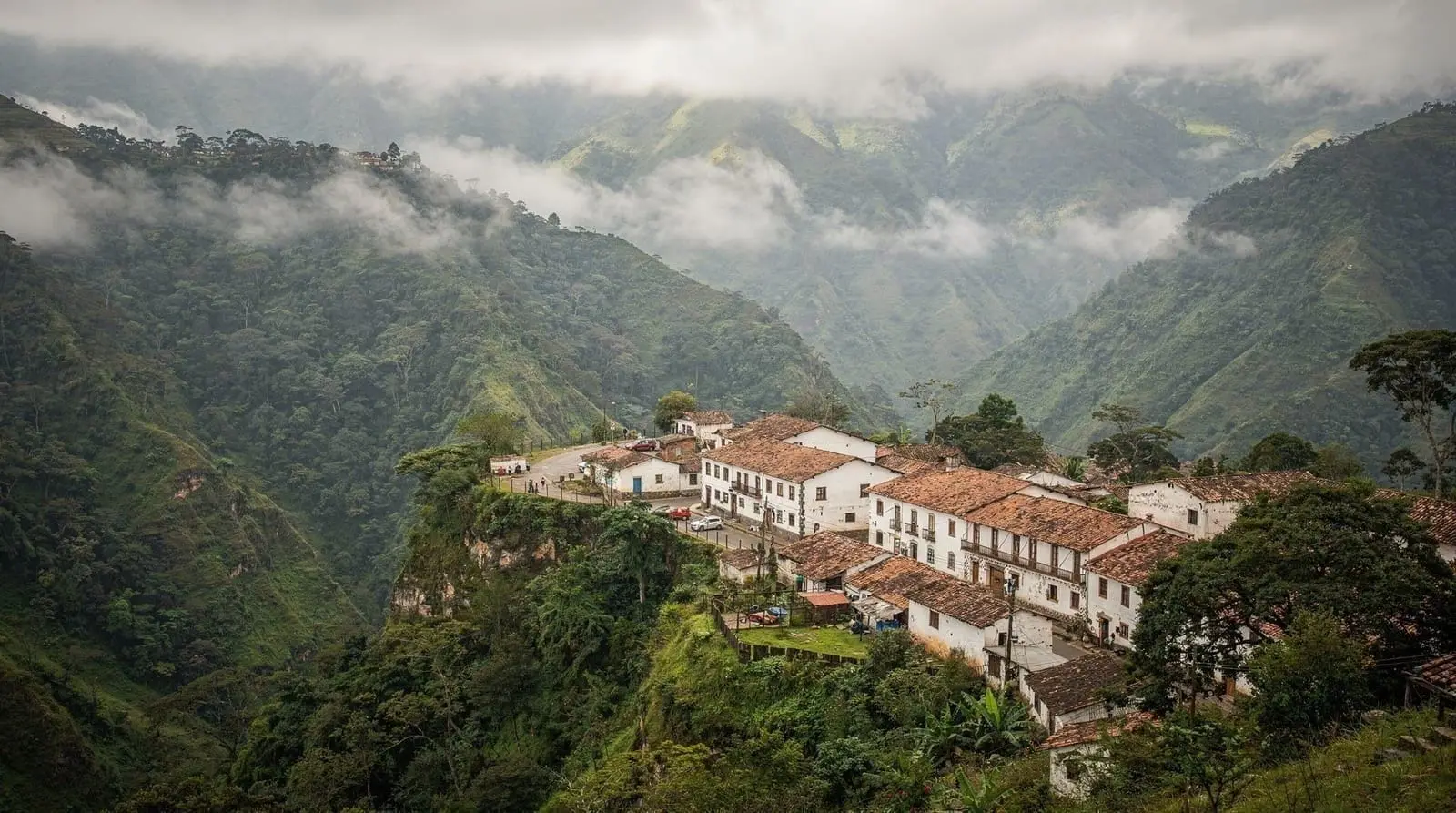
Chachapoyas
Chachapoyas is the base for Kuélap, Gocta waterfall, Karajía sarcophagi, and Revash mausoleums — Peru's most underrated archaeological region.
From Chachapoyas: Kuélap Fortress and Cable Car Tour
Quick facts
- Country
- Peru
- Altitude
- 2,335 m (7,661 ft)
- Currency
- Peruvian sol (S/) — USD widely used
- Best for
- Chachapoya archaeology, jungle waterfalls, cloud-forest scenery
Where cloud forest meets lost civilisation
There is a persistent tension in how Peru markets itself to the world. The Inca narrative — Machu Picchu, Cusco, the Sacred Valley — absorbs the vast majority of international attention, and the genuine astonishments further north are left largely to the visitors who specifically seek them out. Chachapoyas is the most consequential victim of this imbalance.
The Chachapoya people, often called the “Warriors of the Clouds” in tourist literature (a phrase borrowed loosely from Inca accounts of their conquest), built a civilisation across the steep cloud-forest ridges of the northern Andes that lasted roughly from 800 to 1500 CE. They fortified their settlements with stone walls, placed their dead in elaborately carved cliff sarcophagi at vertigo-inducing heights, and constructed a fortress-city at Kuélap that predates Machu Picchu by several centuries and covers a greater area. When the Incas finally subdued them in the 1470s, they deported large numbers of Chachapoya people to other parts of the empire — a standard Inca method of suppressing resistant populations.
The modern town of Chachapoyas, capital of the Amazonas region, sits at 2,335 m. It’s a pleasant, low-key Andean city with a well-preserved colonial Plaza de Armas, reliable enough infrastructure, and a small but growing tourism industry. From here, a half-dozen archaeological and natural sites are within day-trip range. Two days is the minimum to cover the essentials; four or five days allows a more relaxed pace and access to the more remote sites.
| Where | Amazonas region, northern Peru, cloud-forest highlands |
| Time needed | 2 days minimum; 4–5 for a relaxed pace |
| Altitude | 2,335 m (town); Kuélap ~3,000 m |
| Getting there | Fly to Chiclayo/Jaén then bus (7–9 hrs), or 22–24 hr direct bus from Lima |
| Best time | May–September (drier, but cloud forest stays moist year-round) |
How many days to plan for
| Days | What it covers |
|---|---|
| 2 days | Kuélap plus one other site (Gocta or Karajía) |
| 3 days | Adds the Revash/Leymebamba circuit |
| 4–5 days | Hiking rather than driving to Kuélap, a proper Gocta visit, and lesser-known sites like Jalca Grande |
Getting to Chachapoyas
Chachapoyas is genuinely remote. The nearest major hub is Chiclayo on the north coast, roughly 480 km away. From Lima, the most convenient approach is a flight to either Chiclayo or Jaén, followed by a bus (seven to nine hours to Chachapoyas). Direct overnight buses from Lima to Chachapoyas also exist via Tarapoto and the northern highland route, but the total journey typically runs 22–24 hours.
There is a small airport at Chachapoyas (Heli Ochoa Airport, IATA: CHH), and scheduled domestic flights from Lima — via LATAM or Star Perú, with connections at Chiclayo — operate intermittently. Check current schedules carefully; services have historically been inconsistent. Flying in via Chiclayo remains the more reliable option, adding an opportunity to visit Trujillo and the Moche archaeological sites on the way.
Allow extra travel time and do not plan Chachapoyas as a tight one-night detour. The roads in are genuinely spectacular — cloud forest, waterfalls visible from the window, hairpin descents — but they are slow.
Kuélap: the fortress above the clouds
Kuélap is the centrepiece of any visit to the region, and it deserves its reputation. The fortress-city sits at around 3,000 m on a ridge above the Utcubamba valley and consists of a massive stone platform — roughly 600 m long and 110 m wide — enclosed by walls up to 20 m high. Inside, the ruins of several hundred circular dwellings cover the platform, and several carved serpent-head reliefs still decorate the outer walls.
The scale is striking. Kuélap contains an estimated three times the stone volume of the Great Pyramid of Giza, and the site was occupied from roughly 500 CE through to the period of Inca and later Spanish conquest. It is genuinely large, genuinely old, and genuinely impressive — but it is not Machu Picchu.
The crowds are far smaller, the infrastructure is more basic, the on-site interpretation is limited, and the site itself requires imagination to read without a knowledgeable guide. Those who find Machu Picchu overcrowded and prefer their archaeology with silence will love Kuélap. Those expecting a similarly polished experience should calibrate their expectations. The full comparison is in the Kuélap vs Machu Picchu guide.
The cable car from the valley floor at Cocachimba operates, when functioning, and cuts a dramatic 4 km to the fortress entrance. It has experienced operational interruptions in recent years — always confirm its status with your operator or the Ministerio de Cultura website before building your plans around it. The traditional road access by bus and walking remains available when the cable car is suspended.
Kuélap Fortress and cable car tour from ChachapoyasAdmission to Kuélap is currently S/15 (around $4 USD) for foreign adults. The site is open daily from 8 am to 5 pm. Allow at least three hours on site; a full day with a guide is better. See the dedicated Kuélap destination page for logistics and the Kuélap fortress guide for deeper context.
Reaching Kuélap: cable car, road, or on foot
There are three practical ways to reach the fortress, and it’s worth understanding the trade-offs before you commit to one:
- Cable car from Cocachimba — when running, this is the most dramatic and fastest option: a 20-minute ride cutting 4 km across the valley with sweeping views. Check its status before building a plan around it, since it has had operational interruptions.
- Road access by bus/van — always available, reaching a car park a short walk from the entrance. The road is winding but reliable and is the fallback when the cable car is suspended.
- Hiking up from the valley — a genuine multi-hour climb favoured by trekkers who want to earn the view and experience the terrain the Chachapoya themselves would have known. This suits travellers with 4–5 days who are not in a hurry.
Most day-tour packages default to whichever of the first two is operating, so ask your operator directly which mode is included before booking if you have a preference.
Gocta: the waterfall that surprised the world
Gocta was not widely known to the outside world until 2006, when German explorer Stefan Ziemendorff measured it and announced it as one of the tallest waterfalls on Earth — subsequent surveys put it at around 771 m total height, making it one of the top five globally. Local communities in the Cocachimba and San Pablo de Valera valleys had known about it for generations.
The hike to the lower falls takes roughly two to three hours each way from Cocachimba, passing through cloud forest where you may spot spectacled bears (Andean bears), monkeys, and abundant birdlife including cock-of-the-rock. The full hike to both falls adds several hours. It is wet — by definition — and the cloud forest can be muddy; bring waterproofs and expect your shoes to be dirty.
Full-day Gocta waterfall tour from ChachapoyasThe round-trip distance to the lower falls and back is roughly 10 km. You can hike independently from Cocachimba village (S/10 entry to the trail) or join a guided day trip from Chachapoyas, which handles the 45-minute transport each way and typically includes a local guide. The guided option is recommended for first-timers navigating the junction trails.
Karajía: sarcophagi on a cliff face
The Karajía sarcophagi are among the most visually arresting funerary monuments in the Americas. Seven elongated clay figures — each roughly 2.5 m tall, painted white, and depicting ancestors in a squatting position — are wedged into a narrow ledge cut into a near-vertical limestone cliff at around 2,800 m. They have occupied that ledge, largely undisturbed, for roughly 500 years.
The hike to the viewpoint takes about 45 minutes each way from the village of Cruzpata, descending into a canyon before climbing back up to the cliff-face viewpoint. You cannot stand next to the sarcophagi — they’re visible from below at distance — but the visual effect of the figures staring out across the valley is deeply strange and memorable.
Karajía sarcophagi and Quiocta caves tour from ChachapoyasKarajía is typically combined with a visit to Quiocta Caves, a limestone cavern system with stalactites and an entrance used as a Chachapoya burial site. The combined day trip from Chachapoyas is among the most satisfying excursions in the region.
Revash and Leymebamba
Revash is another Chachapoya cliff-side burial site, this one involving miniature house-shaped mausoleums painted ochre-yellow and tucked into overhanging limestone. The mausoleums sit in a vertical cliff in the Utcubamba valley, about 75 km south of Chachapoyas near the village of Santo Tomás, and are reached by a roughly two-hour hike from the road. The site is smaller and quieter than Karajía but feels somehow more intimate — you can get closer, and the human scale of the painted houses is affecting.
Leymebamba, a small town about 80 km south of Chachapoyas, hosts the Leymebamba Museum, which holds more than 200 mummies recovered from the clifftop site of Laguna de los Cóndores in 1997. The mummies were found in excellent preservation, wrapped in textiles, and the museum displays them — along with associated ceramics, wooden objects, and Inca quipus — in purpose-built, climate-controlled cases. It’s one of the most significant archaeological museums in Peru and draws very few visitors relative to its importance.
The standard day trip from Chachapoyas combines Revash and Leymebamba and is a full day by the time transport is factored in.
What a 3-day trip roughly costs
| Item | Approximate cost |
|---|---|
| Flight Lima–Chiclayo/Jaén return | $80–150 |
| Bus Chiclayo/Jaén–Chachapoyas return | S/60–100 |
| Budget guesthouse, 3 nights | S/120–210 |
| Kuélap day tour with guide | S/80–120 |
| Gocta or Karajía day tour | S/60–100 |
| Meals, 3 days | S/150–250 |
Figures are rough guides rather than fixed prices — always confirm current rates with your operator, especially for flights, which vary considerably by season and how far ahead you book.
Practical information
Where to stay: The main accommodation zone in Chachapoyas runs along Jirón Amazonas and the streets around the Plaza de Armas. Budget guesthouses charge S/40–70 per night; the mid-range hotels run S/150–250. Quality has improved significantly in recent years, and several well-reviewed boutique hotels have opened. Book ahead in July and August when the dry season draws the highest visitor numbers.
What to eat: The regional speciality is cecina (dried pork, usually served with fried yuca), and the town has a handful of decent restaurants serving both local food and the Peruvian tourist staples. Expect to pay S/15–30 per main course. The market on Calle Ortiz Arrieta sells fresh fruit and local cheeses.
Internet and communication: The town centre has reliable 4G and WiFi in most hotels. Coverage drops sharply once you leave the valley.
Operators: Several well-regarded tour agencies operate from Chachapoyas, including Turismo Explorer and Vilaya Tours. For multi-day treks or specialised archaeological tours, book before you arrive, particularly in high season.
The town itself: orientation and local life
Chachapoyas is an unexpectedly pleasant place to spend a few days. The Plaza de Armas is handsome and well-maintained, lined with yellow colonial buildings housing cafés and travel agencies. The town is small enough to walk across in 20 minutes, which makes logistics straightforward.
One underrated stop is the Centro Mallqui (also called the Instituto de la Momia Andina), a research centre near the Plaza that holds and studies Andean mummies. Opening hours vary; call ahead. The Mirador Luya Urco, a short taxi ride up the hill east of town, frames the city against the valley and is worth the trip for orientation.
Several walking trails lead out of town into the cloud forest above Chachapoyas. The cloudforest here transitions from dry highland scrub to humid forest within minutes of elevation gain, and the birdwatching is excellent for those with binoculars — cock-of-the-rock, tanagers, and hummingbirds are all possible close to town. The morning hours, before day-trip transport departs, are the best window for this.
Local operators also run lesser-known circuits to sites like La Jalca Grande — a colonial-era village with continuous occupation going back to Chachapoya times — and the Cerro Olán cliff village, which is rarely visited and requires a guide to find. These niche excursions are what make Chachapoyas worth four or five days rather than two.
How many days do you need?
Two days is the minimum to see Kuélap and one other site (Gocta or Karajía). Three days lets you add the Revash/Leymebamba circuit. Four to five days suits anyone who wants to hike rather than drive to Kuélap, see Gocta properly, and explore the lesser-known sites around Jalca Grande or the Gran Saposoa cliff villages.
The journey from Lima is long enough that Chachapoyas rarely works as a one-night stop. Most visitors who arrive report wishing they’d stayed longer.
Connecting to the rest of northern Peru
Chachapoyas sits at the heart of a possible northern Peru circuit that might include Trujillo (Chan Chan, Moche temples) and Cajamarca (where the Incas captured the last Inca emperor Atahualpa). The full circuit is challenging by ground but rewarding; see the itineraries page for suggested route options. For general orientation on the northern highlands, the things to do hub provides a broader overview.
Frequently asked questions about Chachapoyas
Is Chachapoyas worth the long journey from Lima?
For visitors with an interest in pre-Inca archaeology, cloud-forest nature, or simply getting off the beaten path, Chachapoyas is absolutely worth the journey. The combination of Kuélap, Gocta, Karajía, and Leymebamba represents a concentration of genuine, undervisited wonders. The travel time is the real barrier — budget at least two days each way for land transport, or fly via Chiclayo.
Is the Kuélap cable car currently operating?
The cable car has experienced operational interruptions. Before visiting, check with your hotel, a local operator, or the Ministerio de Cultura. Alternative road access to the site is always available, but the cable car adds a genuinely dramatic approach and is worth taking if it’s running.
How does Kuélap compare to Machu Picchu?
Kuélap is older, larger by area, and far less visited than Machu Picchu. It lacks Machu Picchu’s dramatic visual setting (glaciers, the classic postcard view), its polished infrastructure, and the density of interpretation. What it offers instead is the experience of a major pre-Columbian site largely to yourself, at low cost, with the surrounding cloud forest still intact. See the full comparison at Kuélap vs Machu Picchu.
How long is the hike to Gocta waterfall?
The hike to the lower falls from Cocachimba village takes roughly two to two-and-a-half hours each way, covering around 10 km round trip. The cloud forest trail is well-marked but can be slippery. To reach both upper and lower falls adds several more hours. Waterproof footwear and clothing are recommended year-round.
What is the best time of year to visit Chachapoyas?
The drier months (May through September) offer more reliable trail conditions and better visibility. However, the cloud forest is always moist; even in the dry season, morning cloud and occasional rain are normal. The wet season (November through April) sees heavier, more sustained rain and occasional trail closures. July and August are the busiest months.
Can I visit Karajía independently?
The Karajía sarcophagi can be reached independently with your own transport — a combi from Chachapoyas towards Luya drops you near Cruzpata, from where the trail climbs about 45 minutes to the viewpoint. Most visitors join a day trip for convenience and to have a guide who can explain the cultural context. Entry to the site costs S/5.
How far in advance should I book accommodation in Chachapoyas?
For July and August, booking two to three weeks in advance is sensible for the better hotels. Outside peak season, last-minute bookings are usually possible. For multi-day guided treks or specialised tours (Laguna de los Cóndores, Gran Saposoa), contact operators at least a month in advance as they require preparation time.
Should I hike to Kuélap or take the cable car?
Hike if you have 4–5 days and want the fuller cloud-forest experience; the multi-hour climb rewards patience with terrain and views the vehicle approach skips. Take the cable car (when running) or the road if your time is limited to two or three days — it is the far faster option and still delivers dramatic views on the approach.
Is Chachapoyas suitable for a first-time Peru visitor?
It works best as an addition to a Peru trip rather than a first destination, since the long travel time from Lima and the lack of Cusco-level infrastructure suit travellers who already have some Peru experience or a strong specific interest in archaeology and cloud forest. First-timers with limited days are generally better served prioritising Cusco and Machu Picchu, then returning for Chachapoyas on a later trip.
Top experiences
Bookable activities with verified prices and instant confirmation on GetYourGuide.


