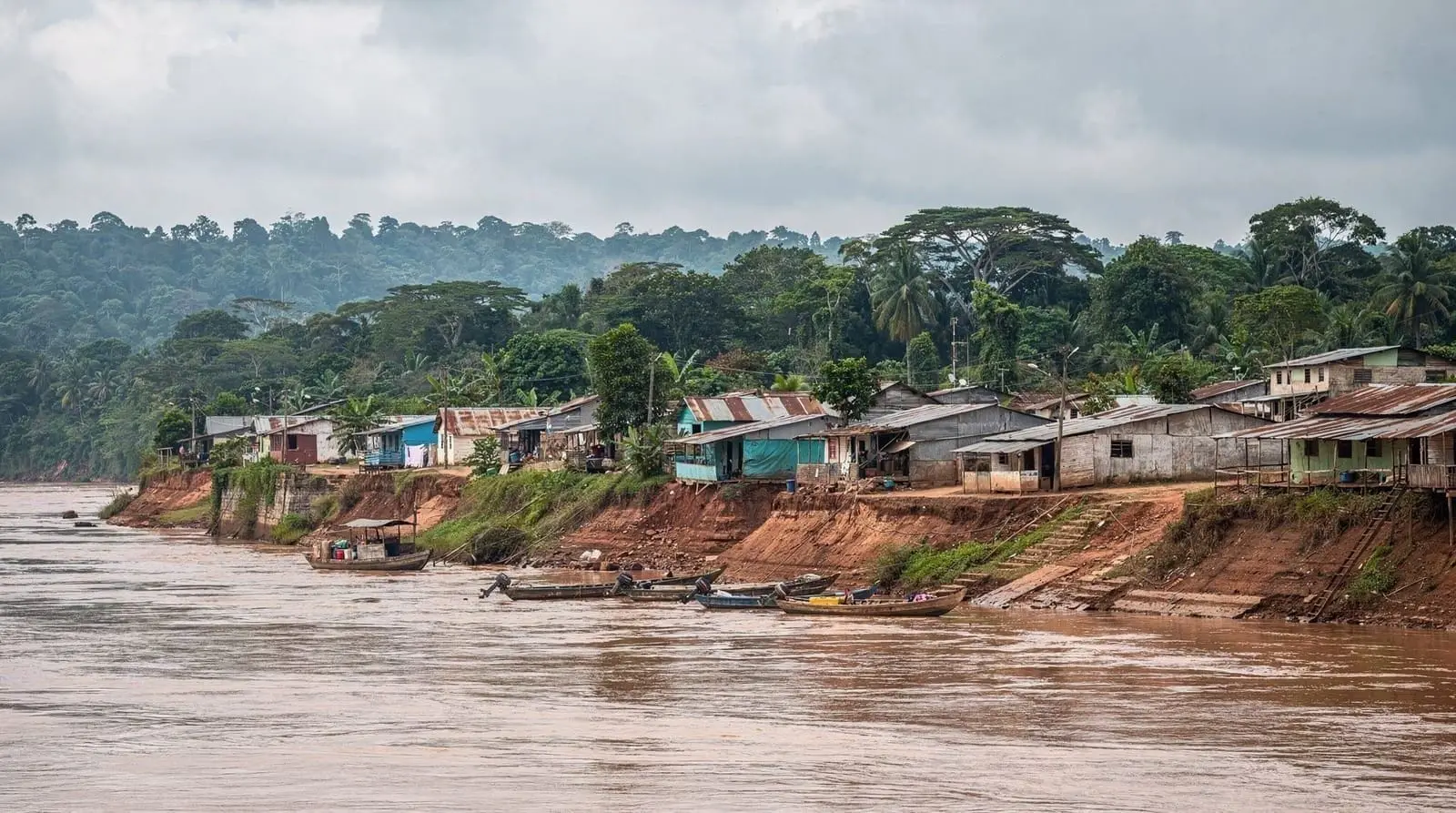
Puerto Maldonado
Puerto Maldonado is the easy-access gateway to Peru's southern Amazon — a short flight from Cusco, surrounded by Tambopata's lodges, lakes, and clay licks.
Puerto Maldonado: 3-Day Amazon Jungle Tour with Lodging
Quick facts
- Country
- Peru (Madre de Dios region)
- Altitude
- 183 m (600 ft)
- Currency
- Peruvian sol (S/) — USD accepted by lodges
- Best for
- Accessible Amazon lodges, Tambopata, clay licks, oxbow lakes
The Amazon you can reach in 35 minutes
If you are travelling Peru’s classic southern circuit and want a genuine taste of the Amazon without committing days to getting there, Puerto Maldonado is the answer almost everyone settles on. The capital of the Madre de Dios region sits at the meeting of the Tambopata and Madre de Dios rivers, and its small Padre Aldamiz Airport is just a 35-minute flight from Cusco. That single fact shapes everything about the town: it is the easiest serious rainforest in Peru to access, and it sees the bulk of travellers who fold the jungle into a one- or two-week trip alongside Machu Picchu and the Sacred Valley.
Puerto Maldonado itself is not a destination so much as a staging post. It is a hot, low, sprawling frontier town of motorcycle taxis, Brazil-nut warehouses, and a riverfront where boats load supplies for lodges upriver. Most visitors spend almost no time in the town proper — you land, you are collected, and within an hour or two you are on a boat heading up the Tambopata or Madre de Dios river toward a lodge. That is exactly as it should be. The reason to come is what lies beyond the town: the Tambopata National Reserve and the buffer-zone forest around it, some of the most biodiverse on the planet.
This page covers the gateway — how to get here, when to come, how the lodge system works, and the honest tradeoffs versus the northern Amazon at Iquitos. For the protected reserve itself, its clay licks and lakes, see the dedicated Tambopata page.
| Where | Madre de Dios, southern Peru — 35 min flight from Cusco |
| Cost | Around $250-450 USD for a 3-day lodge package, plus flights |
| Time needed | 3-4 days including travel |
| Getting there | LATAM/Sky flight from Cusco, or overnight bus via the Interoceanic Highway |
| Best time | April to October (dry season, best clay-lick activity) |
For a fuller planning rundown before you book, the Puerto Maldonado guide covers logistics in more depth, and what to pack for the Amazon is worth reading before you fly.
Getting to Puerto Maldonado
From Cusco by air. This is how the overwhelming majority of visitors arrive, and it is the sensible choice. LATAM and Sky Airline fly Cusco–Puerto Maldonado in about 35 minutes; some routings continue from or connect through Lima. Booked a few weeks ahead, one-way fares run roughly $50–110 USD; last-minute or peak-season seats can climb higher. The descent over unbroken canopy as the plane drops from the Andes into the lowlands is one of the more dramatic short flights in South America.
From Cusco by road. The Interoceanic Highway connects Cusco to Puerto Maldonado, and buses make the run in roughly 10 to 12 hours overnight. This is far cheaper than flying — around S/40–80 (about $11–22 USD) — and the road is fully paved, but it is a long haul down from the high Andes through cloud forest, and most travellers find the flight worth the difference. The bus is a reasonable option if you are watching costs closely or want to break the journey at the cloud-forest town of Quincemil.
The airport transfer. Padre Aldamiz Airport is about 7 km from the centre. If you have booked a lodge package, your operator collects you at the airport and handles everything from there — this is standard and included. Independent arrivals can take a mototaxi into town for around S/8–12.
A practical note on luggage: most lodges ask you to leave the bulk of your bags in secure storage in town (free, arranged by the operator) and bring only a small bag to the lodge by boat. Pack a daypack with essentials and plan around this.
When to visit: dry season versus the floods
Madre de Dios has a wet-and-dry rhythm like the rest of the Amazon, but the practical advice for Puerto Maldonado is fairly clear.
Dry season (roughly April to October) is the recommended window for most visitors. Trails are walkable, rivers are at moderate levels, mosquitoes are somewhat less aggressive, and wildlife is easier to find. This period also brings the friajes — short cold snaps when winds from the far south drop temperatures sharply for a day or two, sometimes to the low teens Celsius. They pass quickly but can surprise travellers who packed only for heat, so bring one warm layer even in the dry months. The macaw clay licks are most active in the dry season, broadly May to September.
Wet season (roughly November to March) brings heavy rain, higher rivers, and lush, dramatic forest. Some trails flood and become impassable, and boat access to certain lakes changes. It is not a bad time to visit — the forest is at its most alive and lodges are quieter and cheaper — but if your priority is reliable trail access and clay-lick activity, the dry months are the safer bet.
Whatever the season, this is equatorial lowland rainforest: expect heat, humidity, sudden downpours, and insects year-round. None of that is a reason to stay away; it is simply the environment you are visiting.
| Season | Months | Trails & rivers | Wildlife | Crowds & prices |
|---|---|---|---|---|
| Dry season | April-October | Walkable, lower water | Clay licks most active May-September | Busiest, higher lodge rates |
| Shoulder | April, October | Mixed conditions | Good all-round chances | Quieter, moderate prices |
| Wet season | November-March | Some trails flood | Lush forest, fewer clay-lick visits | Quietest, cheapest lodges |
See best time to visit the Amazon for how this compares with the northern jungle around Iquitos.
Health: the honest version
Madre de Dios is a yellow-fever and malaria zone, and it is worth being straight about this rather than vague.
Yellow fever vaccination is recommended for the Amazon lowlands, and you should get it at least 10 days before travel for it to be effective. Carry the international vaccination certificate (the yellow card); it is occasionally requested. A single dose now provides lifelong protection for most people.
Malaria risk exists in Madre de Dios, though it is lower than in some other tropical regions. Whether to take antimalarial prophylaxis is a decision to make with a travel-health doctor based on your itinerary, the season, and your own health — not something to settle from a website. What is universal advice: use a repellent containing at least 30% DEET, wear long sleeves and trousers at dawn and dusk when biting insects are most active, and treat clothing with permethrin if you can.
Dengue is present in the region and is mosquito-borne with no vaccine for most travellers, so the same bite-avoidance measures matter. None of this is exotic or alarming — it is the routine preparation any responsible Amazon trip involves.
How the lodge system works
Almost everyone who visits Puerto Maldonado stays at a jungle lodge upriver, sold as an all-inclusive package. Understanding how these packages work saves money and disappointment.
A typical package covers airport pickup, the river transfer, accommodation, all meals, and guided activities — morning and afternoon excursions led by a naturalist guide, plus night walks and boat trips. Lodges are graded loosely by distance from town and by comfort. The closest lodges, 30 to 60 minutes upriver, are convenient and cheaper but see more day-tripper traffic and somewhat habituated wildlife. The deeper lodges, two to four hours up the Tambopata toward the reserve proper, sit in richer forest and offer better odds of meaningful wildlife encounters — but cost more and demand more time.
Puerto Maldonado: 3-day Amazon jungle tour with lodgingThe single biggest determinant of your experience is the guide, not the thread count of the sheets. A genuinely knowledgeable naturalist who can find and explain wildlife is worth far more than a smarter lodge with a mediocre guide. Before booking, ask specifically whether guides are certified naturalists with real ecological knowledge and whether group sizes are small (six to eight is good; large groups scatter wildlife and limit your time at sightings).
Established operators in the area include Rainforest Expeditions (which runs Posada Amazonas, Refugio Amazonas, and the deep-reserve Tambopata Research Center), Inkaterra, and Wasai. There are also many cheaper local operators; quality among these varies enormously, so read recent independent reviews carefully and be wary of prices that look too good — they usually reflect shorter activities, larger groups, or weaker guides.
Tambopata Peruvian Amazon jungle: 3 days / 2 nightsWhat you actually do here
A standard three-day, two-night programme out of Puerto Maldonado typically includes a visit to an oxbow lake (Lake Sandoval is the famous one, with its resident giant otters), a clay lick for parrots or macaws, night walks to spot caiman and nocturnal creatures, a canopy tower for birds at dawn, and forest walks focused on plants, insects, and whatever larger animals reveal themselves. Most lodges also offer optional add-ons like piranha fishing or a visit to a Brazil-nut concession to see how the region’s signature crop is harvested.
A realistic word on wildlife: this is not a safari park. You will reliably see birds — parrots, macaws, toucans, hoatzins — and the clay licks can be genuinely spectacular when active. Caiman, monkeys, and giant otters at Sandoval are likely with a good guide. Jaguars, tapirs, and giant anteaters exist here but are rare sightings that most visitors do not get. Manage your expectations toward the smaller wonders — the insects, frogs, plants, and birdlife — and you will not be disappointed; come expecting big cats and you may be.
Tambopata: multi-day Amazon rainforest tour with a local guideFour days rather than three makes a real difference. The extra day allows a deeper lodge, more time at the reserve’s interior lakes, and the patience that wildlife watching rewards. If your schedule can spare it, the upgrade is worth more than almost any other change you could make to the trip.
A useful comparison point is Tambopata against Manu: both sit in Madre de Dios, but they suit different travellers, and reading the tradeoffs before you book saves regret once you are already in the forest.
Choosing a responsible lodge
Not every operator in Madre de Dios treats the forest the same way, and the choice you make genuinely matters to conservation outcomes here. Rainforest Expeditions, for instance, co-manages part of its concession with local communities and funds long-running macaw research; other established names reinvest in trail maintenance and guide training rather than cutting corners on group size.
Ask directly whether the lodge operates inside a titled conservation concession or the buffer zone, whether it employs local Ese’Eja or ribereño staff as guides (not just porters), and whether it limits numbers at sensitive sites like clay licks and canopy towers. A lodge that welcomes these questions is usually one worth booking; one that deflects them is a warning sign.
It is also worth comparing Puerto Maldonado with Manu National Park, Peru’s most pristine and strictly protected Amazon reserve. Manu sees far fewer visitors, requires longer, more expensive multi-day logistics, and rewards travellers who want depth over convenience — genuinely wild territory rather than a well-trodden lodge circuit. If Tambopata’s day-tripper density around the closer lodges puts you off, Manu is the serious alternative, though it demands more time and budget.
Tipping is also worth planning for honestly. Guides and boat drivers are typically tipped separately from the package price — a rough guide is $10-15 USD per guest per day for the guide, split between the crew, paid in cash at the end of the stay. It is not compulsory, but it is customary and forms a meaningful part of local staff income, so bring small denominations of soles or dollars rather than assuming it can be added to a card payment.
Puerto Maldonado versus Iquitos
Travellers planning the Peruvian Amazon often wrestle with the choice between Puerto Maldonado in the south and Iquitos in the north. Both are excellent; they are simply different.
Puerto Maldonado wins on convenience. Its 35-minute flight from Cusco makes it the natural Amazon component of a southern Peru itinerary, and its terra-firme forest offers superb trail-based wildlife watching, clay licks, and Lake Sandoval. Iquitos, reachable only by air or multi-day boat, sits on the main Amazon River and is the base for genuine multi-day river cruises and the vast Pacaya-Samiria reserve — a more committing, more aquatic Amazon experience. As a rough rule: choose Puerto Maldonado if you want the lowland jungle as an efficient extension of a Cusco trip; choose Iquitos if the great river itself, cruises, and pink dolphins are what draw you, and you have the days to spare.
For where Puerto Maldonado fits in a wider route — alongside Cusco, the Sacred Valley, and Machu Picchu — the itineraries section sets out suggested circuits, and the tools page has flight search and planning resources.
Practical information
Where to stay in town: Most visitors skip town accommodation entirely and go straight to a lodge. If you arrive late or leave early and need a night in Puerto Maldonado, options like Wasai Maldonado Eco Lodge (in town, despite the name) and a handful of mid-range hotels around the Plaza de Armas cover the need. Expect $30–70 USD for a decent room.
Getting around town: Mototaxis are everywhere and cost S/3–8 for short trips. You will rarely need them if you are on a lodge package.
Money: There are ATMs in the centre, but they can run dry on weekends and they are scarce-to-nonexistent at the lodges. Bring enough cash (soles or USD) for tips, drinks, and incidentals, as lodges generally cannot process cards in the forest.
What to pack: Lightweight long sleeves and trousers, a wide-brimmed hat, a rain layer, rubber boots (most lodges lend these — confirm your size), a strong torch or headlamp, binoculars (the most useful single item you can bring), high-DEET repellent, and one warm layer for a possible friaje.
Frequently asked questions about Puerto Maldonado
How far is Puerto Maldonado from Cusco?
By air it is about a 35-minute flight, which is why most travellers add it to a Cusco-based itinerary. By road, on the paved Interoceanic Highway, it is roughly 10 to 12 hours by overnight bus. The flight is inexpensive when booked ahead and saves the better part of a day each way, so it is the choice for most visitors.
Is Puerto Maldonado worth visiting, or should I go to Iquitos instead?
Both are excellent and genuinely different. Puerto Maldonado is far easier to reach from Cusco and offers superb trail-based jungle, clay licks, and Lake Sandoval. Iquitos sits on the main Amazon River and is the base for multi-day cruises, Pacaya-Samiria, and pink dolphins, but takes more time to reach. Choose Puerto Maldonado for an efficient Amazon add-on to a southern Peru trip; choose Iquitos if the river itself and cruises are your priority.
Do I need a yellow fever vaccination for Puerto Maldonado?
A yellow fever vaccination is recommended for Peru’s Amazon lowlands, including Madre de Dios. Get it at least 10 days before travel for it to take effect, and carry the international vaccination certificate, which is occasionally requested. A single dose provides lifelong protection for most people. Discuss malaria prophylaxis separately with a travel-health doctor.
How many days do I need in Puerto Maldonado?
Three days and two nights is the common minimum and gives a real taste of the rainforest. Four days and three nights is meaningfully better, allowing a deeper lodge, more time at interior lakes, and the patience wildlife watching rewards. Anything less than two nights spends too much of your time in transit relative to time in the forest.
What wildlife can I realistically expect to see?
You will reliably see abundant birdlife — parrots, macaws, toucans, hoatzins — and active clay licks can be spectacular. Caiman, several monkey species, and giant otters at Lake Sandoval are likely with a good guide. Larger mammals such as jaguars, tapirs, and giant anteaters live here but are rare sightings most visitors do not get. Set your expectations toward the smaller wonders and a good day will exceed them.
When is the best time to visit Puerto Maldonado?
The dry season, roughly April to October, is best for trail access, lower rivers, and clay-lick activity (most reliable May to September). The wet season from November to March brings heavier rain, higher water, and lusher forest, with quieter, cheaper lodges but some flooded trails. Even in the dry months, pack one warm layer in case of a friaje cold snap.
Is it safe?
Puerto Maldonado is a working frontier town and is generally safe for travellers taking normal urban precautions. Most visitors spend little time in town and travel directly to and from their lodge with the operator. The real hazards are environmental — heat, sun, insects, and river conditions — and these are managed by going with a responsible operator and following your guide’s advice.
Puerto Maldonado or Manu National Park?
Puerto Maldonado wins on speed and cost — a 35-minute flight and an established lodge network make it the practical choice for most itineraries. Manu National Park is more pristine and less visited, but reaching its interior takes several extra days and a bigger budget, with logistics that are harder to arrange independently. Choose Puerto Maldonado if your Amazon time is limited to three or four days; choose Manu if you can dedicate a week or more to a deeper, wilder experience.
Top experiences
Bookable activities with verified prices and instant confirmation on GetYourGuide.

