Iquitos
Iquitos is Peru's Amazon capital — accessible only by plane or boat, it's the base for jungle lodges, river cruises, Pacaya-Samiria, and pink dolphins.
Iquitos: 3-Day, 2-Night Guided Amazon Jungle Tour
Quick facts
- Country
- Peru
- Altitude
- 106 m (348 ft)
- Currency
- Peruvian sol (S/) — USD widely used
- Best for
- Amazon river cruises, jungle lodges, wildlife, pink dolphins
A city the road never reached
There are roughly a million people living in Iquitos, and none of them can reach the rest of Peru by land. The city sits at the confluence of the Nanay, Itaya, and Amazon rivers in the Loreto region of northeastern Peru, deep enough in the jungle that no road has ever connected it to the national highway network. You arrive by plane from Lima (two hours) or by boat up the Amazon from Brazil or downriver from Pucallpa (three to ten days, depending on the vessel and the season). In either case, arrival by river or low aircraft window over an unbroken green canopy makes clear immediately that this is a different Peru.
Iquitos exists because of rubber. During the late nineteenth-century rubber boom, the city became fabulously wealthy as Amazonian rubber flooded global markets. The legacy is visible today in the ornate Portuguese azulejo tiles that cover the façade of buildings on the Malecón Tarapacá and in the extraordinary Casa de Fierro — an iron-framed building attributed (almost certainly incorrectly) to Gustave Eiffel — that still stands in the Plaza de Armas. When rubber prices collapsed after 1912, Iquitos declined rapidly, but its role as the principal commercial hub of the Peruvian Amazon endured.
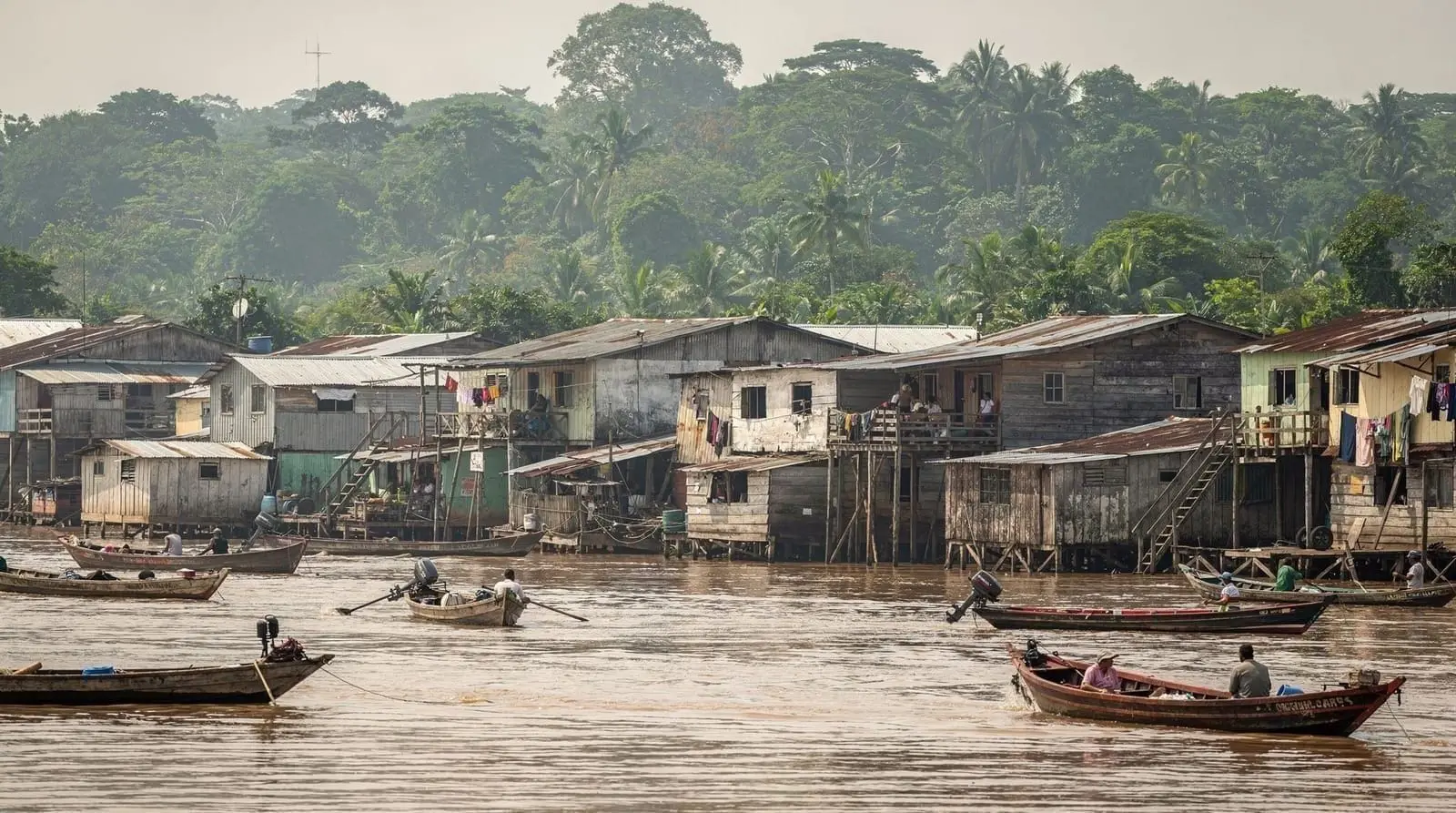
Today it is a city of contradictions. Motorcycles and mototaxis have almost entirely replaced cars on the narrow streets, giving the city a particular clamorous energy. The floating neighbourhood of Belén, built on rafts that rise and fall with the river, is unlike anywhere else in the country. The local cuisine, built around river fish like paiche (arapaima, one of the largest freshwater fish in the world), juane (rice and chicken wrapped in bijao leaves), and the psychedelic local fruit known as camu-camu, is genuinely distinct from highland Peruvian food. And around the city, in every direction, the Amazon spreads out in what feels like all the world’s freshwater concentrated in one place.
| Where | Loreto region, northeastern Peruvian Amazon |
| Cost | Flights from Lima $60–200+; lodge packages roughly $80–200+ per day |
| Time needed | 3 days minimum; 5–7 days for a Pacaya-Samiria cruise |
| Getting there | 2-hour flight from Lima (no road access) |
| Best time | June to November (lower water, better wildlife access) |
Getting to Iquitos
Most visitors arrive by air. LATAM and Star Perú operate several daily flights from Lima’s Jorge Chávez Airport; flight time is approximately two hours and fares range from $60 to $200+ USD depending on advance purchase and season. Iquitos’s Francisco Secada Vignetta Airport is about 5 km from the city centre; mototaxi transfer costs around S/10–15.
Arriving by boat is a far longer proposition. The passenger cargo ferry from Pucallpa (accessible by bus from Lima via Huánuco) takes three to four days depending on the season and the specific vessel. Hammock spaces cost around S/80–100; private cabins run S/150–250. The journey is the experience — river life, communities, birds, and the slow widening of the river as you approach Iquitos. It’s recommended as a one-way option for travellers with time, not as a round trip.
There is no practical direct boat connection from Brazil’s Tabatinga to Iquitos that operates on a normal tourist schedule; this route exists but is mostly freight, and the journey takes several days. Some long-distance travellers use it crossing between Colombia and Peru, but it requires significant planning.
When to visit: water levels and wildlife
The Amazon in the Iquitos region is driven by a simple seasonal logic that most guides simplify as “wet season” and “dry season,” but the reality is a rhythm of flooding and recession that shapes everything.
High water season (roughly December through May): The rivers flood, sometimes dramatically — floodplain lakes expand, trees stand in metres of water, and the jungle becomes navigable by small boat in places that are dry land in other months. Fishing is harder because fish disperse into the flooded forest. Caiman and some birds are more accessible. Mosquito populations increase significantly.
Low water season (roughly June through November): Rivers recede, beaches and river banks appear, wildlife concentrates around remaining water sources. Fishing improves, including for piranha. Hiking jungle trails is easier. Caiman congregate visibly at night. The Pacaya-Samiria reserve is generally more rewarding at lower water levels because you can access the interior oxbow lakes by canoe. This is the recommended period for most visitors.
Neither season is “wrong.” The flooding period has its own spectacular quality, and a multi-day cruise at high water offers experiences unavailable in the dry months. But if you’re optimising for wildlife viewing and lodge-based exploration, June to November is the better window.
Regardless of season, bring: DEET-containing mosquito repellent (high-strength, at least 30% DEET), permethrin-treated clothing if possible, long-sleeved shirts and trousers for evening, a yellow fever vaccination (required, and required to show documentation in some Amazonian countries), and malaria prophylaxis discussed with your doctor before departure. This is not scaremongering — it is the actual preparation the region requires.
Jungle lodges versus river cruises
The central decision facing any visitor to Iquitos is whether to base yourself at a jungle lodge or join a river cruise. Both have genuine merit and the right choice depends on your priorities.
Jungle lodges sit at fixed locations on the river, typically 30–60 minutes by motorboat from Iquitos. They offer a consistent base for daily guided walks, night hikes, canoe trips, and wildlife observation. The best lodges have resident naturalist guides with real expertise in Amazonian ecology. You sleep in the forest, which has its own particular quality — the night sounds, the pre-dawn bird chorus. The tradeoff is that you cover a limited geographic area, and the wildlife around lodges that have operated for years can be slightly habituated to human presence.
River cruises move through the river system over multiple days, accessing different habitats, villages, and oxbow lakes. The Pacaya-Samiria reserve is best explored by multi-day boat from Iquitos. Cruises range from comfortable passenger boats with modest cabins to genuine luxury expedition vessels. The experience of sleeping on the river, waking to mist on the water, and exploring each day in a different location is different in character from a lodge stay. The tradeoff is less immersion in a single ecosystem and more time on the boat between stops.
3-day, 2-night guided Amazon jungle tour from IquitosFor a first visit of three days, a good lodge within day-trip range of Iquitos is usually the most practical option. The Amazon Explorer lodge and Amazon Yarapa River Lodge are among those with established reputations; request detailed information about guiding quality before booking. For the Pacaya-Samiria reserve specifically, a multi-day cruise is the most rewarding approach.
Pacaya-Samiria: the other Amazon reserve
Most visitors to the Peruvian Amazon think of Manu National Park or Puerto Maldonado in Madre de Dios, but Pacaya-Samiria in Loreto is equally impressive and less visited. See the Iquitos vs Puerto Maldonado guide if you are deciding between Peru’s two Amazon gateways. The reserve covers 2.1 million hectares — roughly the size of El Salvador — and encompasses the floodplain between the Ucayali and Marañón rivers, north and west of Iquitos. It is one of the most biodiverse wetland ecosystems on Earth, home to manatees, river otters, two species of river dolphin (pink and grey), anacondas, electric eels, giant otters, and more than 500 bird species.
Access to the interior of Pacaya-Samiria requires a licensed guide and a registered operator. Multi-day cruises from Iquitos penetrating the reserve’s canals and oxbow lakes are the standard approach; the minimum meaningful visit is three days, and five to seven days reveals far more.
3-day Pacaya-Samiria National Reserve tour from IquitosEntry to the reserve requires a fee (currently S/60 per person per day) in addition to the cost of the tour. Permits are arranged by your operator. All trash must be carried out; the fragility of the ecosystem is taken seriously by the better operators.
Pink dolphins: the Amazon’s strangest resident
The boto, or pink river dolphin (Inia geoffrensis), is one of the most distinctive animals of the South American Amazon. Adults can reach 2.5 m in length and weigh up to 180 kg; the males, older and more battle-scarred, take on a deeper pink colouring from repeated skin irritation. They are not naturally pink at birth — the colour comes with age and injury — and the effect of seeing a large adult surface alongside a canoe is genuinely striking.
Pink dolphins are present in the waterways around Iquitos throughout the year. They can be reliably seen on lodge trips and day excursions that include river observation time. They are less predictable than grey dolphins (Sotalia fluviatilis), which also inhabit these waters, but patience and a good guide generally produce sightings.
Swimming with pink dolphins is offered by some operators; the ethics of this are contested, as it can disrupt dolphin behaviour and expose both humans and dolphins to risk. Most reputable naturalist operators now discourage it.
Monkey Island and the Belén market
Two popular day excursions from Iquitos require little advance planning. Monkey Island (Isla de los Monos), about 90 minutes upriver, is a sanctuary for rescued and semi-wild monkeys — woolly monkeys, capuchins, squirrel monkeys — that habituate to humans enough to climb on visitors. It is unabashedly touristic but consistently popular, particularly with families. The boat journey is an experience in itself.
Full-day Monkey Island tour from IquitosThe Belén market and floating neighbourhood, in the southern part of Iquitos near the Itaya River, is more complex. The floating section — a community built on balsa-wood rafts, rising and falling with the river — is a genuine urban phenomenon, not a tourist attraction. The market above it sells everything from jungle medicinal plants and live turtles (illegally; be aware) to local fruits and dried piranhas. It is vivid, crowded, and best visited with a local guide who can navigate the less comfortable ethical terrain. Go in the morning when the market is most active; go with someone who knows it.
Iquitos city: the rubber boom legacy
Iquitos is more architecturally interesting than its reputation suggests. The Malecón Tarapacá, the riverfront promenade, is lined with rubber-era buildings decorated with ceramic tiles imported from Portugal and Spain. Several have been restored; others are gorgeously decayed. The Casa de Fierro in the Plaza de Armas, whatever its true construction history, is a genuine curiosity — an iron-framed structure assembled from prefabricated parts, unusual in any context but extraordinary in the middle of the Amazon.
The Museo Amazónico on the Malecón holds a collection of painted fibre sculptures depicting Amazonian indigenous groups and some exhibits on regional ecology and ethnobotany. It’s worth an hour. The Barrio Belén neighbourhood (distinct from the floating section) has good street food in the evenings, including tacacho (mashed plantain with pork), grilled paiche, and the ubiquitous freshwater fish soups.
Practical information
Where to stay: The mid-range and better hotels cluster around the Plaza de Armas and along the Malecón. The El Dorado Hotel is the most established mid-range option in the city centre; boutique lodges outside the city offer a different experience entirely. Expect to pay $50–120 USD per night for decent city accommodation; lodge packages are typically sold as all-inclusive per-day rates ($80–200+ per person depending on the lodge and season).
Getting around: Mototaxis are the primary transport within the city and cost S/3–8 for most urban trips. Taxis are available near the Plaza. For excursions, your lodge or tour operator handles transport.
Health: Yellow fever vaccination is required and should be done at least 10 days before arrival. Carry your vaccination certificate — some countries in the region require proof. Malaria prophylaxis: consult your doctor before travelling; the Loreto region has malaria risk and the specific antimalarial recommended may vary. Dengue is present; long sleeves and DEET in the evenings are important.
Money: ATMs exist in Iquitos city centre but can run out of cash on peak weekends. Bring enough soles or USD to cover your lodge stay if you’ve pre-arranged it, plus spending money for meals and day trips.
Planning your Amazon experience
Three days in Iquitos typically divides into: one city day (Malecón, Belén market, city orientation), one or two days at a jungle lodge or on a short river cruise, and a day-trip option (Monkey Island or Pacaya-Samiria by day tour). For a meaningful wildlife immersion, five to seven days allows for the Pacaya-Samiria multi-day cruise. For context on the broader Peruvian Amazon, the Peru Amazon complete guide covers the decision between Iquitos (northern Amazon) and Madre de Dios/Manu (southern Amazon).
For planning your route through Peru more broadly, including connections to Lima and Cusco, the itineraries section offers suggested circuits, and the tools page provides flight search and travel planning resources.
Frequently asked questions about Iquitos
Can you reach Iquitos by road?
No. Iquitos is the largest city in the world not connected to any national road network. Access is exclusively by air (two-hour flight from Lima) or by river (three to ten days by cargo-passenger boat from Pucallpa or via the Brazilian and Colombian borders). This isolation is a defining characteristic of the city and its appeal.
Do I need a yellow fever vaccination for Iquitos?
Yes. Yellow fever vaccination is recommended and in many cases required for the Loreto region. Get vaccinated at least 10 days before travel. Carry your international vaccination certificate (the yellow card); some countries in the Amazon region request proof of vaccination at borders. The vaccine is highly effective and provides lifelong protection after a single dose in most people.
What is the difference between a jungle lodge and an Amazon river cruise?
A jungle lodge offers a fixed base with daily excursions by foot and canoe into the surrounding forest. A river cruise moves through the river system, accessing different habitats each day. Lodges offer deeper immersion in a single ecosystem; cruises cover more geographic ground and are often the better approach for reaching Pacaya-Samiria. The right choice depends on your interests and available time.
When is the best time to see pink dolphins?
Pink dolphins (botos) are present year-round in the waterways around Iquitos. They are most easily observed during the lower-water season (June to November) when wildlife concentrates around remaining water sources. Morning boat trips along the major river channels typically produce sightings, though nothing is guaranteed. They are more elusive than grey dolphins but reliably present in the area.
How do I choose a jungle lodge in Iquitos?
Ask specifically about guiding quality — the naturalist guide makes or breaks the wildlife experience. Established lodges with good reputations include Amazon Yarapa River Lodge and Amazon Explorer among others. Check whether guides are certified naturalists with specific knowledge of Amazonian ecology (not simply boat drivers with some wildlife knowledge). Confirm distance from the city (closer lodges see more day-tripper traffic and somewhat less wildlife), and ask about the lodge’s environmental practices.
Is Iquitos safe for tourists?
Iquitos is generally safe for tourists in the central neighbourhoods. Normal urban precautions apply: avoid displaying expensive equipment in crowded markets, take registered taxis or mototaxis, and exercise caution in the Belén floating neighbourhood in the evenings. The jungle environment around the city has its own hazards (insects, river currents, sun exposure at the equator) that are managed by going with a responsible operator and following guide advice.
How much does an Amazon jungle trip from Iquitos cost?
Day trips to Monkey Island or Pacaya-Samiria run $40–80 USD per person including transport and a guide. Multi-day lodge packages range from about $80 per person per day (budget lodges) to $200+ per day for higher-end operations, usually all-inclusive. Multi-day Pacaya-Samiria cruises are typically $150–300+ per person per day depending on vessel quality and group size. Flights from Lima add $60–200 USD each way.
Top experiences
Bookable activities with verified prices and instant confirmation on GetYourGuide.
