Peru bus travel guide: Peru Hop, Cruz del Sur and Oltursa
Route of the Sun: Bus Trip from Cusco to Puno with Stops
Which bus company should I use in Peru?
For comfort and safety on long overnight legs, Cruz del Sur and Oltursa are the premium standard. For a flexible hop-on, hop-off backpacker network with English guides and door-to-door pickups, Peru Hop is purpose-built for tourists. Choose by whether you value independence and price or convenience and route-stops.
Why buses still matter in a country full of flights
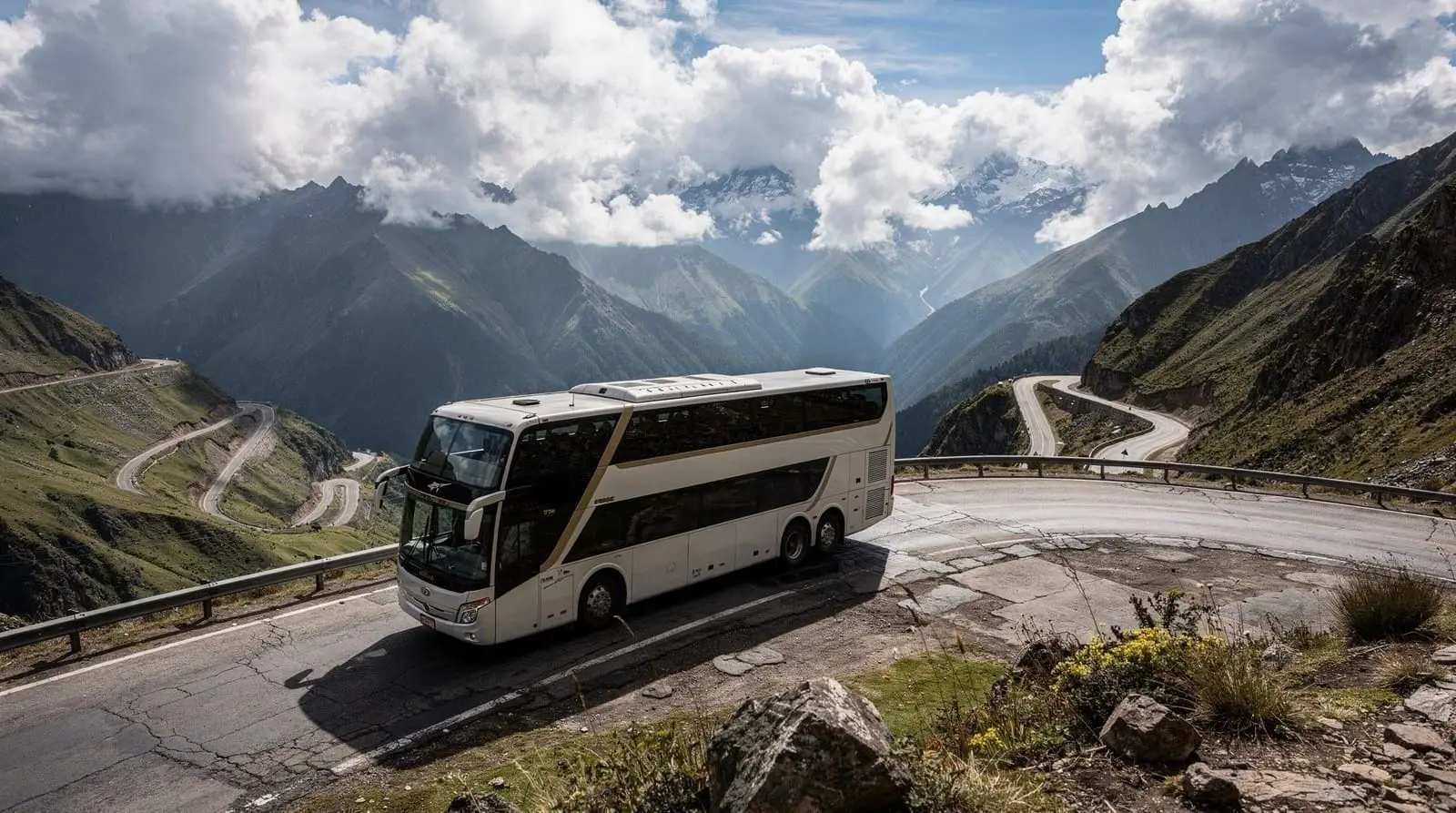
Peru’s intercity buses are far better than most first-time visitors expect. The premium operators run modern double-deck coaches with fully reclining “cama” seats, onboard meals, and overnight services that turn a long leg into a night’s sleep and a saved hotel bill. Buses also reach places flights do not, run on scenic roads that are part of the journey, and cost a fraction of last-minute airfares. For the southern circuit in particular — Lima down the desert coast through Paracas and Huacachina, and the high road from Cusco to Puno — the bus is often the better choice, not the budget compromise.
That said, the gap between Peru’s best and worst buses is enormous. The premium operators are genuinely comfortable and safe; the cheapest informal companies are where the horror stories come from. This guide covers the three names most useful to travellers — Peru Hop, Cruz del Sur and Oltursa — plus the routes worth taking by road, real fares, and how to ride safely overnight. Fares are in soles (S/) with dollar equivalents at roughly S/3.70 to the dollar.
| Where | Coastal and Andean routes nationwide |
| Cost | Around S/40–230 (US$11–62) depending on class |
| Time needed | 3.5 hrs (Lima–Paracas) to 15–16 hrs (Lima–Arequipa) |
| Getting there | Board at company-run terminals, not street stops |
| Best time | Book ahead June–August and around major holidays |
The three operators worth knowing
Cruz del Sur
Cruz del Sur is the gold standard for premium intercity travel in Peru. It runs the main long-haul routes — Lima–Arequipa, Lima–Cusco, Lima–Trujillo, Arequipa–Puno and many more — with modern double-deck coaches, GPS-tracked buses, assigned seats and onboard staff. Its top seat class, often branded “Cruzero” or similar with 180-degree fully flat cama seats, makes overnight travel genuinely restful. You book online with passport details and seats are assigned, which adds a layer of security. It is the operator to default to for any long overnight leg where comfort and safety matter.
Oltursa
Oltursa is Cruz del Sur’s main premium rival and is frequently the better-value option for similar comfort. It covers much of the same trunk network — strong on Lima–Arequipa, Lima–Trujillo and the southern coast — with reclining cama and semi-cama seats and a good safety record. Many travellers find Oltursa’s fares slightly lower than Cruz del Sur’s for comparable seats, so it is always worth comparing the two on your specific route and date.
Peru Hop
Peru Hop is a different animal: a hop-on, hop-off bus network designed specifically for tourists rather than a standard point-to-point carrier. You buy a pass covering a circuit (commonly the southern route from Lima through Paracas, Huacachina, Nazca, Arequipa, Puno and on to Cusco), then ride and stop along it at your own pace.
The selling points are door-to-door hostel pickups, English-speaking onboard guides, built-in stops at sights you might otherwise skip, and the safety of a tourist-only bus. The trade-off is price — it costs more than booking standard buses yourself — and a more backpacker, less local atmosphere. For first-time and solo travellers who want the logistics handled, it is popular and well run.
At a glance: which operator for which traveller
| Cruz del Sur | Oltursa | Peru Hop | |
|---|---|---|---|
| Best for | Widest network, reliability | Value on the same trunk routes | Hands-off logistics, first-timers |
| Price tier | Premium | Premium, often slightly cheaper | Higher overall (bundled pass) |
| Stops included | Point to point only | Point to point only | Built-in sightseeing stops |
| Booking | Website, passport required | Website | Website, pass covers a circuit |
| Best route | Lima–Cusco, Lima–Arequipa | Lima–Arequipa, south coast | Lima–Paracas–Nazca–Arequipa–Puno–Cusco |
The routes worth taking by road
Some legs are best flown (see the domestic flights guide); these are the ones where the bus genuinely wins.
- Lima → Paracas → Ica/Huacachina → Nazca (the south coast). A classic desert-coast run with frequent premium buses. Lima–Paracas is about 3.5–4 hours (S/45–70); continuing to Huacachina and Nazca adds a few hours each. This is Peru Hop’s flagship circuit, and standard operators serve it too.
- Cusco → Puno via the Ruta del Sol. Rather than a plain transfer, this high-altitude road can be done as a sightseeing day with stops at Andahuaylillas church, Raqchi and the La Raya pass. The Route of the Sun bus from Cusco to Puno with stops turns the six-hour leg into the trip’s highlight rather than dead time.
- Arequipa → Puno. A scenic high-altitude road, roughly 5–6 hours, well served by Cruz del Sur and others.
- Lima → Arequipa. A long 15–16 hour overnight on premium cama seats — a comfortable way to save a flight and a hotel night if you are not in a hurry.
- Lima → Trujillo / Chiclayo (north coast). Overnight premium services that anchor the northern archaeology circuit.
For the desert-coast sights specifically, a packaged day tour can replace some bus logistics: the Paracas, Ica and Huacachina day tour from Lima bundles the main south-coast stops into a single guided day if you would rather not piece the legs together yourself.
What it costs
- Economy intercity bus: S/40–90 (US$11–24). Adequate seats, basic comfort, often informal operators — fine by day on shorter legs, less ideal overnight.
- Premium semi-cama (140-degree recline): S/70–140 (US$19–38). The mid-tier on Cruz del Sur and Oltursa.
- Premium cama / full-flat (160–180-degree): S/120–230 (US$32–62). The top tier for overnight legs; worth it for a real night’s sleep on the long routes.
- Peru Hop circuit pass: priced per route and date; expect to pay a premium over piecing the same legs together with standard operators, in exchange for pickups, guides and flexible stops.
Booking an overnight cama on a long leg saves a hotel night, which narrows the real cost gap with flying considerably. For how this fits the whole budget, see the trip cost guide.
Terminals, luggage and boarding
Peru’s premium bus terminals are more organised than first-timers expect, but a few habits save real hassle. Arrive 30–45 minutes before departure for premium operators, since they check passports against tickets at the gate and hold assigned seats only until a cut-off. Checked luggage is weighed and tagged with a claim ticket — keep it, as some terminals check it against your bag at arrival.
Carry a day bag with valuables onto the bus rather than checking everything; theft from the hold, while uncommon on premium lines, does happen. Terminal touts offering “help” with bags or onward taxis are best waved off politely — use the terminal’s own taxi counter or an app instead, the same rule that applies at Cusco’s airport and elsewhere in the country.
Bus terminals themselves vary by city: Lima has several company-specific terminals rather than one central station, so confirm which terminal your ticket departs from — Cruz del Sur, Oltursa and the others do not share a building. Cusco and Arequipa both have more consolidated terminals where multiple companies operate from one building, which makes comparing fares and departure times on the spot easier if your plans are flexible.
Riding overnight safely
Overnight buses are a Peru travel staple, and on the right operator they are comfortable and safe. The precautions:
- Use premium operators (Cruz del Sur, Oltursa) for overnight legs, not the cheapest informal companies. This single choice removes most of the risk.
- Keep valuables on your person, not in the overhead rack or the hold. Money, passport and phone go in a pocket or a bag held on your lap or between your feet.
- Choose the lower deck for a smoother, safer ride on winding mountain roads if you are prone to motion sickness; the upper deck has better views by day.
- Dress warmly. High-altitude routes get cold overnight and air conditioning can be aggressive; a fleece and the provided blanket help.
- Book in advance for peak season (June–August) and around major holidays, when premium seats sell out.
- Note your arrival time: premium buses arrive at their own terminals, often early morning. Arrange an app taxi for onward transfer rather than taking touts at the station. The safety guide covers terminal precautions in more detail.
Bus versus flight: how to decide
The honest rule of thumb:
- Fly the very long legs where the time saving is dramatic — Lima to Cusco above all, where a bus is 20-plus hours against a 1 hour 20 minute flight.
- Take the bus on shorter legs (under about 8 hours), scenic routes where the road is part of the trip (Cusco–Puno, Arequipa–Puno, the south coast), and overnight legs where the bus doubles as your accommodation.
- Mix both on a typical two-week trip: fly the big trunk legs, bus the scenic and shorter ones. The two-week itinerary guide shows how the legs slot together, and the flights guide covers when flying is clearly the better call.
Season matters too: the rainy months (roughly December–March) bring landslides and longer journey times on some mountain roads, so check conditions and lean toward flying high-altitude legs in the wet season. See the best time to visit guide.
For the specific Cusco–Puno and Cusco–Arequipa legs, the Cusco to Puno transport guide and Cusco to Arequipa transport guide go through bus versus flight versus organised tour in more detail, and the south coast 2-day guide shows how the Paracas–Huacachina–Nazca run fits together as a route rather than three separate bookings. One traveller’s real budget breakdown of a bus-heavy Cusco trip is in the Cusco budget trip report, and money and taxi habits for arrival cities are covered in the Cusco taxi and money tips guide.