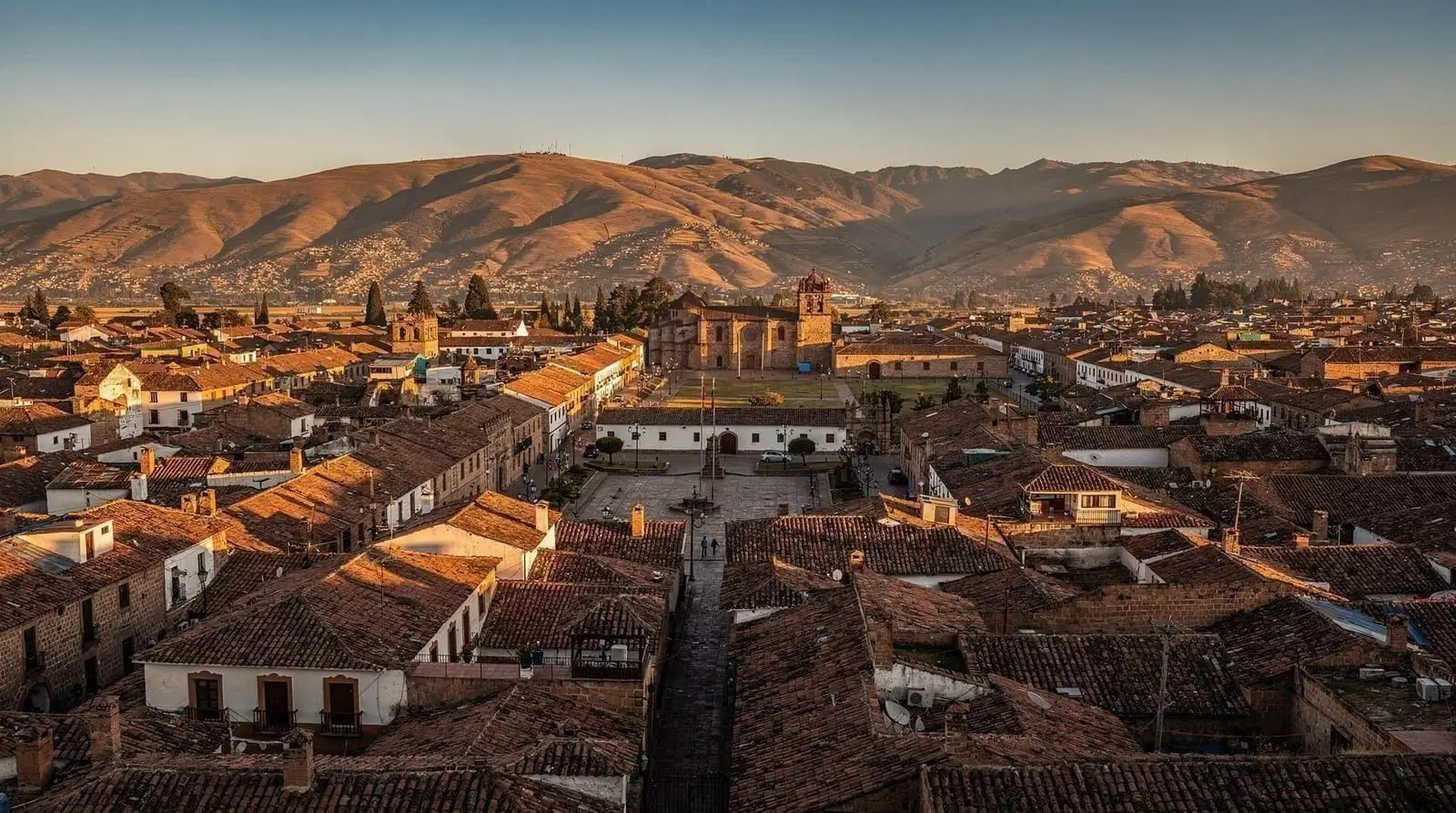
How many days do you need in Cusco?
Sacred Valley & Machu Picchu by Train: 2-Day, 1-Night Tour
How many days do you need in Cusco?
Three nights is the realistic minimum: one to acclimatise to 3,400 m and two for the city and the ruins above town. Add the Sacred Valley and Machu Picchu and you need 5–7 nights based in the region; throw in Rainbow Mountain or a trek and you are at a week or more.
The honest short answer, and why people get it wrong
Most travellers underbudget Cusco for two reasons. First, the maps make it look small — the historic core really is a compact, walkable few square blocks. Second, the marketing sells Cusco as the doorstep to Machu Picchu rather than a destination in its own right, so people pencil in a night or two and treat the city as a transit lounge.
Both instincts produce the same mistake. Cusco sits at 3,400 m (11,150 ft), and that single fact reshapes the whole question. Fly in from sea-level Lima, drop your bags, and try to charge straight up to Sacsayhuamán, and a meaningful number of visitors spend the evening with a pounding headache and nausea rather than sightseeing. The first day is for acclimatising, not for ticking off sites — which means a “two-day Cusco” is really one usable day.
So the realistic minimum is three nights: arrival and rest, then two clear days. Whether you need more is entirely about what you bolt on. Below, the day counts for each common version of a Cusco trip.
| Altitude | 3,400 m (11,150 ft) |
| Minimum stay | 3 nights (1 for acclimatisation, 2 for the city) |
| With Machu Picchu | 5–6 nights |
| With a trek | 7–9 nights |
| Best time to add days | Wet season (Nov–Mar), for weather buffer |
The acclimatisation tax: build it in first
Before any sightseeing maths, account for altitude. There is no honest way around it: your first 24–36 hours in Cusco should be low-effort. That is not lost time — it is the buffer that makes everything afterwards (the Sacred Valley, Rainbow Mountain, Machu Picchu) actually enjoyable rather than a slog. The full pacing routine is in the Cusco acclimatisation plan, but the headline rules are: do nothing strenuous on arrival day, hydrate hard, skip alcohol, and eat light. Symptoms usually ease by day two or three. For the medical side — when a headache is normal and when it is a warning — see the altitude sickness guide.
The clever planning move, if your schedule allows, is to sleep your first night or two in the lower Sacred Valley — Urubamba is at 2,870 m and Ollantaytambo at 2,790 m, several hundred metres below Cusco. Ascending gradually is genuinely easier on your body than the reverse. Many seasoned operators now build itineraries that way, and it folds your acclimatisation into productive sightseeing.
Cusco city only: 3 nights
If Cusco itself is the goal and Machu Picchu sits in another part of the trip, three nights is the sweet spot.
- Day 1 (arrival): Land, rest, and do nothing ambitious. Late afternoon, wander the mostly flat historic centre around the Plaza de Armas. Early, light dinner.
- Day 2: The layered city on foot — Qorikancha, the artisan quarter of San Blas, and a cheap lunch at San Pedro market. Gentle gradients, no rushing.
- Day 3: The ruins above town, now that you are acclimatised — Sacsayhuamán, Qenqo, and Tambomachay and Puka Pukara along the upper road.
Two clear days handle the core comfortably. A fourth night lets you slow the pace or add a short day trip without feeling pressed.
Cusco plus Machu Picchu: 5–6 nights
This is the most common configuration, and the one people most often try to squeeze. Five nights is comfortable; six gives you slack for weather and a bad altitude day.
- Nights 1–2 (or 1–3): Cusco — acclimatise and see the city as above.
- Day 3 or 4: Sacred Valley — Pisac, Ollantaytambo, and ideally Maras and Moray. Sleeping in the valley this night sets you up for the train.
- Day 4 or 5: Train to Aguas Calientes; overnight there.
- Next morning: Machu Picchu early, then train and transfer back.
The single most-asked compression question is whether Machu Picchu can be a same-day round trip from Cusco. It can — but it means a pre-dawn road transfer to Ollantaytambo, the train, the site, and the long haul back, a 14-plus-hour day. Sleeping a night in Aguas Calientes is far saner and lets you reach the citadel earlier and calmer. For the full logistics, see how to get to Machu Picchu and the Aguas Calientes guide.
If you would rather hand the whole Cusco-and-Machu-Picchu sequence to one operator, the Sacred Valley and Machu Picchu 2-day, 1-night tour by train packages the valley, the overnight, and the citadel into a tidy two-day add-on to your Cusco base.
Cusco, Machu Picchu, and the big day trips: 7+ nights
Add the headline excursions and you are at a week or more. Each of these is a full, often early-start day:
- Rainbow Mountain (Vinicunca): A 5,000 m peak — only attempt it well acclimatised, never on your first days.
- Humantay Lake: A turquoise glacial lake at 4,200 m, a demanding day hike.
- Maras and Moray: The salt terraces and concentric agricultural circles, usually folded into a Sacred Valley day.
- Ausangate lakes: A quieter, higher alternative to Rainbow Mountain.
The best day trips from Cusco guide ranks these so you can pick rather than try to do them all. A realistic “see the highlights” Cusco region trip is seven to eight nights: Cusco, the Sacred Valley, Machu Picchu, and one or two big day trips, with a rest day built in.
A combined multi-day tour can be efficient here. The 5-day Cusco, Machu Picchu, Rainbow Mountain and Sacred Valley tour threads the four marquee experiences together, and the longer 7-day Cusco, Machu Picchu, Maras salt mines and Humantay Lake trip adds the salt pans and the lake for travellers who want the lot handled end to end.
Adding a trek: count backwards from the trail
If you want to walk to Machu Picchu rather than take the train, the day count changes shape. The classic Inca Trail is a four-day, three-night trek; the Salkantay route runs four or five days. Crucially, you must be acclimatised before the trek starts, which means two or three nights in Cusco or the Sacred Valley before day one of the hike. So a trek-based trip is typically:
- 2–3 nights acclimatising in Cusco/valley, plus
- 4–5 days on the trail (ending at Machu Picchu), plus
- a buffer night.
That is a 7–9 night commitment for the Cusco region alone. For the route comparison, see the best treks to Machu Picchu guide.
Basing in the Sacred Valley instead of Cusco
An increasingly common variant is to base most nights in the Sacred Valley — Urubamba or Ollantaytambo — rather than in Cusco itself, using the city only for a day visit or two. Because the valley sits several hundred metres lower, this arrangement genuinely eases acclimatisation for travellers worried about altitude, and it also shortens your morning transfer to the Machu Picchu train, since Ollantaytambo is the railhead anyway.
The trade-off is losing some of Cusco’s evening atmosphere — the floodlit cathedral, the San Blas bars, the Plaza de Armas at night — since you are commuting back to the valley each evening rather than staying in the thick of it. For most first-time visitors, splitting the difference works best: two or three nights in Cusco for the city and its nightlife, then shifting down to the valley for the Sacred Valley day and the Machu Picchu departure. The day counts above hold either way; only the balance between “nights in Cusco” and “nights in the valley” changes.
Where the city itself surprises you for time
A quiet reason people end up wanting an extra Cusco night is that the city rewards lingering more than the itineraries suggest. The two “usable days” cover the headline sites, but Cusco is a place where the pleasure is partly in the unstructured hours: a slow coffee on a balcony off the Plaza de Armas, an afternoon getting lost in the steep lanes of San Blas, a long lunch of caldo and juice in San Pedro market, an evening watching the floodlit cathedral.
None of that fits neatly into a checklist, which is exactly why people who budget the bare three nights often wish they had a fourth. If your wider Peru itinerary has any give in it, an extra Cusco night is rarely wasted — it absorbs a slow morning, a weather delay, or simply the desire to sit still in one of South America’s most atmospheric cities rather than racing to the next ruin. The acclimatisation logic reinforces this: a body adjusting to 3,400 m appreciates an unhurried day, and you sightsee better rested than frazzled.
What to cut if you are short on time
If you genuinely only have a few days, prioritise in this order:
- Acclimatisation and the city core (non-negotiable, ~2 usable days).
- Machu Picchu as a two-day, one-night trip via the Sacred Valley.
- One big day trip — Rainbow Mountain or Humantay, not both.
Cut the second day trip before you cut the Machu Picchu overnight, and never cut the acclimatisation buffer — a wasted day with a headache is worse than a planned rest day. For how Cusco fits a wider Peru route (Lima, the south coast, the Amazon), see how many days in Peru.
Combining Cusco with a longer Peru trip
If Cusco is one stop on a wider Peru itinerary rather than the whole trip, the calculus changes slightly. Travellers also visiting Lake Titicaca, Arequipa, or the Amazon should still protect the acclimatisation buffer described above, but can often compress the Cusco-city sightseeing to two full days if time is genuinely tight elsewhere, since the ruins above town and the historic centre are the most flexible part of the itinerary — Machu Picchu and the acclimatisation nights are the parts you should not compress.
See how many days in Peru for how the region-by-region minimums stack up across a full trip, and decide where the extra days matter most before you commit to flight dates.
How the seasons change the day count
Weather quietly affects how many days you should budget. In the dry season (May–September) you can plan tightly: clear mornings are the norm, day trips rarely get cancelled, and you can reasonably expect the views you came for. The trade-off is crowds and cold nights, and the busiest months mean booking trains, Machu Picchu tickets, and treks well ahead — see best time to visit Cusco for the month-by-month picture.
In the wet season (November–March) you should build in more slack, not less. Afternoon downpours are routine, Rainbow Mountain and Humantay days can be socked in by cloud or cancelled outright, and the Inca Trail closes entirely for maintenance every February. A buffer day that you would skip in June becomes genuinely useful in January, because a washed-out day trip needs somewhere to go. So if you are travelling in the rains and a particular day trip is a priority, add a night so you have a second crack at it.
Pace yourself: the over-packed Cusco trap
The most common mistake after under-budgeting is the opposite — cramming an absurd number of 3 am starts into consecutive days. Rainbow Mountain, Humantay, and a Machu Picchu day are each physically demanding outings at altitude, and stacking them back to back without a rest day leaves people exhausted, run-down, and prone to picking up the stomach bugs that circulate among tired travellers.
A realistic week-plus Cusco trip should have at least one genuine rest or light day in the middle: a slow morning, a long lunch, a wander through San Blas or San Pedro market, and nothing that requires a pre-dawn alarm. You will enjoy the big days far more if you are not running on fumes. This is also why adding a night or two beyond the bare minimum pays off: the extra time is not really for seeing more, it is for absorbing what you see without burning out. The Cusco trip planning guide lays out a sensibly paced sample week.
A quick reference table
| Trip type | Nights | Usable days |
|---|---|---|
| Cusco city only | 3 | 2 |
| Cusco + Machu Picchu | 5–6 | 3–4 |
| Cusco + Machu Picchu + 1 big day trip | 6–7 | 4–5 |
| Cusco + Machu Picchu + 2 day trips | 7–8 | 5–6 |
| Cusco + a trek to Machu Picchu | 7–9 | 6–7 |
Solo, couples and families: does the day count change?
The nights above are a reasonable baseline for most travellers, but who you are travelling with shifts the number slightly. Solo travellers and couples can generally stick to the minimums above; you set your own pace and can adjust plans day to day if altitude hits harder than expected. Families with children should add at least one night to every tier — kids acclimatise unpredictably, day trips like Rainbow Mountain are genuinely tough at altitude for young legs, and a slower pace with built-in rest avoids meltdowns on what should be a highlight day.
Older travellers or anyone with a heart or lung condition should also budget the extra night and lean toward the Sacred Valley-first acclimatisation route described above, plus consult a doctor before altitude activities above 4,000 m. In every case, the acclimatisation buffer is the one thing not to compress, whoever you are travelling with.