Best day trips from Cusco
From Cusco: Sacred Valley of the Incas Full-Day Tour
What are the best day trips from Cusco?
The Sacred Valley is the easiest and most rewarding first day trip. Rainbow Mountain and Humantay Lake are the headline high-altitude hikes; Ausangate's lakes are the quiet alternative. Maras and Moray suit gentler days. Most cost S/60–200 and run as early-start tours of 8–16 hours.
How to choose, not just where to go
Cusco is the best day-trip hub in Peru, and the temptation is to cram every famous outing into a tight week. Resist it. The single biggest planning mistake here is not picking the wrong destination — they are nearly all worth doing — but sequencing them badly. Charge up to Rainbow Mountain’s 5,000 m ridge on your second morning in the Andes and you risk a wretched, possibly dangerous day. Do the same hike after three days of acclimatisation and it can be the highlight of your trip.
So this guide ranks the day trips honestly, but it also tells you when in your stay to do each one, what they really cost once the hidden fees are added, and which ones are over-hyped. The golden rule runs through all of it: lower trips first, high hikes later, and never trust a flyer that promises a relaxed half-day for an outing that is actually fourteen hours long.
| Where | Radiating from Cusco: Sacred Valley, Rainbow Mountain, Humantay, Ausangate |
| Cost | S/60–200 depending on trip, plus fees (boleto turístico, community entry) |
| Time needed | 8–16 hours depending on destination |
| Getting there | Organised group tour (default); DIY feasible for Sacred Valley |
| Best time | Lower trips (Sacred Valley, Maras/Moray) first; high hikes after 2–3 days |
Cusco day trips compared
| Trip | Max altitude | Day length | Crowds | Cost |
|---|---|---|---|---|
| Sacred Valley | ~2,870 m (lower than Cusco) | 8–10 hrs | Moderate | S/60–90 |
| Maras and Moray | ~3,400 m | 4–8 hrs | Moderate | S/60–90 |
| Humantay Lake | ~4,200 m | 10–12 hrs | High | S/100–150 |
| Rainbow Mountain | ~5,000 m | 12–14 hrs | Very high | S/90–150 |
| Ausangate lakes | ~4,700 m | 14–16 hrs | Low | S/120–200 |
| Lake Titicaca/Puno | n/a (overnight) | 2 days | Moderate | Varies |
The Sacred Valley: do this one first
If you do only one day trip from Cusco, make it the Sacred Valley. It is the smartest possible first outing for a simple reason: it sits lower than Cusco. The valley floor at Urubamba (2,870 m) and Ollantaytambo (2,790 m) is several hundred metres below the city, so a day down there actively helps your acclimatisation rather than testing it.
A classic full-day circuit links the Pisac ruins and craft market, the colossal terraces and fortress of Ollantaytambo, and often Chinchero’s weaving cooperatives. The scenery — a green river valley walled by snow peaks, terraced from floor to ridge — is the most beautiful drive in the region. Group tours start around S/60–90, though most do not include the boleto turístico (the bundled site pass) needed to enter the ruins, so budget for that separately.
The Sacred Valley full-day tour from Cusco covers the main ruins with transport and a guide in a single efficient day, which spares you the timing and transfers of doing it independently. For the full breakdown of what to see and skip, our Sacred Valley complete guide goes deeper.
Rainbow Mountain (Vinicunca): famous, crowded, high
Rainbow Mountain is the day trip everyone has seen on Instagram, and the reality needs managing. The striped, mineral-streaked ridge is genuinely striking on a clear morning. But it tops out around 5,000 m — higher than Everest Base Camp’s south side — after a steep 3–4 km push, and on a peak-season day you share the trail and the summit with hundreds of other people, horses, and snack stalls.
Expect a brutal early start (hotel pickup around 3:30–4:30 am), a three-hour drive, the hike, and a return by mid-afternoon. Tours run S/90–150, with a separate community entrance fee of around S/25 usually paid at the trailhead. Horses are available to carry tired walkers most of the way up.
Two honest caveats. First, do not attempt it until you are well acclimatised — this is a later-in-your-trip outing, not a day-two one. Second, if crowds put you off, consider Palccoyo, a gentler, less-visited rainbow ridge, or the Ausangate route below. The Vinicunca Rainbow Mountain day trip from Cusco bundles the long logistics into one package; our Rainbow Mountain complete guide covers the alternatives in detail.
Humantay Lake: the turquoise quick-win
Humantay Lake is the high hike with the best effort-to-payoff ratio. A steep 45–60 minute climb from the trailhead delivers you to a vivid turquoise glacial lagoon at about 4,200 m, cradled beneath the glaciers of Salkantay. It is shorter and lower than Rainbow Mountain, which makes it slightly more forgiving, though it still draws big crowds in high season and the final climb is genuinely steep.
Tours run S/100–150, typically with an early start, breakfast, the hike, and lunch on the way back. Horses are available for the ascent. Like all the high hikes, it rewards acclimatisation — do it after a few days, not on arrival. The Humantay Lake tour from Cusco handles the long drive and the early timing for you.
The Ausangate lakes: the quiet alternative
For travellers who have done the headline sights and want somewhere far less crowded, the Ausangate lakes are the standout. The Seven Lakes circuit threads a string of turquoise and emerald lagoons across the flanks of the holiest peak in the southern Andes, at 4,400–4,700 m, and you will share the trail with a tiny fraction of the people you would meet at Rainbow Mountain.
The trade-offs are real: it is a longer day (14–16 hours), more walking (8–12 km), and higher than Humantay. It demands solid acclimatisation. For those not up to a full hiking day, the Ausangate lakes and glaciers ATV tour from Cusco reaches the lagoons and glacier viewpoints with minimal walking. Our Ausangate lakes day trip guide covers both options in full.
Maras and Moray: the gentle, low-altitude day
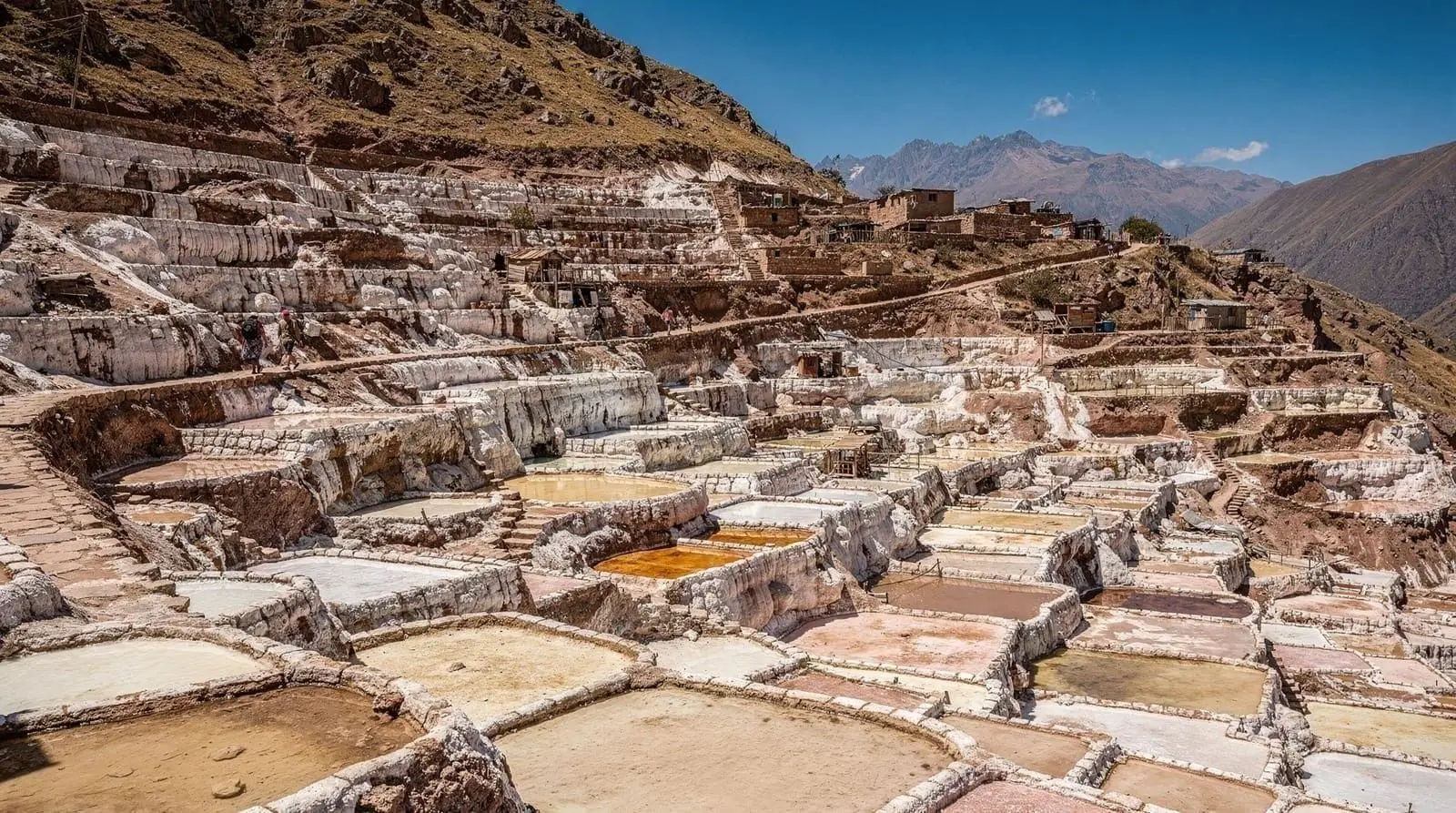
Not every day trip has to be a high-altitude endurance test. The salt terraces of Maras and the concentric agricultural terraces of Moray make a gentle, scenic half-to-full day in the lower Sacred Valley — perfect for an acclimatisation day, a rest day between hard hikes, or travellers who would rather not gasp up a mountain.
Maras is a hillside of thousands of salt-evaporation pans, worked by local families for centuries and glowing white-to-ochre in the sun. Moray is a set of vast circular terraces the Incas may have used as an agricultural laboratory, each ring sitting at a slightly different microclimate. Many Sacred Valley tours combine the two with Pisac and Ollantaytambo, so you can fold them into the valley day rather than treating them as a separate trip.
Lake Titicaca and Puno: the overnight that masquerades as a day trip
You will see Lake Titicaca and the floating Uros islands marketed from Cusco, and it is worth a clear warning: Puno, the gateway town, is a full day’s travel away by the scenic Route of the Sun bus or an overnight ride. This is not a real day trip from Cusco. Treat it as a two-day add-on at minimum, slotted between Cusco and the southern leg of a longer Peru route. For how it fits, see our Peru 2-week itinerary guide.
A realistic week of day trips
Here is how the sequencing works in practice, assuming you arrive in Cusco off a flight:
- Day 1–2: rest and acclimatise in Cusco itself — the city, the ruins above town, gentle walking only.
- Day 3: the Sacred Valley (lower altitude, helps acclimatisation), perhaps with Maras and Moray.
- Day 4: a rest or city day, or Machu Picchu staged from the valley.
- Day 5: a high hike — Humantay Lake or Rainbow Mountain, now that you are acclimatised.
- Day 6+: the Ausangate lakes or a second high hike for those wanting the quiet trails.
For how many days the whole thing needs, see how many days in Cusco, and for the right months, our best time to visit Cusco.
The honest pitfalls
A few traps catch first-timers booking day trips from Cusco:
- The acclimatisation gamble: cheap operators will happily sell you Rainbow Mountain for day two. They are selling, not advising. Go high only when you are ready.
- Hidden entrance fees: many tour prices exclude the boleto turístico, the Rainbow Mountain fee, or community trail fees. Always ask what is included, and carry cash in soles for what is not.
- The “Machu Picchu in a day” pitch: possible but exhausting and risky if anything runs late. Stay a night near the site instead.
- Plaza de Armas flyer tours: the rock-bottom prices come from overcrowded vans, no emergency oxygen, and unqualified guides — exactly the corners that matter on a long, high day.
Tour vs DIY: when to book a guide
A reasonable question for every Cusco day trip is whether to book an organised tour or go independently. The honest answer varies by destination.
For the high-altitude hikes — Rainbow Mountain, Humantay, the Ausangate lakes — a tour is almost always the practical choice. The trailheads are two to four hours out on roads with little or no public transport, the days start before dawn, and a good operator provides breakfast, lunch, a guide, and (crucially) someone with altitude experience and ideally emergency oxygen. Doing these independently means hiring a private driver for not much less than the tour price.
For the Sacred Valley, you have a real choice. Independent travel is genuinely feasible — colectivos (shared vans) run cheaply from Cusco to Pisac, Urubamba, and Ollantaytambo, and you can string the ruins together at your own pace with the boleto turístico. A tour trades that flexibility for convenience: one vehicle, set timing, and a guide to explain the sites. Slow travellers and confident DIY-ers should consider going solo; anyone short on time benefits from the organised version.
For Maras and Moray, a tour or a half-day taxi hire both work well, since the two sites are off the main valley road and awkward to reach by public transport.
Whatever you choose, the Sacred Valley complete guide and the Rainbow Mountain complete guide go deeper on the logistics of each.
What every Cusco day trip has in common
Across all these outings, a handful of constants are worth internalising before you book anything.
They start early and run long. Even the gentler trips leave by 7 or 8 am; the high hikes leave in the dark. Budget a full day and a tired evening, and do not stack a punishing day trip the morning before a flight.
Altitude is the through-line. Cusco at 3,400 m is already high, and most of these trips go higher — Rainbow Mountain past 5,000 m, the Ausangate lakes to 4,700 m, Humantay to 4,200 m. Acclimatise first, hydrate hard, carry coca tea or leaves, and pace yourself. The altitude sickness guide is essential reading before any high hike.
Cash in soles is king. Community entrance fees, the boleto turístico, trail-toilet charges, and tips are almost all cash-only and rarely included in tour prices. Carry small notes.
The weather sets the schedule. Do high trips in the morning, when skies are clearest; afternoon cloud and rain build year-round and worst in the wet season. Our best time to visit Cusco guide explains how the seasons reshape every one of these outings.
Layers and sun protection, always. Freezing dawns, blazing midday UV, and cold returns are the norm at altitude. A base layer, fleece, windproof shell, sunglasses, hat, and high-factor sunscreen cover every trip on this list.
Day trips ranked, in one line each
If you want the whole list distilled, here is the honest one-line verdict on each:
- Sacred Valley — the essential first day trip; lower altitude, helps acclimatisation, packed with ruins and scenery.
- Humantay Lake — the best effort-to-payoff high hike; steep but short, vivid turquoise lagoon.
- Rainbow Mountain — famous and striking, but very high, very crowded, and a brutal early start.
- Ausangate lakes — the quiet alternative for the already-acclimatised; long day, fewer people, higher reward.
- Maras and Moray — the gentle, lower-altitude option; ideal for a rest or acclimatisation day.
- Lake Titicaca / Puno — not a real day trip; treat as a two-day add-on on a longer route.
- Machu Picchu — possible in a day but punishing; far better as an overnight from the valley.
Building the trips into a longer Peru route
For most travellers, Cusco’s day trips are the engine room of a wider southern Peru itinerary that also takes in Lima for food and arrival, the Sacred Valley, Machu Picchu, and often Lake Titicaca or Arequipa further south. The day trips slot into the Cusco-based middle of that loop, after acclimatisation and around the Machu Picchu visit.
How many days the whole thing needs, and how to pace the altitude across it, is covered in how many days in Cusco and the Peru 2-week itinerary guide. And because every one of these trips is weather-sensitive, time your visit using the best time to visit Cusco guide before you lock in dates.
Alternatives if the headline trips don’t fit your trip
If Rainbow Mountain’s crowds put you off, Palccoyo is a genuinely quieter rainbow-striped alternative reachable on a similar day-trip pattern — see the full comparison in Vinicunca vs Palccoyo. If altitude sickness is a concern on any of the high hikes, read the Cusco acclimatisation plan before booking anything above 4,000 m, and pack accordingly using the what to pack for Cusco guide.
Families travelling with children should check Cusco with kids for which of these trips are realistic and which to skip. And if you would rather skip the group-tour crowds entirely for the Sacred Valley, the one-day Sacred Valley itinerary lays out a DIY version hour by hour.
What tour operators rarely tell you upfront
A few practicalities worth knowing before you book any Cusco day trip. Group sizes vary hugely between operators selling what looks like an identical itinerary — a 10-person van and a 25-person bus can cost the same, but the smaller group means less queuing at bottlenecks and a more attentive guide. Ask directly how many people will be on your tour.
Second, “private” and “shared” tours are priced very differently for the same route; a private tour on Rainbow Mountain or the Sacred Valley lets you set your own pace and skip the crowd-timing entirely, useful if you are travelling with a mixed-fitness group or want to linger somewhere the standard itinerary rushes past. Third, most operators build in a stop at a shop or workshop (textiles, silver) that pads the itinerary with a soft-sell detour — it is optional, but budget the extra 20–30 minutes if you would rather not browse.
Weather and rescheduling
Because so many of these trips involve mountain passes, the operator’s policy on weather cancellation is worth asking about before you pay. Rainbow Mountain and the Ausangate lakes occasionally get cancelled or rerouted for snow or dangerous road conditions, particularly outside the core dry season; a reputable operator will offer a reschedule or refund rather than running the trip regardless. If your itinerary is tight, avoid stacking a high-altitude day trip on the last full day before an onward flight, in case a delay or cancellation forces a reschedule.
Frequently asked questions about day trips from Cusco
Frequently asked questions about Best day trips from Cusco
Which is the best day trip from Cusco for first-timers?
How much do day trips from Cusco cost?
Can you do Machu Picchu as a day trip from Cusco?
How early do Cusco day trips start?
Which Cusco day trip has the fewest crowds?
Do I need to acclimatise before doing day trips from Cusco?
Top experiences
Bookable activities with verified prices and instant confirmation on GetYourGuide.


