Best treks to Machu Picchu: every route compared
From Cusco: 4-Day Inca Trail Guided Trek to Machu Picchu
What is the best trek to Machu Picchu?
There is no single best route. The classic 4-day Inca Trail is the only path that walks you through the Sun Gate to the ruins and needs permits booked months ahead. The Salkantay is higher, wilder and cheaper, the Lares is the most cultural, and the 2-day short Inca Trail is the easiest. Choose by fitness, budget and how far ahead you booked.
Why “best” depends entirely on you
Travellers ask which trek to Machu Picchu is the best as if there were a leaderboard. There is not. The routes differ in altitude, scenery, crowding, price, permit hassle and difficulty, and the right one for a permit-locked group of fit twenty-somethings is wrong for a family who decided three weeks ago. This guide lays out the real trade-offs of every major route so you can match a trek to your body, your calendar and your budget rather than to a brochure adjective.
| Trek | Days | Permit? | Price guide |
|---|---|---|---|
| Classic Inca Trail | 4 | Yes, book 5-7 months ahead | S/2,400-3,300 (~$650-890) |
| Salkantay | 4-5 | No | S/1,500-2,600 (~$405-700) |
| Lares | 3-4 | No | S/1,400-2,400 (~$380-650) |
| Inca Jungle | 4 | No | S/900-1,600 (~$245-430) |
| Short Inca Trail | 2 | Yes, easier to secure | S/1,300-2,200 (~$350-595) |
A blunt truth up front: the marketing around these treks oversells comfort and undersells altitude. Every multi-day route here tops 3,800 m and most cross a pass above 4,000 m. None of them is a stroll, and the difference between an enjoyable trek and a miserable one is almost always whether you spent two or three days acclimatising in Cusco or the Sacred Valley beforehand. Build that in before you book anything.
Prices below are guide quotes for 2026 in Peruvian soles (S/) with a US-dollar conversion at roughly S/3.70 to the dollar. They cover reputable mid-range operators; rock-bottom prices usually mean cut corners on porters’ wages, food and emergency cover.
The classic Inca Trail (4 days, 3 nights)
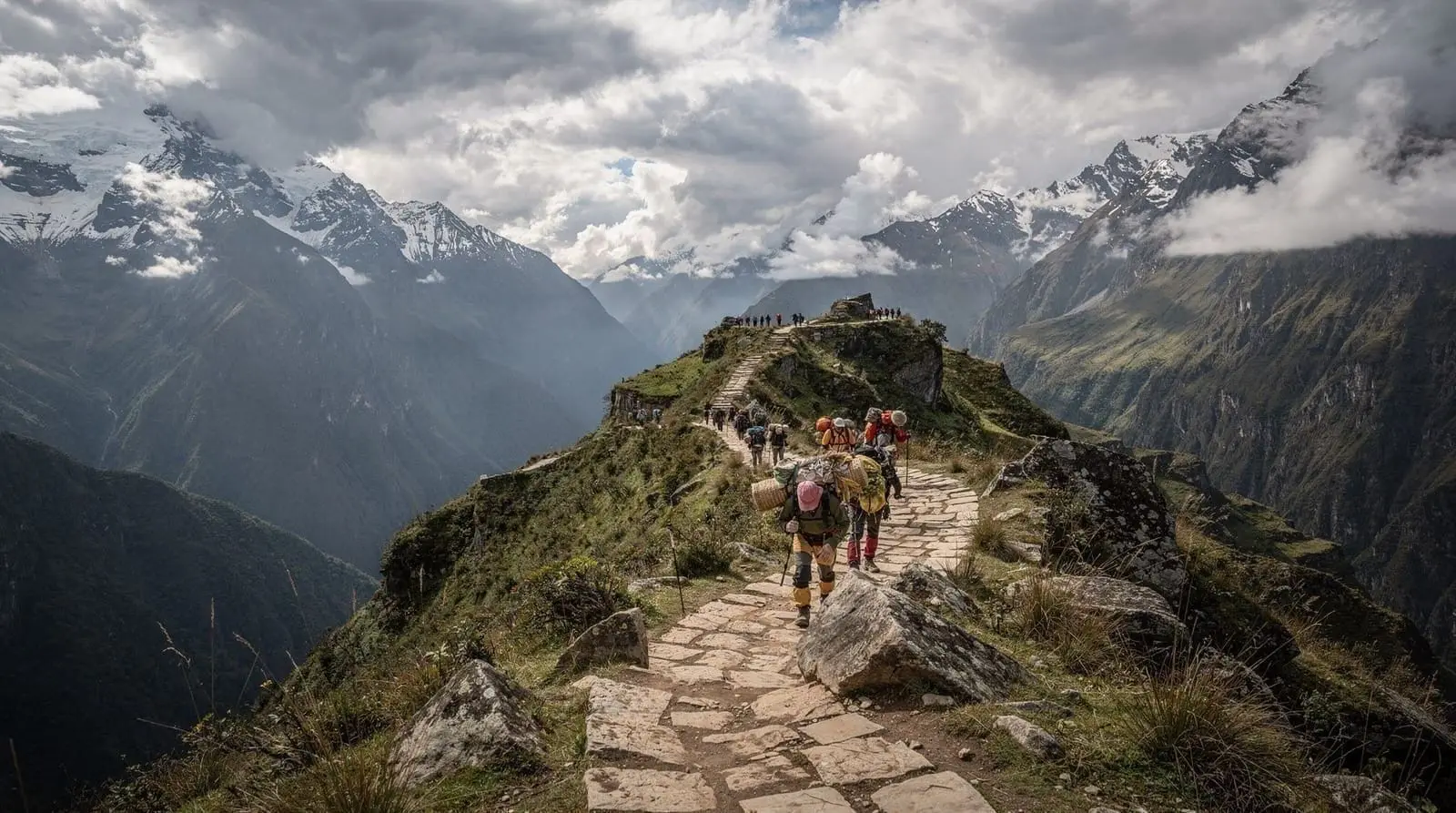
This is the route everyone pictures: stone paths laid by the Inca, cloud-forest tunnels, a string of ruins you reach on foot, and a dawn arrival through Inti Punku, the Sun Gate, looking down on Machu Picchu before the day-trippers arrive by train. It is the only trek that ends inside the citadel on foot, and that single fact is why it stays the most coveted route despite being neither the highest nor the most scenic.
The numbers: about 42 km over four days, peaking at the brutally named Dead Woman’s Pass (Warmiwañusca) at 4,215 m on day two. Expect S/2,400–3,300 (roughly $650–890) for a quality group departure including permit, guide, porters, tents and meals.
The catch is the permit. The Peruvian government caps the trail at 500 people per day, and that figure includes guides and porters — so only around 200 spots are actually for trekkers. High-season dates sell out five to seven months ahead. You cannot walk it independently; a licensed operator must hold the permit, issued against your passport number. The trail closes every February for maintenance.
If the dates work and you booked early, the 4-day Inca Trail guided trek from Cusco is the canonical experience. Read the Inca Trail complete guide before committing, because the permit logistics are unforgiving.
The Salkantay trek (4 or 5 days)
When the Inca Trail is sold out — which is most of the high season by the time many people start planning — the Salkantay is the answer, and a growing number of trekkers now prefer it on its own merits. It runs past the glaciated flank of Nevado Salkantay (6,271 m), crosses the Salkantay Pass at 4,630 m, then drops dramatically through cloud forest into coffee and avocado country before reaching Aguas Calientes.
The numbers: 60–70 km depending on the variant, over four or five days. The 5-day version is more relaxed; the 4-day compresses the same ground. Expect S/1,500–2,600 (about $405–700), genuinely cheaper than the Inca Trail because there is no government permit to buy.
Who it suits: fitter hikers who want bigger mountain scenery, more solitude in the early stages, and flexibility on booking. The pass at 4,630 m is over 400 m higher than Dead Woman’s Pass, so acclimatisation matters even more here.
The 5-day Salkantay trek to Machu Picchu is the comfortable pacing; the Salkantay trek guide and the head-to-head Inca Trail vs Salkantay comparison will help you decide between the two. The Salkantay region page covers the landscape in detail.
The Lares trek (3 or 4 days)
The Lares is the cultural alternative. Instead of a procession of ruins, it threads through high-Andean villages where Quechua-speaking families still weave, herd alpaca and farm potatoes much as they have for centuries. There are several Lares variants, which is both a strength and a confusion — operators route them differently, so ask exactly which valleys and passes yours covers.
The numbers: typically 33–40 km over three days of walking plus a Machu Picchu day, with passes around 4,400 m. Expect S/1,400–2,400 (about $380–650). No permit required.
Who it suits: travellers more interested in living Andean culture than in archaeology, and those who want a slightly gentler, less-trafficked trek. It is often paired with a community-weaving visit. The Lares trek guide goes deeper on the village stops and the responsible-tourism questions worth asking your operator.
The Inca Jungle trek (4 days)
The Inca Jungle is the adventure-sport hybrid: mountain biking down from the Abra Málaga pass, then a mix of hiking, optional zip-lining and rafting, descending through hot, humid valleys to Aguas Calientes. It is lower and warmer than the alpine routes, which makes altitude less of a concern, and it appeals to a younger, party-leaning crowd.
The numbers: S/900–1,600 (about $245–430), among the cheapest options, four days including activities. No trek permit.
Who it suits: travellers who want adrenaline and low altitude over Inca stonework, and budget hikers. Be honest about the bike descent — it is on an open public road with traffic, and a few operators provide poor brakes and no support vehicle. Vet the company carefully.
The short Inca Trail (2 days)
The short trail is the accessible Inca Trail. You take the train to Km 104, climb past the Wiñay Wayna ruins, and walk in toward the Sun Gate the same afternoon before sleeping in Aguas Calientes and entering Machu Picchu the next morning. It still needs a permit, but demand is lower than for the classic four-day.
The numbers: about 12 km of walking on the trail day, S/1,300–2,200 (about $350–595). Permit required but easier to secure.
Who it suits: time-pressed travellers, fit beginners, and anyone who wants a taste of the original trail without four days of camping. The 2-day short Inca Trail tour is the standard package.
Quick comparison
- Most iconic / arrives on foot: classic 4-day Inca Trail. Book 5–7 months ahead.
- Best mountain scenery / no permit: Salkantay, 4–5 days, higher and cheaper.
- Most cultural: Lares, villages and weaving, no permit.
- Most adventurous / lowest altitude: Inca Jungle, biking and rafting.
- Easiest / shortest: 2-day short Inca Trail, still permit-controlled.
A through-line worth repeating: only the Inca Trail routes are permit-gated, and only the classic four-day reliably delivers the dawn Sun Gate arrival. If that image is the whole reason you are coming, book early or accept that you will see Machu Picchu from the standard gate like most visitors do — which is no lesser experience, just a different one. For the logistics of reaching the site by any route, see how to get to Machu Picchu.
Choosing well: a short decision path
Ask yourself three questions in order. First, how far ahead are you booking? If it is under four months in high season, the classic Inca Trail is probably gone — pivot to Salkantay or Lares without regret. Second, how is your fitness and altitude tolerance? If either is shaky, lean to the short Inca Trail or an easier Lares variant and acclimatise hard first. Third, what do you actually want to see? Ruins and the Sun Gate point to the Inca Trail; raw mountains point to Salkantay; living culture points to Lares; adrenaline points to the Inca Jungle.
Whatever you choose, spend your acclimatisation days well in Cusco and the Sacred Valley — see the Sacred Valley complete guide — and read up on staying healthy at altitude in the altitude sickness Cusco guide. For where any of these treks fits in a wider trip, the Peru 2-week itinerary guide sets out realistic sequences. Full multi-day routings are at /itineraries/.
Beyond the five: Choquequirao and combining with Rainbow Mountain
If none of the above feels extreme enough, Choquequirao is the trek serious hikers graduate to — a punishing multi-day route to a Machu Picchu-sized sister site that receives a fraction of the visitors because there is no road or train anywhere near it. It is not a beginner add-on: expect steep canyon descents and re-ascents that make the Salkantay pass feel gentle by comparison. The Choquequirao trek guide lays out the logistics honestly, including the new cable car proposal that may eventually change the calculus.
A separate question worth answering before you book anything: should the trek be combined with Rainbow Mountain (Vinicunca)? Most operators sell it as a standalone day trip rather than folding it into a Machu Picchu trek, and that is usually the right call — Vinicunca sits at over 5,000 m and is a jarring, high-altitude single day best done on its own acclimatisation timeline. The Rainbow Mountain complete guide and the three-way comparison in Vinicunca vs Palccoyo vs Ausangate help you decide whether to add it before or after your trek.
Gear, porters and the tipping question
Every route above except the Inca Jungle traditionally uses porters and mules to carry group equipment, and how you treat that system says something about the trip you are supporting. Reputable operators cap porter loads, provide proper boots and insurance, and pay fair, transparent wages; rock-bottom trek prices are the clearest warning sign that porter welfare has been cut to hit the number. Ask directly what an operator pays and equips its porters with before booking — a company that answers vaguely is one to avoid.
Tipping is expected and effectively built into the economics of every multi-day trek: budget roughly S/50-80 per trekker per day split between guides, porters and cooks on the Inca Trail and Salkantay, a little less on the shorter Lares and Inca Jungle routes. Bring small soles notes for the final-day tipping ceremony, since nobody wants to break a S/100 bill on the trail.
On gear, a duffel within your operator’s weight limit (usually 5-7 kg of personal items carried by porters), a proper rain shell, and broken-in boots matter more than anything expensive — see what to pack for the Inca Trail for the full list, and what to pack for Cusco for the city days either side.
Frequently asked questions about Best treks to Machu Picchu: every route compared
Which trek to Machu Picchu is the hardest?
Do I need a permit for every trek to Machu Picchu?
Can beginners trek to Machu Picchu?
How far ahead do I book the Inca Trail?
When is the trekking season to Machu Picchu?
Do all treks end at the Sun Gate?
How much should I tip trek guides and porters?
Should I add Rainbow Mountain to a Machu Picchu trek?
Top experiences
Bookable activities with verified prices and instant confirmation on GetYourGuide.

