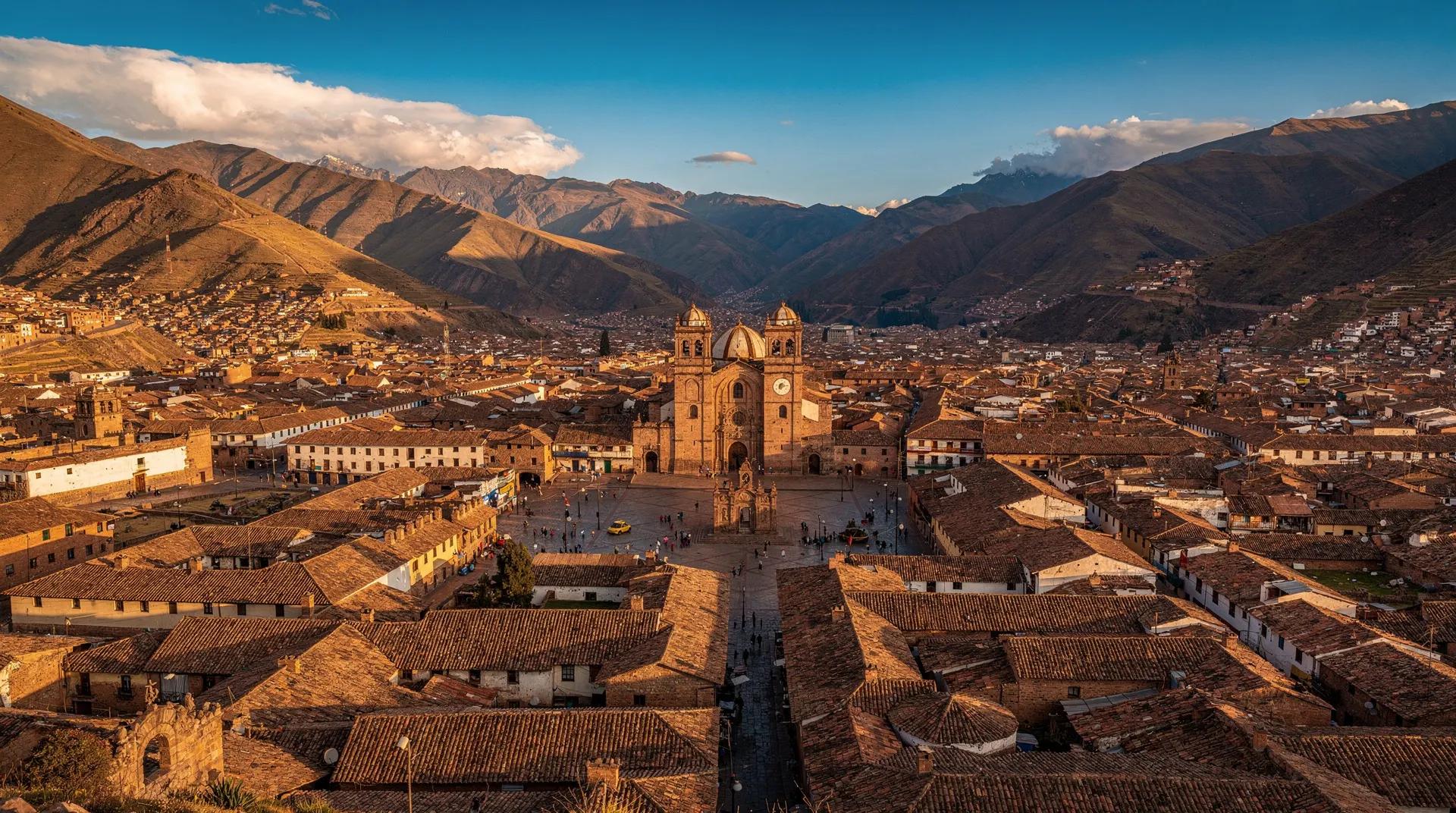
Cusco trip planning 2026: a complete, honest roadmap
Cusco: Half-Day City Tour with Sacsayhuaman and Q’enco
How do I plan a trip to Cusco in 2026?
Allow at least four nights, arrive ready to do nothing strenuous on day one for altitude, book Machu Picchu tickets and trains weeks ahead, and build the city, the ruins above town, and a Sacred Valley day around a Machu Picchu trip. Aim for May–September for dry weather, and budget roughly $50–120 a day mid-range.
Start with the three constraints that shape everything
Most Cusco plans go wrong not because the city is hard to organise but because travellers underweight three fixed constraints and overweight a fourth thing that does not matter much. The three that genuinely shape your trip are altitude, advance-booking deadlines, and the gateway role Cusco plays. The thing people obsess over but can largely relax about is the exact day-by-day order of city sights, which sorts itself out once the big rocks are in place.
Cusco sits at 3,400 m (11,150 ft), so your first day is partly spent letting your body adjust whether you planned for it or not. Machu Picchu and its train run on systems that sell out, so some tickets must be bought weeks ahead. And almost nobody comes to Cusco only for Cusco — it is the hub for the Sacred Valley, Machu Picchu, Rainbow Mountain, and onward travel to Puno and Arequipa. Plan around those three constraints and the rest is detail.
This guide walks through every planning decision for 2026 in order: how long to stay, when to go, what to book ahead, a realistic day-by-day skeleton, a budget in soles and dollars, and the honest list of what to skip.
| Altitude | 3,400 m (11,150 ft) — plan a slow first day |
| Minimum stay | 4 nights city-only, 6–7 for Sacred Valley + Machu Picchu |
| Best months | May–September (dry, busy); April/October (shoulder) |
| Book ahead | Machu Picchu entry + train, Inca Trail (months ahead) |
| Daily budget | around S/120–430 ($35–120) mid-range, excl. Machu Picchu |
| Getting there | Fly from Lima, ~80 minutes |
How many days you actually need
The single most common mistake is allowing too few nights. Here is the realistic maths:
- Cusco city + acclimatisation: 3 nights minimum, 4 comfortable. Day one is low-effort by necessity.
- + Sacred Valley: add 1–2 nights (or one long day trip).
- + Machu Picchu: add 1–2 nights (most people overnight in Aguas Calientes).
- + Rainbow Mountain or Humantay Lake: add a full day each.
A tight but workable Cusco-region trip is 6–7 nights. Anything under four nights forces you to choose between the city and Machu Picchu, and risks doing the early sights while still altitude-sick. For how Cusco slots into a longer national trip, the Peru 2-week itinerary guide places it in context.
When to go in 2026
Cusco has a sharp two-season climate, and your choice is a genuine trade-off:
Dry season — May to September. Reliably clear days, intense sun, and cold nights that can drop near freezing in June and July. This is the best weather and therefore the busiest and most expensive. Inti Raymi (the festival of the sun) on 24 June packs the city; book far ahead if you want to be there for it, and expect higher prices that week.
Shoulder — April and October. The sweet spot for many: mostly dry, fewer crowds, lower prices, and green landscapes either side of the rains.
Wet season — November to March. Greener, quieter, and cheaper, but with near-daily afternoon downpours and slick cobbles. The Inca Trail closes every February for maintenance, so if the classic trek is your goal, avoid that month entirely.
If your dates are fixed, plan activities accordingly — mornings for outdoor sights in the wet season, since rain tends to arrive after midday.
What to book in advance — and what not to
This is where pre-trip energy should go. Get the time-sensitive bookings right and the rest can be arranged on the ground.
Book weeks to months ahead:
- Machu Picchu entry tickets. The national system uses timed entry across several circuits, and popular dates and circuits sell out well ahead in high season. This is the number-one priority. See Machu Picchu for how the circuits work.
- The train to Machu Picchu (PeruRail / IncaRail). Book alongside your entry ticket so the timings line up.
- The Inca Trail, if you want it — permits are limited and sell out months in advance, and it closes every February.
- High-season accommodation for June–August and the Inti Raymi week.
Arrange on arrival or a few days ahead:
- The boleto turístico — never sells out; buy it in Cusco. The Cusco tourist ticket guide explains which version to get.
- Day tours of the city, Sacred Valley, Rainbow Mountain, and cooking classes — plenty of availability except in peak week.
A realistic day-by-day skeleton
This is a 6-night template you can stretch or compress. The principle: ease in low, build up, then launch.
Day 1 — arrive, do almost nothing
Fly into Cusco, check in, and resist ambition. Rest, hydrate, and take a flat, gentle wander around the historic centre and the Plaza de Armas once you have settled. Early, light dinner — a block off the square, not on a balcony (see the Cusco tourist traps guide for why). No uphill climbs today.
Day 2 — the city, with a guide
Now do the anchor city sights. A licensed half-day tour is the efficient way to see the ruins above town with context while your body keeps adjusting. The half-day Cusco city tour with Sacsayhuamán and Qenqo handles the transport up to the ruins and the boleto queue, sparing your still-acclimatising legs the steep walk. Afternoon: Qorikancha and a slow climb into the San Blas artisan quarter.
Day 3 — Sacred Valley
A full day in the Sacred Valley — Pisac, the salt terraces of Maras, the agricultural circles of Moray, and Ollantaytambo. The valley sits lower than Cusco, so it is also gentle on altitude. The Sacred Valley of the Incas full-day tour covers the headline sites in one organised loop, which is the sensible way to see a spread-out region in a day. Consider sleeping in Ollantaytambo tonight to position for an early Machu Picchu train.
Days 4–5 — Machu Picchu
Train from Ollantaytambo to Aguas Calientes, your timed-entry visit to Machu Picchu, and an overnight in Aguas Calientes rather than a punishing same-day return. Back to Cusco on day 5.
Day 6 — an Andean day trip or buffer
By now you are fully acclimatised, so this is the day for Rainbow Mountain (Vinicunca) or Humantay Lake — both demanding high-altitude hikes best left until late in the trip — or a buffer day for the city’s museums, San Pedro market, and a cooking class. A market-to-table half-day is one of the better cultural-value experiences here; the San Pedro market tour and Peruvian cooking class walks you through unfamiliar Andean produce before you cook a three-course meal.
A 2026 budget in soles and dollars
Costs vary widely by style, but realistic per-day figures (excluding the one-off Machu Picchu cost and international flights):
- Budget: S/120–200 a day (about $35–55) — hostels, market and menú meals, shared tours, public transport.
- Mid-range: S/180–430 a day (about $50–120) — comfortable hotels, restaurant meals, private and small-group tours.
- Higher-end: $150+ a day — boutique hotels, fine dining, private guides.
One-off costs to budget separately:
- Boleto turístico: S/130 (about $35) for the full pass.
- Machu Picchu (entry + round-trip train): roughly $150–300 per person depending on train class and circuit — the single biggest line item.
- Rainbow Mountain / Humantay day tours: S/100–180 (about $27–49) each with a reputable operator.
- City and Sacred Valley tours: S/80–200 (about $22–55) depending on group size.
Pay in soles, not dollars, to avoid the exchange skim; carry cash for markets, taxis, and ticket booths. A fuller national cost picture is in the wider planning guides.
Getting in, around, and onward
Arriving: Most travellers fly into Cusco (CUZ) from Lima, an 80-minute hop. The airport is 10 minutes from the centre; agree the taxi fare first (S/20–30) or use a ride app.
Around town: The centre is compact, steep, and cobbled — wear shoes with grip. In-town taxis run S/8–12 for short hops; ride apps (InDriver, Cabify, Uber) remove the haggling.
Onward: Cusco is the hub for the next legs of a southern loop. Buses and the Route of the Sun tourist bus run to Puno and Lake Titicaca — covered in the Cusco to Puno transport guide — and overnight buses and occasional flights reach Arequipa, covered in the Cusco to Arequipa transport guide.
Packing for Cusco’s two faces
Cusco’s climate catches people out because a single day swings widely: intense high-altitude sun by day, near-freezing by night in the dry season, and sudden rain in the wet. Pack for layers, not for a single temperature.
- Layers, always. A base layer, a warm mid-layer (fleece or light down), and a windproof outer. You will peel off in the midday sun and pile back on after dark.
- Sun protection. At 3,400 m the UV is fierce even when it feels cool — high-factor sunscreen, a brimmed hat, and sunglasses are not optional.
- Real walking shoes with grip. The cobbles are steep and slick when wet; sandals are a sprained ankle waiting to happen.
- A reusable water bottle. Hydration is your main altitude defence; refill rather than buy endless plastic.
- A light rain shell year-round, essential in the November–March wet season when afternoon downpours are routine.
- Cash in soles in small notes for markets, taxis, and ticket booths, plus a card for hotels and restaurants.
- Any altitude medication (acetazolamide) arranged with your doctor at home rather than bought on arrival.
A small daypack for day trips, a head torch for early Machu Picchu and Rainbow Mountain starts, and a power bank round out the practical kit.
Where to base yourself in Cusco
Where you sleep shapes your days more than most travellers expect:
- Around the Plaza de Armas — central and convenient, but noisier, pricier, and steeper to reach from the airport side. Good for a first-timer who wants everything on the doorstep.
- San Blas — the artisan quarter, atmospheric and full of cafés, but a steep uphill climb that is punishing on day one before you have acclimatised. Lovely once adjusted.
- Around Avenida El Sol — flatter, closer to ATMs, the COSITUC ticket office, and the bus connections, slightly less charming but easier on the legs.
- The lower Sacred Valley (Urubamba, Ollantaytambo) — the smart acclimatisation play for the first night or two, several hundred metres lower than the city, before coming up to Cusco. See Sacred Valley.
If altitude worries you, the valley-first approach is genuinely easier on your body than starting high in San Blas.
What to skip or relax about
- Don’t cram. A fourth or fifth attraction squeezed into too few days usually means doing the first ones while altitude-sick. Fewer things, properly paced, beats a checklist.
- Don’t book the boleto or day tours from home — there is no need, and you will pay third-party markups.
- Don’t over-plan the city sight order. The big rocks (Machu Picchu, Sacred Valley, acclimatisation day) matter; the precise order of museums and markets does not.
- Don’t underestimate the cold. Dry-season nights are genuinely cold; many hotels have limited heating. Pack real layers.
- Don’t skip the acclimatisation day to save time. It is the worst possible economy.
Money, connectivity, and health basics
A few practical layers round out the plan. Money: ATMs on Avenida El Sol and around the Plaza de Armas dispense soles reliably; withdraw larger amounts less often to reduce fees, and keep a stash of small notes since taxis, colectivos, and market stalls rarely break large bills. Card acceptance is decent in restaurants and hotels but patchy at markets and smaller tour operators, so carry cash as your default.
Connectivity: Peruvian SIMs (Claro, Movistar) are cheap and easy to buy at the airport or in the centre, and coverage in Cusco city and the Sacred Valley is solid; it thins out on high-altitude treks like Rainbow Mountain. Most hotels and cafés have decent wifi, so a local SIM is mainly for maps and messaging on the move.
Travel insurance: Given the altitude and the activity level of most Cusco trips — hiking, Rainbow Mountain, the Inca Trail — genuine travel insurance with medical evacuation cover is worth the modest cost, not an afterthought. Check it covers activities above 3,000 m if you plan any of the high-altitude day trips.
Festivals to plan around: Beyond Inti Raymi on 24 June, Corpus Christi (a moveable May/June date) fills the cathedral square with processions and is worth timing a visit for if festivals interest you, though it also means fuller hotels. The Cusco festivals calendar has the fuller list if your dates are flexible enough to chase — or avoid — a specific celebration.