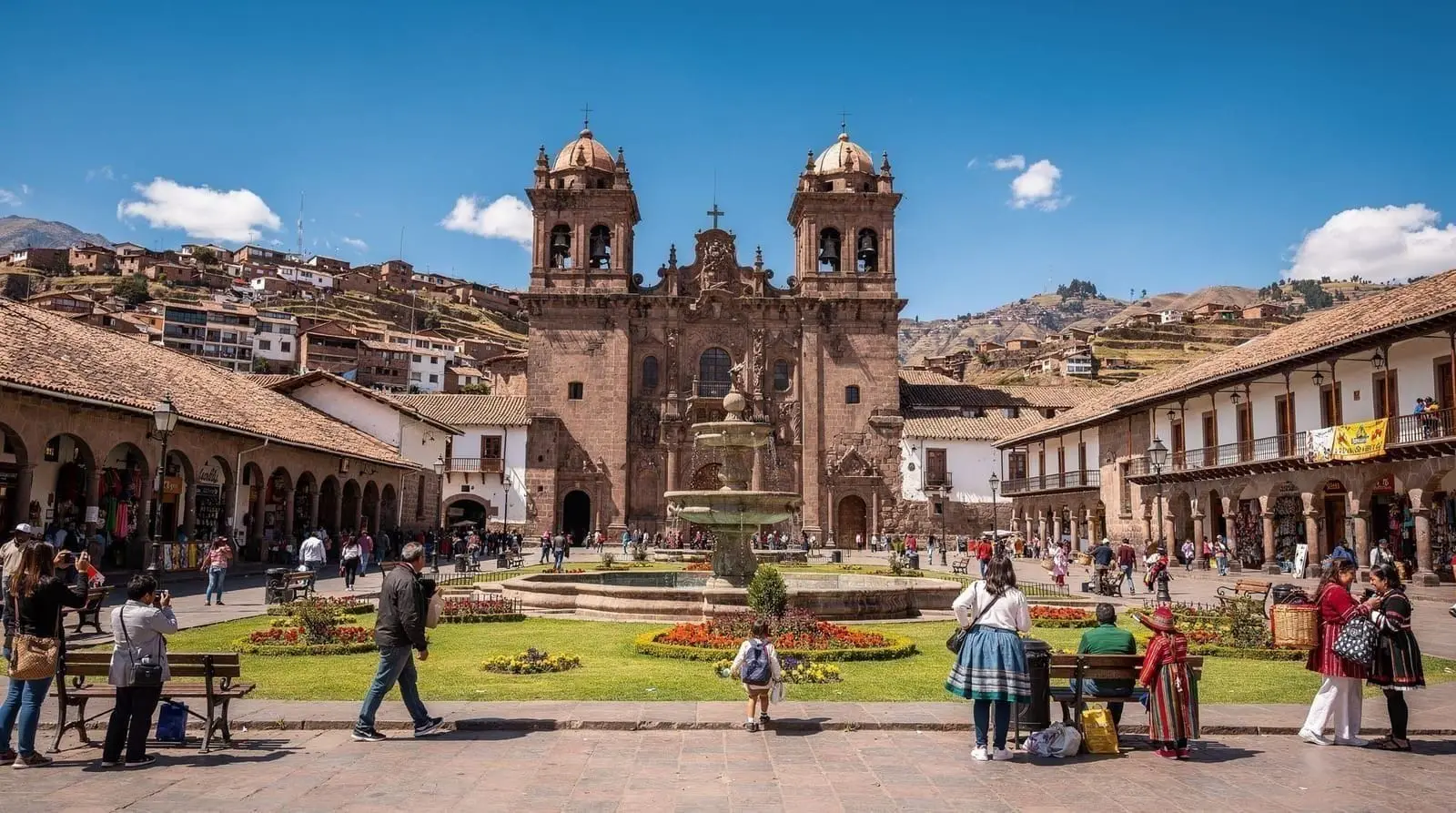
Best time to visit Cusco
Cusco: Half-Day City Tour with Sacsayhuaman and Q’enco
When is the best time to visit Cusco?
May to September is the dry season — clear skies, ideal for trekking, but cold nights and peak crowds and prices in June to August. April and October are the sweet-spot shoulder months: greener, quieter, cheaper, with some rain risk. The wet season (November to March) is greenest and cheapest but rains daily.
Two seasons, not four
Cusco sits at 3,400 m near the equator, so it does not have spring-summer-autumn-winter in any familiar sense. It has two seasons: dry and wet. The dry season runs roughly May to September; the wet season runs November to March; April and October are the shifting boundaries between them. Daytime temperatures barely change across the year — highs hover around 19–21 °C every month. What changes dramatically is the rain, and with it the crowds, the prices, and whether the high treks are even runnable.
That makes choosing your dates less about temperature and more about a set of trade-offs: clear skies versus thin crowds, ideal trekking versus low prices, festival spectacle versus elbow room. This guide walks through each month so you can match your trip to what matters most to you. For the broader national picture across Peru’s coast, mountains, and jungle, see our best time to visit Peru guide; and for Machu Picchu specifically — which follows the same seasons with its own wrinkles — our best time to visit Machu Picchu guide.
| Best overall | May, September (dry, fewer crowds than peak) |
| Best value | April, October (shoulder months) |
| Avoid for trekking | February (Inca Trail closed) |
| Coldest nights | June–July, near or below freezing |
| Peak crowds/prices | June–August, especially around Inti Raymi (24 June) |
The dry season (May–September): the postcard window
This is the headline season and, for most travellers, the right answer. From May to September the skies are reliably clear, the trails are firm and dry, and the mountain views are crisp. It is the ideal window for the Inca Trail, Salkantay, Ausangate, and the high day hikes like Rainbow Mountain and Humantay Lake.
The catches are real, though. First, the nights are cold — June and July dip to or below freezing after dark, and the clear skies that make the days lovely let all the heat escape at night. Pack a proper layering system, not just a fleece. Second, this is peak season: June to August brings the biggest crowds and the highest prices of the year for hotels, trains, and treks. Inca Trail permits and the better Machu Picchu time slots sell out months ahead. Book early or come at the shoulders.
A clear, dry morning is also the best time for the Sacred Valley circuit — the Sacred Valley full-day tour from Cusco shows the terraces and ruins at their photogenic best under blue skies.
The wet season (November–March): green, cheap, and quiet
The wet season is the dry season’s mirror image, and it is unfairly maligned. Yes, it rains — most days, peaking in January and February. But the rain typically falls in heavy afternoon bursts rather than all day, so mornings are frequently clear and bright. The landscape turns vivid green, the crowds thin out dramatically, and prices for everything drop.
The trade-offs to weigh honestly: the high treks get muddy and the mountain views can be cloud-socked; the Inca Trail closes for the whole of February for maintenance (the train and Machu Picchu itself stay open); and landslides occasionally disrupt the rail line in the wettest weeks. The high-altitude treks like Ausangate largely stop running because of snow on the passes.
If your priority is budget, green scenery, and breathing room — and you can accept some grey afternoons and skip the Inca Trail — the wet season is a genuinely good and underrated choice.
The shoulder months (April and October): the sweet spot
For many travellers, the smartest dates fall on the edges of the dry season. April comes just after the rains end: the landscape is at its lushest and greenest, the trails are drying out, crowds are still light, and prices are moderate. October comes just before the rains return: still mostly dry and clear, with thinner crowds than midsummer and lower prices. Both carry a modest risk of showers, but in exchange you get much of the dry season’s reward without the peak-season crush. Early November can also work, with rising rain risk.
These shoulder windows are the ones I would steer most flexible travellers toward.
Month by month, quickly
| Month | Season | Crowds/prices | Notes |
|---|---|---|---|
| Jan–Feb | Peak wet | Low | Daily afternoon rain; Inca Trail closed in February |
| March | Wet, easing | Low–moderate | Good value, still wet early on |
| April | Shoulder | Moderate | Lush, drying, light crowds |
| May | Dry opens | Moderate, rising | Excellent weather, a top month |
| June | Peak dry | Highest | Inti Raymi (24 June); cold nights |
| July | Peak dry | Highest | Fiestas Patrias (28 July); coldest nights |
| August | Peak, easing late | High | Excellent trekking still |
| September | Dry tail | Moderate, easing | Underrated, great weather |
| October | Shoulder | Moderate | Mostly dry, lighter crowds |
| Nov–Dec | Wet returning | Low, rising near NYE | Early November still decent |
- January–February: peak wet season. Green, cheap, quiet; daily afternoon rain. Inca Trail closed in February.
- March: rains easing toward month’s end. Still wet but improving; good value.
- April: shoulder sweet spot — lush, drying, light crowds, moderate prices.
- May: dry season opens. Excellent weather, crowds building, prices rising. A top month.
- June: peak dry season, peak crowds. Inti Raymi (24 June). Cold nights; book everything early.
- July: peak crowds, peak prices, Fiestas Patrias around 28 July. Coldest nights. Superb conditions.
- August: still peak but crowds easing late in the month. Excellent trekking.
- September: dry-season tail — great weather, thinning crowds, easing prices. Underrated.
- October: shoulder sweet spot — mostly dry, lighter crowds, lower prices.
- November–December: wet season returning, but early November is still decent. Festive and quieter.
Festivals worth planning around (or avoiding)
Cusco’s calendar peaks with Inti Raymi, the Festival of the Sun, on 24 June — a vast re-enactment of the Inca winter-solstice ceremony at Sacsayhuamán above the city. It is spectacular, but it draws huge crowds and spikes prices across late June; book accommodation months ahead. Corpus Christi (movable, usually June) fills the Plaza de Armas with processions. Fiestas Patrias (Peru’s independence days, around 28 July) brings domestic tourists and full hotels.
If you want the festival, plan around it well in advance. If you want a quiet city, deliberately avoid late June and late July.
A clear-weather day during festival season is the time to escape the city centre with the half-day Cusco city tour with Sacsayhuamán, which reaches the ruins above town where the Inti Raymi spectacle unfolds.
How the season interacts with altitude
It is worth separating two things travellers often blur together: the weather and the altitude. The weather changes with the season; the altitude does not. Cusco is 3,400 m every day of the year, and that is the factor that most shapes how your first days feel, regardless of whether the sun is out.
The seasons do interact with acclimatisation in a couple of practical ways, though. In the dry season, the freezing nights mean your hotel choice matters more — many older colonial buildings have no heating, and a cold, sleepless first night makes altitude symptoms worse. Pay for a place with heating or extra blankets, especially June to August.
In the wet season, the damp cold is milder at night but the lower oxygen still applies, and muddy trails make the gentle acclimatisation walks (around the city, the ruins above town) slower going. Whatever the month, plan your first day or two as low-effort, hydrate aggressively, and ease into the high day trips — the logic is the same year-round, and is laid out fully in our altitude sickness guide.
When to book, by season
The right time to book depends entirely on the season you are targeting.
For a dry-season trip (May–September), and especially the June–August peak, book early. Inca Trail permits routinely sell out four to six months ahead; the better Machu Picchu time slots and the popular Huayna Picchu circuit go months in advance; and well-reviewed hotels and trek operators fill up. If your dates fall in or near Inti Raymi (late June) or Fiestas Patrias (late July), treat four to six months out as the safe lead time for everything.
For a shoulder-month trip (April or October), two to three months ahead is usually comfortable, with the Inca Trail still the item to secure first if you want it.
For a wet-season trip (November–March), you have far more flexibility — accommodation and treks rarely sell out, and you can often arrange things a few weeks ahead or even on arrival. The exception is anything over the Christmas–New Year holidays, when domestic tourism spikes. And remember February: if the classic Inca Trail is on your list, that month is off the table.
Day-trip timing within your stay
Once your dates are set, the season also nudges how you sequence the day trips from Cusco within your stay. In the dry season, the high hikes — Rainbow Mountain, Humantay Lake, the Ausangate lakes — are at their best, so prioritise them once acclimatised.
In the wet season, lean toward the lower-altitude outings — the Sacred Valley, Maras and Moray — which hold up better under afternoon rain, and keep the high hikes for whichever morning dawns clearest. In every season, do the high trips in the morning: afternoon cloud build-up is common year-round and worst in the wet months.
What to pack for the season you choose
Whatever month you pick, Cusco’s altitude makes layering essential. Dry-season visitors need serious warmth for the freezing nights (thermal base layer, fleece, insulated jacket) alongside strong sun protection for the intense high-altitude daytime UV. Wet-season visitors need all of that plus a proper rain shell and waterproof footwear for the muddy afternoons. And in every season, the altitude itself is the bigger planning factor than the weather — see our altitude sickness guide and how many days in Cusco to build in the acclimatisation time that makes the whole trip work.
Temperatures and what they really feel like
The raw numbers undersell how Cusco’s weather feels, because altitude changes everything. Daytime highs sit around 19–21 °C all year, which sounds mild — and in direct sun, at 3,400 m, it can feel genuinely warm, even hot, with UV strong enough to burn unprotected skin within minutes. Step into the shade or watch a cloud cross the sun and the temperature drops sharply in seconds. This rapid swing between sun and shade is the defining feature of the Cusco climate and the reason layering matters so much.
Nights are the other half of the story. In the dry season, clear skies let the day’s heat radiate away after sunset, and June and July routinely drop to freezing or just below in the city, colder in the surrounding highlands. Many colonial-era hotels have no central heating, so a cold first night is common — ask about heating or extra blankets when you book. Wet-season nights are milder, often in the 6–9 °C range, because cloud cover traps some warmth, but the damp makes them feel raw.
The practical upshot: pack for a 20-degree daily swing in the dry season, with serious warmth for the nights and serious sun protection for the days. It is not the season’s average temperature that catches people out — it is the gap between noon and midnight.
The verdict by traveller type
To cut through the trade-offs, here is the short version by what kind of trip you want:
- First high-altitude trek (Inca Trail, Salkantay, Ausangate): dry season, ideally May or September to dodge the worst crowds.
- Best weather, do not mind crowds or cost: June to August, booked months ahead.
- Best balance of weather, crowds, and price: April, May, September, or October — the shoulders.
- Tightest budget, green scenery, smallest crowds: wet season, November to March, accepting cloudy afternoons and skipping February’s Inca Trail closure.
- Festivals and spectacle: late June for Inti Raymi, booked very early.
For how this maps onto Machu Picchu specifically and the rest of the country, see our best time to visit Machu Picchu and best time to visit Peru guides, and the Cusco destination page for the city itself.
Two other seasonal calendars to check
Cusco’s festival calendar goes well beyond Inti Raymi — the Cusco festivals calendar covers Corpus Christi, Qoyllur Riti, and the other dates worth planning around or avoiding. If your trip is dry-season by necessity but you want to dodge the worst of the June–August crush, the Cusco dry season guide and Cusco rainy season guide go deeper on each half of the year than this overview can. And once your dates are fixed, how many days in Cusco helps you turn a season choice into an actual itinerary.
Why locals plan differently from visitors
Cusqueños themselves tend to think about the calendar in terms of agricultural and ceremonial cycles rather than tourist seasons, and that older rhythm still shapes the city. The dry season aligns with harvest time in the surrounding highlands, which is part of why so many festivals — Inti Raymi among them — cluster in June: it was traditionally a season of relative abundance and celebration after the crops were in.
Understanding this gives useful context beyond weather planning: markets are fullest and most colourful around the dry-season festivals, while the wet season’s quieter months are also quieter culturally, with fewer processions and more everyday city life on display. Neither is better for a visitor, but it explains why the same city can feel like two different places depending on when you land.
Booking flights and trains around your chosen season
Once your month is set, the same seasonal logic applies to domestic flights and the Machu Picchu train, both of which get pricier and scarcer around the same peaks that push up hotel rates. Flights into Cusco from Lima are busiest and priciest during Inti Raymi week and the Fiestas Patrias period in late July, and seats can sell out days ahead — the Lima to Cusco flights guide has the detail on booking windows. Train tickets to Machu Picchu follow a similar pattern, tightest in June to August; see the PeruRail vs IncaRail guide for how the two operators price across the seasons.
Frequently asked questions about the best time to visit Cusco
Frequently asked questions about Best time to visit Cusco
What is the rainy season in Cusco?
What is the coldest month in Cusco?
When is Cusco most crowded?
Is it worth visiting Cusco in the rainy season?
What are the best months to visit Cusco for good weather and fewer crowds?
Does it snow in Cusco?
Top experiences
Bookable activities with verified prices and instant confirmation on GetYourGuide.

