San Pedro Market
Honest guide to Mercado de San Pedro, Cusco's central market: what to eat, the juice stalls, fair prices, the tourist traps, and how to visit respectfully.
Cusco: San Pedro Market and Peruvian Cooking Class
Quick facts
- Location
- Calle Túpac Amaru, 4 blocks SW of the Plaza de Armas, Cusco
- Altitude
- 3,400 m / 11,150 ft
- Entry
- Free
- Hours
- Roughly 6 am-5 pm (food stalls earlier); quieter Sundays
- Best for
- Cheap local lunches, fresh juices, food culture, market photography
Cusco’s working market, not a tourist attraction
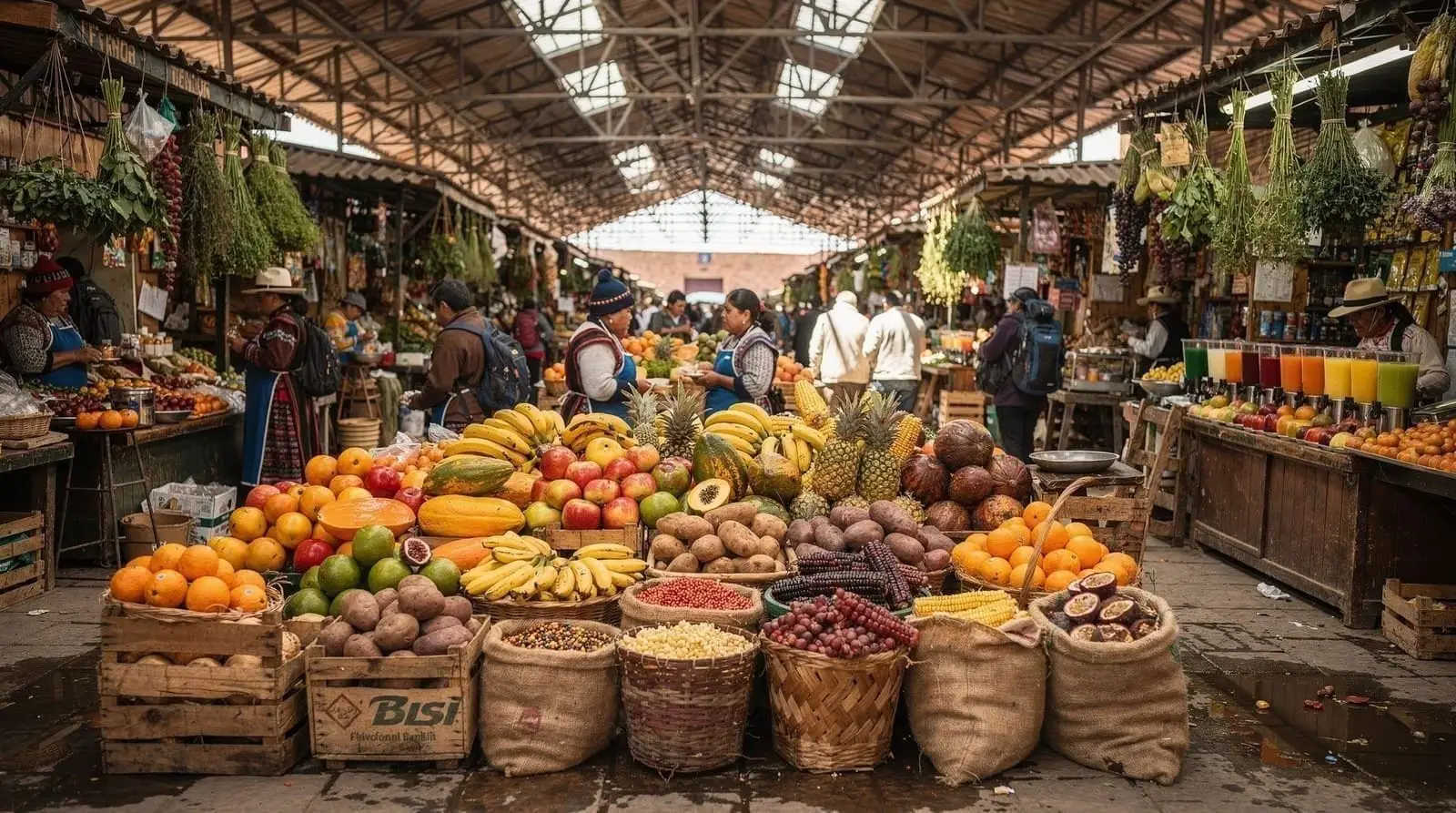
The Mercado Central de San Pedro is where Cusco actually shops. Four blocks southwest of the Plaza de Armas, behind a handsome iron-framed hall built in the early 1900s, it is a working food market first and a visitor sight a distant second — which is exactly why it is worth your time. Inside you’ll find rows of fruit and juice stalls, hanging sides of meat, sacks of dried maize in a dozen colours, walls of cheese and bread, herbalists selling coca leaves and obscure roots, comedor stalls dishing out set lunches to construction workers and shopkeepers, and a creeping fringe of souvenir vendors near the main entrances.
It is the single best place in Cusco to eat cheaply and well, to taste fruits you’ve never seen, and to understand what the Andean and high-jungle larder actually contains. It is also, increasingly, on every city tour’s route — so the front rows have tilted toward tourists while the real market hums in the back. The trick is knowing which part is which. Go in the morning, head past the souvenir stalls to where locals are eating, and you’ll have one of the most honest, inexpensive experiences in the city.
| Location | Calle Túpac Amaru, 4 blocks SW of the Plaza de Armas |
| Cost | Free entry; a juice and lunch under S/25 / $7 |
| Time needed | 1 to 2 hours |
| Getting there | 7-10 min walk, gently downhill from the plaza |
| Best time | Mornings (8-11 am) for freshest produce and fewer tour groups |
For the broader food scene beyond this one market, see the San Pedro Market food guide and the wider Peruvian food guide.
Is San Pedro Market worth visiting?
Yes — with realistic expectations. This is not a polished food hall; it’s a busy, slightly chaotic, occasionally pungent working market. If you enjoy markets, street food, and people-watching, you’ll love it, and an hour or two costs almost nothing. If you want a sanitised gourmet experience, this is not that — and that’s the point.
The honest caveat is that the section nearest the main entrance has become a souvenir bazaar selling the same mass-produced alpaca-blend jumpers and fridge magnets you’ll see across Peru. Push past it. The food heart of the market — the juice row, the comedor lunch stalls, the produce — is where the value and the character are.
What to eat and drink
The juice stalls
The most famous stop is the jugos (juice) section, where a long row of stalls blend fresh-fruit juices to order. Order a surtido (mixed) or pick your own combination; a large glass runs around S/6-12 (about $2-3). A local custom worth knowing: many stalls will refill your glass (the yapa) once for free after you finish the first, so don’t rush off. Stalls compete hard for tourists here — pick one that’s busy with locals and check the price before you order.
Comedor set lunches
The cooked-food stalls (comedores) at the back serve a menú — a set lunch of soup, a main with rice and potato, and sometimes a drink — for around S/10-15 (about $3-4). Caldo de gallina (hen soup) is the classic Cusco morning restorative. Choose a stall that’s full and turning over food quickly; freshness, not the menu board, is your guide to which one to trust.
The produce and the oddities
Wander the produce rows to see the staggering variety of Andean potatoes and corn, dried llama meat (charqui), fresh cheeses, chocolate, and a wall of breads. The herbalists’ stalls sell coca leaves (legal and traditional, useful for altitude) and a folk pharmacy of roots and tinctures. Tropical fruits trucked up from the jungle — chirimoya, lúcuma, granadilla, aguaymanto — are worth trying; ask a juice vendor to blend whatever you don’t recognise.
A note on the cheese, meat, and frog
You’ll see raw meat hanging unrefrigerated and, in some stalls, live frogs (used for a traditional blended “frog juice” claimed to cure ailments). Eat cooked food from busy stalls and you’ll be fine; be more cautious with anything raw or sitting out. This is normal market practice, not a red flag — just use the same judgement you would at any open-air market.
If cuy (guinea pig) or other traditional Andean dishes intrigue you, the cuy and Andean food guide explains what to expect before you order, and a first-hand account in San Pedro Market morning walks through an early visit hour by hour, which is a useful preview if the idea of a busy, unfiltered food market feels intimidating on paper.
Learn to cook what you see
The market is the natural starting point for a Peruvian cooking class, because the best ones begin with a guided shop through San Pedro’s stalls before you cook. This is genuinely the best way to demystify the produce: a cook walks you through the potatoes, ajíes (chillies), and herbs, then you turn them into ceviche, lomo saltado, and a pisco sour.
The San Pedro Market tour and Peruvian cooking class is the most on-the-nose option — it starts with the market shop and ends with you cooking the classics. The broader Peruvian cooking class with market tour is similar and a strong pick if the San Pedro-specific class is full. If you’d rather skip the market portion and just cook, the 3-hour Peruvian cooking class is the leaner option.
If you are weighing several cooking-class options across the city, the Cusco cooking classes compared guide breaks down which include a market visit, which focus on pisco sour and ceviche specifically, and which suit dietary restrictions.
Honest watch-outs
Pickpockets. San Pedro is the one place in central Cusco where bag theft and pickpocketing are a real, recurring problem, precisely because it’s crowded and distracting. Keep your phone away, wear your daypack on your front in tight aisles, and don’t flash cash. This is the genuine downside of the market and worth taking seriously.
Tourist pricing on the souvenirs. The craft stalls near the entrance charge inflated, non-fixed prices aimed at tour groups. The same items are cheaper and often better made in San Blas or at dedicated artisan markets. Buy food here; buy crafts elsewhere.
Check prices before ordering. A minority of juice and food stalls quote a higher “gringo price” if you don’t ask first. Confirm the cost before you order — it’s normal and not rude to do so.
Tour-group congestion. Mid-morning, city tours funnel groups through the front of the market and it gets shoulder-to-shoulder. Arrive at opening (around 8 am) for the calmest, freshest experience.
Photography etiquette. Vendors are people working, not exhibits. Ask before photographing someone close up — a smile and a small purchase go a long way, and a few will ask for a small tip. Don’t photograph anyone who waves you off. A short, genuine conversation before raising your camera usually gets a warmer reaction than a quick, unasked snap.
Practical information
Location: Calle Túpac Amaru, roughly four blocks (a 7-10 minute walk, gently downhill) southwest of the Plaza de Armas. Returning uphill is the only effort.
Hours: Roughly 6 am to 5 pm; cooked-food stalls busiest at breakfast and lunch. Sundays open later and wind down earlier.
Entry: Free.
Cost of a visit: A juice and a set lunch will run you under S/25 (about $7) total.
Time needed: 1 to 2 hours, or longer if you’re eating and lingering.
Cash: Bring small soles. Card payment is rare to non-existent inside.
Getting back: the return walk uphill toward the Plaza de Armas is the only real effort involved, and it feels noticeably harder on your first day or two at 3,400 m. Budget a few extra minutes and take it slowly rather than treating it as a quick errand.
Frequently asked questions about San Pedro Market
Is San Pedro Market worth visiting?
Yes, if you enjoy working food markets. It’s the best place in Cusco for a cheap, fresh lunch (around S/10-15) and a glass of blended fruit juice, and it gives you a real look at Andean produce. Set expectations correctly: it’s a busy, slightly gritty working market, not a polished food hall, and the front section has become a souvenir bazaar you should walk past.
What should I eat at San Pedro Market?
Start at the juice row for a fresh-blended fruit juice (S/6-12, often with a free refill), then have a set lunch (menú) at a busy comedor stall at the back — soup, a main, and a drink for about S/10-15. Try the Andean potatoes, fresh cheeses, and jungle fruits like chirimoya and lúcuma. Choose stalls that locals are eating at for freshness.
Is San Pedro Market safe?
The market itself is fine to visit, but it’s the one spot in central Cusco where pickpocketing and bag theft are a genuine, recurring risk because of the crowds. Keep your phone out of sight, wear your daypack on your front in tight aisles, and don’t display cash. With those precautions it’s safe and rewarding.
What are the opening hours of San Pedro Market?
Roughly 6 am to 5 pm daily, with food stalls busiest at breakfast and lunch. Sundays open a little later and close earlier. Mornings (8-11 am) are the best time to visit for the freshest produce and before the city-tour groups arrive.
Should I buy souvenirs at San Pedro Market?
Not really. The craft stalls near the entrances charge inflated, negotiable prices aimed at tour groups, and the goods are mostly mass-produced. You’ll find better-quality, fairer-priced crafts in the San Blas artisan quarter or at dedicated markets. Use San Pedro for food, not shopping.
Can I do a cooking class at San Pedro Market?
Yes — several Peruvian cooking classes begin with a guided shop through San Pedro’s stalls before you cook ceviche, lomo saltado, and a pisco sour. It’s one of the best ways to understand the unfamiliar produce, since a cook talks you through the potatoes, chillies, and herbs as you buy them.
Is San Pedro Market or San Blas better for shopping?
San Pedro is for food, not crafts — its souvenir stalls are inflated and mass-produced. San Blas has genuine artisan workshops and a Saturday market with fairer, fixed prices for textiles, ceramics and silver. Use San Pedro for a cheap lunch and a fresh juice, then walk (or taxi) up to San Blas for anything you want to buy and take home. The two neighbourhoods complement each other well as a single afternoon loop.
Top experiences
Bookable activities with verified prices and instant confirmation on GetYourGuide.
