Peru Amazon complete guide: where to go and how to plan
Tambopata: Multi-Day Amazon Rainforest Tour with Local Guide
Where should I go in the Peruvian Amazon?
Most travellers choose between the southern Amazon (Tambopata and Manu, reached from Cusco via Puerto Maldonado) and the northern Amazon (Iquitos, reached by air from Lima). Tambopata is the easiest add-on to a Cusco trip; Iquitos is the base for river cruises; Manu is the wildest and hardest to reach.
The single decision that shapes your whole Amazon trip
More than half of Peru is rainforest, but almost none of it is on the standard tourist map. The classic Peru circuit — Lima, Cusco, the Sacred Valley, Machu Picchu — never touches the Amazon, and a great many visitors leave the country without setting foot in the largest ecosystem it contains. That is a defensible choice when time is short, but it means missing a side of Peru that is genuinely unlike the highlands or the coast.
If you do want the jungle, the planning comes down to one decision before anything else: which Amazon. Peru’s rainforest is not a single experience you book in one of several interchangeable places. It splits into two broad worlds — the southern Amazon of the Madre de Dios region, reached overland and by air from Cusco, and the northern Amazon of the Loreto region, centred on Iquitos and reached by air from Lima. The two are roughly 1,000 km apart, served by different gateways, and suited to different kinds of trips. Get this choice right and the rest of the planning falls into place. Get it wrong and you spend money and travel days on the wrong part of the forest for your itinerary.
This guide walks through that decision, then covers the practical layer that applies everywhere: lodges versus cruises, seasons, health, costs, and what you can honestly expect to see. For the deeper detail on each region, the Tambopata guide, the Iquitos complete guide, and the Tambopata vs Manu comparison go further than there is room for here.
| Where | Southern Amazon (Tambopata/Manu) via Cusco, or northern Amazon (Iquitos) via Lima |
| Cost | Around $80–350+ per person per day, all-inclusive |
| Time needed | 3–5 days for Tambopata or Iquitos, 6–9 for Manu |
| Getting there | ~35 min flight Cusco–Puerto Maldonado, or ~2 hr flight Lima–Iquitos |
| Best time | Dry/low-water season: roughly May–Oct (south), Jun–Nov (north) |
The southern Amazon: Tambopata and Manu
The southern Amazon sits in the Madre de Dios region, southeast of Cusco. Its two headline destinations are the Tambopata National Reserve and Manu National Park, and its gateway town is Puerto Maldonado.
What makes the south the default Amazon for most Peru itineraries is simple geography: Puerto Maldonado is a 35-minute flight from Cusco on LATAM or Sky, with fares commonly in the $40–120 USD range one way. You can finish Machu Picchu in the morning and be standing on the Tambopata River the same evening. Nothing else in the Peruvian Amazon is that easy to fold into a trip.
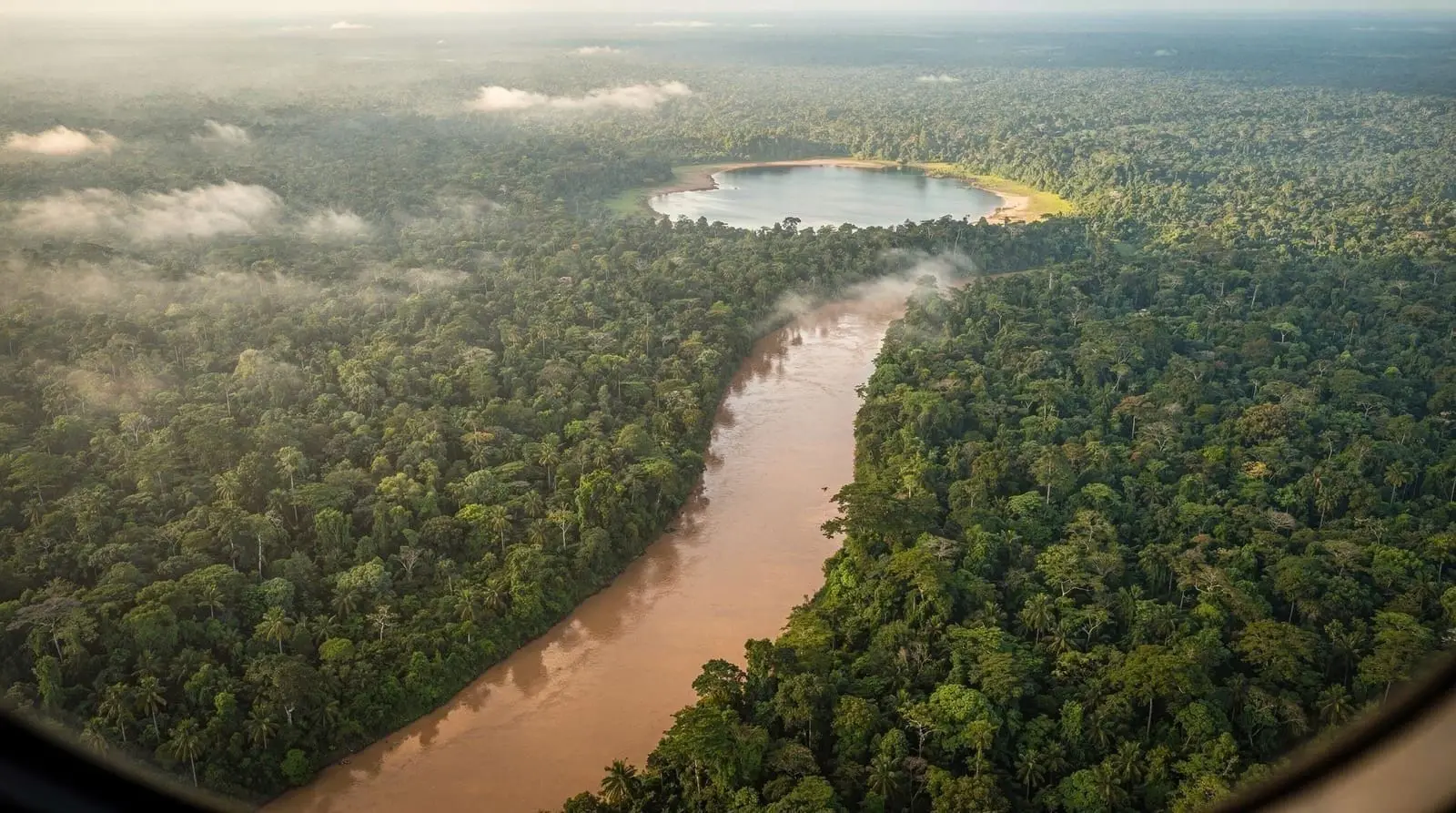
Tambopata is the accessible serious Amazon — a 274,690-hectare reserve famous for macaw clay licks, where parrots and macaws gather on riverbank clay at dawn, and for Lake Sandoval, an oxbow lake with a resident family of endangered giant otters. Lodges range from places 30 minutes upriver to deep-reserve lodges three to five hours up, near the great Colorado clay lick. It is excellent for birds, very good for monkeys and caiman, and reliable for giant otters at the lakes.
Manu is the wilder, more committing option — a vast, near-pristine park that drops from Andean cloud forest down to lowland jungle. The wildlife potential is higher and the crowds far thinner, but reaching the lowland zone overland takes the better part of two days each way (or a costly charter flight), so realistic Manu trips run six to nine days. It is a destination for travellers for whom the rainforest is the main event, not an add-on.
Tambopata: multi-day Amazon rainforest tour with a local guideIf you are weighing the two against each other, the Tambopata vs Manu guide breaks the decision down in detail. The short version: Tambopata for an efficient, high-quality Amazon add-on to a Cusco trip; Manu for a longer, harder, wilder expedition.
The northern Amazon: Iquitos and the rivers
The northern Amazon is a different proposition entirely. Iquitos, the largest city in the world unreachable by road, sits on the Amazon River in the Loreto region. You get there by a two-hour flight from Lima ($60–200 USD), not from Cusco, which immediately tells you something: the northern Amazon belongs to a Lima-based or fly-in trip, not the Cusco circuit.
What the north offers that the south cannot is scale of water and river travel. This is the Amazon proper — a river so wide that the far bank is often a smudge on the horizon. The signature northern experience is the multi-day river cruise, from comfortable passenger boats to genuine luxury expedition vessels, exploring the river system, villages, and oxbow lakes over several days. The other northern jewel is the Pacaya-Samiria National Reserve, a 2.1-million-hectare flooded forest — roughly the size of El Salvador — that is among the most biodiverse wetlands on Earth, home to manatees, both pink and grey river dolphins, and over 500 bird species.
From Iquitos: 3-day Pacaya-Samiria National Reserve tourThe north also has lodges, the same way the south does, reached 30 to 90 minutes by motorboat from Iquitos. But the thing that makes Iquitos worth the separate flight is the river — pink dolphins surfacing beside a canoe, the floating Belén neighbourhood, and the slow scale of life on the Amazon. The Iquitos complete guide covers the city and its excursions; the Iquitos jungle lodges guide covers choosing a lodge there.
So which one is right for you?
Strip away the romance and the choice is mostly about your existing itinerary and how much time you have.
Choose the southern Amazon (Tambopata) if: you are already going to Cusco and Machu Picchu, you have three to five spare days, and you want the most efficient way to add real rainforest. The short flight from Cusco makes Tambopata the obvious add-on for the great majority of Peru trips.
Choose Iquitos (northern Amazon) if: you specifically want a river cruise, you are interested in Pacaya-Samiria, you are starting or ending in Lima rather than Cusco, or the romance of the Amazon River itself is the point. The northern Amazon does not slot into a Cusco trip; it is its own destination.
Choose Manu if: the rainforest is your primary reason for visiting Peru, you have at least six to nine days, and you are willing to trade comfort and convenience for wildness and far fewer people.
For travellers trying to fit everything into a fixed window, the how many days in Peru guide and the Peru 2-week and 3-week itinerary guides show where the Amazon realistically fits. The dedicated Amazon from Cusco guide and the ready-made Cusco Amazon 7-day itinerary map the logistics of bolting Tambopata onto a Cusco trip in detail, and the Iquitos vs Puerto Maldonado guide compares the two gateway towns directly if you are still undecided on the region.
At a glance: the three regions compared
| Tambopata | Manu | Iquitos | |
|---|---|---|---|
| Gateway | Puerto Maldonado (35 min from Cusco) | Overland from Cusco (1.5–2 days) | 2 hr flight from Lima |
| Typical trip length | 3–5 days | 6–9 days | 3–7 days |
| Signature sight | Clay licks, Lake Sandoval otters | Pristine wilderness, highest wildlife odds | River cruises, pink dolphins, Pacaya-Samiria |
| Crowds | Moderate | Low | Moderate (lodges), low (cruises) |
| Cost per day | $80–350+ | Similar or slightly higher, fewer options | $80–350+, cruises higher |
| Best for | Cusco add-on | Dedicated wilderness trip | Lima-based trip, river focus |
Lodges versus cruises versus day trips
Within whichever region you pick, the format of your Amazon experience matters as much as the location.
Jungle lodges sit at a fixed point on the river and serve as a base for daily guided walks, night hikes, and canoe trips. The best have resident naturalist guides with real expertise — and that guide, far more than the lodge’s comfort level, determines what you actually see. Lodges suit travellers who want to settle into one ecosystem. The tradeoff is a limited geographic range, and wildlife near long-established lodges can be somewhat habituated to people.
River cruises, available mainly from Iquitos, move through the river system over multiple days, reaching a different habitat, village, or oxbow lake each day. They are the best way to penetrate Pacaya-Samiria and the most comfortable way to cover distance. The tradeoff is more time on the boat and less immersion in any single patch of forest.
Day trips — Monkey Island and Belén market from Iquitos, Lake Sandoval and a parrot lick from Puerto Maldonado — are real options for travellers genuinely short on time, but they are a taste, not an immersion. You sleep in town and see the forest in daylight hours only, missing the night sounds and the pre-dawn chorus that are half the point.
As a rule of thumb: for a first Amazon visit of three to four days, a good lodge within day-trip range of its gateway town is the most practical choice. For Pacaya-Samiria specifically, a multi-day cruise is the more rewarding approach.
When to go: the rhythm of flood and recession
The Peruvian Amazon does not have “summer” and “winter”; it has high water and low water, and the timing differs slightly north to south.
Southern Amazon (Madre de Dios): the dry season runs roughly May to October. Trails are walkable, river levels moderate, wildlife easier to find, and crucially the macaw clay licks are most active from May to September. Expect occasional friaje cold snaps — brief southern wind events that drop temperatures sharply for a day or two — so pack one warm layer even in the heat. The wet season (November to March) means heavy rain, high rivers, lush forest, and quieter, cheaper lodges, but some trails flood.
Northern Amazon (Loreto): the low-water season runs roughly June to November. Rivers recede, beaches appear, wildlife concentrates around remaining water, fishing improves, and Pacaya-Samiria’s interior oxbow lakes become accessible by canoe. The high-water season (December to May) floods the forest, opening boat routes through what is dry land in other months but dispersing fish and raising mosquito numbers.
Neither season is “wrong,” and the flooded forest has its own spectacular character. But if you are optimising for wildlife viewing and trail-based exploration, the dry/low-water windows are the better bet. The best time to visit Peru guide sets these Amazon windows against the rest of the country’s seasons.
Health and safety: the honest version
The Amazon requires real preparation, and it is worth being factual rather than either alarmist or dismissive.
Yellow fever vaccination is recommended for all Peruvian Amazon lowlands. Get it at least 10 days before travel and carry the international certificate (the yellow card), as some neighbouring Amazon countries request proof at borders. A single dose protects most people for life.
Malaria risk exists, higher in Loreto (Iquitos) than in some southern areas. Whether to take antimalarial prophylaxis is genuinely a decision for a travel-health doctor, based on your specific itinerary, the season, and your health — this is not something to decide from a blog. Either way, mosquito-bite prevention is non-negotiable.
Dengue is present across the lowlands and there is no prophylactic drug, so bite prevention is the only defence. Bring high-strength DEET repellent (at least 30%), wear long sleeves and trousers at dawn and dusk, and consider permethrin-treated clothing.
General safety in the gateway towns is reasonable with normal urban precautions. The genuine hazards are environmental — sun at the equator, river currents, insects, and getting lost off-trail — and the answer to all of them is going with a responsible, licensed operator and following your guide. For the wider national picture, see the Peru travel safety guide.
Puerto Maldonado and Iquitos both sit at low altitude, which is a relief after Cusco’s 3,400 m or Puno’s 3,800 m — travellers arriving from the highlands often notice the thick, humid air but not the breathlessness of altitude. That makes the Amazon leg, if anything, a physically easier stretch of a Peru trip than the mountain sections either side of it.
What it costs
Amazon trips are sold mostly as all-inclusive per-day packages, which makes comparison easier than it first looks. Rough 2026 figures, per person:
- Day trips (Lake Sandoval, Monkey Island, a parrot lick): $40–80 USD including transport, guide, and often lunch.
- Budget lodge packages: from about $80 per day, all-inclusive (transfers, meals, guided excursions).
- Mid-range to good lodges: roughly $120–200 per day.
- Deep-reserve and premium lodges, and Pacaya-Samiria cruises: $200–350+ per day, with the better river cruises higher still.
- Flights: Cusco–Puerto Maldonado $40–120 USD each way; Lima–Iquitos $60–200 USD each way.
The Peru trip cost guide and the Peru domestic flights guide help slot these into an overall budget. One honest note on operators: the cheapest jungle packages sometimes cut corners on guiding, group size, and environmental practice. The guide is the single biggest determinant of your experience, so it is worth paying for and worth asking hard questions about before booking.
Multi-day river cruises deserve a separate mention, since they are priced and sold differently from lodges — usually as a fixed per-cabin rate covering the whole boat, meals and shore excursions included. The Amazon river cruises guide breaks down vessel types, cabin classes and realistic per-day costs for Pacaya-Samiria and the wider Iquitos river network.
What to pack
Amazon packing is different from the rest of a Peru trip, and getting it wrong means either sweating through cotton or getting bitten through thin fabric. The essentials: lightweight long sleeves and trousers in quick-dry synthetic fabric (not cotton, which stays wet), a rain jacket, closed shoes for the trail plus sandals for the boat, a headlamp for night walks and pre-dawn departures, high-strength DEET repellent, a dry bag for electronics, and a swimsuit if your lodge offers a river swim. Most lodges supply rubber boots for muddy stretches, so you rarely need to bring your own. The full checklist, including what to leave at home, is in the what to pack for the Amazon guide.
Wildlife: setting honest expectations
The Peruvian Amazon is among the most biodiverse places on the planet, and with a sharp guide you will see a remarkable quantity of life. What it is not is a safari where charismatic mammals parade past on schedule.
Highly likely: abundant birds (parrots, macaws, toucans, hoatzins, raptors), several monkey species, caiman on night trips, and — at the oxbow lakes — giant otters. Active clay licks, in season and with luck on the weather. Around Iquitos, pink and grey river dolphins.
Possible with time and luck: capybara, peccary herds, sloths, and an endless catalogue of frogs, snakes, butterflies, and insects that good naturalists get genuinely excited about.
Rare: jaguar, tapir, giant anteater. They are here, and a fortunate few see them, but planning a trip around them leads only to disappointment.
The travellers who leave happiest tune into the smaller scale — leafcutter ant columns, poison frogs, the night sounds, the sheer diversity of birds — rather than waiting for a jaguar that almost never comes.
Putting it together
For most people the answer is straightforward: if Cusco is already on your itinerary, add three to five days in Tambopata from Puerto Maldonado. If you are drawn to the river itself, the cruises, or Pacaya-Samiria, fly from Lima to Iquitos and treat it as its own trip. If the rainforest is your whole reason for coming, give Manu the week it deserves.
From there, the region-specific guides handle the detail: Tambopata and Puerto Maldonado for the south, Iquitos and Iquitos jungle lodges for the north, and Tambopata vs Manu for the southern wilderness decision.
For routes that weave the jungle into a wider trip, see the itineraries section and the ready-made 7-day Amazon itinerary, and for flight search and planning tools, the tools page. One traveller’s real diary of tacking the jungle onto a Cusco trip is in the Amazon from Cusco trip diary.
Frequently asked questions about Peru Amazon complete guide: where to go and how to plan
Which is the best Amazon region in Peru for a first visit?
Do I need a yellow fever vaccination for the Peruvian Amazon?
Is malaria a real risk in the Peruvian Amazon?
How many days do I need for the Peruvian Amazon?
Will I see jaguars and other big animals?
Is the Amazon better in the dry or wet season?
What should I pack for the Peruvian Amazon?
Top experiences
Bookable activities with verified prices and instant confirmation on GetYourGuide.

