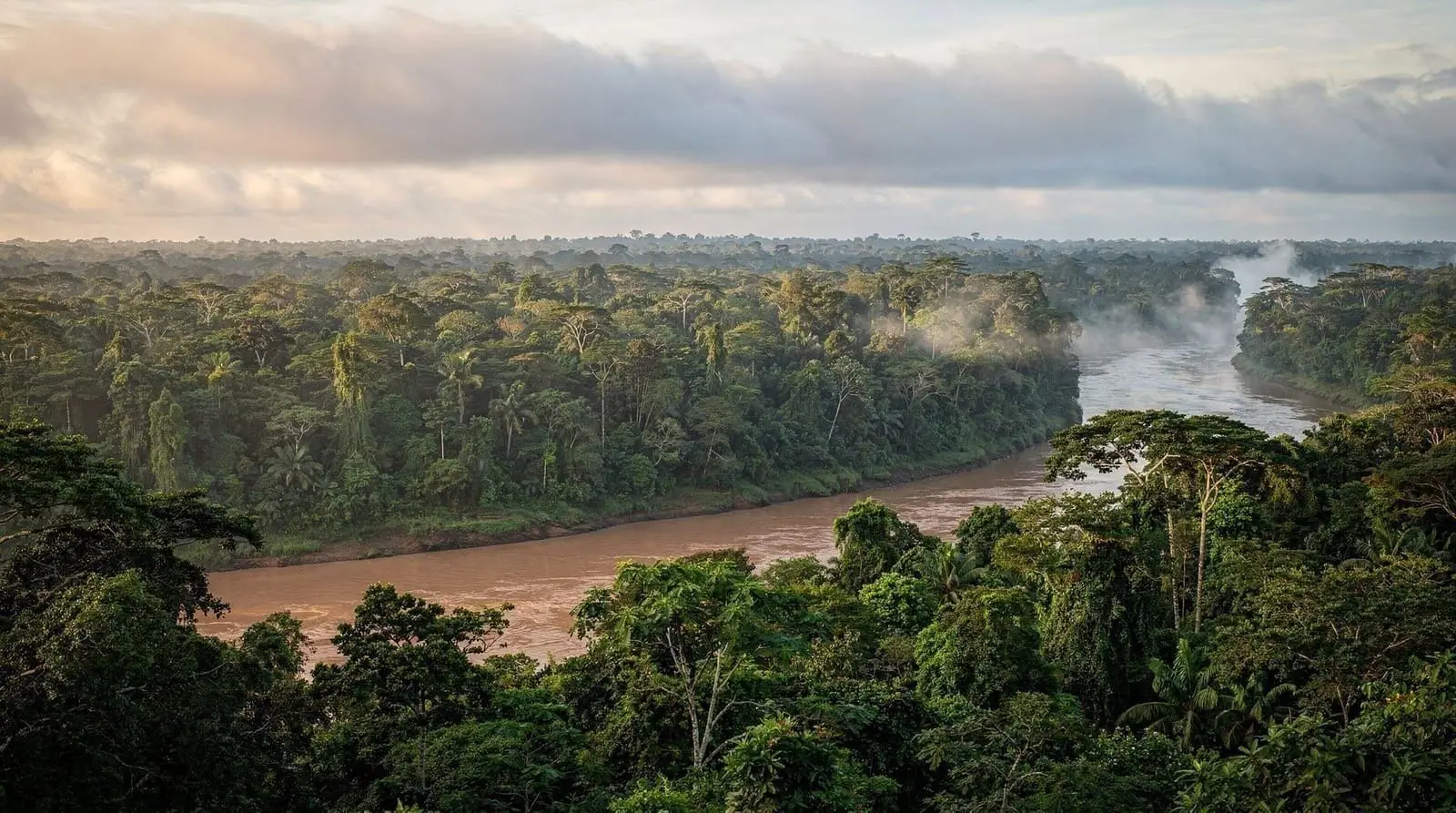
Manu National Park
Manu National Park is Peru's most pristine Amazon — a UNESCO biosphere of cloud forest and lowland jungle, reached by a long expedition from Cusco.
Quick facts
- Country
- Peru (Madre de Dios & Cusco regions)
- Status
- UNESCO World Heritage Site & Biosphere Reserve
- Size
- Over 1.7 million hectares across three zones
- Best for
- Pristine wilderness, biodiversity, serious wildlife travellers
The Amazon at its least compromised
Manu is the name serious naturalists say with a certain reverence. While Tambopata is the accessible Amazon and Iquitos is the great-river Amazon, Manu is the wild one — a vast, scientifically legendary protected area that descends from the high Andes through cloud forest into untouched lowland rainforest, sheltering some of the most intact biodiversity left on the continent. It is a UNESCO World Heritage Site and Biosphere Reserve covering more than 1.7 million hectares, and within it live an estimated 1,000-plus bird species, 200-plus mammals, and numbers of insects and plants that defeat any tidy count.
The catch — and it is a real one — is access. Manu is not a quick add-on. Reaching the productive lowland zone means a long overland descent from Cusco followed by river travel, typically as part of a multi-day guided expedition of five to nine days. There are no short cuts that deliver the heart of the park. This is precisely why Manu remains so pristine: its difficulty is its protection. For travellers willing to commit the time, it offers a depth of wilderness that the more convenient reserves cannot match.
| Where | Madre de Dios & Cusco regions, reached overland from Cusco |
| Cost | Booked direct with a specialist operator, not on GetYourGuide; varies widely by zone and lodge tier |
| Time needed | 5 to 9 days |
| Getting there | Overland from Cusco over the Andes, then motorised canoe |
| Best time | May to October (dry season) |
Understanding Manu’s three zones
Manu is not a single uniform forest; it is legally and ecologically divided into zones, and knowing which one you can visit matters enormously for planning.
The Cultural Zone (Zona Cultural) is the outer, buffer area where local communities live and most lodges sit. It runs through cloud forest and the upper jungle, and it is where the road from Cusco ends and river travel begins. Much of what budget operators sell as a “Manu tour” actually takes place here or in the adjacent Cultural Zone forests rather than in the strictly protected core. The wildlife is good and the cloud forest is genuinely special, but it is not the famous untouched heart of the park.
The Reserved Zone (Zona Reservada) is the area open to controlled tourism inside the protected park. This is where the great oxbow lakes — Cocha Salvador and Cocha Otorongo — lie, with their giant otters, and where the richest lowland wildlife watching happens. Access requires a permit, a licensed operator, and the time to get there. This is the Manu most people mean when they imagine the place.
The Core / Intangible Zone (Zona Núcleo) is strictly off-limits to tourism, reserved for science and for Indigenous peoples living in voluntary isolation. No tourist visits this zone, and it is right that none does.
A blunt word for shoppers: many cheap “Manu” tours never enter the Reserved Zone at all. There is nothing dishonest about a Cultural Zone trip — it can be excellent — but if your goal is Cocha Salvador and the protected core, you must confirm specifically that your itinerary includes the Reserved Zone, because the price gap between the two is large and the difference on the ground is real.
Cloud forest to lowland jungle
One of Manu’s distinctive pleasures is the descent itself. A classic overland expedition leaves Cusco and climbs over a high Andean pass before dropping into the cloud forest on the eastern slopes — a misty, mossy, orchid-hung world that is a destination in its own right. This is prime territory for the Andean cock-of-the-rock, Peru’s flamboyant national bird, which gathers at dawn leks to display; for the spectacled bear, occasionally glimpsed; and for an astonishing range of hummingbirds and tanagers. The Manu Road through this zone is one of the most celebrated birding routes on Earth.
From the cloud forest the route continues down to the river towns, where road gives way to motorised canoe for the journey deeper into the lowlands. Over the course of an expedition you pass through several distinct ecosystems stacked by altitude, which is part of why Manu’s species totals are so staggering — it protects everything from high-elevation cloud forest to steamy lowland rainforest in a single continuous swathe.
What you can realistically see
Manu’s reputation rests on biodiversity, and with the time and the right zone it delivers. At the Reserved Zone’s oxbow lakes, giant otters hunt in family groups and are among the more reliable highlights. Black caiman, the Amazon’s largest predator, bask on the banks. Thirteen-plus species of monkey live in the park — spider, woolly, howler, capuchin, squirrel, and the diminutive pygmy marmoset among them — and Manu is one of the best places in Peru to encounter several in a single trip. Tapirs are seen with real, if uncommon, regularity at certain clay licks. Macaw and parrot clay licks operate here as in Tambopata. And the birdlife is simply world-class, the reason dedicated birders travel from across the globe.
The honest caveats apply here as everywhere in the Amazon. Jaguars are present and sighted more often in Manu than in most reserves, but they remain a fortunate rarity, not an expectation. The densest forest hides far more than it reveals, and weather, water levels, and luck all shape any given day. What Manu reliably offers that the easier reserves cannot is the sense of true wilderness — long stretches with no other tourists, forest that runs unbroken to the horizon, and the quiet that comes with genuine remoteness.
How a Manu expedition works
Manu is sold almost exclusively as a multi-day, all-inclusive guided expedition; independent travel into the protected zones is not practical. A typical programme runs five to nine days and follows the descent from Cusco through cloud forest to the lowland lakes, with nights split between cloud-forest lodges, jungle lodges, and sometimes basic tented camps deeper in.
Expeditions vary widely in depth and price. The cheaper end concentrates on the Cultural Zone and may use rougher transport and camping; the higher end reaches the Reserved Zone lakes, uses better lodges, and carries expert naturalist guides. As with all Peruvian Amazon trips, the guide is the variable that matters most — a top naturalist transforms the experience. Before booking, confirm three things in writing: whether the itinerary actually enters the Reserved Zone, the guide’s qualifications, and the group size.
Reputable operators specialising in Manu include Manu Expeditions, InkaNatura, Pantiacolla, and Crees, among others. Be especially wary of suspiciously cheap “Manu” trips sold on the street in Cusco; they frequently overpromise on the zones they reach. Because Manu currently has no published GetYourGuide listings, arranging a trip means booking directly with a specialist operator rather than through a marketplace — research recent independent reviews carefully and compare exactly what each itinerary includes.
When to visit Manu
Manu is firmly a dry-season destination. The recommended window is roughly May to October, when trails are walkable, rivers are navigable, and wildlife is easier to find. The cloud-forest portion can be misty and cool year-round, so layers are essential regardless of month. As elsewhere in the southern Amazon, brief friaje cold snaps can drop temperatures sharply for a day or two even in the dry season, so pack a warm layer.
During the wet season (roughly November to March), heavy rain swells rivers, sections of the Manu Road can become difficult or impassable, and many operators reduce or suspend deep-park expeditions. Some shorter cloud-forest and Cultural Zone trips still run, but the full Reserved Zone experience is largely a dry-season proposition.
On health, the standard Amazon precautions apply: a yellow fever vaccination is recommended (get it at least 10 days ahead and carry the certificate), malaria risk exists in the lowlands and antimalarial prophylaxis is a decision for a travel-health doctor, and dengue is present — so high-DEET repellent, long sleeves at dawn and dusk, and permethrin-treated clothing all matter.
How Manu compares and where it fits
Choosing between Manu and the alternatives comes down to time and intent. Tambopata, reached via a 35-minute flight from Cusco through Puerto Maldonado, is the practical choice for travellers with a few days and a Cusco-based itinerary; it offers superb clay licks and Lake Sandoval without the long overland slog. Iquitos in northern Peru is the place for Amazon River cruises and Pacaya-Samiria. Manu is for those who specifically want the wildest, most pristine forest and are prepared to give it the better part of a week.
Because the overland route begins in Cusco, Manu pairs naturally with the southern highlands circuit for travellers who can extend their trip. For suggested combinations of the Andes and the jungle, see the itineraries section, and for planning and transport resources, the tools page.
Frequently asked questions about Manu National Park
How do I get to Manu National Park?
Manu is reached overland from Cusco, climbing over a high Andean pass and descending through cloud forest before continuing by motorised canoe into the lowland jungle. There is no quick route to the productive interior; it is visited as a multi-day guided expedition, typically five to nine days. The journey through stacked ecosystems is part of the experience, but it demands time.
What is the difference between Manu’s Cultural Zone and Reserved Zone?
The Cultural Zone is the outer buffer area where communities and most lodges sit; many budget “Manu” tours stay here. The Reserved Zone is the protected interior open to controlled tourism, home to the famous oxbow lakes (Cocha Salvador, Cocha Otorongo) and the richest wildlife. The Core Zone is closed to all tourism. If you want the celebrated heart of Manu, confirm your tour specifically enters the Reserved Zone, as cheaper trips often do not.
How many days do I need for Manu?
A meaningful Manu expedition runs five to nine days, because reaching the Reserved Zone’s lakes from Cusco takes substantial overland and river travel. Shorter trips generally stay in the cloud forest and Cultural Zone, which can be rewarding for birdwatching but do not reach the protected core. If your goal is the famous interior, plan for at least six to seven days.
Is Manu better than Tambopata?
It depends on your priorities. Manu is wilder, more pristine, and richer in untouched wilderness, but far harder and slower to reach. Tambopata is reached by a 35-minute flight from Cusco and offers excellent clay licks, Lake Sandoval, and birds with much less travel time. Choose Manu if pristine wilderness is your central goal and you have the days; choose Tambopata for an efficient, high-quality Amazon add-on to a Cusco trip.
What wildlife can I see in Manu?
Manu reliably offers giant otters at its oxbow lakes, black caiman, numerous monkey species, macaw clay licks, and world-class birdlife including the Andean cock-of-the-rock in the cloud forest. Tapirs are seen with some regularity at clay licks, and jaguars are sighted more often here than in most reserves, though they remain a rare, fortunate encounter rather than an expectation.
When is the best time to visit Manu?
The dry season, roughly May to October, is strongly preferred, with walkable trails, navigable rivers, and easier wildlife viewing. In the wet season (November to March), heavy rain swells rivers and can make the Manu Road impassable, so deep-park expeditions are limited. The cloud-forest portion is misty and cool year-round, so pack layers in any season.
Do I need vaccinations and antimalarials for Manu?
A yellow fever vaccination is recommended for Peru’s Amazon lowlands; get it at least 10 days before travel and carry the certificate. Malaria risk exists in the lowland zones, and whether to take antimalarial prophylaxis is a decision to make with a travel-health doctor. Dengue is also present, so use high-DEET repellent, wear long sleeves at dawn and dusk, and consider permethrin-treated clothing.