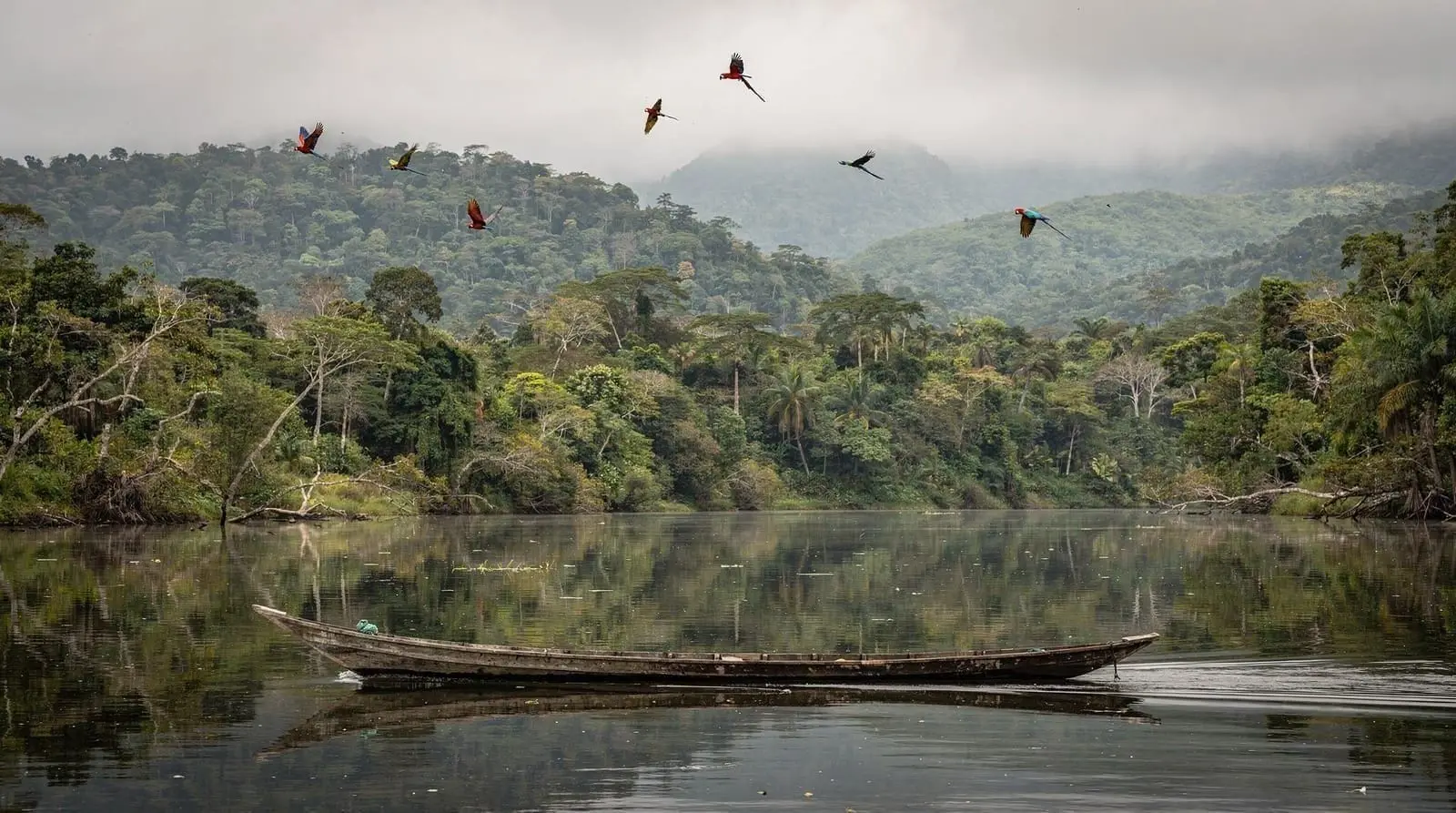
Tambopata vs Manu: choosing your southern Peru Amazon
Tambopata: Multi-Day Amazon Rainforest Tour with Local Guide
Should I go to Tambopata or Manu?
Choose Tambopata if you have three to five days and want the most accessible serious Amazon — a 35-minute flight from Cusco, macaw clay licks, and Lake Sandoval's giant otters. Choose Manu if the rainforest is your main reason for visiting Peru, you have six to nine days, and you want wilder, more pristine forest with far fewer people, accepting a long overland journey to get there.
Two visions of the southern Amazon
Travellers heading to Peru’s southern rainforest face a choice that sounds technical but is really about temperament. Tambopata and Manu National Park both protect lowland Amazon in the Madre de Dios region, both deliver macaw clay licks and oxbow-lake wildlife, and both are reached from the Cusco side of the country. On a map they look like near-equivalents. In practice they offer very different trips, and choosing between them comes down to one question: how much do you want the rainforest, and how much are you willing to give up to get the wildest version of it?
Tambopata is the accessible, efficient Amazon. Manu is the deep, committing one. Neither is “better” in the abstract — they suit different travellers and, crucially, different amounts of available time. This guide compares them across the things that actually decide the choice: access, wildlife, cost, days needed, comfort, and crowds. For the wider context on how both fit alongside the northern Amazon, see the Peru Amazon complete guide.
| Tambopata | Manu | |
|---|---|---|
| Access | 35-min flight from Cusco | ~2 days overland each way |
| Days needed | 3-5 | 6-9 |
| Total cost | Lower (shorter trip) | Higher (longer trip) |
| Wildlife potential | Excellent, reliable | Higher ceiling, wilder |
| Crowds | More visited | Far fewer people |
Access: the difference that decides everything
If you remember only one thing from this comparison, make it this: access is the single biggest difference, and for most people it settles the decision.
Tambopata is reached from Puerto Maldonado, a 35-minute flight from Cusco on LATAM or Sky (commonly $40–120 USD one way). From town it is a boat ride up the Tambopata River — anywhere from 30 minutes to the closest lodges to four or more hours to the deep-reserve lodges. You can be deep in the reserve the same day you leave Cusco.
Manu has no quick way in. Reaching its lowland reserved zone overland from Cusco takes the better part of two days each way: a long, spectacular drive over the Andes and down through cloud forest, then a river journey into the lowlands. A handful of operators offer a charter flight to cut the time, but at significant cost. The drive itself is genuinely scenic — birders love the cloud-forest transition zone — but it is two days you are not in the lowland jungle, and you do it again on the way out.
That single fact cascades through everything else: how long the trip takes, how much it costs, and how many other people you share the forest with.
Tambopata: multi-day Amazon rainforest tour with a local guideWildlife: potential versus reliability
On paper, Manu wins the wildlife comparison. It is wilder, far less visited, and spans a huge altitudinal range from Andean cloud forest down to lowland jungle, which gives it one of the longest species lists of any protected area on the planet. The reserved zone sees so few people that animals are less wary, and the odds of rarer species — including, very occasionally, the big cats — are genuinely higher than at most of Tambopata.
But “higher potential” is not the same as “you will see more.” Two honest qualifiers matter. First, the lowland reserved zone is the part of Manu where this potential lives, and reaching it is exactly what takes the time and money described above. Shorter Manu trips that only reach the cloud-forest cultural zone do not deliver the lowland wildlife the park is famous for. Second, even in Manu, jaguars and tapirs remain rare; the difference in your odds is real but modest, and no trip to either reserve should be planned around them.
Tambopata, meanwhile, is no consolation prize. Its clay licks are the famous ones — including the Colorado lick, among the largest macaw licks in the world — and Lake Sandoval’s giant otters are as reliable a wildlife highlight as the southern Amazon offers. Birdlife at both reserves is world-class. For the great majority of visitors, the practical wildlife experience at a good Tambopata lodge is excellent and not dramatically below Manu, especially when you account for the extra days Manu demands.
The Tambopata guide details exactly what to expect at the licks and the lake.
Cost: it is mostly about days
Per-day rates at comparable lodges in the two areas are not wildly different. The real cost gap comes from duration. A satisfying Manu trip runs six to nine days; a satisfying Tambopata trip runs three to five. Multiply even a moderate daily rate across those extra days, add the logistics of the long overland journey, and Manu ends up meaningfully more expensive overall.
Rough 2026 figures, per person:
- Tambopata: budget lodges from ~$80/day, mid-range ~$120–200/day, deep-reserve lodges $200–350+/day, over three to five days. Plus the Cusco flight, $40–120 each way.
- Manu: mid-range programmes typically run higher per total trip simply because they last six to nine days; expect total costs well above an equivalent Tambopata trip, with charter-flight options adding substantially more.
For budgeting your wider trip, the Peru trip cost guide puts these in context.
Tambopata Peruvian Amazon jungle: 3 days / 2 nightsDays needed and how each fits an itinerary
This is where the two diverge most sharply for trip planning.
Tambopata folds neatly into the standard southern circuit. The common shape is Cusco and the Sacred Valley, then Machu Picchu, then a short flight down for three to five days of jungle. It is the Amazon you add to a Peru trip.
Manu is harder to fold in. Its six-to-nine-day commitment means it tends to define a trip rather than slot into one. If you have only two weeks in Peru, Manu eats so much of your time that you may have to drop other regions to fit it. The travellers who choose Manu are usually those for whom the rainforest, and birds in particular, are the main event. The how many days in Peru guide and the 2-week and 3-week itinerary guides show where each realistically fits.
Comfort and crowds
Comfort: Tambopata has the broader range, from rustic budget lodges to genuinely comfortable mid-range and high-end options with private bathrooms and reliable hot water. Manu’s lodges trend toward the more rustic and expedition-style, in keeping with its remoteness, though comfortable options exist.
Crowds: here Manu has the clear edge. Tambopata, being accessible, sees considerably more visitors, especially the closer lodges and Lake Sandoval, which can feel busy in high season. Manu’s remoteness is its own filter — far fewer people make the journey, so the forest feels wilder and more solitary. If the sense of being somewhere genuinely remote matters to you, Manu delivers it in a way Tambopata, for all its quality, cannot.
A simple decision framework
Boil it all down and the choice is usually clear:
Choose Tambopata if: you are already going to Cusco; you have three to five spare days; you want excellent clay licks, Lake Sandoval, and birds without a major time commitment; you prefer the option of more comfort; and you are fine sharing the more popular spots with other travellers. This describes most Peru visitors.
Choose Manu if: the rainforest is a primary reason for your trip; you have six to nine days to give it; you want the wildest, least-visited southern Amazon and the highest wildlife potential; you enjoy the cloud-forest-to-lowland journey as part of the experience; and you are willing to accept more rustic comfort and higher overall cost for the solitude.
If you find yourself genuinely torn, the tiebreaker is almost always time. With under a week, Tambopata is the answer; with a week or more dedicated to the jungle, Manu becomes worth its demands.
Beyond the south: the northern alternative
Worth noting, before you commit, that the southern Amazon is not the only Peruvian rainforest. The northern Amazon around Iquitos — reached by air from Lima, not Cusco — offers river cruises and the vast Pacaya-Samiria reserve, a different experience built around the great river itself rather than lodge-based forest walks. If a river cruise or pink dolphins appeal more than clay licks, that may change your whole plan; the Iquitos complete guide covers it. For routes that combine highlands and jungle, see the itineraries section, and for flight search, the tools page.
What each looks like in practice, day by day
A typical Tambopata programme runs: day one, fly Cusco to Puerto Maldonado, transfer and boat to the lodge, afternoon forest walk; day two, dawn clay lick or Lake Sandoval excursion, afternoon canopy tower or night walk; day three, morning activity and flight back to Cusco. Compressed but genuinely full.
A typical Manu programme runs: days one and two, the overland drive from Cusco over the Andes into cloud forest, with birding stops along the way; days three to six, boat and lodge time in the lowland reserved zone with clay licks, oxbow lakes and forest walks; days seven and eight, the return journey. The cloud-forest transition itself is a highlight many Manu travellers rate as highly as the lowland jungle.
If you are still unsure: a quick self-check
Ask yourself three questions. Do you have six or more free days specifically for the jungle, not counting the rest of your Peru trip? Is remoteness and low visitor density more important to you than convenience? Are you comfortable with a long, if scenic, overland journey each way? Two or three “yes” answers point to Manu. Mostly “no” answers point to Tambopata, and there is no shame in it — Tambopata’s clay licks and Lake Sandoval otters satisfy the great majority of travellers who make the trip.
Frequently asked questions about Tambopata vs Manu: choosing your southern Peru Amazon
Is Manu better for wildlife than Tambopata?
How long does it take to reach Manu?
Which is cheaper, Tambopata or Manu?
Can I do Manu as a short trip?
Do both have macaw clay licks?
Are vaccinations the same for both?
Can I visit both Tambopata and Manu on the same trip?
Which is better for birdwatchers specifically?
Top experiences
Bookable activities with verified prices and instant confirmation on GetYourGuide.
