Iquitos complete guide: Peru's Amazon river capital
Iquitos: 3-Day, 2-Night Guided Amazon Jungle Tour
Is Iquitos worth visiting?
Yes, if you want the river Amazon rather than the Cusco-circuit jungle. Iquitos is the largest city in the world unreachable by road, a two-hour flight from Lima, and the base for Amazon river cruises, jungle lodges, the vast Pacaya-Samiria reserve, and pink dolphins. It is its own trip from Lima, not an add-on to a Cusco itinerary.
The Amazon you reach only by air or water
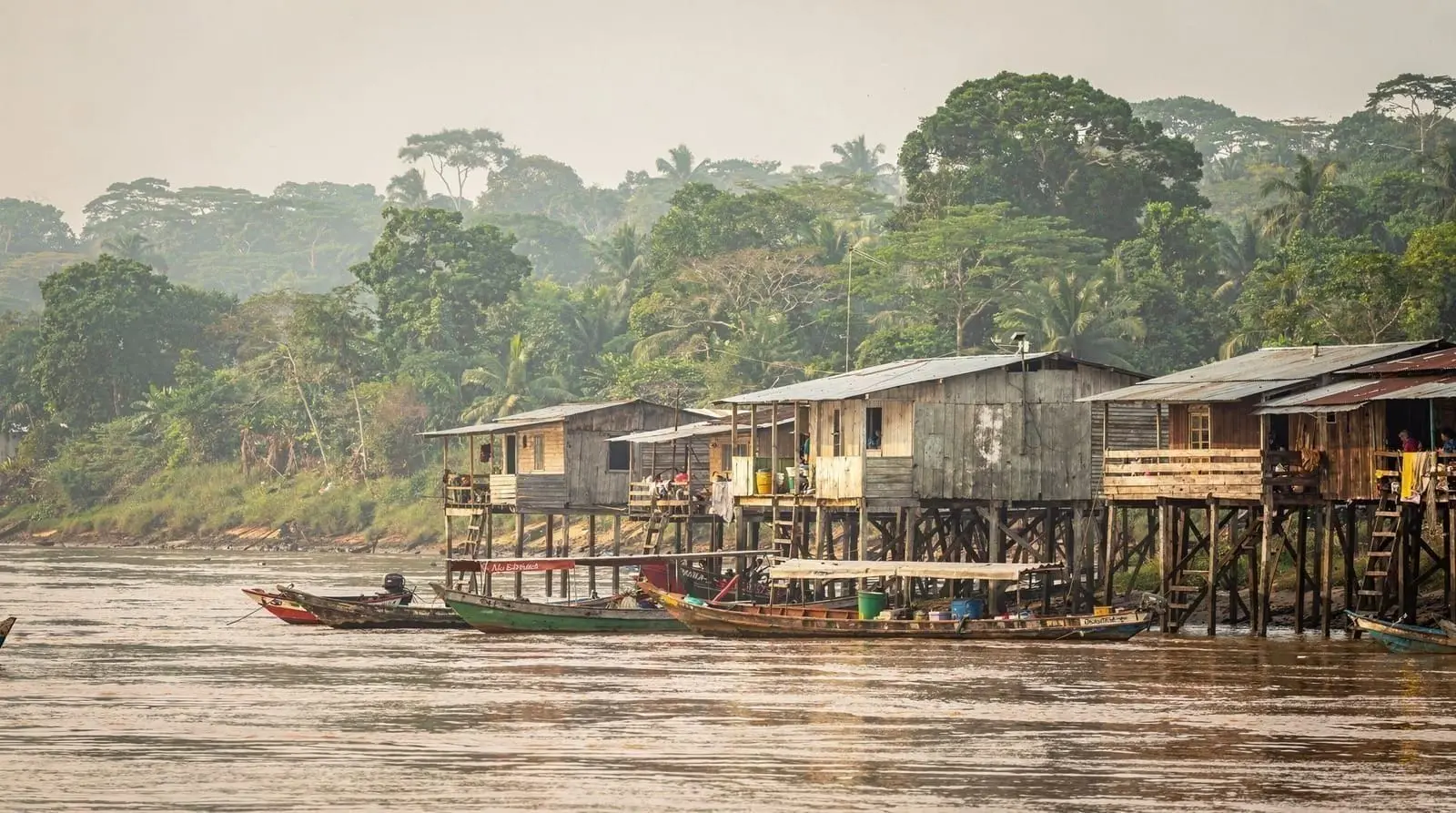
Iquitos is the great anomaly of Peruvian travel. A city of roughly a million people, the commercial capital of the vast Loreto region, and the largest city on Earth that no road has ever reached. You arrive by a two-hour flight from Lima or by a multi-day boat up the Amazon — there is no other way in. That isolation is not a quirk to be tolerated; it is the entire character of the place. Step off the plane and the difference from the rest of Peru is immediate: the heat, the river that stretches to the horizon, the mototaxis swarming the streets, and the floating neighbourhoods that rise and fall with the water.
Iquitos belongs to a different Amazon from the Cusco-circuit jungle of Tambopata and Manu. This is the northern, river Amazon — the Amazon of multi-day cruises, the immense Pacaya-Samiria reserve, pink dolphins, and the rubber-boom city itself. Crucially, it is reached from Lima, not Cusco, which means it is a destination in its own right rather than something you bolt onto a southern trip.
This guide covers how to get there, the central lodge-versus-cruise decision, the headline experiences, the practicalities, and when to go. For choosing a specific lodge, the Iquitos jungle lodges guide goes deeper, and for how Iquitos compares with the southern Amazon, see the Peru Amazon complete guide.
| Where | Loreto region, reached only from Lima |
| Getting there | ~2hr flight from Lima ($60–200+) or multi-day boat |
| Best time | Low water, roughly June–November, for wildlife |
| Typical trip length | 3–7 days |
| Vaccination | Yellow fever recommended/required for Loreto |
| Signature experiences | Pink dolphins, Pacaya-Samiria, Belén market |
Getting to Iquitos
By air is how most visitors arrive. LATAM and Star Perú operate several daily flights from Lima’s Jorge Chávez Airport; flight time is about two hours and fares run $60 to $200+ USD each way depending on advance purchase and season. Iquitos’s Francisco Secada Vignetta Airport is roughly 5 km from the centre; a mototaxi transfer costs around S/10–15 (about $3–4). The Peru domestic flights guide covers booking these.
By boat is a far longer proposition and an experience rather than mere transport. The cargo-passenger ferry from Pucallpa (reachable by bus from Lima) takes three to four days depending on the season; hammock spaces cost around S/80–100 and basic private cabins S/150–250. The journey — river life, communities, birds, the river slowly widening as you approach — is the point, and it is best treated as a one-way option for travellers with time, not a round trip. There is also a freight-oriented route via the Brazil–Colombia–Peru tri-border (Tabatinga–Leticia–Santa Rosa), used by some long-distance travellers but requiring real planning.
Lodges versus river cruises: the central decision
Every Iquitos visitor faces the same first choice, and both options have genuine merit.
Jungle lodges sit at fixed points on the river, typically 30–90 minutes by motorboat from Iquitos. They are a consistent base for daily guided walks, night hikes, canoe trips, and wildlife observation, and the best have resident naturalist guides with real Amazonian expertise. You sleep in the forest, with its night sounds and pre-dawn bird chorus. The tradeoff is a limited geographic range, and wildlife around long-established lodges can be somewhat habituated to people. For a first visit of three days, a good lodge within reach of the city is usually the most practical option.
Iquitos: 3-day, 2-night guided Amazon jungle tourRiver cruises move through the river system over multiple days, accessing different habitats, villages, and oxbow lakes, and they are the standard way to reach the interior of Pacaya-Samiria. They range from comfortable passenger boats with modest cabins to genuine luxury expedition vessels. Sleeping on the river, waking to mist on the water, and exploring a new location each day is different in character from a lodge stay. The tradeoff is more time aboard and less immersion in a single ecosystem.
The Iquitos jungle lodges guide helps you choose a lodge specifically; for the river, the choice is mostly about budget and how many days you can give Pacaya-Samiria.
Pacaya-Samiria: the other great Amazon reserve
Most travellers think of Manu when they think of Peru’s wildest jungle, but Pacaya-Samiria in Loreto is equally extraordinary and far less visited. The reserve covers 2.1 million hectares — roughly the size of El Salvador — protecting the flooded forest between the Ucayali and Marañón rivers north and west of Iquitos. It is one of the most biodiverse wetland ecosystems on Earth, home to manatees, river otters, both pink and grey river dolphins, anacondas, electric eels, and more than 500 bird species.
Reaching the interior requires a licensed guide and a registered operator. Multi-day cruises from Iquitos that penetrate the reserve’s canals and oxbow lakes are the standard approach; the minimum meaningful visit is three days, and five to seven reveals far more.
From Iquitos: 3-day Pacaya-Samiria National Reserve tourEntry to the reserve carries a fee (currently around S/60 per person per day) on top of the tour cost, with permits arranged by your operator. All trash must be carried out, and the better operators take the ecosystem’s fragility seriously.
Pink dolphins, Monkey Island, and the Belén market
Three experiences define an Iquitos visit beyond the deep-jungle trips.
Pink dolphins. The boto (Inia geoffrensis) is one of the Amazon’s strangest residents — adults reach 2.5 m and males take on a deep pink colour with age and injury. They live in the waterways around Iquitos year-round and are reliably seen on lodge and river excursions, most easily in the low-water season. Swimming with them is offered by some operators but is ethically contested — it can disrupt the animals and risk both them and you — and most reputable naturalists now discourage it.
Monkey Island. Isla de los Monos, about 90 minutes upriver, is a sanctuary for rescued and semi-wild monkeys that climb on visitors. It is unabashedly touristic but consistently popular, especially with families, and the boat journey is half the experience.
Iquitos: full-day Monkey Island tourThe Belén market and floating neighbourhood. In the south of the city near the Itaya River, the floating section — a community on balsa rafts that rise and fall with the river — is a genuine urban phenomenon, not a tourist attraction. The market above sells everything from jungle medicinal plants to local fruits and dried piranhas (and, illegally, wildlife — be aware). It is vivid, crowded, and best visited in the morning with a local guide who can navigate the less comfortable ethical terrain.
Iquitos: city tour and the Belén marketA sample 5-day Iquitos itinerary
For travellers wondering how the pieces fit together, a typical first Iquitos trip runs something like this:
| Day | Focus |
|---|---|
| 1 | Fly in from Lima, settle in, evening stroll on the Malecón and Casa de Fierro |
| 2 | Transfer to a jungle lodge, afternoon forest walk |
| 3 | Full day: canoe trip, piranha fishing, night caiman search |
| 4 | Morning wildlife walk and pink dolphin watching, return to the city |
| 5 | Belén market in the morning, fly back to Lima in the afternoon |
Travellers doing a Pacaya-Samiria cruise instead of a fixed lodge should plan for at least three days aboard, replacing days 2–4 above with the cruise itinerary and adding a buffer day either side for the flight connections.
What to pack for the Amazon
Beyond the standard travel basics, an Iquitos trip has a specific packing list: lightweight, quick-dry long sleeves and trousers for sun and insect protection, a strong high-DEET repellent, a wide-brim hat, biodegradable sunscreen (reef- and river-safe), a dry bag for phones and cameras on the boat transfers, and a headlamp for night excursions and evenings with limited lighting.
Lodges generally supply rubber boots sized to you for forest walks, so you do not need to bring your own. The what to pack for the Amazon guide has the fuller checklist, and it applies equally whether you choose a lodge or a river cruise — the Amazon river cruises guide covers the cruise format specifically if that is the route you choose.
The city: rubber-boom legacy and river cuisine
Iquitos is more architecturally interesting than its reputation suggests. The Malecón Tarapacá, the riverfront promenade, is lined with rubber-era buildings decorated with Portuguese and Spanish ceramic tiles — some restored, others gorgeously decayed. The Casa de Fierro on the Plaza de Armas, an iron-framed structure often (almost certainly wrongly) attributed to Gustave Eiffel, is a genuine curiosity in the middle of the jungle. The Museo Amazónico on the Malecón holds painted fibre sculptures of Amazonian indigenous groups and is worth an hour.
The food is a real draw and distinct from highland Peruvian cuisine. Look for paiche (arapaima, one of the world’s largest freshwater fish), juane (rice and chicken in bijao leaves), tacacho (mashed plantain with pork), and the eye-watering local fruit camu-camu. The Barrio Belén neighbourhood (distinct from the floating section) has good street food in the evenings.
Practical information
Where to stay: mid-range and better hotels cluster around the Plaza de Armas and the Malecón; the El Dorado Hotel is the most established central option. Expect $50–120 USD a night for decent city accommodation. Lodge stays are sold as all-inclusive per-day rates ($80–200+).
Getting around: mototaxis are the primary transport (S/3–8 for most urban trips). For excursions, your lodge or operator handles transport.
Health: yellow fever vaccination is recommended and often required for Loreto — get it at least 10 days ahead and carry the certificate. Loreto has malaria risk, so discuss prophylaxis with a travel-health doctor; dengue is present, so use high-DEET repellent and cover up at dawn and dusk. The Peru travel safety guide covers the wider picture.
Money: ATMs exist in the centre but can run out of cash on peak weekends; bring enough soles or USD to cover a pre-arranged lodge plus spending money.
When to visit
The Amazon around Iquitos runs on a rhythm of flood and recession rather than a simple wet/dry split.
Low water (roughly June to November): rivers recede, beaches appear, wildlife concentrates around remaining water, fishing improves, and Pacaya-Samiria’s interior oxbow lakes open up to canoes. This is the recommended window for most visitors and for wildlife-focused lodge trips.
High water (roughly December to May): the rivers flood, sometimes dramatically, making the forest navigable by small boat where it is dry land in other months. Fish disperse, mosquitoes increase, but the flooded forest has its own spectacular character, especially on a cruise. The best time to visit Peru guide sets this against the rest of the country.
How Iquitos fits a Peru trip
Because it is reached from Lima rather than Cusco, Iquitos does not fold into the southern circuit the way Tambopata does — it is its own destination, best built around a Lima arrival or departure. A common shape is Lima for the food and museums, then a fly-in to Iquitos for three to seven days on the river, before continuing south or flying home. Travellers comparing it with the southern Amazon should read the Peru Amazon complete guide; those weighing the southern reserves against each other, the Tambopata vs Manu guide. For full routes, see the itineraries section, and for flight search and planning, the tools page.
Frequently asked questions about Iquitos complete guide: Peru's Amazon river capital
How do I get to Iquitos?
Should I do a jungle lodge or a river cruise from Iquitos?
When is the best time to visit Iquitos?
Do I need a yellow fever vaccination for Iquitos?
How much does an Iquitos Amazon trip cost?
Can you see pink dolphins in Iquitos?
What should I pack for an Iquitos jungle trip?
Is Iquitos safe to visit?
Top experiences
Bookable activities with verified prices and instant confirmation on GetYourGuide.
