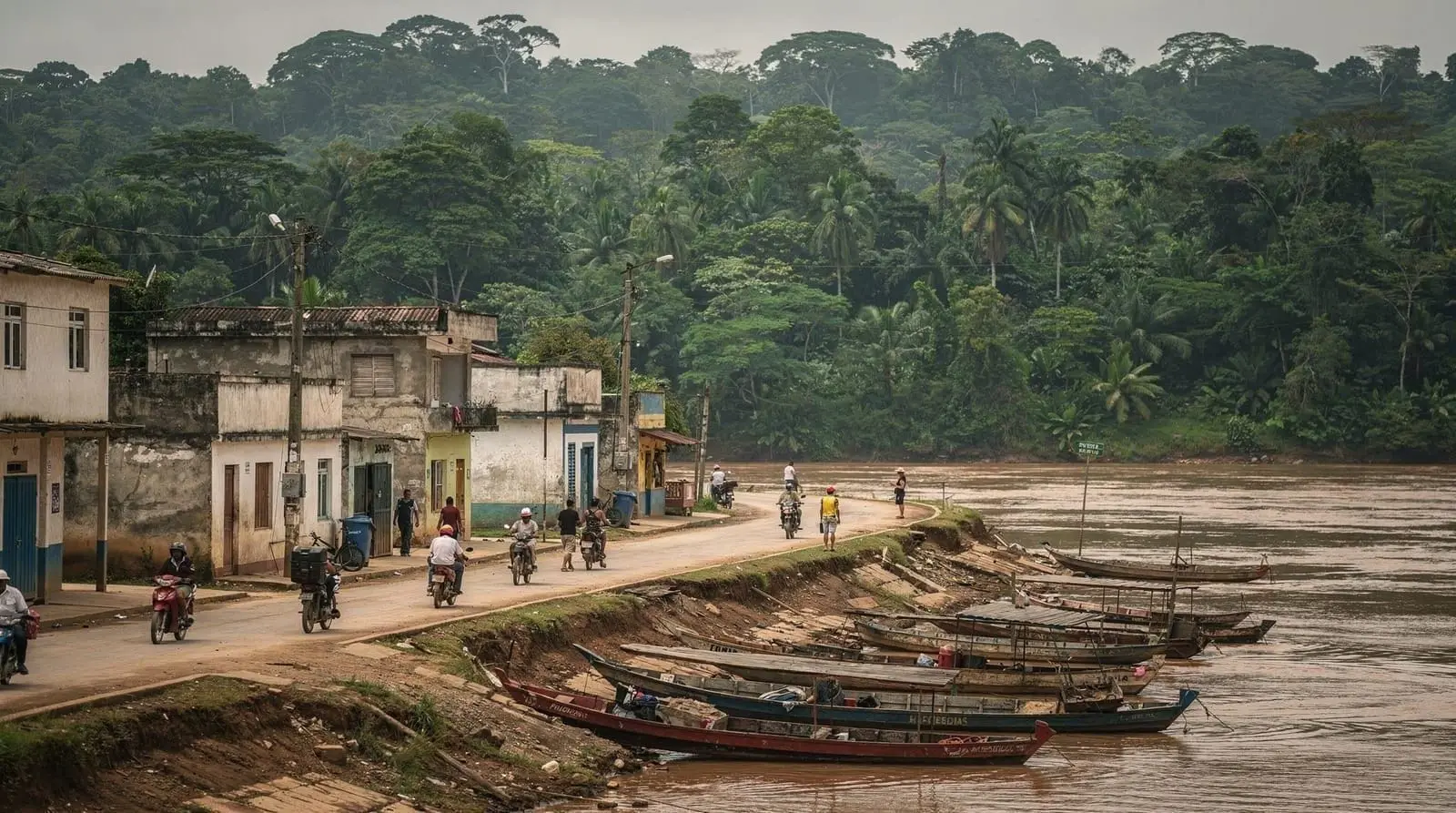
Puerto Maldonado guide: the gateway to Peru's southern Amazon
Puerto Maldonado: 3-Day Amazon Jungle Tour with Lodging
Is Puerto Maldonado worth visiting?
Puerto Maldonado itself is a functional jungle town, not a sight in its own right — the reason to come is that it is the gateway to the Tambopata National Reserve. A 35-minute flight from Cusco, it is where almost all southern-Amazon lodge trips begin, with boats heading up the Tambopata and Madre de Dios rivers to the lodges.
A town that exists to be passed through
Be honest about Puerto Maldonado before you arrive and you will enjoy it more. This is not a destination in the way Cusco or Arequipa is; it is a working frontier town in the Madre de Dios region, hot and humid, built on logging, Brazil-nut harvesting, gold mining, and increasingly tourism. Most visitors barely see it — they land at the airport, get bundled into a van, and are on a boat heading up the river within the hour. And that is exactly as it should be, because the reason to come to Puerto Maldonado is what lies beyond it: the Tambopata National Reserve, the most accessible serious Amazon in Peru.
That said, understanding the gateway makes the whole trip smoother. Knowing how the flights work, how lodge packages are structured, what the town offers if you do get stuck there, and how the river transfers run removes the friction from a trip whose real payoff is in the forest. This guide handles all of that practical layer. For the wildlife itself — the clay licks, Lake Sandoval, what you will actually see — turn to the Tambopata guide, and for the bigger picture of where the southern Amazon sits among Peru’s options, the Peru Amazon complete guide.
| Where | Madre de Dios lowlands, 35-min flight from Cusco |
| Cost | Lodge packages from ~$80/day; flight $40-120 each way |
| Time needed | 3-5 days including river transfer |
| Getting there | Fly from Cusco (almost everyone); bus ~10hrs is the budget option |
| Best time | Dry season, May-October, for trails and clay licks |
Getting to Puerto Maldonado
By air from Cusco is how almost everyone arrives. LATAM and Sky operate the 35-minute hop from Cusco daily, with fares commonly in the $40–120 USD range one way depending on how far ahead you book and the season. It is one of the great short flights in Peru — you climb out of the Andes and within half an hour the window fills with unbroken green canopy and the brown coils of the Madre de Dios River. The Peru domestic flights guide covers booking these well.
By air from Lima generally routes through Cusco rather than flying direct, so plan for a connection. By bus from Cusco is the budget alternative: the Interoceanic Highway runs roughly 10 hours over the Andes and down into the lowlands. It is cheap and the scenery is dramatic, but it is a long, tiring journey and most travellers prefer to spend their time in the forest rather than on the road. The Peru bus travel guide has the detail if you are considering it.
Puerto Maldonado’s airport sits a few kilometres from the town centre. If you have a lodge package — and you almost certainly will — your operator meets you at the airport, so you need not worry about transfers.
How lodge packages work
This is the single most useful thing to understand before booking, because the southern Amazon is sold almost entirely as all-inclusive lodge packages, not as à la carte components.
A typical package covers: airport pickup, the river transfer to the lodge, accommodation, all meals, and guided excursions (forest walks, night hikes, canoe trips, a clay lick or Lake Sandoval depending on the lodge’s location). You pay a per-day, per-person rate and essentially everything from the moment you land is handled. This is genuinely convenient and removes the logistics of organising boats and guides independently — which is difficult to do well from town anyway.
The flow on arrival: you are met at the airport, often taken briefly to the operator’s town office to drop excess luggage and gear up, then driven to the boat dock on the river. From there you travel by motorboat up the Tambopata or Madre de Dios River to your lodge — 30 minutes to about 2 hours for the closer lodges, 3 to 5+ hours for the deep-reserve lodges near the great Colorado clay lick. The depth of the lodge is the main thing that varies between packages, and it is worth understanding before you book; the Tambopata guide explains how deep to go.
Puerto Maldonado: 3-day Amazon jungle tour with lodging in TambopataChoosing a package: length and depth
Two variables define a southern-Amazon package: how many days, and how deep into the reserve.
Three days, two nights is the most popular length and the practical minimum for a meaningful visit. At a closer lodge it covers Lake Sandoval, forest walks, a night excursion, and often a smaller parrot lick. It suits travellers folding the Amazon into a wider Peru trip.
Four to five days is what you need to reach the deep-reserve lodges and the big Colorado macaw lick, because the long upriver journey would otherwise eat too much of a shorter trip. More mornings also improve your odds at the weather-dependent clay licks. This length suits travellers for whom birds and the rainforest are a primary draw.
Tambopata Peruvian Amazon jungle: 3 days / 2 nightsA word on operators: Puerto Maldonado has a wide spread, from polished international-standard lodges to cut-price local outfits. The cheapest packages can be fine, but some cut corners on group size, guiding quality, and environmental practice. The naturalist guide matters more than the lodge’s comfort, so read reviews that mention guides by name and describe wildlife realistically, and be sceptical of any operator promising guaranteed jaguar sightings.
| Lodge tier | Rough cost/day | Distance upriver | Best for |
|---|---|---|---|
| Budget | ~$80 | Close, 30min-2hrs | Short trips, tight budgets |
| Mid-range | $120-200 | Moderate | Balanced comfort and wildlife access |
| Deep-reserve | $200-350+ | Far, 3-5+ hrs | Colorado clay lick, serious birders |
A sample 3-day, 2-night itinerary
Since packages are all-inclusive, it helps to know the typical rhythm of a standard trip:
- Day 1 — Fly in from Cusco, met at the airport, brief stop at the operator’s office, then a river transfer of one to a few hours to the lodge. Afternoon forest walk and settling in; night walk or canoe trip after dinner.
- Day 2 — Early wildlife activity (a parrot or macaw clay lick if the lodge is close to one, or Lake Sandoval by canoe), a midday rest during the day’s heat, then an afternoon forest walk or canopy tower visit, and another night excursion.
- Day 3 — A final short activity, breakfast, then the river transfer back to town and the flight out, usually a midday or afternoon departure.
Longer four- and five-day packages simply add more mornings at the clay licks and push further upriver toward the deep-reserve lodges, which improves your odds of the big Colorado macaw gathering.
The town itself, if you do stop
If a late flight or an early departure means a night in town, Puerto Maldonado is perfectly manageable. The Plaza de Armas is the centre, with the distinctive Obelisco, a tower you can climb for a view over the town and the surrounding forest and rivers. There is a cluster of mid-range hotels around the centre, simple but adequate, generally $25–60 USD a night.
The food is worth a moment: this is Brazil-nut country (castañas), and the region’s nuts turn up in everything from snacks to ice cream. Local river fish and the Amazonian staple juane (rice and chicken in bijao leaves) appear on menus. The town’s market is a workmanlike affair rather than a tourist sight, but good for fruit and a sense of frontier life. For a frontier town, it is friendly and low-key; the energy is functional rather than charming, and an evening is plenty.
Costs at a glance
Rough 2026 figures, per person:
- Lodge packages: budget from ~$80/day, mid-range $120–200/day, deep-reserve $200–350+/day, all-inclusive.
- Flights: Cusco–Puerto Maldonado $40–120 USD each way.
- Day trips (Lake Sandoval or a parrot lick, sleeping in town): $40–80.
- Town hotels: $25–60 USD a night.
- Tambopata reserve entry fee where applicable, usually arranged by your operator.
For fitting this into an overall budget, see the Peru trip cost guide.
Health and packing for the lowlands
The Madre de Dios lowlands require real preparation, stated factually rather than fearfully. Yellow fever vaccination is recommended — get it at least 10 days before travel and carry the international certificate. Malaria risk exists, and whether to take prophylaxis is a decision for a travel-health doctor based on your itinerary and health. Dengue is present with no preventive drug, so bite avoidance is the defence: high-strength DEET repellent (at least 30%), long sleeves and trousers at dawn and dusk, and ideally permethrin-treated clothing. The Peru travel safety guide covers the wider picture.
For packing, bring lightweight long-sleeved clothing in muted colours, a hat, repellent, a headlamp, a dry bag for the boat, binoculars, and a quick-dry towel. Most lodges supply rubber boots — confirm your size ahead. Leave heavy luggage in Cusco (lodges and operators offer left-luggage) and take only a small bag into the jungle.
When to go
The reserve follows the broader Madre de Dios rhythm. The dry season (roughly May to October) is the recommended window — walkable trails, moderate rivers, easier wildlife access, and the most reliable clay-lick activity from May to September. Pack one warm layer for the occasional friaje, a brief southern cold snap that can drop temperatures for a day or two even in the heat.
The wet season (November to March) brings heavy rain, high rivers, lush forest, and quieter, cheaper lodges, but some trails flood and clay-lick activity is less predictable. The best time to visit Peru guide places these against the rest of the country’s seasons.
How Puerto Maldonado fits your trip
Because of the short flight from Cusco, Puerto Maldonado and Tambopata are the Amazon that slots most easily into the southern circuit. The classic shape: Cusco and the Sacred Valley, then Machu Picchu, then a short flight down for three to five days in the jungle before returning — the Cusco-Amazon 7-day itinerary lays this out in full.
Travellers weighing a wilder option sometimes compare it with Manu National Park — see the Tambopata vs Manu guide — while those drawn to river cruises look north to Iquitos instead, covered in the Iquitos complete guide and directly compared in Iquitos vs Puerto Maldonado. For full routes combining highlands and jungle, see the itineraries section, and for flight search, the tools page.
The honest verdict
Frequently asked questions about Puerto Maldonado guide: the gateway to Peru's southern Amazon
How do I get to Puerto Maldonado?
Do I need to spend a night in Puerto Maldonado town?
How do lodge packages work from Puerto Maldonado?
How much does a Puerto Maldonado Amazon trip cost?
What vaccinations do I need for Puerto Maldonado?
What is the best time to visit Puerto Maldonado?
Is Puerto Maldonado or Iquitos better for the Amazon?
How many days of jungle time is worth it from Puerto Maldonado?
Top experiences
Bookable activities with verified prices and instant confirmation on GetYourGuide.

