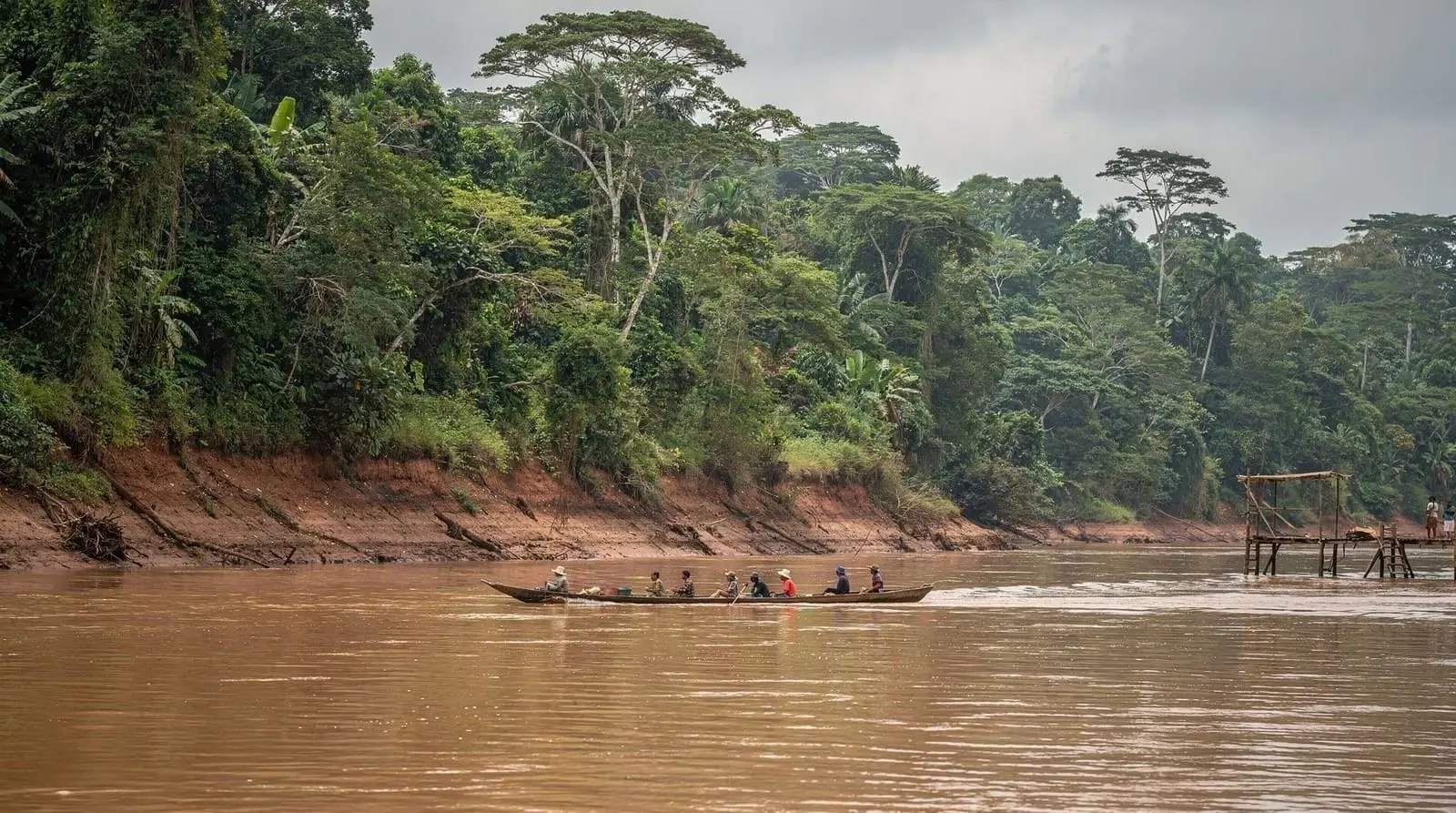
Iquitos vs Puerto Maldonado
From Iquitos: 3-Day Pacaya-Samiria National Reserve Tour
Should I choose Iquitos or Puerto Maldonado for the Amazon?
Choose Puerto Maldonado if you want the easiest, cheapest Amazon add-on to a Cusco trip — it's a short flight from Cusco and a lodge sits two hours upriver. Choose Iquitos if you want a wilder, river-based experience with cruises into the vast Pacaya-Samiria reserve and have more time and budget. Both are excellent; they suit different trips.
Two Amazons, two very different trips
Peru has two main Amazon gateways, and choosing between them is one of the more consequential planning decisions for a Peru trip. They are nearly 1,500 km apart, sit in different river basins, and offer genuinely different experiences. Get the choice right and the Amazon becomes the highlight of your trip; get it wrong and you spend money and days reaching a region that did not match what you wanted.
Iquitos is the northern gateway, capital of the Loreto region, sitting on the Amazon River itself in the far northeast. It is the launch point for river cruises into the colossal Pacaya-Samiria reserve and for jungle lodges around the city. The Iquitos destination guide covers it in depth.
Puerto Maldonado is the southern gateway, capital of the Madre de Dios region, near the Bolivian and Brazilian borders. It is the base for lodges in the Tambopata National Reserve and, for the adventurous and well-funded, the far-flung Manu region. The Puerto Maldonado destination guide has the details.
This comparison walks through the factors that actually decide it — access, cost, wildlife, time, and how each fits a wider Peru route — without pretending one is universally better. They suit different trips.
| Iquitos | Puerto Maldonado | |
|---|---|---|
| Reached from | Lima only (~2hr flight) | Cusco (~45min flight or bus) |
| Typical cost | $130–1,000+/person/day | ~$250–400 total for 3 days |
| Time needed | 4–6 days | 3 days |
| Signature wildlife | Pink dolphins, manatees, giant otters | Macaw clay licks, giant otters, monkeys |
| Best for | River wilderness, cruises | Easy Cusco add-on |
Access: the factor that decides most trips
For many travellers this single factor settles the question.
Puerto Maldonado is the easy one. It is a short direct flight from Cusco — around 45 minutes — which makes it the natural Amazon extension to the standard Cusco, Sacred Valley, and Machu Picchu circuit that almost every Peru trip includes. You can finish Machu Picchu, fly down to the jungle the next morning, spend two nights at a lodge, and fly back, all without backtracking. There is also a long bus connection from Cusco for the budget-minded.
Iquitos is the committed one. There are no flights from Cusco; you must route through Lima, and the city is reachable only by air (two hours from Lima) or by multi-day river boat. That makes Iquitos a deliberate detour rather than a convenient add-on. If your trip is built around Cusco and you have limited time, the logistics alone often point to Puerto Maldonado.
This is the core trade-off: Puerto Maldonado slots neatly into an existing itinerary; Iquitos demands you build the trip around it.
Cost: south is cheaper, north has a higher ceiling
Puerto Maldonado is generally cheaper. Short, inexpensive flights from Cusco, plus competitive three-day lodge packages that start around USD 250 to 400 total per person, make it the budget-friendlier Amazon. Tambopata lodges range from rustic to comfortable, and even the mid-range options are reasonable.
Tambopata 3-day, 2-night Amazon jungle tour from Puerto MaldonadoIquitos spans a far wider range. Basic lodge stays start around USD 130 per day, but the destination’s signature experiences — multi-day cruises into Pacaya-Samiria — run from USD 250 to over USD 1,000 per person per day, and you must add a Lima flight on top. The ceiling is much higher because the headline Iquitos experience is a river cruise, a fundamentally more expensive format than a fixed lodge.
In short: if budget is the deciding factor and you want a solid Amazon experience without overspending, Puerto Maldonado usually wins. If you are willing to invest in something wilder and more remote, Iquitos justifies the spend.
Wildlife: flooded forest versus terra firme
Both regions are extraordinarily biodiverse, but the ecosystems differ, and so does what you are likely to see.
Puerto Maldonado / Tambopata is largely terra firme rainforest — high ground that does not flood. Its signature draws are the macaw and parrot clay licks (collpas), where dozens of birds gather at dawn to eat mineral-rich clay; oxbow lakes like Lake Sandoval with giant otters; monkeys; caiman; and good general rainforest immersion accessible from comfortable lodges. It is reliable, accessible Amazon wildlife. The Tambopata guide and Puerto Maldonado guide go deeper.
Iquitos / Pacaya-Samiria is flooded forest (várzea), and the wildlife reflects that — Amazonian manatees, pink and grey river dolphins, giant otters, and exceptional canoe-based birding, most of it observed from the water rather than on foot. The reserve is vast and far less visited, so the deep interior offers genuine wilderness. The catch is that reaching that interior takes a multi-day cruise; shorter Iquitos trips see thinner wildlife than the marketing suggests. The Pacaya-Samiria guide explains how far in you need to go.
Neither has objectively “better” wildlife. Puerto Maldonado is more reliable on a short trip; Iquitos offers more remote, water-based wildlife if you invest the days to reach it.
3-day Pacaya-Samiria National Reserve tour from IquitosTime: how each fits your itinerary
This follows directly from access. Puerto Maldonado works beautifully as a three-day, two-night add-on bolted onto the end of a Cusco trip — minimal disruption, maximum convenience. Iquitos is a four-to-six-day commitment once you account for the Lima routing and a cruise long enough to be worthwhile. If your total Peru trip is under two weeks and already includes Lima, Cusco, and Machu Picchu, Puerto Maldonado is the realistic Amazon choice. If you have three weeks, or the Amazon is your primary goal, Iquitos becomes viable and rewarding.
The two-week and three-week Peru itinerary guides show exactly how each Amazon leg slots into a wider route, and the itineraries hub has full circuits.
Lodges and operators: what the booking actually looks like
The on-the-ground experience differs in ways the brochures rarely make explicit.
In Puerto Maldonado / Tambopata, the standard product is a fixed lodge reached by a road transfer and then a boat ride up the Tambopata or Madre de Dios river — typically one to three hours depending on how deep the lodge sits. The closer lodges (under an hour) are cheaper and busier; the further ones (Tambopata Research Center deep in the reserve, for instance) cost more but reach better wildlife and the famous macaw clay licks. A three-day, two-night package is the workhorse: arrive, two nights of guided walks and lake trips, depart. It is a clean, predictable format that suits the time-pressed.
In Iquitos, the booking splits more sharply between lodges and cruises. Lodges sit on the river within an hour or two of the city and run a similar daily-excursion model to Tambopata. But the destination’s defining product is the multi-day river cruise into Pacaya-Samiria, which is a fundamentally different — and pricier — proposition: a moving vessel, en-suite cabins, and access to waters no fixed base can reach. This is why the Iquitos cost range is so much wider than Puerto Maldonado’s, and why choosing Iquitos often means choosing the cruise format specifically.
One practical consequence: a quality Tambopata lodge with an expert guide is, for many three-day visitors, a more reliably rewarding choice than a short Iquitos lodge trip, because Tambopata’s wildlife (clay licks, oxbow-lake otters) is genuinely accessible on a short stay, whereas Iquitos’s best wildlife requires the longer cruise to reach.
Puerto Maldonado 3-day Amazon jungle tour with lodgingThe city itself: a tie-breaker
There is one more difference worth weighing. Iquitos is a destination in its own right — a fascinating, faded rubber-boom city with tiled mansions, the famous floating Belén market, distinctive Amazonian cuisine, and a buzzing mototaxi energy you will not find elsewhere in Peru. Many visitors enjoy a day in the city before or after their jungle time; the Belén market guide and Iquitos complete guide cover it.
Puerto Maldonado, by contrast, is a functional frontier town — pleasant enough, but mostly a place you pass through on the way to a lodge rather than somewhere you linger. If the cultural texture of an Amazon city appeals to you, that tips the scales toward Iquitos.
First-time versus experienced Amazon travellers
If this is your first Amazon trip anywhere, Puerto Maldonado is generally the gentler introduction: the clay licks, oxbow lakes and reliable terra firme wildlife are accessible from a comfortable lodge on a short stay, so you are very likely to see genuine Amazon wildlife even on a compressed three-day trip. Iquitos rewards travellers with a bit more time and, often, some Amazon experience already — its signature flooded-forest wildlife largely requires the longer, pricier cruise format to reach properly, and a rushed lodge-only visit can undersell what the region actually offers.
Neither rule is absolute; a well-guided short Iquitos lodge stay still delivers monkeys, birds and often dolphins. But if you are choosing your very first Amazon experience and want the odds in your favour, Tambopata is the safer bet. The how many days in Peru guide helps you see where either Amazon leg fits your overall trip length.
Health and safety side by side
Both regions carry the same core health considerations, since both are Amazon lowland zones. Yellow fever vaccination is recommended (and in practice often required) for travel to either Loreto or Madre de Dios, ideally taken at least ten days before arrival so it has time to take effect, and the international certificate is worth carrying in case a border or lodge asks for proof.
Malaria risk exists in both regions at a similar low level, so discuss prophylaxis with a travel-health doctor ahead of your trip, and dengue is present in both, meaning a strong repellent and covering clothing at dawn and dusk matter regardless of which gateway you choose. Neither destination is meaningfully riskier than the other on health grounds; the difference between them is about experience and logistics, not safety. The Peru travel safety guide covers the wider picture, including the more common everyday risks like petty theft that apply across the country.
Should you combine both?
Rarely. The two gateways sit in opposite corners of the Peruvian Amazon with no direct connection, so combining them means backtracking through Lima or Cusco, doubling your Amazon time, and roughly doubling the cost. Unless the Amazon is the entire point of your trip and you have weeks to spare, pick one. For most travellers, the deciding logic is simple: if you are short on time and building around Cusco, choose Puerto Maldonado; if you have the days and want a wilder, river-based experience, choose Iquitos.
If you do have the appetite for a longer southern Amazon stay, a four-day Tambopata trip pushes deeper into the reserve than the standard three-day package and reaches better wildlife.
Tambopata 4-day, 3-night Amazon rainforest tourQuick verdict
Choose Puerto Maldonado if: you are short on time, want an easy add-on to a Cusco trip, are watching the budget, or want reliable, accessible rainforest wildlife and macaw clay licks.
Choose Iquitos if: the Amazon is a priority rather than an afterthought, you want a river cruise into the vast Pacaya-Samiria wilderness, you are drawn to flooded-forest wildlife like dolphins and manatees, and you have the time and budget to do it properly — plus the bonus of an unforgettable Amazon city. Both are genuine highlights of Peru. The right answer is simply the one that fits the trip you are already planning. For broader Amazon context, see the Peru Amazon complete guide.
Frequently asked questions about Iquitos vs Puerto Maldonado
Which is cheaper, Iquitos or Puerto Maldonado?
Which has better wildlife, Iquitos or Puerto Maldonado?
How long do I need for each?
Can I combine Iquitos and Puerto Maldonado?
Which is easier to reach from Cusco?
Do both require yellow fever vaccination?
Which is better for a first-ever Amazon trip?
How far ahead should I book either trip?
Top experiences
Bookable activities with verified prices and instant confirmation on GetYourGuide.


