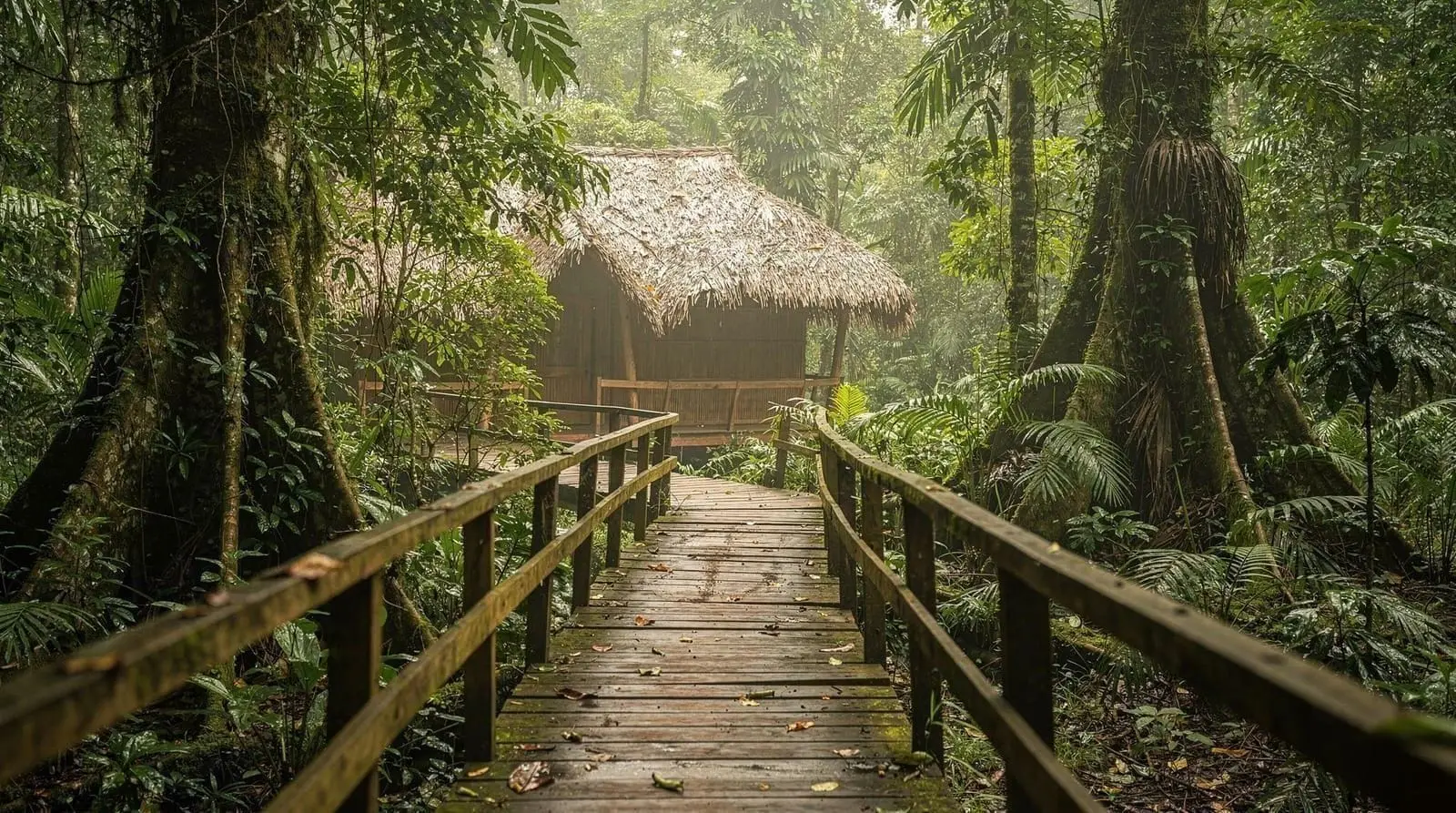
The Amazon from Cusco: how to add the jungle
Tambopata Peruvian Amazon Jungle for 3 Days / 2 Nights
What is the easiest way to do the Amazon from Cusco?
Fly from Cusco to Puerto Maldonado — a 45-minute hop — and base yourself at a Tambopata lodge for three or four days. It is the fastest, most reliable Amazon add-on from Cusco. The deeper, wildlife-richer Manu Biosphere Reserve is the alternative but needs a long overland approach and more days.
Why the jungle is closer to Cusco than you think
Most people picture the Peruvian Amazon as a far-off expedition reachable only from Iquitos, days from anywhere. From Cusco, it is closer than the train to Machu Picchu. A 45-minute flight drops you from the cold Andean air at 3,400 m into the hot, dripping lowland rainforest around Puerto Maldonado at barely 200 m. Within a couple of hours of leaving your Cusco hotel you can be on a wooden boat heading up the Tambopata or Madre de Dios river toward a jungle lodge.
That accessibility is the reason the Amazon is the single best add-on to a southern Peru trip. It also delivers a complete change of scene — you go from high, dry, archaeological Cusco to humid, green, wildlife-thick jungle in one short hop, which makes the contrast part of the appeal. This guide covers the two real ways to do it (the easy Tambopata flight and the wilder Manu overland route), what it costs, how many days you actually need, and how to set your wildlife expectations honestly.
It pairs with the broader Peru Amazon complete guide; this one focuses specifically on doing the jungle from Cusco.
| Where | Tambopata via Puerto Maldonado (45-min flight) or Manu (overland) |
| Time needed | 3–4 days minimum for Tambopata; 5–8 days for Manu |
| Cost | Around $250–800/person for Tambopata; $600–1,200+ for Manu |
| Getting there | Cusco–Puerto Maldonado flight, then road/river transfer to lodge |
| Best time | Dry season (May–Oct) for trails; visitable year-round |
Option one: fly to Tambopata (the easy way)
For nine out of ten Cusco travellers, this is the answer. You fly Cusco to Puerto Maldonado (LATAM and others run the route; the flight is about 45 minutes), then transfer by road and river to a lodge in the Tambopata region — one of the most biodiverse protected areas on earth.
How it works in practice:
- Fly in. Round-trip Cusco–Puerto Maldonado fares run roughly $80–200 depending on season and how far ahead you book.
- Transfer to the river. Lodges arrange pickup. Closer lodges are a short drive plus a 30–60 minute boat ride; deeper ones (toward the Tambopata National Reserve and Lake Sandoval) are several hours upriver.
- Stay full board. Lodge packages bundle meals, guided walks, boat excursions, and activities like night caiman spotting, oxbow-lake paddles, and clay-lick visits.
A three-day, two-night package is the realistic minimum — it gives you about one and a half full days in the forest after the travel. The three-day, two-night Tambopata Amazon jungle programme covers the standard activity set and is the most common length people choose as a Cusco add-on.
If you want more time for wildlife — and the difference is real — the four-day, three-night Tambopata tour with a local guide reaches deeper into the reserve and gives you a genuine extra day in the forest. Budget travellers who want a no-frills option can look at the three-day Puerto Maldonado jungle tour with lodging.
Costs, roughly: budget lodges $250–450 per person for three days, mid-range $450–800, and the famous remote lodges well above that — plus the flight. See /guides/tambopata-guide/ for a lodge-by-lodge breakdown.
Option two: Manu (the wilder, slower way)
The Manu Biosphere Reserve is the connoisseur’s choice — a vast, layered protected area running from cloud forest down into pristine lowland jungle, with some of the best wildlife density in the Amazon. The trade-off is access. Reaching Manu from Cusco means a long overland journey: a full day’s drive over the Andes and down through the cloud forest before you even reach the boats, then river travel beyond.
That overland approach is both the cost and the reward. You pass through dramatic transition zones — cloud forest with cock-of-the-rock leks, then progressively wilder lowland forest — that the Tambopata flight skips entirely. But it eats days. Realistic Manu trips run five to eight days, and the deepest “reserved zone” programmes are longer and pricier (often $600–1,200-plus). If your Amazon time is short, Manu is the wrong tool; if you have a week and want the wildest version, it is unmatched.
A practical middle path: some operators fly you back from Boca Manu or arrange one-way flights to compress the return, cutting a day of overland travel. Ask specifically about this when comparing Manu quotes.
How many days — and how to fit it in
The honest framing is about full days in the forest, not nights booked.
- 3 days / 2 nights (Tambopata): about 1.5 forest days. The practical minimum. Good for a taste — monkeys, macaws, a night boat ride, an oxbow lake.
- 4 days / 3 nights (Tambopata): about 2.5 forest days. The sweet spot. Time to reach a clay lick and a remote lake, better odds on giant otters and varied wildlife.
- 5+ days (Manu or deep Tambopata): for serious wildlife and birding, accepting the long approach.
Where it slots into a Cusco trip: the cleanest sequence is to finish your Cusco, Sacred Valley, and Machu Picchu days first, then fly to the jungle as a distinct chapter, and either return to Cusco or fly onward. Because it is a short flight, the Amazon does not force a big detour the way an Iquitos trip would. Browse /itineraries/ for routings that include it and the planning tools at /tools/.
Tambopata vs Iquitos vs Manu, briefly
Three real ways into the Peruvian Amazon, and travellers often conflate them:
- Tambopata (from Cusco/Puerto Maldonado): easiest and fastest from the southern circuit. Excellent biodiversity, famous macaw clay licks, well-developed lodges.
- Manu (from Cusco overland): wilder, deeper, better primary-forest wildlife, but a major time commitment.
- Iquitos (northern Amazon): a completely separate trip with its own flights, reaching a different, often deeper section of rainforest and the Pacaya-Samiria reserve. Not a Cusco add-on — you fly there from Lima.
From a Cusco base, the choice is really Tambopata versus Manu, and for most itineraries Tambopata’s logistics win. If you are weighing the regions in depth, /guides/tambopata-guide/ covers the southern jungle and the complete-guide above covers all three.
What you will actually see, and what to pack
Set expectations toward birds, monkeys, and atmosphere rather than headline mammals. Realistic sightings: several monkey species, macaws and parrots (best at a clay lick, where dozens gather at dawn), caimans on night boat rides, capybaras, a range of frogs and insects, and — on certain oxbow lakes — giant river otters. Jaguars and tapirs exist but are genuinely rare; treat any sighting as a bonus, not a plan.
Packing essentials (see the full list at /guides/what-to-pack-amazon-peru/):
- Long, light, light-coloured clothing against sun, mosquitoes, and brush.
- High-DEET insect repellent and, for forested lodges, consider a head net.
- Rubber boots (most lodges lend them) and a rain layer — it is the rainforest.
- A dry bag for cameras and documents; humidity and river travel are hard on electronics.
- A headlamp, binoculars, and any personal medication.
- Yellow fever vaccination is recommended for the Peruvian Amazon — arrange it well before travel and carry the certificate.
On timing, the dry season (May–October) generally means easier trails and accessible clay licks, while the wet season is lusher with higher rivers; both are visitable. For the full seasonal breakdown see /guides/best-time-amazon-peru/.
Choosing a lodge: location beats luxury
The biggest variable in how good your Tambopata trip is comes down to where the lodge sits, not how plush the rooms are. Lodges fall into rough tiers by distance from Puerto Maldonado:
- Close-in lodges (30–60 minutes by river): cheapest and easiest, but the forest here is more disturbed and wildlife thinner. Fine for a quick taste, less so for serious wildlife.
- Mid-distance lodges (1–3 hours upriver): the sweet spot for most travellers — meaningfully wilder forest, access to oxbow lakes, without an exhausting transfer.
- Deep-reserve lodges (3+ hours, toward the Tambopata National Reserve and Lake Sandoval): the best wildlife and the famous macaw clay licks, but a real commitment of travel time, which is why they suit four-day-plus stays.
A common mistake is booking a comfortable but close-in lodge for a three-day trip and being disappointed by the wildlife. If wildlife is your priority, push for distance over thread count and add a day. The Tambopata lodge guide breaks down individual properties; the Iquitos lodge guide covers the northern equivalent if you are weighing both regions.
What a typical Tambopata day looks like
To set expectations, here is the rhythm of a standard lodge program. Days start early because that is when wildlife is active.
- Pre-dawn: an optional early boat to a clay lick, where parrots and macaws gather at first light — the iconic Tambopata sight, weather permitting.
- Morning: a guided forest walk learning the trees, medicinal plants, and how to spot monkeys and birds, or a paddle on an oxbow lake (Lake Sandoval is the famous one) looking for giant river otters and caimans.
- Midday: lunch and a rest through the hottest hours, when the forest goes quiet anyway.
- Afternoon: a second activity — a canopy tower for birds, a visit to a local farm, or a longer hike.
- After dark: a night boat ride spotting caimans by torchlight and listening to the forest, or a short night walk for frogs and insects.
The pace is active but not punishing, and most lodges flex it to the group. The richness of what you see scales directly with the number of full days you give it — another argument for four days over three if you can.
Health prep before you go
The jungle leg needs different preparation than the Andean part of a Cusco trip. Yellow fever vaccination is recommended for the Peruvian Amazon lowlands and should ideally be given at least 10 days before you travel — arrange it well before your trip and carry the certificate, as some lodges and connecting flights ask for it. Malaria risk is low around well-run Tambopata lodges but not zero, so discuss prophylaxis with a travel doctor if you plan a longer or more remote stay. Regardless of vaccination status, strong insect repellent (30%+ DEET or picaridin), long light-coloured sleeves, and a mosquito net check in your room are basic sense against both mosquitoes and the biting flies common near rivers.
The altitude drop itself is a relief, not a risk — dropping from Cusco’s 3,400 m to Puerto Maldonado’s roughly 200 m eases any soroche symptoms you were carrying, though the heat and humidity are their own adjustment. Drink more water than feels necessary in the first day, and pace your first jungle walk gently until you have acclimatised to the heat.
Frequently asked questions about The Amazon from Cusco: how to add the jungle
How many days do I need for the Amazon from Cusco?
Is it better to fly to Puerto Maldonado or go to Manu?
How much does an Amazon trip from Cusco cost?
Is the Cusco Amazon worth it or should I go to Iquitos?
What wildlife will I actually see in the Amazon from Cusco?
When is the best time for the Amazon near Cusco?
Top experiences
Bookable activities with verified prices and instant confirmation on GetYourGuide.

