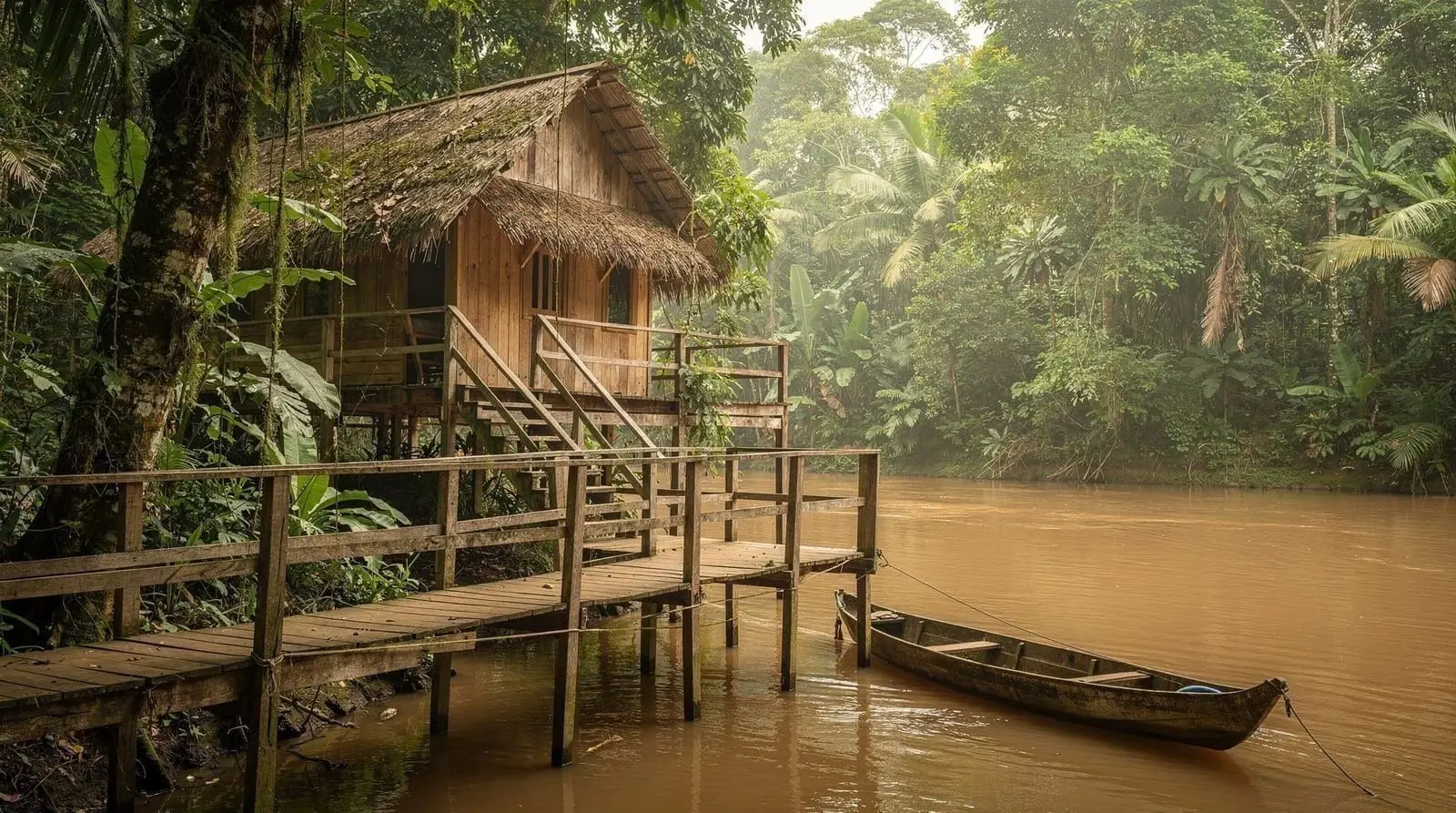
Iquitos jungle lodges guide: how to choose the right one
Iquitos: 3-Day, 2-Night Guided Amazon Jungle Tour
How do I choose a jungle lodge in Iquitos?
Prioritise the quality of the naturalist guide above all — it makes or breaks the wildlife experience. Then weigh distance from the city (farther usually means quieter forest and more wildlife but longer transfers), the lodge tier and what's included, and the operator's environmental practices. For a first visit, a well-reviewed lodge 1–3 hours upriver over three days is a solid default.
Why the lodge choice matters more than you think
When people plan an Iquitos trip, they often agonise over the dates and the flights and then book the first lodge that looks comfortable. That is the wrong order of priorities. In the northern Amazon, the lodge you choose — and specifically the guide who comes with it — does more to shape your experience than almost any other decision. Two travellers can stay the same three nights on the same stretch of river and come away with completely different trips, one buzzing about giant otters and a tree full of macaws, the other vaguely disappointed, and the difference is almost always the guide and the lodge’s location, not the thread count of the sheets.
This guide is about making that choice well. It assumes you have already decided that Iquitos is your Amazon — if you are still weighing it against the southern reserves, the Peru Amazon complete guide handles that, and the Iquitos complete guide covers the city, the cruises, and the practical layer. Here the focus is narrow: how to pick the right jungle lodge, what the tiers really mean, what is and is not included, and how to avoid the common mistakes.
| Budget lodges | from ~$80/person/day |
| Mid-range | ~$120–180/person/day |
| Premium | $200+/person/day |
| Best distance for a first visit | 1–3 hours upriver |
| Best season | Low water, roughly June–November |
| What’s included | Transfers, all meals, guided excursions, boots |
Distance from the city: the first real variable
The single most consequential thing about an Iquitos lodge is how far up the river it sits, because distance correlates directly with how much wildlife you are likely to see and how much of your trip you spend in transit.
Close lodges (30–90 minutes by motorboat): easy to reach, good for short stays and travellers who do not want a long boat journey. The catch is that this band of forest, near the city, sees the most day-tripper traffic, and the wildlife is the most habituated to people. You will still see plenty — monkeys, birds, caiman on night trips — but it is the busiest Amazon around Iquitos.
Mid-distance lodges (2–4 hours): quieter forest, better wildlife odds, fewer other groups. The transfer is longer but manageable within a three-to-four-day trip. For many travellers this is the sweet spot.
Far lodges and Pacaya-Samiria cruises (4+ hours, or the reserve interior): the wildest forest and the best wildlife, but the journey demands more days to justify it. Reaching the interior of Pacaya-Samiria is really cruise territory rather than a fixed lodge, and needs a minimum of three days, ideally five to seven.
A practical default: for a first visit of three days, a well-reviewed lodge one to three hours upriver gives the best balance of accessible and wild.
Iquitos: 3-day, 2-night guided Amazon jungle tourThe guide: the thing lodge websites won’t tell you
Lodge marketing sells comfort and amenities. What it rarely sells, because it is harder to standardise, is the quality of the naturalist guide — and that is the variable that determines whether you spot the sloth in the canopy, understand the leafcutter ant column at your feet, find the pink dolphins, and learn what you are actually looking at.
Before you book, ask directly: Are the guides certified naturalists with genuine knowledge of Amazonian ecology, or are they boat drivers with some wildlife familiarity? What languages do they guide in (important if you are not a Spanish speaker)? How many guests per guide on excursions — smaller groups see more and disturb wildlife less, so a ratio of four or fewer per guide is a good sign. The reviews worth trusting are the ones that name a guide and describe the wildlife realistically; the ones that just praise the food and the hammocks tell you less.
Lodge tiers and what they cost
Iquitos lodges span a wide range, and the price tells you roughly what to expect.
Budget lodges (from ~$80 per person per day): simple cabins, shared or basic private bathrooms, often cold-water showers, fan rather than air conditioning, set meals. Perfectly adequate for travellers focused on the forest rather than the room. Guide quality varies most at this tier, so vet carefully.
Mid-range lodges (~$120–180 per day): private bathrooms, better food, screened rooms, and generally stronger guiding. The comfortable default for most travellers.
Premium lodges ($200+ per day): more comfort, better infrastructure, smaller groups, and often the strongest naturalist guides. Worth it if comfort matters to you or wildlife is a primary goal.
Iquitos: jungle trip with premium lodgeFor a shorter taste, a two-day, one-night package at a closer lodge covers the basics — a forest walk, a night excursion, dolphin watching, and piranha fishing — though it is genuinely brief.
Iquitos: Amazon rainforest 2-day jungle experienceFor budgeting the wider trip, the Peru trip cost guide puts these figures in context.
| Tier | Price/day | Rooms | Guiding |
|---|---|---|---|
| Budget | from ~$80 | Shared or basic private bath, fan | Variable — vet carefully |
| Mid-range | ~$120–180 | Private bathroom, screened rooms | Generally stronger |
| Premium | $200+ | Best comfort, smaller groups | Often the strongest naturalists |
Booking as a solo traveller, couple or family
Solo travellers need not hesitate: lodges group guests together for excursions, so meals and forest walks are naturally social, and many lodges offer a single-room rate rather than forcing a shared-room supplement onto solo bookings — ask directly when quoting. Couples are the default guest profile at most lodges and are well catered for across all tiers.
Families should look specifically at a lodge’s minimum-age policy and whether excursions can be shortened or adapted for children’s stamina and attention span; mid-range lodges with private bathrooms and flexible guides tend to work best for families, since budget lodges’ shared facilities and premium lodges’ longer, more specialised excursions suit them less well. Whatever your group, confirm the guide-to-guest ratio on your specific dates rather than assuming it matches the lodge’s marketing photos.
Connectivity, electricity and what “off-grid” really means
Most Iquitos lodges run on generator power for a set window each evening, with lights and charging points available for a few hours after dark rather than around the clock — ask specifically if you need to charge camera batteries overnight. Wi-Fi, where it exists at all, is typically slow and limited to a common area rather than in-room, and premium lodges are more likely to offer it than budget ones. Mobile signal generally disappears once you are more than an hour or so upriver from Iquitos. Treat this as a feature rather than a drawback: a genuine digital break is part of what makes a lodge stay restorative, and packing a physical book or a fully charged power bank solves most of the inconvenience.
What’s included, and what isn’t
Iquitos lodge packages are all-inclusive per day, which makes them easy to compare once you know what the rate covers.
Usually included: pickup at the airport or in town, the river transfer both ways, accommodation, all meals (Amazonian fare — river fish, plantain, rice, fruit), guided excursions (forest walks, night hikes, canoe trips, piranha fishing, dolphin watching, often a village visit), and rubber boots in your size.
Usually extra: alcoholic and bottled drinks, guide and staff tips (customary and appreciated), the Pacaya-Samiria entry fee where your itinerary enters the reserve (around S/60 per person per day), and any flights to and from Iquitos. Confirm exactly what is and is not in the rate when you book, since this is where lodges quietly differ.
Reading reviews and avoiding the traps
Iquitos has a reputation, partly deserved, for aggressive lodge touts at the airport and in the streets, and for a tier of operators that over-promise. A few honest pointers:
- Book ahead, not at the airport. The touts who meet flights pressure you into snap decisions; a lodge booked in advance with read reviews is far safer.
- Be sceptical of guarantees. Any operator promising you will definitely see anacondas, jaguars, or specific rare animals is overselling. Wildlife is never guaranteed.
- Watch for animal-handling red flags. Trips that bait animals, let you handle sloths or anacondas, or push swimming with pink dolphins are ethically poor and a sign of an operator prioritising the photo over the animal. Reputable naturalists discourage all of it.
- Check the group size. Large groups are cheaper for the lodge and worse for you; small groups see more.
Lodge versus river cruise, briefly
If you are still deciding between a lodge and a cruise, the short version: a lodge is a fixed base for deep immersion in one stretch of forest, ideal for a first three-day visit and generally cheaper. A river cruise moves through different habitats over several days, is the proper way to reach the interior of Pacaya-Samiria, and delivers the experience of the great river itself — mist on the water at dawn, a new place each day.
From Iquitos: 3-day Pacaya-Samiria National Reserve tourThe Iquitos complete guide covers cruises in more depth; for the southern alternative of lodge-based forest with clay licks, the Tambopata guide is the equivalent.
When to stay
Lodge stays favour the low-water season, roughly June to November: trails are walkable, wildlife concentrates around remaining water, fishing and night caiman trips are productive, and the forest is at its most accessible on foot. The high-water season (December to May) floods the forest, which suits boat exploration and has its own beauty but disperses fish and raises mosquito numbers. Either works, but if you are choosing a lodge specifically (rather than a cruise), low water is the stronger bet. The best time to visit Peru guide sets this against the wider calendar.
Bringing it together
Pick the guide and the location first, the comfort tier second. For a first visit, that usually means a well-reviewed mid-range lodge one to three hours upriver, booked in advance, over three days. Confirm guiding quality and group size, check what the all-inclusive rate actually covers, avoid the airport touts and any guarantees, and time it for the low-water season if you can. Do that and the lodge becomes what it should be — a comfortable base from which a good guide reveals one of the richest ecosystems on the planet.
For the full city-and-region picture, return to the Iquitos complete guide; for how the northern Amazon compares with the south, the Peru Amazon complete guide. For routes that work Iquitos into a wider trip, see the itineraries section, and for flight search and planning, the tools page.
Frequently asked questions about Iquitos jungle lodges guide: how to choose the right one
How far from Iquitos should my lodge be?
What's included in an Iquitos lodge package?
How much do Iquitos jungle lodges cost?
Is a lodge or a river cruise better from Iquitos?
What should I look for in a lodge's guide?
When is the best time to stay at an Iquitos lodge?
Are Iquitos lodges suitable for solo travellers or families?
What should I pack for a lodge stay?
Top experiences
Bookable activities with verified prices and instant confirmation on GetYourGuide.
