Cusco with kids: altitude, pacing, and an honest family plan
Cusco: Half-Day City Tour with Sacsayhuaman and Q’enco
Is Cusco suitable for kids?
Yes, with planning. The main challenge is the 3,400 m altitude, which affects children too, so build in a slow first day or two and consider sleeping in the lower Sacred Valley first. Cusco itself is walkable, kid-friendly, and full of markets, animals, and ruins children enjoy.
The one thing that changes everything with kids
Cusco is a genuinely good family destination — markets, animals, ruins to clamber over, and a culture children find vivid and strange in the best way. But there is one variable that reshapes the whole trip with kids in tow, and it is the same one that catches adults: the altitude. Cusco sits at 3,400 m (11,150 ft), and children are not immune. They can develop altitude sickness, and younger ones cannot always tell you what is wrong — a normally cheerful child who turns clingy, off their food, and sleeps badly may simply be struggling with the elevation.
That is not a reason to stay away. It is a reason to plan the trip around a slower clock than a couple would use, to ascend gradually, and to treat the first day or two as deliberately gentle. Get the altitude right and the rest of Cusco — the San Pedro market juice stalls, the giant zigzag walls of Sacsayhuamán, the animals and viewpoints of the Sacred Valley — is a delight with children.
This guide is the honest family version: altitude first, then realistic pacing, food, costs, and the sights that actually hold a child’s attention.
| Main challenge | Altitude (3,400 m) affects kids too |
| Minimum stay | 3–4 nights, more than a couple would take |
| Easier alternative | Sleep in the lower Sacred Valley first |
| Best age | School-age (6+) copes most easily |
| Getting around | Taxis (S/8–15); cobbles defeat strollers |
| Kid-friendly food | Lomo saltado, pollo a la brasa, fresh juices |
Altitude with children: the rules
Acclimatise gradually, and consider the valley first
The smartest move for a family is to sleep lower before coming up. The Sacred Valley towns of Urubamba (2,870 m) and Ollantaytambo (2,790 m) sit several hundred metres below Cusco. A night or two down there straight from the airport, before tackling the higher city, gives the whole family a gentler entry. If you must start in Cusco, treat the first 24–36 hours as rest time, not sightseeing.
What to do on arrival day with kids
- Plan nothing strenuous. No uphill walks, no Sacsayhuamán climb on day one. Let everyone rest, nap, and adjust.
- Push fluids. Children dehydrate fast at altitude and in the dry air; offer water constantly. Dehydration mimics and worsens altitude symptoms.
- Feed light meals. Heavy food sits badly when the body is busy adjusting.
- Watch for warning signs. Headache, nausea, poor appetite, and disturbed sleep are common and usually pass in a day or two. Confusion, loss of coordination, or a persistent cough are red flags that warrant descent and medical attention.
- See your pediatrician before you go. Discuss altitude with children specifically, especially for infants and toddlers, and ask about any medication considerations. Note that coca tea, freely offered in hotels, is not appropriate for young children.
The full medical picture for everyone in the family is in the altitude sickness in Cusco guide. Read it before the trip, not on arrival.
Realistic pacing: half the speed, twice the patience
The single biggest mistake families make is importing an adult itinerary. Kids at altitude tire faster, melt down sooner, and need more downtime, snacks, and toilet stops than the schedule assumes. Build the trip at half speed.
A workable rhythm over four nights might look like: a do-nothing arrival day; a gentle historic centre day around the flat Plaza de Armas with a market lunch; one ruins-and-stories day once acclimatised; and one easy day trip. Crucially, plan one main thing per day, not three. A morning of sightseeing followed by an afternoon of plaza time, ice cream, and a playground beats two cathedrals and a museum.
The how many days in Cusco guide lays out the timing logic; for families, lean toward the longer end of every estimate.
Sights that actually work for kids
San Pedro market
San Pedro market is a sensory feast children love: pyramids of fruit, blocks of cheese, the juice stalls blending fresh frutado combinations for S/6–10, and the cheap, hearty soups. It is a short, vivid outing rather than an endurance test, and it doubles as lunch. Hold small hands in the crowds and keep bags zipped.
Sacsayhuamán
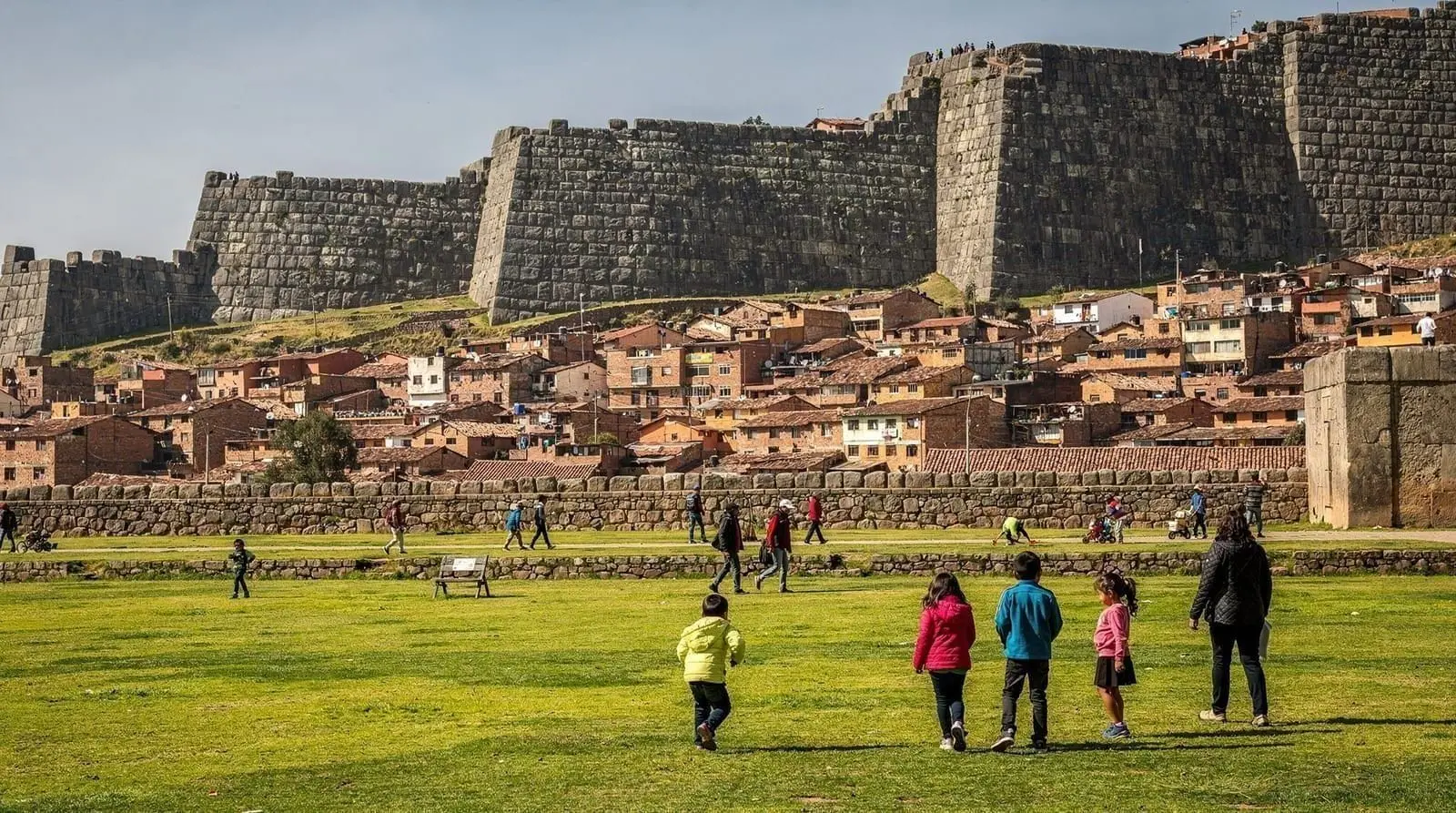
Once everyone is acclimatised, Sacsayhuamán is the most kid-friendly ruin: huge open grassy expanses to run on, colossal stones that genuinely impress children, and the natural rock slides that local kids have polished smooth over generations. The stories — giants moving impossible boulders, Inca battles — land well with school-age kids. A half-day city tour spares the steep uphill walk on still-adjusting legs; the half-day Cusco city tour with Sacsayhuamán and Q’enco includes the transport up, which makes a real difference with tired children.
Cooking and chocolate
Hands-on activities beat passive sightseeing for kids. The ChocoMuseo on Calle Garcilaso runs legitimate, transparent chocolate-making workshops children adore. A family cooking class is another winner: the San Pedro market tour and Peruvian cooking class turns lunch into an activity, with a market walk first so kids see where the food comes from. (Check the minimum age with the operator when you book.)
The Sacred Valley
The lower, gentler Sacred Valley is easier on small lungs and full of child-pleasers: alpacas and llamas to feed at Awana Kancha, the staircase terraces of Pisac and Ollantaytambo to climb, and roadside choclo con queso to snack on. The dedicated family-friendly day trips from Cusco guide covers these in detail.
Food for the family
Cusco feeds picky eaters more easily than parents fear. Alongside the Andean dishes there is plenty of familiar food: grilled chicken (pollo a la brasa with fries is a national staple), pasta, pizza, soups, and fresh fruit juices everywhere. Lomo saltado — beef stir-fried with onion, tomato, and chips — is a reliable kid-pleaser that introduces local flavour without surprises. The cheap set-lunch menú (S/10–18) usually includes a mild, simple main option.
Ease young stomachs in gently for the first days, stick to bottled or boiled water and avoid ice from unknown sources, and carry snacks for the inevitable energy crashes between meals. The whole-animal cuy is best treated as an optional novelty rather than a kids’ meal; the cuy and Andean food guide explains what to expect.
Costs and practicalities
- Getting around: Taxis are cheap (S/8–15 for short hops) and easier than walking the steep, cobbled streets with small children. There are no metered taxis; agree fares first or use the InDriver and Cabify apps.
- Strollers vs carriers: The polished cobblestones and steep gradients defeat most strollers. A soft baby carrier or backpack carrier is far more practical for infants and toddlers.
- Accommodation: Family rooms and apartments around the centre keep everyone together; pick by how much uphill walking you can manage. Many hotels offer free coca tea in the lobby — fine for adults, not for young kids.
- Health kit: Bring children’s pain/fever medication, rehydration salts, sunscreen and hats (the high-altitude sun is fierce), and warm layers for the cold nights.
- Toilets: Carry small change and tissue; many public toilets charge a sol or two and rarely supply paper.
Keeping kids engaged with the culture
Children disengage fast from ruins they cannot connect to, so the trick in Cusco is to give them hooks. The Inca stories help enormously: the giants who supposedly lifted the boulders at Sacsayhuamán, the gold that once sheathed the walls of Qorikancha, the idea of an empire with no writing and no wheel that still moved mountains. A good child-friendly guide is worth paying for precisely because they turn stone into story. When you book a tour or hire a site guide, mention you have kids and ask them to pitch it accordingly.
Sensory and hands-on moments beat passive looking. Let children blend their own juice at a San Pedro market stall, feed alpacas in the valley, press a coin into a textile demonstration, or try grinding cacao at the ChocoMuseo. The colour and noise of a Cusco festival, if your dates line up, is the kind of thing children remember for years — the best time to visit Cusco guide flags the festival calendar so you can aim for, or avoid, the big celebrations depending on your tolerance for crowds with kids in tow.
A small notebook or a disposable camera turns a child from a reluctant passenger into a recorder of their own trip, and a few soles of pocket money to spend in a market gives them a stake in the day. None of this is groundbreaking, but at altitude, where everyone has a shorter fuse, these small engagements are what keep a sightseeing morning from sliding into a meltdown.
Health, sun, and the small stuff
Beyond altitude, a few highland realities deserve a parent’s attention. The sun at 3,400 m is genuinely fierce — children burn faster than at sea level even on cool, cloudy days — so high-factor sunscreen, hats, and sunglasses are daily essentials, not occasional ones. The air is dry, which dehydrates kids quickly and chaps lips; keep water and lip balm to hand. Nights are cold, often near freezing in the dry season, and many older buildings have limited heating, so pack warm layers and check whether your accommodation heats the rooms.
Stomach upsets are the other common family hiccup. Stick to bottled or boiled water, avoid ice and raw salads from uncertain kitchens for the first days, choose busy, freshly cooked food, and ease young stomachs in gradually. Pack children’s pain and fever medication, rehydration salts, and any regular medicines from home, since local pharmacies may not stock familiar children’s brands. Pharmacies on Avenida El Sol are well stocked for the basics, and several clinics in Cusco are used to treating travelling families, but it is far easier to carry your own kit than to hunt for it with a sick child at altitude.
How a family Cusco trip fits together
The honest shape of a family visit is: arrive slow, acclimatise low if you can, see one thing a day, lean on markets, animals, and hands-on activities over museums, and pad every estimate with extra time. Use Cusco as the base, the lower Sacred Valley as the gentler counterpoint, and the family-friendly day trips guide to choose outings that match your kids’ stamina. Done at the right pace, Cusco gives children something few destinations can — ruins they can climb, animals they can feed, and a living culture that feels genuinely different from home.
Medical resources and what to pack in the family kit
Knowing where to go if a child feels unwell removes a lot of parental anxiety. Cusco has private clinics used to treating travelling families — ask your hotel for the nearest one, and confirm your travel insurance covers altitude-related treatment before you go, since a clinic visit for suspected altitude sickness is common enough to plan for rather than hope to avoid. Pharmacies on Avenida El Sol stock the basics, but familiar children’s brands of pain and fever medication are not guaranteed, so bring your own from home along with rehydration salts, a thermometer, and any regular prescriptions.
A practical family kit for Cusco covers three problems at once: the altitude (rehydration salts, children’s paracetamol, a pulse oximeter if you want reassurance), the sun (high-factor sunscreen, hats, sunglasses — the UV at 3,400 m burns fast even on cool days), and the cold (a warm layer per child for every outing, since dry-season nights drop near freezing and many buildings have limited heating). Pack these before you land rather than hunting for them with a fussy child on day one.
Choosing where to stay as a family
Family rooms or apartments near the Plaza de Armas keep everyone central, but weigh the uphill walking against your children’s stamina — San Blas is charming but steep, while the flatter streets around Avenida El Sol are easier on small legs and closer to pharmacies and the ATM strip. Some families choose to spend the first night or two in the lower Sacred Valley specifically to ease the whole household into the altitude before tackling Cusco’s hillier quarters, which several hotels there are set up to accommodate with family rooms and gardens for kids to burn off energy.
Frequently asked questions about Cusco with kids: altitude, pacing, and an honest family plan
Is the altitude in Cusco dangerous for children?
What is the best age to take kids to Cusco?
How many days should a family spend in Cusco?
What is there for kids to do in Cusco?
Is the food in Cusco okay for picky eaters?
Should families go to the Sacred Valley before Cusco?
What medical resources are available for families in Cusco?
Is a stroller practical in Cusco?
Top experiences
Bookable activities with verified prices and instant confirmation on GetYourGuide.


