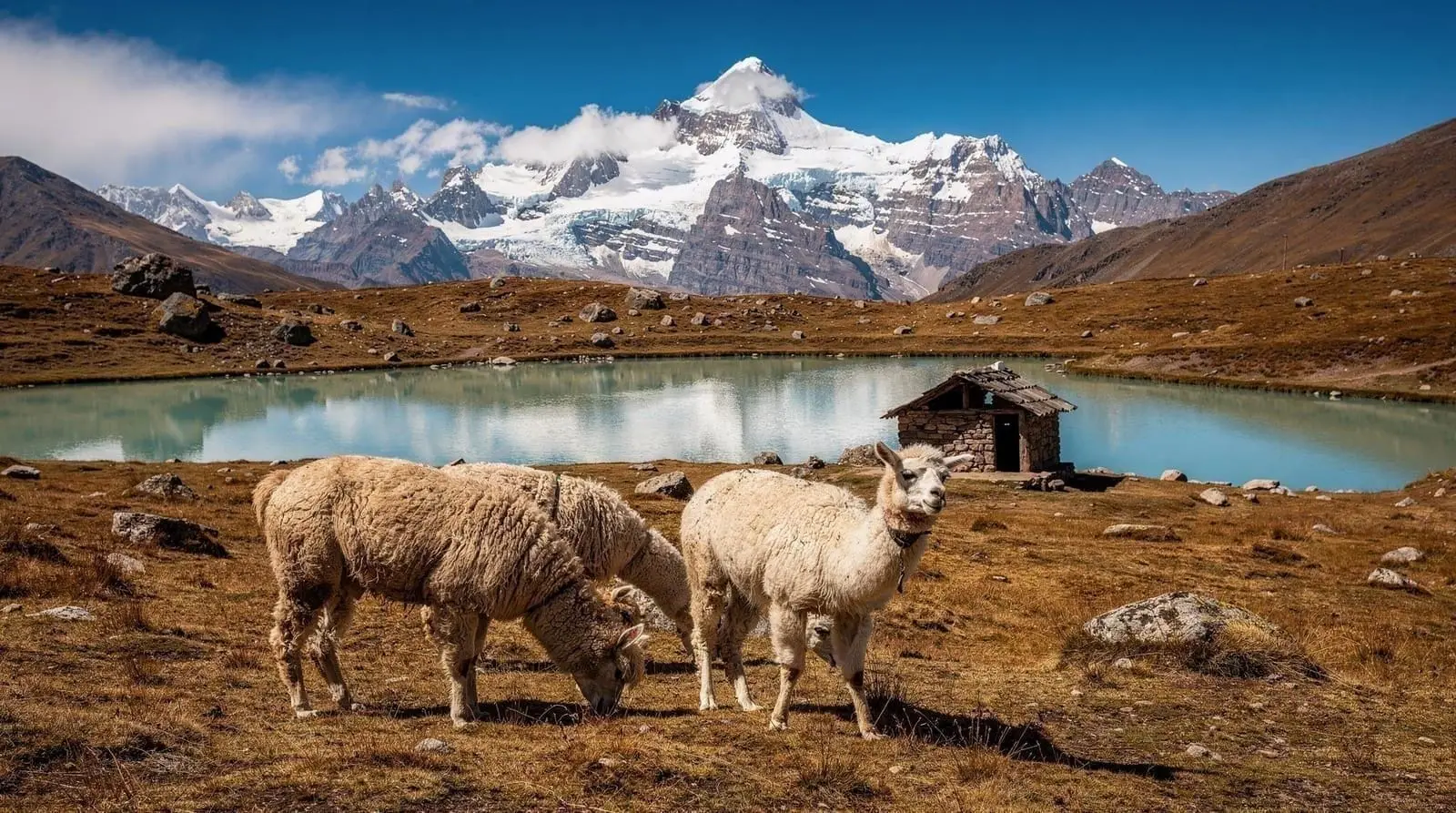
Ausangate
Ausangate is Peru's sacred 6,384 m peak: a serious high-altitude trek, the 7 Lagoons day hike, and the quiet real Rainbow Mountain. The honest guide.
From Cusco: Ausangate Lakes and Glaciers ATV Tour
Quick facts
- Peak altitude
- 6,384 m / 20,945 ft (Nevado Ausangate)
- Trek passes
- Up to 5,200 m on the circuit
- 7 Lagoons day hike
- ~4,400-4,800 m, 8-10 km
- Full circuit
- 4-5 days, 60-70 km
- Crowds
- Very low — true wilderness
Who Ausangate is really for
Ausangate is not a place you wander into. It is the highest mountain in the Cusco region — Nevado Ausangate rises to 6,384 m — and the trekking around it crosses passes above 5,000 m through some of the emptiest, most spectacular high country in Peru. Where Rainbow Mountain and Palccoyo are day trips you can do with minimal experience, the Ausangate circuit is a serious multi-day trek for fit, well-acclimatised, properly equipped hikers. People who arrive underprepared get into real trouble here, far from any road.
That said, Ausangate now offers a spectrum. At the demanding end is the full 4-5 day circuit. In the middle sits the increasingly popular “7 Lagoons” (Siete Lagunas) day hike — a strenuous but single-day walk past a chain of turquoise glacial lakes. And at the accessible end are shorter outings, including ATV-based tours that reach the lakes and glaciers without a multi-day commitment. This page covers all three so you can match the mountain to your fitness and experience honestly.
| Where | Cordillera Vilcanota, ~100 km southeast of Cusco |
| Time needed | 1 day (ATV or 7 Lagoons) to 5 days (full circuit) |
| Altitude | Up to 5,200 m on the circuit; 4,400–4,800 m on day options |
| Best time | May–September (dry season) only |
| Who it’s for | Experienced, well-acclimatised trekkers, or ATV day-trippers |
What Ausangate is
Ausangate (Apu Ausangate) is the most sacred mountain (apu) in the southern Peruvian Andes, central to Quechua cosmology and the focus of the vast Quyllurit’i pilgrimage held on its lower glaciers each year. The massif sits about 100 km southeast of Cusco, in the Cordillera Vilcanota, the same range that holds Vinicunca. In fact the famous Rainbow Mountain lies on Ausangate’s flanks — which is why serious trekkers often describe Ausangate as “the real Rainbow Mountain”: you pass striped peaks and turquoise lakes for days, almost entirely alone, instead of queuing at a single viewpoint.
The landscape is high-altitude puna: glaciated peaks, alpine lakes coloured by glacial flour, herds of alpaca and llama, and scattered Quechua herding families living above 4,000 m. There are no towns on the circuit, no shops, and very little shelter — this is genuine wilderness.
Three ways to experience Ausangate
1. The full circuit trek (4-5 days). A 60-70 km loop around the massif, crossing several passes, the highest around 5,200 m. Nights are spent camping (or in basic community lodges on some operator routes) at altitudes of 4,400-4,800 m, where temperatures drop well below freezing. This is a committing trek: long days, extreme altitude, cold, and total remoteness. It is for experienced trekkers who have already acclimatised for several days. Do not attempt it as your first Andean hike.
2. The 7 Lagoons day hike (Siete Lagunas). A long, strenuous single day — typically 8-10 km of walking at 4,400-4,800 m — past a string of vivid glacial lakes beneath the Ausangate glaciers. It demands good fitness and solid acclimatisation but no overnight camping. For many travellers this is the sweet spot: a real taste of the Ausangate high country in a day, with a fraction of the crowds you would find at Vinicunca.
3. The ATV / shorter tours. For those who want the scenery without the multi-day effort, quad-bike tours reach the Ausangate lakes and glacier viewpoints. The Ausangate Lakes and Glaciers ATV tour is one such option, covering ground on machines that would otherwise take a hard day on foot — a reasonable choice if altitude trekking is beyond your fitness but you still want to see the high lakes.
Altitude and safety: the non-negotiables
Ausangate is the most demanding destination in this whole region, and the altitude is the central reason. The circuit’s passes exceed 5,000 m; even the 7 Lagoons day hike works around 4,500 m for hours. This is not a place to learn how your body handles altitude.
- Acclimatise extensively first. Several days in Cusco, the Sacred Valley, or on lower hikes before attempting anything on Ausangate. The full circuit demands the most acclimatisation of any trek in the region.
- Go guided, with a reputable operator. The remoteness means a problem here can become an emergency fast. A good operator provides oxygen, emergency communication, an evacuation plan, and a guide trained to recognise altitude illness. Cut-price operators that skimp on these are a genuine danger on Ausangate — this is the place where choosing the cheapest tour can be a serious mistake.
- Know the warning signs. Severe headache, vomiting, confusion, loss of coordination, or a wet cough mean descend now. High-altitude pulmonary and cerebral oedema are real risks above 4,500 m.
- Be ready for cold. Camping nights drop well below freezing. You need a four-season sleeping bag, insulated layers, a windproof shell, gloves, a warm hat, and good boots. Sunscreen and sunglasses are essential — glare off snow at this altitude can damage your eyes.
- Season matters. May to September, the dry season, is the only sensible window. In the rainy months the passes can be snowbound, the trail dangerous, and the colours hidden.
Ausangate vs Vinicunca vs Salkantay
Travellers often confuse these. Here is how they differ:
- vs Rainbow Mountain / Vinicunca: Vinicunca is a single crowded day-trip viewpoint on Ausangate’s flank. Ausangate is the whole massif — days of striped peaks and lakes, almost no one else. If you want wilderness rather than a photo queue, Ausangate is the answer.
- vs Palccoyo: opposite ends of the spectrum. Palccoyo is the easy, flat, family-friendly rainbow walk; Ausangate is the hardest trek in the region.
- vs Salkantay: Salkantay is a popular trek that ends at Machu Picchu and is well trafficked. Ausangate is a loop that returns near its start, far less travelled, and not connected to Machu Picchu. Salkantay is the better first big trek; Ausangate is for those who want solitude and a bigger challenge.
Comparing the three ways to see Ausangate
| Option | Duration | Altitude reached | Fitness needed | Best for |
|---|---|---|---|---|
| Full circuit trek | 4–5 days | ~5,200 m passes | High — multi-day camping trekker | Solitude, a genuine expedition |
| 7 Lagoons day hike | 1 long day | 4,400–4,800 m | Moderate-high, no overnight | A real taste of Ausangate in a day |
| ATV / quad tour | Half to full day | Reaches the lakes/glaciers | Low — no serious trekking fitness | Seeing the high country without the effort |
Cost tracks difficulty roughly in reverse: the ATV and day-hike options run a fraction of the price of a full multi-day guided circuit, which must cover camping equipment, cooks, porters or horses, and several days of guiding. Whichever you choose, budget for a properly equipped operator rather than the cheapest bid — see the safety section below for why that matters more here than almost anywhere else in the region.
Further reading on the specific options: the full Ausangate trek guide covers circuit logistics and operators in detail, and the Ausangate lakes day trip guide focuses on the shorter options for travellers without five days to spare.
How Ausangate fits a trip
Ausangate is a commitment rather than a casual add-on. The full circuit needs 5-6 days carved out of your itinerary plus several acclimatisation days beforehand, so it suits travellers building a trek-focused trip rather than a sightseeing one. The 7 Lagoons day hike fits more easily into a standard Cusco-region plan alongside Machu Picchu, the Sacred Valley, and Pisac — but only as a late, well-acclimatised day, not an early one.
If you are weighing Ausangate against the Salkantay trek or the classic Inca Trail, think about whether you want a route that ends at Machu Picchu (Salkantay or the Inca Trail) or a wilderness loop for its own sake (Ausangate). To plan acclimatisation, season, and logistics, see the /itineraries/, the planning /guides/, and the conditions /tools/ page.
Frequently asked questions about Ausangate
How hard is the Ausangate trek?
Very hard. The full 4-5 day circuit crosses passes above 5,000 m, involves camping in sub-freezing conditions at 4,400-4,800 m, and covers 60-70 km in remote terrain with no towns or shops. It is for experienced, well-acclimatised trekkers only. The 7 Lagoons day hike is easier in that it has no overnight, but it is still a strenuous 8-10 km at around 4,500 m.
Is Ausangate the same as Rainbow Mountain?
Rainbow Mountain (Vinicunca) sits on Ausangate’s flank, so they share the same massif, but they are different experiences. Vinicunca is a single, crowded day-trip viewpoint. Ausangate is the whole mountain — multiple striped peaks, turquoise lakes, and days of near-solitude. Trekkers often call Ausangate “the real Rainbow Mountain” for this reason.
Can I do Ausangate as a day trip?
Partly. The 7 Lagoons (Siete Lagunas) day hike and ATV-based tours let you experience the Ausangate high country in a single day, without multi-day camping. The full circuit, however, requires 4-5 days. The day options still demand good fitness and solid acclimatisation because they work at altitudes around 4,500 m.
When is the best time to trek Ausangate?
May to September, the dry season, is the only sensible window. The passes can be snowbound and the trail dangerous in the rainy months from December to March, and cloud often hides the very lakes and peaks you came to see. June through August are the most reliable, though also the coldest at night.
Do I need a guide for Ausangate?
Yes, strongly. The remoteness and extreme altitude make a self-guided trek risky. A reputable guided operator supplies oxygen, emergency communication, an evacuation plan, and altitude-trained guides. This is one trek where choosing the cheapest operator to save money can become a genuine safety hazard.
How does Ausangate compare to the Salkantay trek?
Salkantay is a popular, well-trafficked trek that ends at Machu Picchu, making it a great first big Andean hike. Ausangate is a remote wilderness loop that does not connect to Machu Picchu, is far less travelled, and is more demanding. Choose Salkantay for a Machu Picchu finish and more support on the trail; choose Ausangate for solitude and a tougher challenge.
What does an Ausangate tour typically cost?
Prices vary widely by option: ATV tours and the 7 Lagoons day hike are the most affordable, priced closer to a standard Cusco day trip. The full 4-5 day circuit costs considerably more because it includes camping equipment, cooks, porters or horses, and several days of guiding. Treat unusually cheap multi-day quotes with suspicion — cutting corners on safety equipment is a real risk at this altitude.
Can beginners do the 7 Lagoons hike?
Only with solid prior acclimatisation and reasonable fitness — it is not a beginner’s first Andean walk. Several days spent in Cusco or the Sacred Valley beforehand, plus comfort with a full day of hiking at 4,400–4,800 m, are the minimum. If you are unsure, an ATV tour reaches similar scenery with far less physical demand.