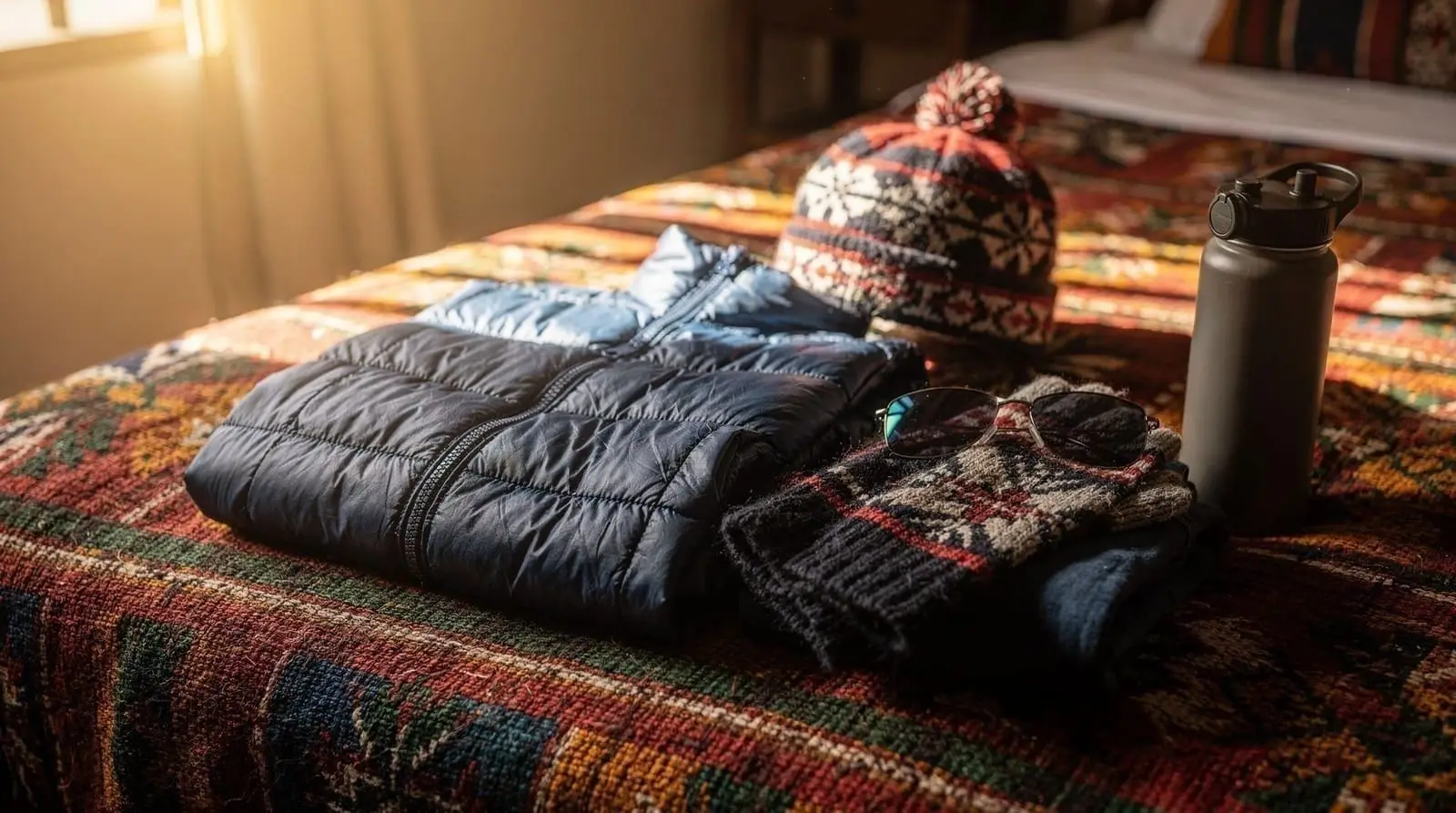
What to pack for Cusco: a layer-by-layer list
What should I pack for Cusco?
Pack for a single day that swings from near-freezing dawns to strong midday sun: thermal base layers, a warm mid-layer, a waterproof shell, a hat and gloves, plus high-factor sunscreen, lip balm, and broken-in walking shoes. Bring any altitude medication from home, and leave space — cheap alpaca knits and forgotten basics are easy to buy in Cusco.
Why Cusco breaks normal packing instincts
Most travellers pack for a destination’s average temperature. Cusco punishes that habit, because there is no meaningful average to pack for — the city lives in extremes on the same calendar day. At 3,400 m (11,150 ft), the dry-season sun at noon is fierce enough to burn unprotected skin in twenty minutes, while the same evening, with no insulating cloud and almost no indoor heating anywhere, can slide toward freezing. People arrive with either a beach wardrobe or a single bulky coat, and both groups suffer.
The correct mental model is not “warm” or “cold” but “layered.” You will add and shed clothing repeatedly across a single day in Cusco — peeling off a fleece as you cross a sunny plaza at midday, pulling it back on the moment you step into the shade of a colonnade. This guide is built around that reality, organised by what genuinely earns its place in your bag, what you can happily buy on arrival, and what people drag across the Andes and never touch.
| Altitude | 3,400 m (11,150 ft) |
| Temperature swing | Near-freezing dawns to strong midday sun, same day |
| Key items | Thermal base, fleece/down mid-layer, waterproof shell |
| Buy locally | Alpaca-blend hats, gloves, scarves; ponchos |
| Best time | Dry season May–September for clearest skies |
A second principle: leave room. Cusco’s markets are full of cheap, warm, useful clothing, and you will almost certainly buy something. Pack the things that are hard to find or that you must have from home, and let the rest be a local purchase. For when to come and how the seasons change the list, pair this with our best time to visit Cusco guide.
The layering system that actually works
Forget single garments. Build three layers and mix them according to the hour.
Base layer (next to skin): Two or three merino or synthetic thermal tops and a pair of thermal leggings. Merino resists odour over multiple wears, which matters when laundry is intermittent. This is the layer that does the quiet work on cold mornings and under everything else at night. Cotton is the weak link — it holds sweat and chills you, so keep it for relaxed daytime wear only.
Mid layer (insulation): A fleece and a light, packable down or synthetic jacket. The packable jacket is the single most valuable item in a Cusco bag — it compresses to nothing in your daypack and reappears the instant the sun drops. Two complementary mid-layers beat one heavy sweater because you can fine-tune warmth.
Outer layer (weather): A waterproof, windproof shell. In the dry season you will mostly use it against wind and evening chill; in the wet season (November to March) you will need it daily against afternoon downpours. A packable rain shell that doubles as a windbreaker covers both jobs without bulk.
The rest of the wardrobe: A few quick-dry T-shirts and a long-sleeve shirt, comfortable trousers (convertible hiking trousers are popular and practical), and one slightly smarter outfit if you plan to eat somewhere nicer. Cusco is relaxed; nobody needs formalwear.
Head, hands, and the sun problem
The thin air at 3,400 m filters far less ultraviolet light than you are used to, and the consequences are quick and unpleasant. This is the section travellers most often skimp on and most often regret.
- Sunscreen, SPF 50: Apply it on cloudy days too — UV penetrates cloud at altitude. Bring enough; quality sunscreen is expensive and patchily available locally.
- Lip balm with SPF: The dry, high-altitude air cracks lips fast. A small thing that prevents real misery.
- Sunglasses with UV protection: Genuine eye protection, not a fashion accessory, especially if you head to Rainbow Mountain or any snow.
- A wide-brimmed or peaked hat for sun, and separately a warm beanie and gloves for cold. You need both, often within the same day. The warm versions are the easiest things in the world to buy in Cusco if you under-pack them.
- A buff or scarf: Doubles as neck warmth, dust protection on dry trails, and a sun shield.
Feet, daypack, and the practical kit
Footwear: Comfortable, broken-in walking shoes or light trail shoes with real grip. Cusco’s polished cobbles are genuinely slippery when wet, and the centre is relentlessly steep. Do not arrive in brand-new boots and expect to break them in on holiday — blisters at altitude are slow to heal. Add a pair of sandals or slip-ons for the evening and warm socks for cold nights.
Daypack: A 20 to 30 litre pack to carry your shed layers, water, snacks, and camera through the day. This is your most-used bag in Cusco, more than your main luggage.
Water and altitude: A refillable bottle (you should aim for three-plus litres a day; dehydration worsens altitude symptoms), basic painkillers for the headache most people get, and any prescription altitude medication brought from home. Coca tea and sweets are everywhere locally. Our altitude sickness guide covers the medical side in detail.
Documents and money: Passport, a printed and digital copy of key bookings, and a stash of small-denomination soles — many market stalls and taxis take only cash. A money belt or hidden pouch is sensible for crowded places like San Pedro market.
Electronics: Peru uses 220 V; bring a universal adapter (sockets accept both flat North American and round European pins in many places, but check). A power bank earns its keep on long day trips with 4 am starts.
Seasonal adjustments: dry versus wet
The base list above works year-round, but two seasons pull it in opposite directions, and getting the emphasis wrong is a common source of discomfort.
Dry season (May to September): This is the cold-nights, clear-skies window. The daily temperature swing is at its widest — brilliant, burning sun by day, genuinely freezing nights with no cloud blanket to hold heat in. Weight your packing toward insulation: the down mid-layer, the beanie and gloves, and a second thermal set for sleeping in unheated rooms. Rain is unlikely, so your shell is mostly a windbreaker, but carry it anyway for the wind on day trips to high viewpoints. This is also the busiest season, which has nothing to do with clothes but everything to do with booking accommodation and trains early.
Wet season (November to March): Days are milder and nights less bitter, but afternoon downpours are routine and often heavy. Now the waterproofs move to the front of the list — a properly waterproof shell, not a shower-resistant one, plus quick-dry trousers and a cheap poncho (buy it locally) for the worst cloudbursts. Footwear with real grip matters more than ever, because the polished cobbles turn treacherous in the rain. The trade-off is greener landscapes and thinner crowds. Note that the Inca Trail closes every February for maintenance, which shapes any trek plans. Our best time to visit Cusco and best time to visit Peru guides go deeper on the calendar.
Shoulder months (April and October): A sensible compromise — fewer crowds than peak dry season, less rain than the wet heart of summer. Pack the full dry-season layering with the waterproofs kept handy, and you are covered either way.
What to buy in Cusco instead of carrying
Cusco’s markets and shops make several items pointless to pack:
- Alpaca-blend hats, gloves, scarves, and jumpers — abundant and cheap, from a few soles. Check labels: the very cheapest “alpaca” is acrylic, and genuine baby alpaca costs more but is noticeably softer. The Centro de Textiles Tradicionales and reputable shops in San Blas sell the real thing with provenance.
- Coca tea, sweets, and basic remedies — no need to import.
- Cheap rain ponchos — sold everywhere when the wet season catches people out.
- A daypack or duffel — if you need an extra bag for purchases.
Buying locally also spreads money into the regional economy, which beats hauling everything from home.
What to leave behind
- Heavy single coats — they take half your luggage and do one job badly; layers do it better.
- High heels and delicate shoes — the cobbles will destroy them and your ankles.
- Excess cotton — slow to dry and cold once damp.
- A hairdryer or bulky toiletries — most accommodation provides what you need, and you can buy the rest.
- Valuables you do not need — leave expensive jewellery at home.
Adjusting the list for what comes next
Cusco is rarely a standalone trip. If you are continuing to the Sacred Valley, the same layering system works, with slightly milder lows. If you are heading down to the Amazon afterwards, your wardrobe inverts completely — see our what to pack for the Peruvian Amazon guide, which is essentially the opposite list. And if a trek is on your itinerary, the Inca Trail packing list layers technical and overnight gear on top of these Cusco basics.
For the bigger picture of staging your acclimatisation and city days, the Cusco destination guide and getting to Cusco cover arrival logistics that shape what you want accessible in your daypack on day one.
A packing checklist by category
Pulling the guide above into one scannable list, here is what earns a place in your bag versus your daypack.
Base layer (2–3 sets): merino or synthetic thermal tops, thermal leggings, quick-dry T-shirts.
Mid layer: fleece, packable down or synthetic jacket — the single most-used item in a Cusco bag.
Outer layer: waterproof, windproof shell that doubles as a windbreaker in dry season and rain protection in wet season.
Head and hands: SPF 50 sunscreen, SPF lip balm, UV-rated sunglasses, sun hat, warm beanie, gloves, buff or scarf.
Feet: broken-in walking shoes or light trail shoes with grip, sandals or slip-ons for evenings, warm socks.
Daypack essentials: 20–30 litre bag, refillable water bottle, basic painkillers, coca tea or sweets, small-denomination soles, power bank.
Documents: passport, printed and digital booking copies, universal plug adapter.
How this differs from other Andean cities
Travellers arriving from the Sacred Valley sometimes assume Cusco’s packing needs are identical, but the altitude difference matters. The Sacred Valley sits several hundred metres lower than Cusco, so nights there are noticeably milder — the same layering system works, but you will use the heaviest mid-layer and beanie less often.
If your itinerary runs Sacred Valley before Cusco, expect the cold to intensify as you climb into the city rather than easing off, which catches some travellers off guard. Compare this against Huaraz too if your trip spans both regions — Huaraz’s higher trekking altitudes push the layering system further still, closer to the Inca Trail packing list than to the city-based list here.