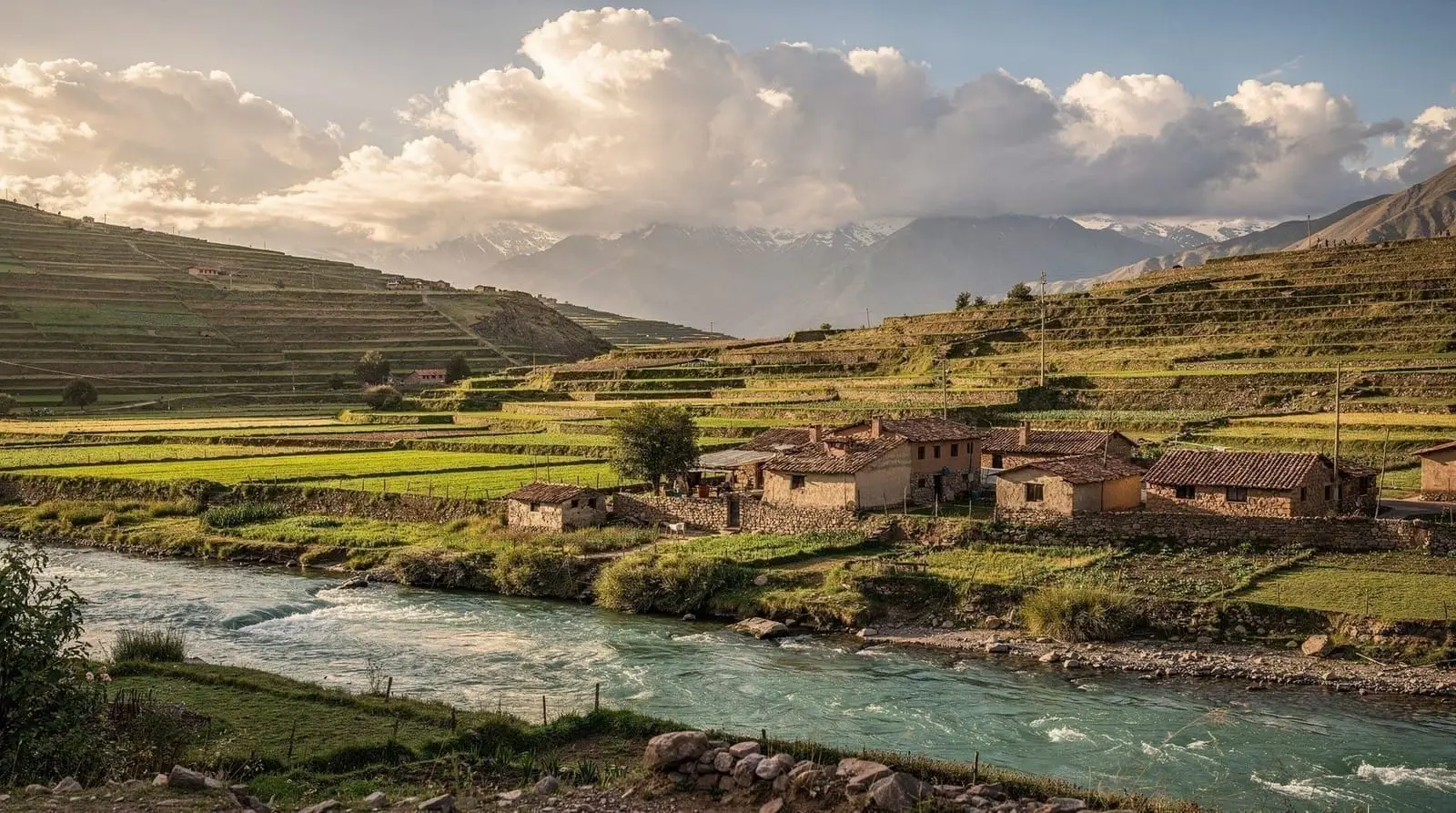
One-day Sacred Valley itinerary
From Cusco: Sacred Valley of the Incas Full-Day Tour
Can you really do the Sacred Valley in one day?
Yes, but not all of it. A good one-day plan covers two or three ruins plus one market or the salt pans — typically Pisac, Ollantaytambo and either Maras-Moray or Chinchero. Trying to hit everything means rushing all of it.
What one day can and cannot buy you
The honest starting point: the Sacred Valley is not designed to be seen in a single day, and the people who enjoy it most give it two or three. The valley floor stretches roughly 60 km from Pisac near Cusco down to Ollantaytambo near the train to Machu Picchu, with the salt pans and terraces of Maras and Moray up on a plateau in between. Linking the highlights means real driving time, and a day spent doing it will feel full.
That said, a one-day visit is a legitimate choice when your schedule is tight, and done well it shows you the best of the valley’s Inca architecture and Andean landscapes. The trick is to accept the trade-off up front: you will see two or three sites properly rather than five sites in a blur. This guide gives you a realistic route, honest timings, the costs, and the decisions that make or break the day.
It also flags the single biggest mistake people make — assuming they can fold Machu Picchu into the same day. They cannot. Machu Picchu is a separate full day with its own train, and trying to combine the two is how travellers end up seeing neither well.
| Where | Pisac → Maras/Moray → Ollantaytambo (or swap in Chinchero) |
| Cost | ~S/70 boleto + salt pans entry (cash) + transport/lunch |
| Time needed | Full day, 07:30-18:30 |
| Getting there | Group tour easiest; private driver for flexibility |
| Best time | Early departure — before the tour-bus crowds |
| Machu Picchu? | No — it needs its own separate day and train |
The smart one-day route
The best order follows the valley downhill from the Pisac end toward Ollantaytambo, so you are never doubling back. A workable independent or private-driver itinerary:
07:30 — Leave Cusco. Aim to be on the road by 07:30 to 08:00. The early start is the whole game: it gets you to the first site before the tour buses and leaves daylight at the end.
08:30 — Pisac ruins. Arrive as the gates open. The hillside terraces and ceremonial sector are the most photogenic in the valley early, before the haze and crowds. Give it 75 to 90 minutes. If it is a Sunday, Tuesday or Thursday, the market in the town below is at its biggest — but you will have to choose between a quick market browse and a relaxed ruins visit.
11:00 — Maras and Moray. Drive up to the plateau. The concentric terraces of Moray (an Inca agricultural laboratory) take 45 minutes; the Maras salt pans, a hillside of more than 5,000 hand-worked evaporation ponds, take another 45. The salt pans are a separate cash entry, not on the boleto; the rate is set by the community operator and changes, so check it on site.
13:30 — Lunch in Urubamba. The valley’s main town has the widest choice of restaurants. Keep it to an hour.
15:00 — Ollantaytambo. The day’s grand finale. Climb the fortress terraces to the Temple of the Sun (1.5 to 2 hours), then either head back to Cusco or — if you planned ahead — catch an afternoon train to Aguas Calientes.
18:30 — Back in Cusco (if returning).
If you would rather swap Maras-Moray for Chinchero and its weaving cooperatives, do Chinchero last on the way back up to Cusco instead — it sits on that road.
The day at a glance
| Time | Stop | Duration |
|---|---|---|
| 07:30 | Leave Cusco | — |
| 08:30 | Pisac ruins | 75-90 min |
| 11:00 | Maras and Moray | ~90 min combined |
| 13:30 | Lunch in Urubamba | ~1 hour |
| 15:00 | Ollantaytambo fortress | 1.5-2 hours |
| 18:30 | Back in Cusco (or onward train) | — |
Tour vs private driver vs colectivo
For a single day, how you travel matters more than which sites you pick.
Group tour is the default for good reason. The full-day loops bundle the boleto logistics, transport between sites that public vans do not connect well, and usually a buffet lunch, for roughly $25-45. The full-day Sacred Valley tour from Cusco hits the classic highlights and gets you back by evening, while the Pisac, Maras, Moray and Ollantaytambo small-group tour adds the salt pans in a smaller group. For a slower pace with fewer people, the Sacred Valley VIP full-day group tour is the comfort-tier option.
Private driver costs roughly S/200-280 (about $55-75) for the day and is the most flexible independent route — you stop where you like and skip the souvenir sales stops. Agree the route and price before setting off.
Colectivos (shared vans) are cheapest at a few soles per leg, but you change vans repeatedly (Cusco to Pisac, Pisac to Urubamba, Urubamba to Ollantaytambo) and lose serious time waiting. Doable, but not ideal for a one-day blitz. The full breakdown is in the getting around the Sacred Valley guide.
For a one-day squeeze specifically, the time lost waiting for connections is the real cost of colectivos, not the fare — a missed van can easily add 30-45 minutes to a day that has no slack left in it. If your schedule genuinely has no flexibility, that risk alone tips the calculation toward a tour or private driver even for budget-focused travellers.
What it costs
A realistic one-day budget, independent:
- Boleto Turístico, partial Circuit III: S/70 (about $19), valid 2 days, covers Pisac, Ollantaytambo, Chinchero and Moray.
- Maras salt pans (Salineras): separate cash entry, not on the boleto; the rate is set by the community operator and changes, so check it on site.
- Lunch: S/25-60 depending on where you eat.
- Transport: a few soles per colectivo leg, or S/200-280 for a private driver split between your group.
A group tour rolls most of this into one price except the salt pans entry, which is sometimes extra — check the inclusions. The ticketing logic in full is in the Cusco tourist ticket guide.
If you have a flexible afternoon
Three honest variations on the standard loop:
Market-focused day. If you came for the Andes textiles and produce, time your day for a Sunday and lead with the Pisac market, then do the Pisac ruins and Ollantaytambo, skipping Maras-Moray. Chinchero’s market is also Sunday.
Salt-pans-and-terraces day. Skip Pisac entirely, start with Moray and Maras when they are quiet, lunch in Urubamba, and spend a long, unhurried afternoon at Ollantaytambo.
Acclimatisation day. If this is your first full day off the plane, keep it gentle: one market, one short ruins walk, lots of water and coca tea, and an early return. Pushing hard at altitude on day one is the classic way to ruin the rest of the trip — see the altitude sickness guide.
Photography-focused day. If the light matters more to you than covering ground, flip the usual order: arrive at Pisac right at opening for the low morning sun on the terraces, and time Ollantaytambo for the last hour before close, when the low afternoon light rakes across the fortress and the day-trip crowds have thinned. This costs you Maras-Moray, but the photographs from the golden hours at either end of the day are noticeably better than the flat midday light most itineraries get stuck with.
For longer plans that give the valley the days it deserves, see the itineraries hub and the best day trips from Cusco guide.
The sites ranked, if you have to cut
A one-day trip almost always means dropping something. If time runs short, here is how the valley’s headline sights stack up so you can cut the right one rather than the wrong one.
Ollantaytambo — keep it. The fortress is the most complete and dramatic Inca site in the valley, and the living town below it has no equal. If you only have time for one stop, make it this one. It is also the natural place to end the day, with the train station and good restaurants on hand.
Pisac — keep it if you start early. The hillside terraces are arguably the most photogenic ruins in the valley, and the market in the town below is the most famous in the region. The catch is its position at the Cusco end: do it first thing or skip it, because backtracking to it later wastes an hour.
Maras and Moray — the flexible pair. The salt pans are visually extraordinary and unlike anything else in Peru, while Moray’s sunken circular terraces are a quiet marvel. They are an easy add if you have a driver, but they sit up on a plateau off the main valley road, so they cost time. The first to cut on a tight self-guided day.
Chinchero — the weaving stop. Highest and coldest of the four, best for its textile cooperatives and Sunday market. It sits on the road back to Cusco, so it slots in neatly at the end of the day — but only if weaving and markets interest you more than another ruin.
The honest hierarchy: never skip Ollantaytambo, do Pisac only if you can do it early, and treat the rest as bonuses dictated by your transport and your interests.
Before you set off
A few preparations make the difference between a smooth day and a frustrating one. Carry your passport or a copy, since entry and train staff may ask for identification. Bring layers: the valley floor can feel warm in the sun, while the plateau around Maras and Moray and the road near Chinchero are noticeably colder and windier. Sun protection matters at this altitude even on cloudy mornings. Our what to pack for Cusco guide covers the full list.
Carry small notes and coins in soles for toilets, snacks and the salt pans entry, because small vendors rarely change large bills. For cash and taxi advice, the Cusco taxi and money tips page is worth a read before you leave the city.
If you have not yet spent a night at altitude, read the Cusco acclimatisation plan first. The valley floor sits lower than Cusco, which many visitors find more comfortable, and the Cusco altitude versus Sacred Valley comparison explains why.
Making the most of each stop
At Pisac, resist the urge to rush the upper sectors. The paths wind along the terraces, and the best views reward the slower walker. The Pisac ruins guide and the Pisac market and ruins page explain what you are looking at, so the stones mean more than a pretty backdrop.
At Moray and Maras, a little context helps. The Moray terraces guide describes the agricultural experiment behind the circular design, and the Maras salt mines guide explains how families still work the ponds. If this stop is your priority, the full Maras and Moray day trip guide goes deeper.
At Ollantaytambo, the fortress is the headline, but the lanes of the old town reward a short wander once you come down. The Ollantaytambo ruins guide and the Ollantaytambo village guide cover the climb and the town separately, which helps when you must choose where to spend your last hour of light.
At Chinchero, if you swap it in, the Chinchero weaving guide shows how to tell genuine hand-woven cloth from mass-produced goods, so any purchase is an informed one.
If the day grows into more than one
Plenty of travellers start with a single day and realise at lunch that they want more. If that happens, the Sacred Valley complete guide lays out a slower plan, and the Sacred Valley versus Cusco base guide helps you decide whether to move your bed out of the city. Staying in the valley lets you reach the sites at opening time without the early drive, which is the single biggest improvement you can make to the experience. If Machu Picchu is next, the how to get to Machu Picchu guide picks up where this itinerary leaves off at Ollantaytambo.
Tourist traps and honest warnings
The “see everything” promise. Loops that list five or six stops in one day spend more time on the bus and at a buffet than inside the ruins. Read how long you actually get at Ollantaytambo and Pisac, not just the stop count.
Salt pans not on the boleto. Sellers sometimes imply your tourist ticket covers everything. It does not cover Salineras — that is a separate cash entry, with a rate set by the operator that changes, and the cheapest tours occasionally drop it.
The textile sales stop. Many budget tours include a roadside alpaca-goods “demonstration” that is really a sales floor. It is optional; you are not obliged to buy.
Trying to bolt on Machu Picchu. It cannot be done in the same day. Machu Picchu needs its own day and train. Pretending otherwise wrecks both.
Starting late. A 09:00 or 10:00 departure means you arrive at the first site with the crowds and run out of daylight at the last. The early start is non-negotiable for a good one-day trip.
Frequently asked questions about One-day Sacred Valley itinerary
What is the best one-day Sacred Valley route?
How much does a one-day Sacred Valley trip cost?
Should I take a tour or go independently for one day?
Can I add Machu Picchu to a one-day Sacred Valley trip?
Is one day in the Sacred Valley enough?
What time should a one-day Sacred Valley trip start?
Top experiences
Bookable activities with verified prices and instant confirmation on GetYourGuide.


