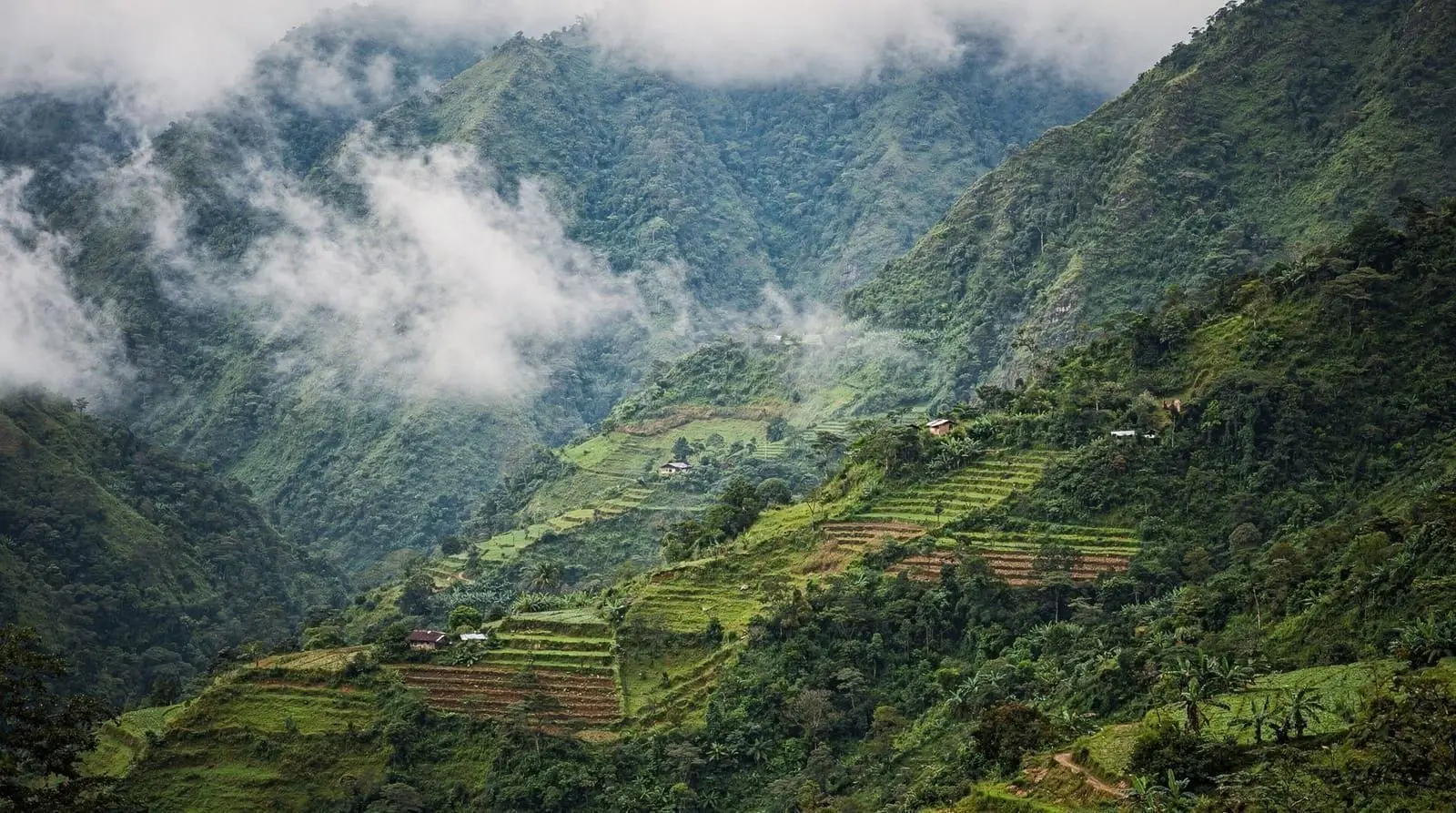
Chachapoyas complete guide
From Chachapoyas: Kuélap Fortress and Cable Car Tour
Is Chachapoyas worth visiting?
Yes, if you have at least three or four days and an interest in pre-Inca archaeology and cloud-forest scenery. The region packs Kuélap fortress, the 771 m Gocta waterfall, the Karajía cliff sarcophagi and the Leymebamba mummy museum into a compact area — but it is remote, so the travel time in and out is the real cost.
Why this corner of Peru gets overlooked
Peru sells itself to the world through a single, tightly controlled image: Machu Picchu at dawn, llamas on Inca terraces, the Sacred Valley. That image is so dominant that it crowds out almost everything north of Lima. The result is that the Amazonas region — home to a fortress older and larger by area than Machu Picchu, one of the planet’s tallest waterfalls, cliff-mounted sarcophagi that stare out across canyons, and a climate-controlled museum holding more than two hundred mummies — receives a tiny fraction of the visitors it warrants.
Chachapoyas, the regional capital, is the base for all of it. This guide covers what the destination page does not: how to budget your days and your money, how to sequence the sites, where the genuine tourist traps are, and what the cloud-forest climate will actually do to your plans. For orientation on the town itself and a site-by-site overview, start with the Chachapoyas destination page.
| Where | Amazonas region, northern Peru, ~2,335 m |
| Time needed | 4 days on the ground (plus travel in/out) |
| Cost | Roughly S/120-180/day all-in |
| Getting there | Fly Lima–Jaén or Chiclayo, then 4-9hr transfer |
| Best time | May-September (dry season, still cloud forest) |
A quick read on the Chachapoya
The people who built these sites are usually marketed as the “Warriors of the Clouds,” a phrase loosely drawn from Inca accounts of conquering them. The Chachapoya were a cloud-forest culture spread across the ridges of the upper Marañón and Utcubamba valleys, flourishing roughly from 800 to 1500 CE. Their signature is everywhere once you learn to see it: cylindrical stone dwellings, zigzag and rhombus friezes, and the habit of placing their dead high on cliff faces so ancestors stayed visible to the living.
The Incas under Tupac Yupanqui subdued them in the 1470s after years of resistance, then deported large numbers to break the region’s will. The Spanish arrived not long after. What survives is a layered archaeological landscape that has barely been excavated — many ridge-top ruins have never been formally studied — which is part of what makes the region feel genuinely undiscovered rather than packaged.
How many days you actually need
The honest answer is more than most people allow. Because each major site sits at the end of a half-day or full-day round trip, you cannot bundle them efficiently. Here is a realistic framework:
- Two days: Kuélap plus one of Gocta or Karajía. This is the bare minimum and only makes sense if your travel logistics force it. You will leave wishing you had more time.
- Three days: Kuélap, Gocta, and the Karajía and Quiocta caves combination. This covers the headline experiences.
- Four days: Add the Revash mausoleums and the Leymebamba museum, the most underrated day in the region.
- Five-plus days: Slow the pace, hike to Kuélap rather than taking the cable car, see both Gocta falls, or add niche sites like Jalca Grande or the Yumbilla waterfall.
Given that getting in and out can eat two days at each end, treat four days on the ground as the target. See how many days in Peru for fitting this into a wider trip.
What it costs
Chachapoyas is one of the cheaper destinations in Peru once you arrive — the expensive part is reaching it. Approximate per-person costs, in soles with USD equivalents at roughly S/3.7 to the dollar:
- Kuélap admission: S/15 (about $4) for foreign adults.
- Kuélap cable car: roughly S/30 round trip (about $8) when operating, sometimes bundled into tour pricing.
- Gocta trail entry: S/10-15 (about $3-4) at the community gate in Cocachimba or San Pablo.
- Karajía site entry: around S/5; Quiocta caves a similar amount.
- Group day tours: S/60-120 per person (about $16-32) depending on the site and inclusions; private tours cost considerably more.
- Budget guesthouse: S/40-70 per night (about $11-19); mid-range hotels S/150-250 (about $40-68).
- Main course in a local restaurant: S/15-30 (about $4-8).
A frugal traveller doing the region by group tours can manage on roughly S/120-180 per day all-in once on the ground. The flights and long-haul buses are where the real money goes — budget those separately and read the Peru trip cost guide for the bigger picture.
The four headline experiences, in order
Kuélap fortress
The centrepiece. A 600 m stone platform ringed by walls up to 20 m high, sitting on a ridge at around 3,000 m, holding the remains of more than four hundred circular dwellings. It predates Machu Picchu by centuries and covers a greater area. The cable car, when running, delivers a genuinely dramatic 4 km arrival over the cloud forest; the road approach is the always-available fallback. Give it a full day. The deep dive is in the Kuélap fortress guide, the access logistics in the Kuélap cable car guide, and the inevitable comparison in Kuélap vs Machu Picchu.
Kuélap fortress and cable car tour from ChachapoyasGocta waterfall
Measured in 2006 at around 771 m, Gocta is among the planet’s tallest waterfalls. The classic hike runs roughly 5-6 km each way from Cocachimba to the lower falls through cloud forest where spectacled bears and cock-of-the-rock live. It is wet, muddy, and worth it. Full coverage is in the Gocta waterfall guide.
Full-day Gocta waterfall tour from ChachapoyasKarajía sarcophagi
Seven painted clay figures, each about 2.5 m tall, wedged onto a cliff ledge for five centuries. A 45-minute hike from Cruzpata gets you to the viewpoint; you see them from below, not beside them. Usually paired with the Quiocta limestone caves. See the Karajía sarcophagi guide.
Karajía sarcophagi and Quiocta caves tour from ChachapoyasRevash and Leymebamba
Revash is a cluster of small ochre house-shaped mausoleums set into a cliff near Santo Tomás. The Leymebamba museum, an hour further south, holds the more than two hundred mummies recovered from Laguna de los Cóndores in 1997. The two combine into the region’s most rewarding archaeology day. See the Revash mausoleums guide and the Leymebamba museum guide.
A sensible four-day sequence
Tour operators in Chachapoyas run a predictable rotation, and the order matters because the harder hikes are better tackled early:
- Day 1 — Kuélap. Full day, ideally with the cable car if it is running.
- Day 2 — Gocta. A solid half-day hike; start early before the afternoon cloud thickens.
- Day 3 — Karajía and Quiocta caves. A gentler day with a short hike and a cave walk.
- Day 4 — Revash and Leymebamba. The longest driving day but the quietest and most contemplative.
Resist any operator who offers to combine Kuélap and Gocta in a single day. It is technically possible and uniformly disappointing — both deserve their own day, and rushing the fortress to make a waterfall deadline wastes the longer journey you took to get here.
The cloud-forest climate, and managing expectations
The single most common disappointment in Chachapoyas is weather. This is cloud forest. Even in the dry season of May to September, mornings often start under mist that can sit on Kuélap’s ridge until mid-morning, and short showers are normal at any time of year. November to April brings heavier, more sustained rain.
What this means in practice: go to Kuélap and Gocta early, when the light is best and the cloud has not fully built. Pack a genuine waterproof, not a token windbreaker, and accept that your footwear will get muddy. If you have flexibility, keep your itinerary loose enough to swap a clouded-out Kuélap day for a clearer one. The dry-season clarity is real but never guaranteed, and anyone promising you a cloudless fortress photo is overselling. The wider seasonal picture is in best time to visit Peru.
Tourist traps and honest warnings
- The “Machu Picchu of the north” framing. Operators and signage lean on this constantly. It sets the wrong expectation. Kuélap is bigger and older but has none of Machu Picchu’s polish, interpretation or postcard setting. Go for solitude and scale, not for a familiar experience.
- Single-day combos. As above, any tour bundling two major sites into one day is selling convenience at the cost of the experience.
- Cable car assumptions. Do not book a trip built entirely around the cable car without confirming it is running. It has had repeated, sometimes lengthy, closures. The Kuélap cable car guide covers the current picture and the road alternative.
- Underestimating transfer times. The roads are spectacular and slow. A “50 km” trip to Kuélap is a couple of hours each way, not forty minutes.
- Over-tight flight connections. Domestic flights into Jaén and Chachapoyas have historically been inconsistent. Build a buffer day; do not connect a Chachapoyas flight to an international departure on the same day.
Where to base yourself and what to eat
Most travellers stay in Chachapoyas town itself, around the Plaza de Armas and Jirón Amazonas. It is walkable in twenty minutes, has reliable 4G and hotel WiFi, and puts you near the agencies and bus terminal. Alternatives include staying out at Cocachimba near Gocta for the falls, or Nuevo Tingo near the Kuélap cable car base, but for a multi-site trip the town is the practical hub.
The regional dish to try is cecina, dried and salted pork usually served with fried yuca and a fried egg. Juanes (rice and chicken steamed in bijao leaves) appear here too, a nod to the jungle border. The market on Calle Ortiz Arrieta is the place for fresh fruit and the local cheeses the highlands are known for. Restaurants around the plaza serve both regional food and the standard Peruvian tourist menu at S/15-30 per main.
Connecting Chachapoyas to a wider trip
Chachapoyas anchors a northern Peru circuit that can string together Chiclayo and Trujillo on the coast — with the Moche and Chimú sites of Chan Chan and the royal tombs of Sipán — and Cajamarca in the highlands, where the Spanish captured the Inca emperor Atahualpa. Doing the loop by ground is demanding but coherent; see the itineraries hub for structured route options and north vs south Peru to decide whether the north fits your trip at all.
If you are weighing this region against the classic Cusco circuit, the honest head-to-head is in Chachapoyas vs Cusco. For the practical question of actually arriving, read how to get to Chachapoyas.
Money, connectivity and other practical loose ends
Bring more cash than you think you need. Chachapoyas town has a handful of ATMs around the plaza, but they occasionally run out of notes or go offline, and none of the outlying sites — Kuélap, Gocta, Karajía, Revash — have any banking facilities at all. Withdraw in Chiclayo or Jaén before the transfer in if you can, and carry enough soles in Chachapoyas to cover several days of tours, meals and tips without relying on a card.
Connectivity is patchy but improving: Chachapoyas town has reasonable 4G and hotel WiFi, but signal drops out completely on the roads to Kuélap, Gocta and Karajía, so download offline maps and any guide material before you leave the plaza each morning. Spanish is the practical language outside organised tours — English-speaking guides exist but should be requested in advance rather than assumed. Power cuts are occasional but not rare in the shoulder and wet seasons, so a portable charger is worth packing alongside the usual rain gear.
Frequently asked questions about Chachapoyas complete
How many days do you need in Chachapoyas?
What is the best time of year to visit Chachapoyas?
How do you get to Chachapoyas?
Is Chachapoyas safe for tourists?
Do you need a guide in Chachapoyas?
Are there ATMs near the Chachapoyas archaeological sites?
Is there phone signal at the Chachapoyas sites?
Top experiences
Bookable activities with verified prices and instant confirmation on GetYourGuide.


