Kuélap vs Machu Picchu
From Chachapoyas: Kuélap Fortress and Cable Car Tour
Is Kuélap better than Machu Picchu?
They are different rather than better or worse. Kuélap is older, larger by area and almost crowd-free, with a fraction of the cost and none of the polish. Machu Picchu has the iconic setting, dense interpretation and world-class infrastructure but heavy crowds and high costs. Choose Kuélap for solitude and scale, Machu Picchu for the postcard experience, or see both for the full story.
The comparison everyone makes, addressed honestly
Kuélap is marketed relentlessly as “the Machu Picchu of the north,” and the phrase does the site a disservice. It sets visitors up to expect a familiar experience and then quietly disappoints them when Kuélap turns out to be something else entirely. The truth is that Kuélap and Machu Picchu are both extraordinary pre-Columbian stone cities in the Peruvian Andes, and that is roughly where the similarity ends. One is older, larger by area, and almost empty; the other is younger, more compact, more dramatically sited, and visited by millions.
This guide compares them honestly across every dimension that matters, so you can decide which suits your trip — or whether, as for many travellers, the answer is both. For the deeper dive on each, see the Kuélap fortress guide and the Machu Picchu destination page; for the broader regional choice, Chachapoyas vs Cusco.
| Kuélap | Machu Picchu | |
|---|---|---|
| Where | Chachapoyas region, northern Peru | Sacred Valley, near Cusco |
| Cost | around S/15 (~$4) admission | $150+ per person all-in |
| Time needed | 2-3hrs on site, 8-9hrs round trip | half to full day from Cusco/Aguas Calientes |
| Getting there | flight to Jaén/Chiclayo + road, or long bus | train to Aguas Calientes + bus up |
| Best for | solitude, pre-Inca history, scale | iconic setting, first-time visitors |
Age and culture
Kuélap was built by the Chachapoya, a cloud-forest culture distinct from the Inca. Construction began around 500 CE, and the fortress was occupied for roughly a thousand years before the Incas conquered the region in the 1470s. It predates Machu Picchu by close to a millennium and belongs to a culture most visitors have never heard of.
Machu Picchu is an Inca royal estate, built in the 15th century under the emperor Pachacuti, occupied for around a century before being abandoned around the time of the Spanish conquest. It is the apex of Inca architecture and the centrepiece of the story Peru tells about itself.
Verdict: Kuélap for age and cultural rarity; Machu Picchu for the iconic Inca narrative.
Size and scale
Kuélap is genuinely enormous. Its stone platform runs roughly 600 m long and 110 m wide, ringed by walls up to 20 m high, enclosing the remains of more than 400 circular dwellings. It is frequently cited as containing more stone than Machu Picchu — the scale is its defining quality. The catch is that no single viewpoint captures it; you absorb it by walking the platform over two or three hours.
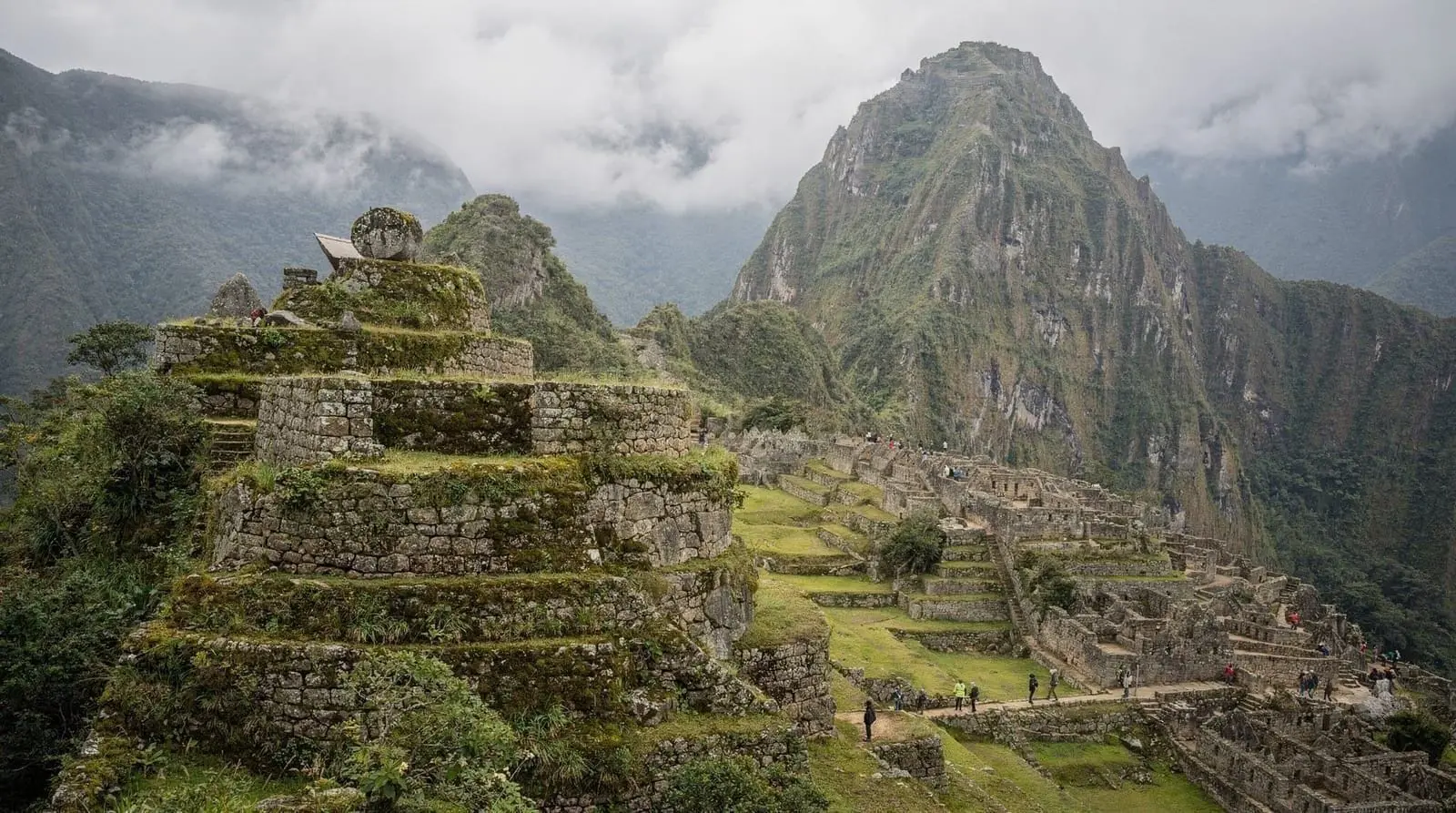
Machu Picchu is more compact but more architecturally varied — temples, terraces, royal quarters, the Intihuatana stone — arranged in a tight, legible composition with the famous overlook from the Inti Punku gate. It photographs in a single frame in a way Kuélap never will.
Verdict: Kuélap for raw scale and stone volume; Machu Picchu for architectural variety and the iconic single view.
Setting and drama
This is where Machu Picchu pulls decisively ahead. Its setting — perched on a saddle between Huayna Picchu and Machu Picchu mountains, with the Urubamba river curling far below and cloud forest spilling down the slopes — is one of the most dramatic on Earth, and the reason it became a global icon.
Kuélap sits on a forested ridge at 3,000 m above the Utcubamba valley, atmospheric and often misty, but without Machu Picchu’s vertiginous, postcard-perfect drama. The Kuélap cable car, when running, adds a spectacular aerial arrival that partly closes the gap.
Verdict: Machu Picchu wins clearly on setting. It is simply one of the most beautifully sited ruins in the world.
Crowds
Kuélap is quiet. On a typical day you may share the vast site with a few dozen people. The solitude is profound and, for many, the whole point — you can stand inside a thousand-year-old fortress and hear nothing but wind and birds.
Machu Picchu receives thousands of visitors per day, managed through a timed-entry ticketing system with set circuits and, in places, mandatory guides. It is never empty, and the marquee viewpoints can feel congested, though careful timing helps.
Verdict: Kuélap wins overwhelmingly for solitude. If crowds ruin sites for you, this is decisive.
Cost
Kuélap is one of the great archaeological bargains. Admission is S/15 (about $4), with the cable car adding roughly S/30 round trip when it runs. The real cost is the long journey to reach the Chachapoyas region — see how to get to Chachapoyas.
Machu Picchu is expensive. The entry ticket, the train to Aguas Calientes, the bus up to the site, and often a guide combine to well over $150 per person, and that is before Cusco accommodation and the Sacred Valley. It is one of the costlier single experiences in South America.
Verdict: Kuélap is far cheaper on site; Machu Picchu’s headline costs are high. See the Peru trip cost guide.
Access and infrastructure
Machu Picchu has a polished, high-capacity tourism machine: frequent flights to Cusco, the train system, organised buses, dense interpretation, and abundant guides. It is easy to visit despite its remote location, because everything is engineered to move large numbers smoothly.
Kuélap has little of this. Reaching Chachapoyas takes a flight to Jaén or Chiclayo plus a long drive, or a 22-24 hour bus. On site, interpretation is sparse — a good guide is essential to read the ruins — and facilities are basic. The cable car has had repeated closures, with a road-and-walk fallback.
Verdict: Machu Picchu for ease and infrastructure; Kuélap for the rawer, less-managed experience.
Interpretation and understanding
At Machu Picchu, the site is densely documented, well signed, and covered by countless guides, so even an unprepared visitor leaves understanding what they saw.
At Kuélap, on-site signage is minimal, and without a knowledgeable guide the circular dwellings and enclosures can feel like a maze of waist-high walls. The flip side is that Kuélap rewards the curious — the entrance tunnel, the friezes, El Tintero and El Castillo all reveal themselves to anyone who reads up first or hires a good guide.
Verdict: Machu Picchu is easier to understand on arrival; Kuélap demands more of the visitor and repays the effort.
Who should choose which
Choose Machu Picchu if you: are visiting Peru for the first time, want the world-famous icon, value the dramatic setting and polished infrastructure, and can accept the crowds and cost.
Choose Kuélap if you: prize solitude and scale, are drawn to a rarer pre-Inca culture, want a fraction of the cost, prefer a gentler altitude, and have the time for the long northern journey.
See both if you: have two weeks or more and want the full sweep of Andean history — the famous Inca south and the secret Chachapoya north. They sit at opposite ends of the country, linked via Lima, so combining them takes internal flights and planning. See the itineraries hub and how many days in Peru.
Kuélap fortress and cable car tour from ChachapoyasThe honest bottom line
If you can only visit one and it is your first trip to Peru, Machu Picchu remains the right choice — its setting, fame and accessibility deliver the experience most people come for, crowds and cost notwithstanding. But the moment you have seen Machu Picchu, or if you actively want to escape the tourism machine, Kuélap is one of the most rewarding sites in the Americas: older, larger, almost empty, and genuinely yours. The dichotomy is false for travellers with time — the richest Peru trips include both fortresses. Plan Kuélap with the Kuélap fortress guide and weigh the wider regions in Chachapoyas vs Cusco.
What each trip actually requires of you
Beyond the site comparison itself, the two trips demand different things logistically. A Machu Picchu day trip from Cusco slots neatly into a standard Sacred Valley itinerary and needs little extra planning beyond booking train and entry tickets ahead. A Kuélap trip is a genuine expedition: you are flying into a region with far less tourism infrastructure, basing yourself in Chachapoyas for several days, and building in flexibility around the cable car’s unpredictable status. Neither is objectively harder, but Kuélap asks for more trip-planning patience in exchange for the solitude.
Kuélap fortress full-day tour from ChachapoyasFrequently asked questions about Kuélap vs Machu Picchu
Is Kuélap older than Machu Picchu?
Is Kuélap bigger than Machu Picchu?
Which is cheaper to visit, Kuélap or Machu Picchu?
Which has fewer crowds, Kuélap or Machu Picchu?
Should I visit both Kuélap and Machu Picchu?
Which trip requires more planning, Kuélap or Machu Picchu?
Top experiences
Bookable activities with verified prices and instant confirmation on GetYourGuide.
