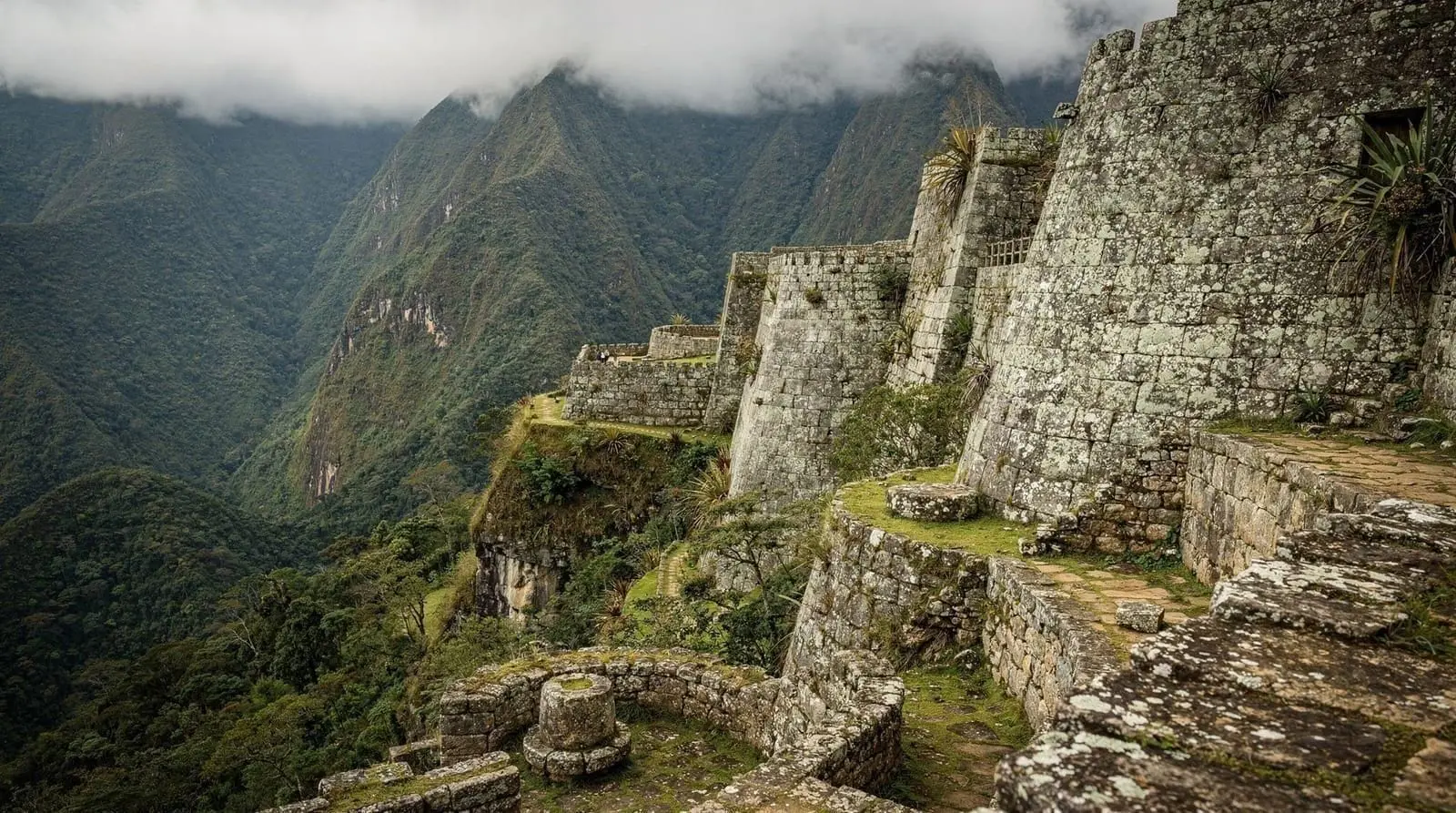
Chachapoyas vs Cusco
Cusco: Half-Day City Tour with Sacsayhuaman and Q’enco
Should I visit Chachapoyas or Cusco?
Choose Cusco for the iconic Inca circuit — Machu Picchu, the Sacred Valley, Rainbow Mountain — with easy access and full infrastructure but heavy crowds. Choose Chachapoyas for older, larger, near-empty pre-Inca sites like Kuélap and the Gocta waterfall, in exchange for a long, remote journey and basic facilities. First-time visitors usually pick Cusco; return visitors and off-the-beaten-path travellers favour Chachapoyas.
Two versions of Andean Peru
Chachapoyas and Cusco represent two almost opposite ways of experiencing the Peruvian Andes, and the choice between them is really a choice about what kind of traveller you are. Cusco is the polished, world-famous heart of the Inca circuit — easy to reach, lavishly served, and visited by millions. Chachapoyas is the remote, pre-Inca north — hard to reach, lightly served, and visited by a fraction of those numbers. Both are genuinely worthwhile. Neither is a substitute for the other.
| Cusco | Chachapoyas | |
|---|---|---|
| Access | Direct flight, ~1.5hrs from Lima | Flight + 4-9hr transfer, or 22-24hr bus |
| Crowds | Heavy at headline sites | Light to none |
| Altitude | ~3,400 m | ~2,335 m (Kuélap ~3,000 m) |
| Cost on the ground | Higher, esp. Machu Picchu | Lower |
| Best for | First-timers, tight schedules | Return visitors, solitude-seekers |
This guide compares them honestly across the dimensions that actually shape a trip: access, crowds, cost, the archaeology, the scenery, and who each one suits. For the narrower site-level question, see Kuélap vs Machu Picchu; for the regional framing, north vs south Peru.
Access and logistics
This is the starkest difference. Cusco has a busy airport (code CUZ) with frequent direct flights from Lima taking about 1.5 hours, plus full bus connections. Once there, the Sacred Valley, Machu Picchu and Rainbow Mountain are all reachable by well-oiled tourist transport. The infrastructure exists to move large numbers of people efficiently.
Chachapoyas is the opposite. There is no reliable direct flight from Lima; you fly to Jaén or Chiclayo and drive 4-10 hours, or take a 22-24 hour bus. The town’s own airport has only intermittent service. Once there, each site is a half- or full-day excursion on slow mountain roads. Getting to and around Chachapoyas is part of the adventure — and part of the cost.
Verdict on access: Cusco wins decisively for ease. If your time is tight or you dislike long transfers, this alone may decide it.
Crowds and atmosphere
Cusco is one of South America’s most-visited destinations. Machu Picchu operates timed entry, the Sacred Valley towns fill with tour buses, and the city itself has a dense, sometimes overwhelming tourist scene around the Plaza de Armas. The upside is energy, choice and a thriving traveller infrastructure; the downside is that solitude is hard to find at the headline sites.
Chachapoyas is the antidote. At Kuélap you may share a vast fortress with a few dozen people rather than a few thousand. The Gocta trail, the Karajía sarcophagi, the Leymebamba museum — all are quiet by Cusco standards. For travellers who find crowds corrosive to the experience, this is Chachapoyas’s single biggest draw.
Verdict on crowds: Chachapoyas wins overwhelmingly for solitude. Cusco wins for buzz and traveller community.
Cost
Once you are there, Chachapoyas is cheaper. Kuélap admission is S/15 (about $4); there is no equivalent to Machu Picchu’s combined ticket, train and bus system that can run well over $150 per person. Food and lodging in Chachapoyas are modest. The hidden cost is the journey — flights to Jaén and long transfers add up in money and time.
Cusco has more budget infrastructure (hostels, cheap eats, abundant tours) but higher headline costs, driven by Machu Picchu and the premium placed on the marquee experiences. A Cusco trip with Machu Picchu is one of the more expensive things you can do in Peru; a Chachapoyas trip, journey aside, is one of the cheaper.
Verdict on cost: Chachapoyas is cheaper on the ground; Cusco can be done cheaply but the headline experiences are pricey. See the Peru trip cost guide.
The archaeology
Both regions are archaeological heavyweights, but from different cultures and eras.
Cusco is the Inca capital and its surroundings are saturated with Inca and pre-Inca sites — Sacsayhuamán, Ollantaytambo, Pisac, the Sacred Valley, and of course Machu Picchu. The masonry is famously precise, the interpretation is dense, and the cultural story is the one most visitors come to Peru for.
Chachapoyas is the heartland of the Chachapoya, a distinct cloud-forest culture predating the Inca conquest. Kuélap is older and larger by area than Machu Picchu; the Karajía sarcophagi and Revash mausoleums show a unique cliff-burial tradition; the Leymebamba museum holds over 200 mummies. The trade-off is sparse on-site interpretation — you need a good guide to read these sites.
Verdict on archaeology: Cusco for the iconic Inca story and polished presentation; Chachapoyas for older, rarer, more enigmatic sites you will have largely to yourself.
Scenery and nature
Cusco offers high-Andean grandeur: the Sacred Valley, snow peaks, Rainbow Mountain’s striped slopes, and the dramatic cloud-forest descent to Machu Picchu. It is spectacular and varied.
Chachapoyas is cloud forest — humid, green, misty ridges with the 771 m Gocta waterfall, spectacled bears, cock-of-the-rock and lush biodiversity. It is a softer, wetter, more enclosed landscape than the open Andes around Cusco.
Verdict on scenery: A genuine tie that comes down to taste. Cusco for dramatic high-mountain vistas; Chachapoyas for atmospheric cloud forest and a world-class waterfall.
Altitude
Cusco sits at around 3,400 m, high enough that altitude sickness is a real consideration; many visitors need a day or two to acclimatise on arrival. Chachapoyas town is gentler at 2,335 m, with Kuélap at around 3,000 m — high but less punishing than Cusco. Travellers sensitive to altitude may find Chachapoyas more comfortable.
Verdict on altitude: Chachapoyas is the easier altitude. Cusco demands acclimatisation.
Who should choose which
Choose Cusco if you:
- Are visiting Peru for the first time and want the iconic sites.
- Have limited time and value easy access.
- Want full tourist infrastructure, abundant choice and a lively scene.
- Are set on seeing Machu Picchu and the Sacred Valley.
Choose Chachapoyas if you:
- Have been to Cusco already, or actively want to avoid the crowds.
- Value solitude and a sense of genuine discovery over fame and polish.
- Are interested in pre-Inca cultures and unusual archaeology.
- Have the time and patience for a long, remote journey.
- Prefer a gentler altitude and lower on-the-ground costs.
Do both if you have at least two weeks and want the full range of Peruvian Andean history. They sit at opposite ends of the country, linked via Lima, so combining them takes internal flights and planning — see the itineraries hub and how many days in Peru.
Time budget: how each fits a trip
The clearest practical lens is how much of your trip each region consumes. Cusco is efficient. A flight from Lima puts you there in 1.5 hours, and a well-organised four-to-five-day stay covers the city, the Sacred Valley and Machu Picchu, with Rainbow Mountain as an optional add. The infrastructure is built to deliver a lot in a short window, which is why Cusco anchors almost every one-week Peru itinerary.
Chachapoyas is the opposite — it demands time and rewards patience. Realistically you need a day to get in, three or four days on the ground to do the headline sites justice, and a day to get out, so a genuine Chachapoyas visit is the better part of a week on its own. Trying to compress it wastes the long journey and leaves no buffer for the cloud-forest weather that routinely reshuffles plans. This is the single biggest reason short-trip visitors default to Cusco: the maths simply works better.
The implication for a combined trip is straightforward. If you want both, budget two weeks minimum and accept that internal flights via Lima will eat part of it. A sensible structure runs the famous south first — Cusco, the Sacred Valley, Machu Picchu — then flies north via Lima for the quieter Chachapoya circuit, ending with the sense of having seen both the Peru everyone knows and the Peru almost nobody does. The itineraries hub has structured options, and how many days in Peru helps you size the whole trip.
Food and daily life: a smaller but real difference
Beyond the headline comparisons, day-to-day travel feels different in each place. Cusco has a mature traveller ecosystem: menus in English, abundant vegetarian options, coffee shops, laundry services on every corner, and a lively evening scene around the Plaza de Armas and San Blas. Chachapoyas is a working regional town first and a tourist base second — you eat well (cecina, juanes, fresh highland cheese) but mostly in Spanish, with far fewer concessions to foreign visitors, and the evening scene is quiet by 9 or 10pm. Neither is wrong; it is simply a measure of how much infrastructure has grown up around each destination.
If you want a guided taste of each before committing, a half-day orientation works in both places: in Cusco, a half-day city tour covering the Circuit I ruins gets you oriented fast; in Chachapoyas, the full-day Kuélap fortress tour is the equivalent anchor for that region. For the full planning detail behind each pick, read the Cusco destination page or the dedicated Chachapoyas complete guide.
The honest bottom line
For most first-time visitors with a week or so, Cusco is the sensible choice — it delivers the experiences people come to Peru for, with the access and infrastructure to match. For return visitors, crowd-averse travellers, and anyone drawn to the road less travelled, Chachapoyas is one of the most rewarding places in the country, precisely because so few make the effort. The richest trips, time permitting, include both: the famous south and the secret north. Start with the Chachapoyas and Cusco destination pages to dig deeper into each.