Cusco tourist ticket guide: which boleto to actually buy
From Cusco: Sacred Valley of the Incas Full-Day Tour
Which Cusco tourist ticket should I buy?
Buy the full Boleto Turístico General (S/130, about $35, valid 10 days) if you are visiting Sacsayhuamán, the ruins above town, and any Sacred Valley sites. Buy a partial circuit (S/70, valid 1–2 days) if you are only seeing one cluster. Qorikancha, the cathedral, and Machu Picchu are all ticketed separately.
Why this ticket confuses everyone
The Cusco tourist ticket — the boleto turístico del Cusco (BTC) — trips up more first-time visitors than altitude does. The confusion is structural, not personal: it is a bundled pass that covers some famous sites but pointedly excludes others that travellers assume it includes, it comes in several versions with overlapping coverage, and the official information is scattered across Spanish-language signage and ticket booths.
The result is predictable. People buy the wrong version, queue twice, turn up at Qorikancha expecting their boleto to work and have to pay again, or worse, assume it covers Machu Picchu and arrive without the one ticket that actually matters. None of this is necessary. The system is logical once you see the structure, and this guide lays it out completely — versions, real 2026 prices, exactly what is and isn’t covered, where to buy, and a decision rule for matching the ticket to your days.
| Full pass | S/130 ($35), valid 10 days, all 16 sites |
| Partial circuit | S/70 ($19), valid 1–2 days, one cluster |
| Buy at | COSITUC office (Av. El Sol) or any covered site’s gate |
| Not covered | Qorikancha temple, cathedral, Machu Picchu |
| Student rate | S/70 full pass with ISIC card, under 26 |
Full pass vs partial circuits at a glance
| Boleto Turístico General | Circuit I | Circuit II | Circuit III | |
|---|---|---|---|---|
| Price | S/130 | S/70 | S/70 | S/70 |
| Validity | 10 days | 1 day | 1–2 days | 2 days |
| Covers | All 16 sites | 4 upper ruins | City museums | 4 Sacred Valley sites |
| Best for | Multi-cluster trips | City-only, short stop | Museum-focused | Valley-only trips |
The structure: one pass, several versions
The boleto turístico is administered by COSITUC, a regional body, and bundles sixteen sites into a single pass. Crucially, most of the covered sites have no individual ticket at all — the boleto is the only legal way in. That is what makes it unavoidable rather than optional.
There are two tiers:
The full pass — Boleto Turístico General (BTG)
- Price: S/130 for adults (about $35)
- Validity: 10 days from first use
- Covers: all 16 sites across three groups (city ruins, Sacred Valley, and city museums)
The partial passes — circuits
The same sixteen sites are split into smaller partial circuits, each a separate, cheaper ticket:
- Price: S/70 each (about $19)
- Validity: 1 day for some circuits, 2 days for others
- Covers: a sub-group of sites
The partial circuits are commonly numbered as three groups:
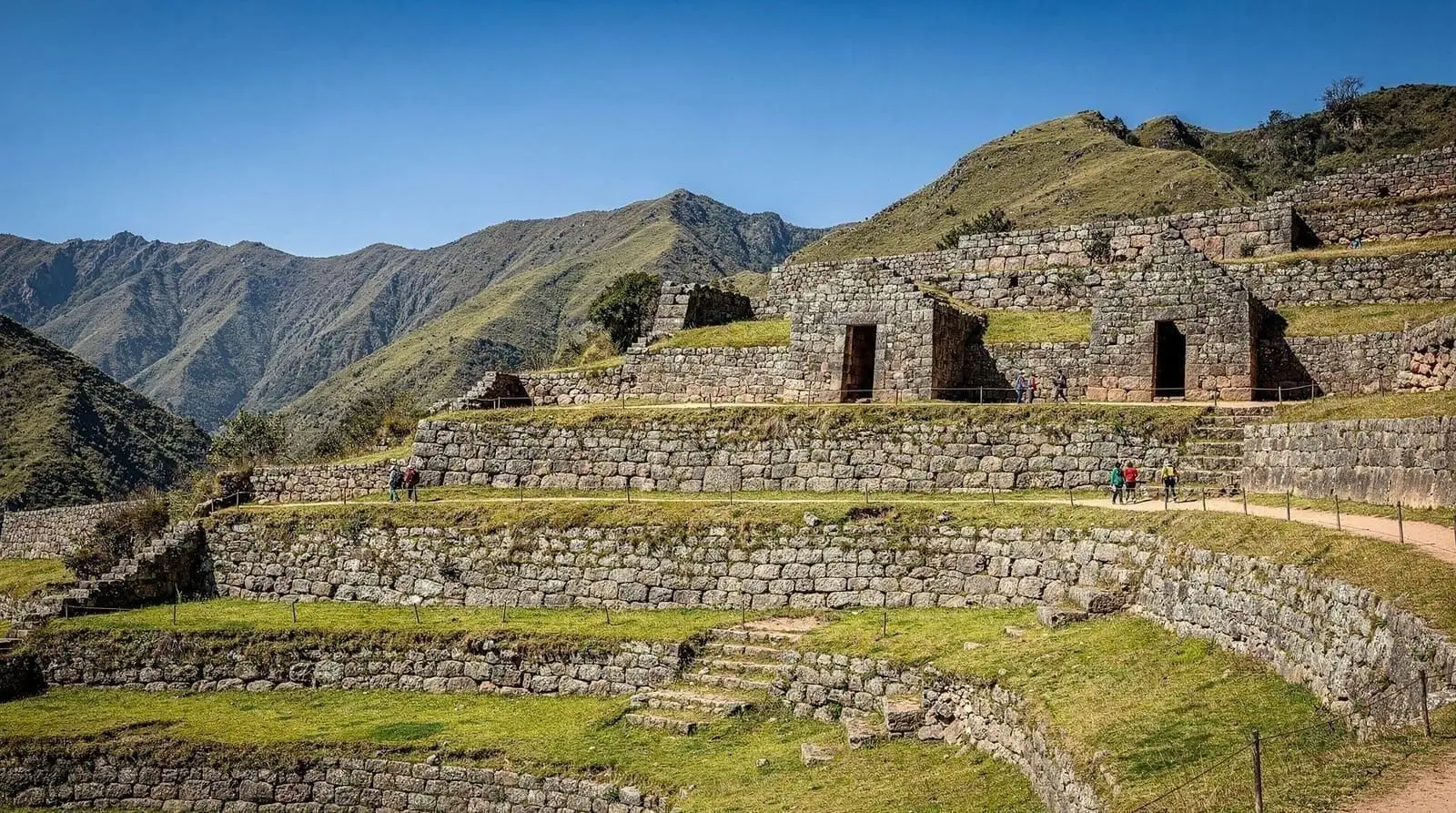
- Circuit I — the four ruins immediately above Cusco: Sacsayhuamán, Qenqo, Puka Pukara, and Tambomachay (valid 1 day).
- Circuit II — the city museums and sites within Cusco itself, including the Museo Histórico Regional, the Museo de Arte Popular, the Qosqo Native Art Centre with its evening dance show, and the Pikillaqta / Tipón sites south of the city (valid 1–2 days).
- Circuit III — the Sacred Valley sites: Pisac, Ollantaytambo, Chinchero, and Moray (valid 2 days).
Discounted rates
- Students: S/70 for the full pass, for holders of a valid ISIC card who are under 26. A regular university ID is not enough — booths want the ISIC specifically.
- Andean Community nationals (Peru, Bolivia, Ecuador, Colombia) get reduced rates with ID.
- Children under 10 are generally free or heavily reduced.
What the boleto covers — the full list
The sixteen sites, grouped:
City ruins (Circuit I):
- Sacsayhuamán — the colossal zigzag fortress-temple above the city
- Qenqo — a carved limestone ceremonial outcrop
- Puka Pukara — a small roadside Inca checkpoint
- Tambomachay — the “bath of the Inca,” a spring-fed water shrine
Sacred Valley (Circuit III):
- Pisac — terraces and ruins above the market town
- Ollantaytambo — the great terraced temple-fortress
- Chinchero — Inca terraces and a colonial church on Inca foundations
- Moray — the concentric agricultural terraces
City and southern museums (Circuit II):
- Museo Histórico Regional
- Museo de Arte Popular
- Museo de Sitio del Qoricancha (the archaeological museum, distinct from the Qorikancha temple itself)
- Centro Qosqo de Arte Nativo (evening folkloric dance show)
- Monumento a Pachacútec
- Tipón and Pikillaqta — Inca and pre-Inca sites south of Cusco
What the boleto does NOT cover — read this twice
This is where the money gets lost. The following are separate tickets, no matter what a hopeful traveller assumes:
- Qorikancha (the Temple of the Sun itself) — separate entry, around S/15. Note the confusion: the boleto’s Circuit II covers the site museum of Qoricancha, but not the famous golden temple and Santo Domingo convent. Those are a separate, privately run ticket.
- Cusco Cathedral — part of a separate religious circuit ticket, around S/40, which also covers San Blas church and the Compañía de Jesús.
- Machu Picchu — entirely separate. It runs on the national park’s own timed-entry system with several distinct circuits, and it is the single most important ticket to book in advance. The boleto turístico has no relationship to it whatsoever. See Machu Picchu for how that ticketing works.
- The train to Machu Picchu (PeruRail / IncaRail) — obviously separate, booked through the rail companies.
- Rainbow Mountain, Humantay Lake, Maras salt mines — these popular day-trip sites are outside the boleto system and charge their own small entry fees on the day.
- Cusco’s San Pedro market — free to enter; no ticket of any kind.
The honest summary: the boleto covers Inca and pre-Inca archaeological sites administered by the region. It does not cover religious buildings (separate church ticket) or the national park at Machu Picchu (separate national system).
Where and how to buy
- COSITUC office, Avenida El Sol 185, central Cusco — the main sales point, open daily. This is the reliable place to buy the full BTG.
- At the gate of the first covered site you visit — you can buy both full and partial passes at most site entrances, which saves a special trip to the office.
Practical rules:
- Bring cash in soles. Many booths do not take cards. ATMs cluster on Avenida El Sol near the COSITUC office.
- Carry small notes. Exact change moves the queue.
- Keep the ticket intact. Staff punch or check it at each site; a torn or soaked boleto causes arguments.
- Bring your passport (and ISIC card if claiming the student rate). ID is checked for discounts.
- No online sales of the boleto exist in a reliable form — buy in person. Be wary of third-party sites claiming to sell it.
The decision rule: which ticket for which traveller
Match the ticket to what you will actually visit:
Buy the full BTG (S/130) if you will:
- Do a city tour covering the four upper ruins, AND
- Spend a day in the Sacred Valley (Pisac, Ollantaytambo, etc.)
This is the typical Cusco-base traveller, and the full pass pays for itself easily versus buying circuits separately. The 10-day validity comfortably covers a normal stay.
Buy Circuit I (S/70) if you will:
- Only see the ruins immediately above Cusco and skip the Sacred Valley
Buy Circuit III (S/70) if you will:
- Only do the Sacred Valley and skip the city ruins (rare, but possible if you are short on time)
Skip the boleto entirely if you will:
- Only visit free or separately-ticketed sites — for example, a quick stop focused on Qorikancha, the cathedral, San Pedro market, and Machu Picchu. In that case you never enter a boleto site and should not buy one.
A planning note: if you are taking an organised Sacred Valley or city tour, check whether the boleto is included in the tour price or whether you need to buy it separately and bring it. Most reputable operators state this clearly; ask before booking. For a fuller picture of how the tickets fit into your overall schedule, see the Cusco trip planning 2026 guide.
Worked examples: what to buy for three common trips
Abstract rules are easier to apply against concrete itineraries. Here are three typical Cusco trips and the ticket each one needs.
Example 1 — the classic four-day Cusco-region trip. You do a city tour (Sacsayhuamán and the upper ruins), a Sacred Valley day (Pisac, Ollantaytambo, Moray), and Machu Picchu. Buy: the full BTG (S/130) — it covers the city ruins and the Sacred Valley sites, which is the bulk of your sightseeing. Plus separately: Machu Picchu entry and train (the big advance booking), and optionally Qorikancha (S/15) and the cathedral religious circuit (S/40) if you want them.
Example 2 — a short two-day city-only stop. You are passing through and only have time for the four ruins above Cusco and a wander of the centre, with no Sacred Valley. Buy: Circuit I (S/70) for the upper ruins, plus Qorikancha (S/15) and the cathedral (S/40) à la carte. The full BTG would be wasted.
Example 3 — the Sacred Valley-focused traveller. You are basing in the lower valley for altitude reasons and doing Pisac, Ollantaytambo, Chinchero, and Moray, but skipping the city ruins. Buy: Circuit III (S/70) for the valley sites. If you later add a city day, you would need the full pass instead, so confirm your plan before buying.
The pattern across all three: the full pass wins when your trip spans more than one cluster, and the partials win when it does not. Map your sites first, then buy. For help mapping those sites across your days, the Cusco trip planning 2026 guide lays out a realistic skeleton.
How the boleto interacts with guided tours
A frequent source of confusion: if you book an organised city or Sacred Valley tour, does it include the boleto? Usually not — most tour prices cover transport and a guide but exclude the boleto and individual site fees, which you either buy beforehand or at the first gate. Reputable operators state this in their inclusions; always check the wording. The practical implication is that you should have the right boleto (or cash to buy it) before a tour starts, because the bus will not wait while you queue at COSITUC.
This is also worth flagging against the street-tout tours that advertise suspiciously low prices — sometimes the low headline figure simply excludes the boleto and entrance fees that a more transparent operator bundles in. The honest way to compare two tour prices is to add the boleto and site fees to whichever quote leaves them out. For more on that and other money traps around the plaza, see the Cusco tourist traps guide.
Sacred Valley full-day tour from CuscoCommon mistakes and how to avoid them
- Buying a partial when you needed the full. If you later add a Sacred Valley day after buying Circuit I, you cannot upgrade — you pay for a second circuit, ending up close to the full price anyway. Decide your itinerary first.
- Assuming it covers Qorikancha or the cathedral. It does not. Budget a separate S/15 and S/40 for those.
- Confusing the Qorikancha temple with the Qoricancha site museum. The boleto covers the small museum, not the famous golden temple. Two different places, two different tickets.
- Letting the validity lapse. The full pass is 10 days; a partial is 1–2. If your sightseeing is spread out, the full pass’s longer window matters.
- Leaving Machu Picchu tickets to chance. This is the real ticket to worry about — it sells out for popular dates and circuits weeks ahead in high season. The boleto is the easy part; book Machu Picchu first.
What happens if you lose or damage your boleto
Because the boleto is checked and punched at every site, treat it like cash for the duration of your trip. If it’s torn, soaked or badly faded, staff at later sites may refuse it, which effectively means paying again to enter. Keep it in a hard case or a dedicated pocket in your daypack, separate from wet gear, especially if you’re travelling in the rainy season. If it’s genuinely lost, the honest answer is that COSITUC has no dependable replacement process for tourists mid-trip — the practical fix is to buy the relevant partial circuit again for your remaining sites rather than chasing a refund or duplicate.
How the boleto fits into a first-time Cusco itinerary
For most first-time visitors, the boleto decision resolves itself once the itinerary is drafted. A typical four- or five-day stay in Cusco includes a city tour of the four upper ruins, one Sacred Valley day, and the separate Machu Picchu excursion — which is exactly the combination the full BTG is built for.
The practical sequence: buy the full pass on day one or two at the COSITUC office or your first site’s gate, use it across the city tour and Sacred Valley day within its 10-day window, and keep it aside from Machu Picchu logistics entirely, since that ticket is a different system altogether. The Cusco trip planning 2026 guide walks through how to sequence all of this across your actual days.