Unlicensed tour agencies in Cusco: a real danger
From Cusco: 4-Day Inca Trail Guided Trek to Machu Picchu
Are unlicensed tour agencies in Cusco actually dangerous?
Yes, genuinely. Cusco's streets are lined with informal agencies and touts selling treks and day trips at prices that undercut licensed operators because they cut corners on safety, insurance, guides and porter welfare. The risks range from a ruined trip — no-show transport, fake Inca Trail 'permits', vanished deposits — to real physical danger on high-altitude treks run without proper safety provision. Always verify the operator before you pay.
Why this is not just a money problem
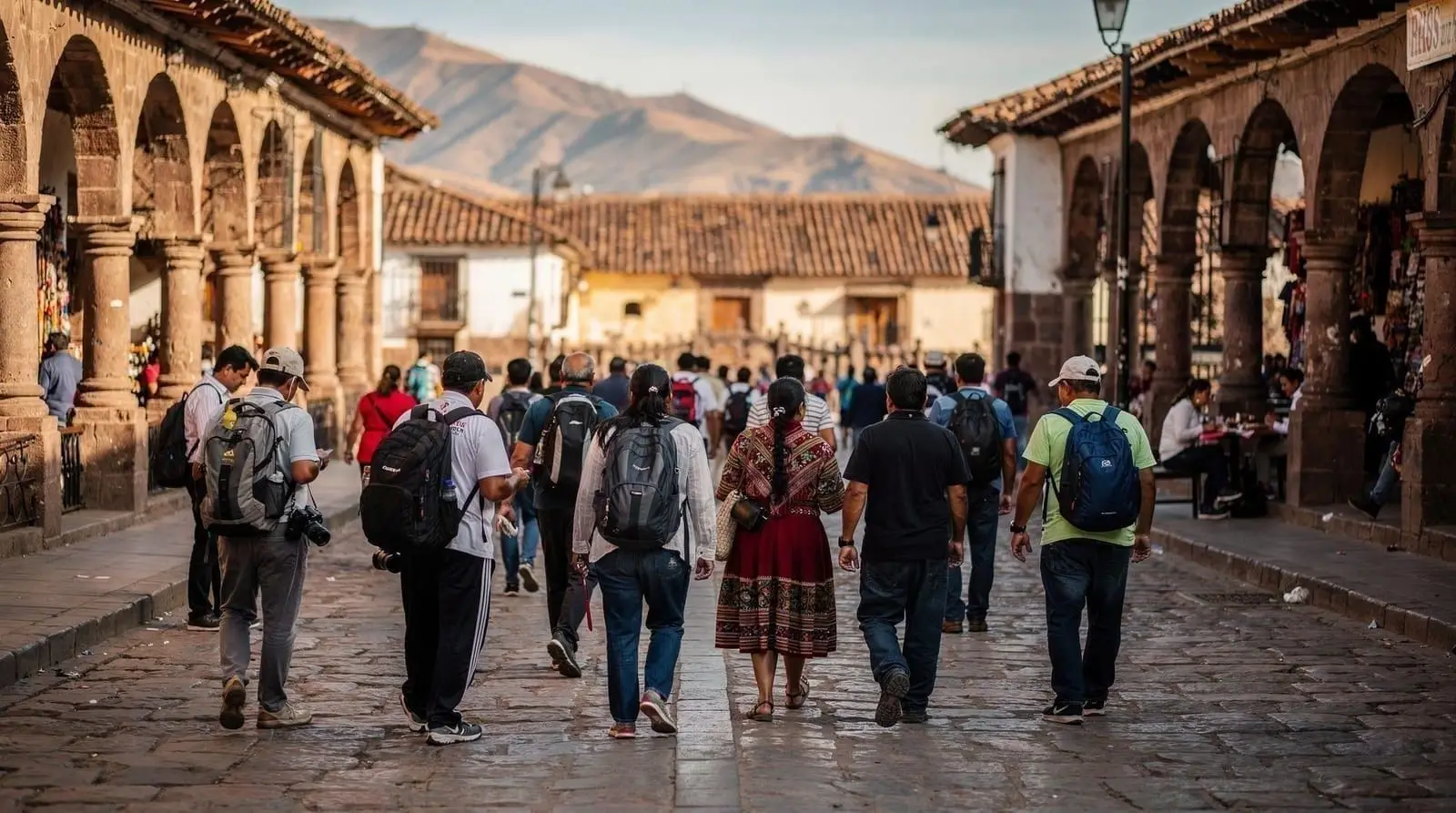
Walk the streets around Cusco’s Plaza de Armas, down Calle Plateros, or along Avenida El Sol, and you will be approached every few metres: a flyer for a Rainbow Mountain trip, a chalkboard advertising a four-day Salkantay trek at half the price you saw online, a young tout promising the Inca Trail “tomorrow, no problem.” Cusco has hundreds of tour agencies, and a large share of them are informal, unlicensed, or fronts that resell other people’s trips. For most purchases that is merely a quality lottery. For high-altitude treks, it can be a genuine safety hazard.
This guide treats the problem honestly, because the marketing-driven travel internet tends not to. The cheapest trek in Cusco is cheap for a reason, and on a route that crosses 4,600 m passes and depends on guides, oxygen, and porters to keep you safe, the corners that get cut to hit that price are exactly the ones that matter when something goes wrong. Below is how to recognise the risk, how to verify a real operator, and how to book in a way that protects both your money and your safety.
| Where it happens | Plaza de Armas, Calle Plateros, Avenida El Sol |
| Biggest risk | Multi-day high-altitude treks (Inca Trail, Salkantay) |
| Red flag | Price dramatically below every other quote |
| Verify | RUC/tax ID, fixed office, consistent-name reviews |
| Safest booking | Card payment or a platform with buyer protection |
What “unlicensed” actually means here
Not every cheap agency is dangerous, and not every shiny office is safe — but the legal and structural differences are real.
A licensed operator is registered with Peru’s tourism authorities, holds a tax identity (RUC), employs qualified guides, and, for the classic Inca Trail, appears on the official list of companies authorised by the Ministry of Culture to run the trail. These operators carry insurance, follow porter-welfare rules that cap loads and guarantee pay, and have the equipment and protocols — emergency oxygen, first aid, evacuation plans — that a high-altitude trek requires.
An unlicensed or informal agency may have none of this. Some are storefronts that take your money and subcontract the actual trip to whoever is cheapest, with no quality control. Some are pure resellers operating on commission from a street stall. Some are outright scams that collect deposits and vanish. The common thread is that you cannot verify who will actually be responsible for you on the mountain.
The real risks, ranked
The dangers run from annoying to genuinely serious.
Trip failure. The mildest outcome: transport that never shows, a “guide” who is a teenager with no training, a group double the promised size, accommodation downgraded without warning, or a deposit on a trip that was never actually booked. You lose the day, the money, or both.
Fake permits and tickets. The classic Inca Trail is permit-controlled and names are checked at the checkpoint against the official register. An unlicensed seller cannot issue a real permit, so travellers have flown to Cusco for a trek that does not exist in the system and been turned away. The same logic applies to forged Machu Picchu entrance tickets, covered in fake Machu Picchu tickets, and to the broader pattern of street-sold cons in the tourist traps guide.
Safety on the trail. This is the one that should worry you most. A multi-day Andean trek crosses passes above 4,000 m — Salkantay tops about 4,600 m — in cold, remote terrain hours from help. Reputable operators carry emergency oxygen, run guides trained in altitude first aid, keep group sizes manageable, and have an evacuation plan. The cut-price operators that hit impossible prices do so partly by dropping exactly these provisions. When a client develops altitude sickness at the pass, the difference between a licensed and an unlicensed operator can be the difference between a managed descent and a crisis.
Porter and animal welfare. A quieter cost, but a real one: the cheapest treks are subsidised by underpaid, overloaded porters carrying loads above the legal limit. Booking a licensed operator that respects porter-welfare rules is both an ethical choice and a sign of a company that does things properly across the board.
How to verify a legitimate operator
You do not need to be an expert to filter out the worst operators. A few checks catch most of them.
- Ask for the RUC and full legal name. A real company gives you its tax ID and registered name without flinching. Vagueness is a red flag.
- Insist on a fixed office. A street stall or a WhatsApp number alone is not an operator. A verifiable physical address you can return to if something goes wrong matters.
- Check reviews under a consistent name. Read recent reviews on independent platforms, and be wary of agencies that operate under several shifting names or have no traceable history.
- For the Inca Trail, confirm the authorised list. Only operators on the Ministry of Culture’s official list can run the classic trail. Cross-check the company name. The full permit rules are in the Inca Trail permits guide.
- Be suspicious of “tomorrow.” The classic Inca Trail sells out months ahead; an agency offering it next week either means a different trek or is not telling the truth.
- Treat the cheapest quote as a warning, not a win. If one agency is dramatically below the rest, ask precisely what is missing — oxygen, insurance, group size, porter pay — because something is.
Where street touts fit in
The touts working the Plaza de Armas and the main avenues deserve a specific warning, because they are the most common entry point into a bad booking. Some are harmless commission agents for legitimate offices. Many are not: they resell trips at a markup, funnel you to whichever agency pays them best regardless of quality, or collect a deposit for a trip that never materialises. The unsolicited “free” chocolate or pisco workshop flyer is a related hard-sell tactic. The simple rule is to never hand cash to someone who approached you on the street for a trip you have not independently verified. Decide what you want first, research operators, then book — do not let a tout decide for you.
Booking in a way that protects you
The safest approach is to remove cash and anonymity from the equation. Pay by card with a verifiable, licensed operator, or book through an established platform that vets its operators and holds your payment until the trip is delivered. Platform bookings give you reviews, a refund channel, and buyer protection that a cash deposit to a street agency simply does not — if a trip fails, you have recourse. It is not a guarantee of a flawless experience, but it eliminates the worst outcomes: the vanished deposit, the non-existent permit, the operator you can never find again.
For the marquee trips, this matters most on the multi-day treks. Compare legitimate trekking options in best treks to Machu Picchu, and for day trips remember the same principle applies to Rainbow Mountain and high-altitude outings, where a properly equipped operator with oxygen on board is worth paying for. The goal is not to be paranoid — Cusco’s legitimate tourism industry is large and excellent — but to make sure the company you trust with your safety at altitude is one you have actually verified.
Common pitches and how to read them
A handful of sales lines come up again and again on the Cusco street, and each one has a tell. Learning to read them saves you from the worst bookings before you have handed over a single sol.
- “Inca Trail, you can leave tomorrow.” Almost always false. The classic four-day trail sells out months ahead and is permit-controlled, so a next-day departure is either a different, permit-free trek being sold under the famous name, or a flat lie. Clarify exactly which trek is on offer.
- “Best price in Cusco, only today.” Manufactured urgency is the oldest tactic there is. A legitimate trek’s price does not evaporate by this evening, and the pressure to commit on the spot exists precisely to stop you researching the operator.
- “All included, very cheap.” Ask what “all” means in writing — guide qualifications, group size, emergency oxygen, insurance, porter pay, meals, the entrance ticket. A real operator itemises this happily; a vague answer means the inclusions are the corners being cut.
- “Pay cash now, office is just around the corner.” Resistance to card payment and a reluctance to do business at a fixed, findable address are the two clearest signals of an operator you will not be able to hold accountable later.
None of these pitches is automatically a scam, but each one is an invitation to slow down and verify rather than commit. The travellers who get burned are almost always the ones who booked in the first ten minutes of an unsolicited conversation.
If something goes wrong
If you have already paid an agency you now doubt, act quickly. Gather everything in writing — receipts, WhatsApp messages, the business name and any RUC you were given — and contact your payment provider first if you paid by card, since a chargeback is your strongest lever while the transaction is recent. If you booked through a platform, open a dispute through its support channel, where buyer protection gives you a formal route to a refund.
For an outright scam or a vanished deposit, the tourist police (Policía de Turismo) in central Cusco take reports from travellers and can sometimes intervene with local operators, and iPerú, the national tourist-information service, can advise on legitimate alternatives and complaints. The honest reality is that money handed in cash to an unverifiable street agency is hard to recover — which is exactly why the prevention in this guide matters more than any after-the-fact remedy.
A note on related Cusco scams
Unlicensed agencies rarely travel alone. The same informal economy produces the over-the-counter “altitude cure” pills sold by pharmacies and touts, dissected in altitude medicine scams in Cusco, and the forged entrance tickets in fake Machu Picchu tickets. Treat all of them with the same instinct: anything sold to you urgently, cheaply, and by someone you cannot find again tomorrow deserves a hard second look. Cusco rewards the careful traveller and punishes the rushed one.
What a properly licensed trek actually looks like
It helps to know what you are aiming for, not just what to avoid. A licensed operator running the classic Inca Trail will confirm your name against the Ministry of Culture’s permit list weeks before departure, itemise exactly what is included (tents, meals, porter numbers, emergency oxygen, evacuation plan), and accept card payment or a documented deposit rather than insisting on cash to a stranger.
Their guides carry certification, their porters carry loads within the legal limit, and their office has a fixed address you could return to if something went wrong. None of this is exotic or expensive to demonstrate — it is simply what a real business looks like, which is exactly why the absence of these things is so telling. Compare quotes from two or three operators who tick all these boxes in best treks to Machu Picchu before committing.
For travellers who want the classic route handled by a properly documented operator rather than assembling the comparison themselves, a standard licensed booking looks like this:
Classic 4-day Inca Trail trek with a licensed operatorHow this plays out for day trips versus treks
The unlicensed-agency risk is not uniform across every kind of Cusco booking, and it is worth separating the two cases. For single-day outings — a Rainbow Mountain trip, a Sacred Valley tour, a city tour — the worst realistic outcome from a bad agency is a wasted day: a late minivan, a rushed itinerary, an unqualified guide who adds little value. Unpleasant, but recoverable.
For multi-day, high-altitude treks like the Inca Trail or Salkantay, the same warning signs point to a genuinely different category of risk, because the missing safety provisions (oxygen, trained guides, evacuation planning, porter welfare) are the things that matter when a client develops altitude sickness or an injury hours from the nearest road. Apply light scrutiny to the former and rigorous scrutiny to the latter, and you calibrate your caution correctly rather than treating every booking with the same intensity.