The boleto turístico explained: circuits, validity, and exact prices
Cusco: Half-Day City Tour with Sacsayhuaman and Q’enco
What is the boleto turístico and which version should I buy?
It is a bundled government pass covering 16 sites around Cusco that mostly have no individual ticket. The full BTG is S/130 (about $35) for 10 days; three partial circuits are S/70 (about $19) each for 1-2 days. Buy the full pass if you are doing a city tour plus a Sacred Valley day; buy a single circuit if you only want one cluster.
A pass that is part bargain, part bureaucratic puzzle
Few pieces of paper in Peru cause as much confusion as the boleto turístico del Cusco. Travellers arrive expecting a single museum ticket and instead find a tiered system of full passes and partial circuits, each covering a different list of sites, each with its own price and validity window, and none of it sold online. The result is that people routinely overpay, buy the wrong version, or stand in a gate queue discovering their ticket does not work where they thought it would.
| Full pass (BTG) | S/130 (~$35), valid 10 days, all 16 sites |
| Single circuit (I/II/III) | S/70 (~$19) each, valid 1-2 days |
| Where to buy | COSITUC office, Av. El Sol 103, or the first site’s gate |
| Payment | Cash in soles only |
| Not covered | Qorikancha, the Cathedral, Machu Picchu |
This guide takes the pass apart piece by piece. It lists exactly which sites each version covers, the real prices in soles with rough dollar equivalents, how the validity clock works, and the decision logic for matching a pass to your actual route. If you only read one paragraph, read the quick answer at the top. If you want to avoid every common mistake, read the whole thing before you reach Cusco.
The pass is administered by COSITUC (Comité de Servicios Integrados Turístico Culturales del Cusco), a regional body that pools entry to a basket of Inca ruins and city museums. The logic behind it is that many of these sites — the four ruins above Cusco, several Sacred Valley complexes, a cluster of small museums — could not sustain individual ticketing, so they were bundled. That is why, for most of these places, the boleto is the only way in. There is no separate door fee.
The full pass: boleto turístico general (BTG)
The headline product is the boleto turístico general, usually shortened to BTG.
- Price: S/130 for foreign adults — roughly $35 at a typical 2026 exchange rate near S/3.70 to the dollar.
- Validity: 10 consecutive days from first use.
- Coverage: all 16 included sites.
- Student price: about S/70 for university students under 26 with a valid ISIC card.
Ten days is generous. It comfortably spans a city stay plus one or more Sacred Valley days, which is exactly how most travellers use it. The catch is that the clock runs on calendar days, not on days you actually visit sites. If you buy it, then leave Cusco for a five-day trek, you will burn most of the validity sitting in a duffel bag.
The 16 sites fall into four groups:
City of Cusco museums (4): the Museo de Arte Contemporáneo, the Museo Histórico Regional (in the Casa Garcilaso), the Museo de Sitio del Qorikancha (a small site museum, not the Qorikancha temple itself), and the Museo de Arte Popular. Plus the Centro Qosqo de Arte Nativo, which stages a nightly Andean dance show — a genuinely good use of the pass that most visitors forget they have paid for.
Ruins above Cusco (4): Sacsayhuamán, Qenqo, Puka Pukara, and Tambomachay — the cluster strung along the road climbing north out of the city, covered together in our archaeological sites guide.
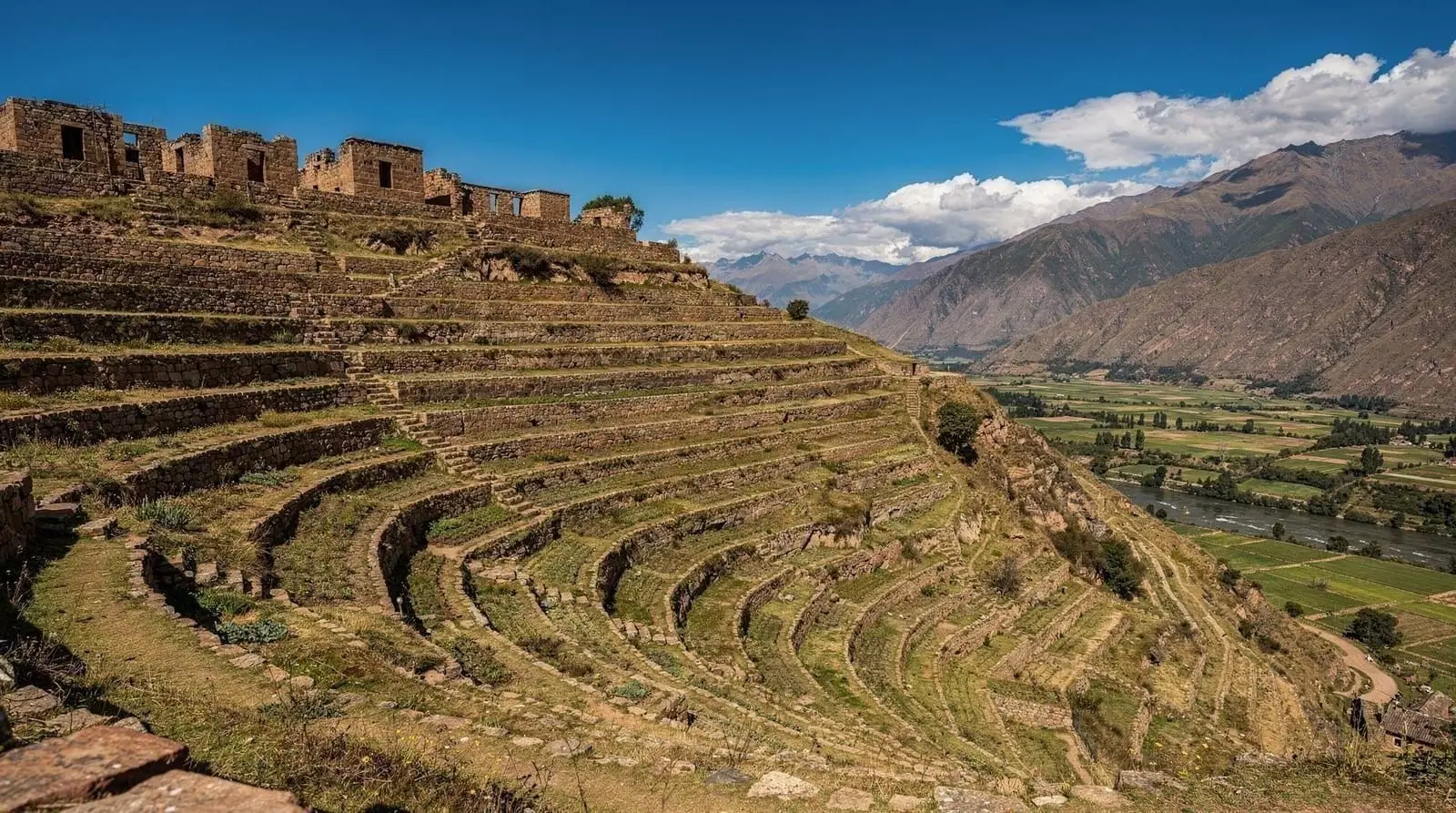
Sacred Valley sites (4): the Pisac ruins, the Ollantaytambo fortress, the Chinchero complex, and Moray (the concentric agricultural terraces near Maras and Moray).
South Valley sites (3): Tipón, Pikillacta, and the Pikillacta-area museum at the edge of the south valley circuit.
That is the full menu. Note what is not on it.
What the boleto does not cover
This is where most of the overpaying and confusion happens. The following are all separate tickets, and assuming the boleto covers them is the single most common planning mistake:
- Qorikancha — the Inca Temple of the Sun. The boleto includes a small site museum near it, but the temple-convent itself charges a separate entry of around S/15.
- Cusco Cathedral — part of a separate religious-circuit ticket of roughly S/40, sold by the Archbishopric, not COSITUC.
- Machu Picchu — an entirely separate national-park system with timed circuits, run by the Ministry of Culture. The boleto has nothing to do with it. See our guidance on avoiding fake Machu Picchu tickets.
- The Maras salt pans (Salineras) — privately managed by the local community; a separate S/10-ish fee, not part of the boleto even though Moray, just up the road, is.
- Rainbow Mountain, Humantay Lake, the treks — all separate, all unconnected to the pass.
Keep this list in mind when a guide or itinerary says “entrances included.” Always ask which entrances, because a tour that bundles the boleto may still leave Qorikancha and the cathedral as paid extras.
The partial circuits: when one is enough
If you are not visiting the full spread, three partial circuits carve the basket into smaller, cheaper chunks. Each costs S/70 (about $19).
- Circuit I — validity 1 day. The four ruins immediately above Cusco: Sacsayhuamán, Qenqo, Puka Pukara, Tambomachay. This is the one to buy if you are doing a half-day Cusco ruins tour and nothing in the valley.
- Circuit II — validity 1 day. The city museums plus Tipón and Pikillacta in the south valley, and the Qosqo Arte Nativo dance show. A niche circuit, useful mostly for museum-and-south-valley days.
- Circuit III — validity 2 days. The Sacred Valley headliners: Pisac, Ollantaytambo, Chinchero, and Moray. The right pick if you are doing a single packed Sacred Valley day and skipping the Cusco ruins.
The maths is simple. Two circuits at S/70 already cost S/140, more than the S/130 full pass. So the rule is: the moment you need sites from two different circuits, buy the full BTG. A single circuit only saves money if your entire ground game fits inside it.
A decision tree that actually works
Match your route to a pass with these four cases:
- City tour + a Sacred Valley day (the typical trip). Buy the full BTG, S/130. You will touch Circuit I and Circuit III sites; the full pass is cheaper than buying both.
- Only the four ruins above Cusco. Buy Circuit I, S/70, valid one day. Do them in a morning.
- Only a Sacred Valley day, skipping the Cusco ruins. Buy Circuit III, S/70, valid two days — handy if your valley day runs long or you split Pisac and Ollantaytambo across two days.
- Museum-focused or south-valley day. Circuit II, S/70.
If you are unsure, default to the full BTG. The premium over a single circuit is only S/60, it unlocks the dance show and the museums you would otherwise skip, and it removes the risk of buying the wrong circuit at a gate where staff cannot upgrade you. For broader trip context, our best day trips from Cusco guide maps which excursions lean on which pass.
Buying it: where, how, and the cash rule
There is no official online purchase. Ignore third-party sites advertising a “skip-the-line boleto turístico” — they are reselling at a markup, and the gate queues are rarely long enough to justify the fee.
Two legitimate places to buy:
- The COSITUC office, Avenida El Sol 103, central Cusco. Open daytime hours, this is the calm option — no gate crowds, staff who can explain the circuits, and the full range of pass types.
- At the gate of the first included site you visit. Sacsayhuamán’s ticket booth, for instance, sells both the full pass and Circuit I.
Bring cash in soles. Many booths do not take cards, and the ones that do are slow and occasionally offline. Carry the S/130 (or S/70) in small-to-mid notes; exact change keeps the line moving and avoids the “no tengo cambio” stall. Students must show the physical ISIC card — a photo or expired card will be refused at the better-staffed gates.
A practical note on the paper itself: the boleto is a printed card that gets hole-punched at each site. Guard it like cash. There is no replacement if you lose it, and a soggy, shredded ticket can be questioned at a gate. Keep it in a zip pocket, not loose in a daypack.
Timing the validity clock
Because the full pass runs 10 consecutive days and the circuits run 1-2 days, when you buy matters as much as what you buy.
- Do not activate the full pass before a multi-day absence. If your plan is two days in Cusco, a five-day trek, then the Sacred Valley, the 10-day clock will expire mid-trek. Buy the pass when you start the city sights, time the valley to fall inside the window, or split into circuits.
- Circuit III’s two-day window is useful for travellers who want to slow the Sacred Valley down — Pisac and its market one day, Ollantaytambo and Moray the next — without buying twice.
- Build the dance show into the window. The Qosqo Arte Nativo performance runs nightly around 18:30-19:30; it is included in the full pass and Circuit II, and it is an easy evening to slot in while the clock is still live.
For sequencing the whole Cusco-and-valley block against altitude and train times, the acclimatisation and altitude trade-off guide pairs well with this one, and the multi-day routings at /itineraries/ show where the pass fits in a full Peru loop.
Practical day-management with the pass in hand
Owning the right boleto is half the battle; using it efficiently is the other half. A few field-tested habits:
- Photograph the punched card after each site. It will not get you back through a gate, but it gives you a clear record of which of the 16 sites you have used and which remain — easy to lose track of across a 10-day window.
- Pair sites by geography, not by checklist. The four ruins above Cusco sit along one short road and make a clean half-day; the four Sacred Valley sites split naturally into a Pisac-and-east day and an Ollantaytambo-Chinchero-Moray-and-west day. Trying to zig-zag the whole basket in one go wastes hours in transit.
- Hit the gates early. Sacsayhuamán and the Sacred Valley ruins are calmest before the mid-morning tour buses arrive from Cusco. The boleto does not offer a timed entry, so your only crowd control is turning up early.
- Do not over-buy on a short stay. If you only have a day in Cusco proper, a single Circuit I covers the headline ruins for S/70; the full pass only earns its keep once a Sacred Valley day is in the plan.
- Keep the dance show in mind. The Qosqo Arte Nativo evening performance is the most-forgotten inclusion. Build it into a night while the pass is still live and you effectively get a cultural show you have already paid for.
These small choices are the difference between the pass feeling like good value and feeling like a queue-and-confusion tax.
Honest verdict on value
Is the boleto turístico good value? For the typical city-plus-valley traveller, yes — S/130 for a city tour’s worth of ruins, four Sacred Valley complexes, a clutch of museums, and a nightly dance show is a fair deal, and there is no legal way around it for the headline sites anyway. The frustration is never the price; it is the lack of online sales, the circuit confusion, and the assumption that it covers Qorikancha, the cathedral, and Machu Picchu when it covers none of them.
Treat it as what it is: a government bundle for a specific basket of Inca sites, bought in cash, on the ground, valid on a fixed clock. Get the version that matches your route, carry small notes, guard the paper, and you will never think about it again after the first gate. For a complementary walk-through with on-the-ground booth tips, see our Cusco tourist ticket guide, and for the city itself start at /destinations/cusco/.
Doing it with a guide instead of solo
Buying the boleto yourself and figuring out transport is entirely doable, but many travellers prefer a guided day that handles the logistics and reads the sites for you — worthwhile given how thin the on-site signage is at most of these ruins. For the four ruins above the city, a half-day guided option covers Sacsayhuamán, Qenqo, Puka Pukara and Tambomachay with Circuit I:
Half-day Cusco city tour with the four Circuit I ruinsFor the Sacred Valley leg (Circuit III territory), a full-day guided tour typically covers Pisac, Chinchero and either Ollantaytambo or Moray:
Sacred Valley day tour: Pisac, Chinchero and the boleto sitesNote that on a guided tour the boleto itself is rarely included in the tour price — confirm this before booking, since “entrance fees included” sometimes means only the non-boleto extras like Qorikancha, and you may still need to buy or bring your own boleto turístico to get through the gate.
A note on Circuit II and the south valley
Circuit II is the one most visitors skip, and often rightly — it bundles the four city museums, the Qosqo Arte Nativo dance show, and the less-visited south valley sites of Tipón and Pikillacta. Tipón’s Inca agricultural terraces and water channels are genuinely underrated and see a fraction of Pisac’s crowds, so if your schedule has a spare half-day and you have already done the headline circuits, it is worth the S/70 rather than an automatic skip. Just do not buy it expecting Pisac-level polish; the appeal here is quiet engineering, not photogenic drama.