Cusco altitude vs the Sacred Valley: where to sleep first
From Cusco: Sacred Valley of the Incas Full-Day Tour
Should I stay in Cusco or the Sacred Valley first for altitude?
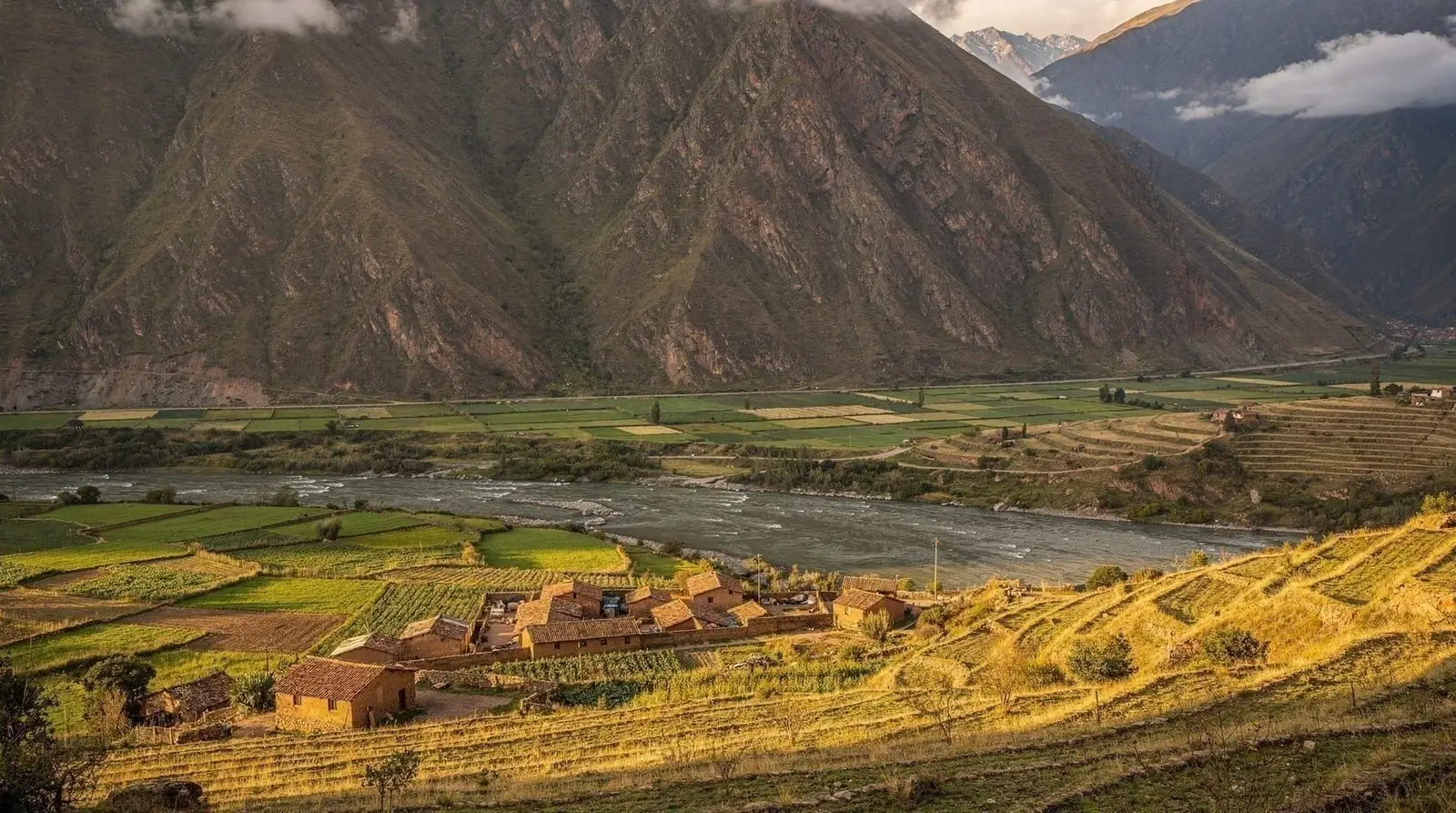
If your schedule allows, sleep in the Sacred Valley first. Urubamba (2,870 m) and Ollantaytambo (2,790 m) sit several hundred metres lower than Cusco (3,400 m), so a night or two there before coming up to the city eases acclimatisation and puts you closer to the Machu Picchu train.
A few hundred metres that change your first days
Almost every guide to the southern Peru circuit tells you to acclimatise before tackling Machu Picchu and the high day trips. Far fewer tell you where to do it — and the choice between basing yourself in Cusco at 3,400 m and the Sacred Valley several hundred metres lower has a real, physical effect on how your body adjusts. This is one of the most useful planning decisions you can make, and it is largely invisible to travellers who simply book the default “fly into Cusco, stay in Cusco” arrangement.
The short version is that, when your schedule allows, sleeping in the lower Sacred Valley first is gentler on your body and conveniently nearer the Machu Picchu train. But it is a trade-off, not an absolute rule, and this guide lays out the real elevations, the logic of why the place you sleep matters more than the place you visit, and a couple of practical sequences depending on how your trip is shaped.
| Where | Cusco (3,400 m) vs. Urubamba/Ollantaytambo (2,790-2,870 m) |
| Recommended | Sacred Valley first, 2 nights, then Cusco |
| Getting there | 1.5-2 hrs by road from Cusco airport |
| Best for | Anyone not already acclimatised at altitude |
| Cost difference | Minimal; mainly one extra transfer |
The numbers that drive the decision
Acclimatisation is about elevation, so start with the actual figures:
- Cusco: about 3,400 m (11,150 ft).
- Pisac: about 2,970 m.
- Urubamba: about 2,870 m.
- Ollantaytambo: about 2,790 m.
- Machu Picchu (the citadel): about 2,430 m.
- Aguas Calientes (the town below it): about 2,040 m.
The headline jumps out: the main Sacred Valley towns sit 500 to 600 m lower than Cusco, and Machu Picchu itself is lower still. The valley is not “low” in any absolute sense — 2,800 m is plenty high — but relative to Cusco it is a meaningful step down, and at altitude, steps matter.
Why the place you sleep matters more than the place you visit
The single most important principle in altitude acclimatisation is that your body adjusts according to where you sleep, not where you spend the day. You can visit a high site like Sacsayhuamán or even Rainbow Mountain and then come back down to sleep; what counts for your overnight recovery is the sleeping elevation. This is why mountaineers “climb high, sleep low.”
Applied to Peru, the implication is direct: if you sleep your first nights in Urubamba or Ollantaytambo at around 2,800 m before moving up to Cusco at 3,400 m, you have broken the climb from sea level into two gentler stages instead of one big jump. Your body does the bulk of its early adjusting at a lower, kinder elevation, and the later step up to the city is smaller and easier to absorb. Go the other way — straight to Cusco, then down to the valley later — and you take the full jump on night one, which is when altitude sickness most often strikes.
This is not folk wisdom; it is why an increasing number of experienced operators now build their itineraries valley-first.
The case for the Sacred Valley first
Beyond the altitude logic, sleeping in the valley first stacks up several practical advantages:
- Easier nights from the start. Lower sleeping elevation means a better chance of sleeping well and waking without the classic first-night headache.
- Closer to the train. Trains to Machu Picchu leave mainly from Ollantaytambo, right in the valley. Basing there for Machu Picchu spares you the 1.5 to 2 hour pre-dawn transfer from Cusco.
- A calmer pace. The valley is quieter, greener, and more relaxed than the city — a gentle environment for your first days when you want to take it easy anyway.
- You still see the valley sights. Pisac, the Maras salt pans, the Moray terraces, and Ollantaytambo’s fortress are all right there. A circuit like the full-day Sacred Valley tour or the small-group Pisac, Maras, Moray and Ollantaytambo tour covers them while you acclimatise gently.
The case for Cusco first
The valley-first approach is not automatically right for everyone. Cusco-first makes sense when:
- Your flights and time are tight. If you fly into Cusco late and out early, adding a valley leg can cost a night you do not have. Cusco’s airport is in the city, so staying put is logistically simplest.
- You want the city energy immediately. Cusco has the restaurants, the nightlife, the museums, and the famous Inca-on-colonial streetscape. The valley is lovely but sleepy.
- You are already partly acclimatised. If you have spent days in the Andes elsewhere — Arequipa, Puno, or a prior high stretch — the marginal benefit of sleeping lower shrinks, and you can comfortably base in Cusco.
If you do start in Cusco, follow the disciplined first-48-hours routine in our Cusco acclimatization plan: a restful arrival day, aggressive hydration, no alcohol early, and gentle flat walking before anything steep.
Two sequences that work
The acclimatisation-optimised route (valley first):
- Fly into Cusco, transfer straight down to Ollantaytambo or Urubamba (1.5 to 2 hours).
- Sleep two nights in the valley; spend the days on the Sacred Valley sights at an easy pace.
- Take the train from Ollantaytambo to Machu Picchu — the citadel is lower than where you have been sleeping, so altitude is a non-issue there.
- Move up to Cusco for the city, the ruins above town, and any high day trips, now well acclimatised.
This front-loads the gentler elevations and saves the Cusco-to-Ollantaytambo train transfer. The Machu Picchu day trip by train slots in from the valley if you would rather not arrange the rail and entry logistics yourself.
The compact route (Cusco first):
- Fly into Cusco, take a deliberately quiet first day and night in the city.
- Spend a second day on flat city sights, easing into the altitude.
- Day trip to the Sacred Valley, then continue to Machu Picchu.
- Keep the high excursions (Rainbow Mountain, Humantay) for day three onward.
Less optimal for acclimatisation, but tighter on logistics and time.
What this means for Machu Picchu and the high trips
A common worry is doing Machu Picchu “too early.” Relax: at about 2,430 m, the citadel is lower than both Cusco and most of the Sacred Valley, so it is not where altitude bites. The genuinely demanding excursions are the high ones — Rainbow Mountain and the high passes above 4,500 m, Humantay Lake, and the trek trailheads. Those deserve real acclimatisation, ideally two or three days at Cusco-level elevation behind you, regardless of which base you chose. Sequence the high trips late in your stay, not early.
Putting it together
If you can spare the extra night, the valley-first sequence is the smarter structural choice for most travellers: gentler on the body, nearer the train, and no less rewarding in sights. If your time is genuinely tight, Cusco-first works as long as you respect the first 48 hours. Either way, the principle holds — sleep lower when you can, ascend in steps, and save the high day trips for the end. For the full day-by-day adjustment routine see the Cusco acclimatization plan; for routing across the country, browse /itineraries/ and the two-week Peru itinerary guide.
Cusco vs. the Sacred Valley as a base, side by side
| Cusco (3,400 m) | Sacred Valley (2,790-2,970 m) | |
|---|---|---|
| Altitude adjustment | Full jump on night one | Gentler, stepped ascent |
| Nightlife and restaurants | Best in the region | Quieter, more limited |
| Distance to Machu Picchu train | 1.5-2 hr transfer to Ollantaytambo | Already there or close |
| Pace | Busier, more logistics on hand | Calmer, slower |
| Best for | Tight schedules, city lovers | First-time high-altitude arrivals |
Frequently asked questions about Cusco altitude vs the Sacred Valley: where to sleep first
Is the Sacred Valley lower than Cusco?
Why is sleeping lower first better for acclimatisation?
Can I fly into Cusco and go straight to the Sacred Valley?
Does it matter if I do Machu Picchu before fully acclimatising?
Which is better as a base, Cusco or the Sacred Valley?
How many nights should I spend in the Sacred Valley before moving up to Cusco?
Does arriving from Arequipa or Puno change this advice?
Top experiences
Bookable activities with verified prices and instant confirmation on GetYourGuide.


