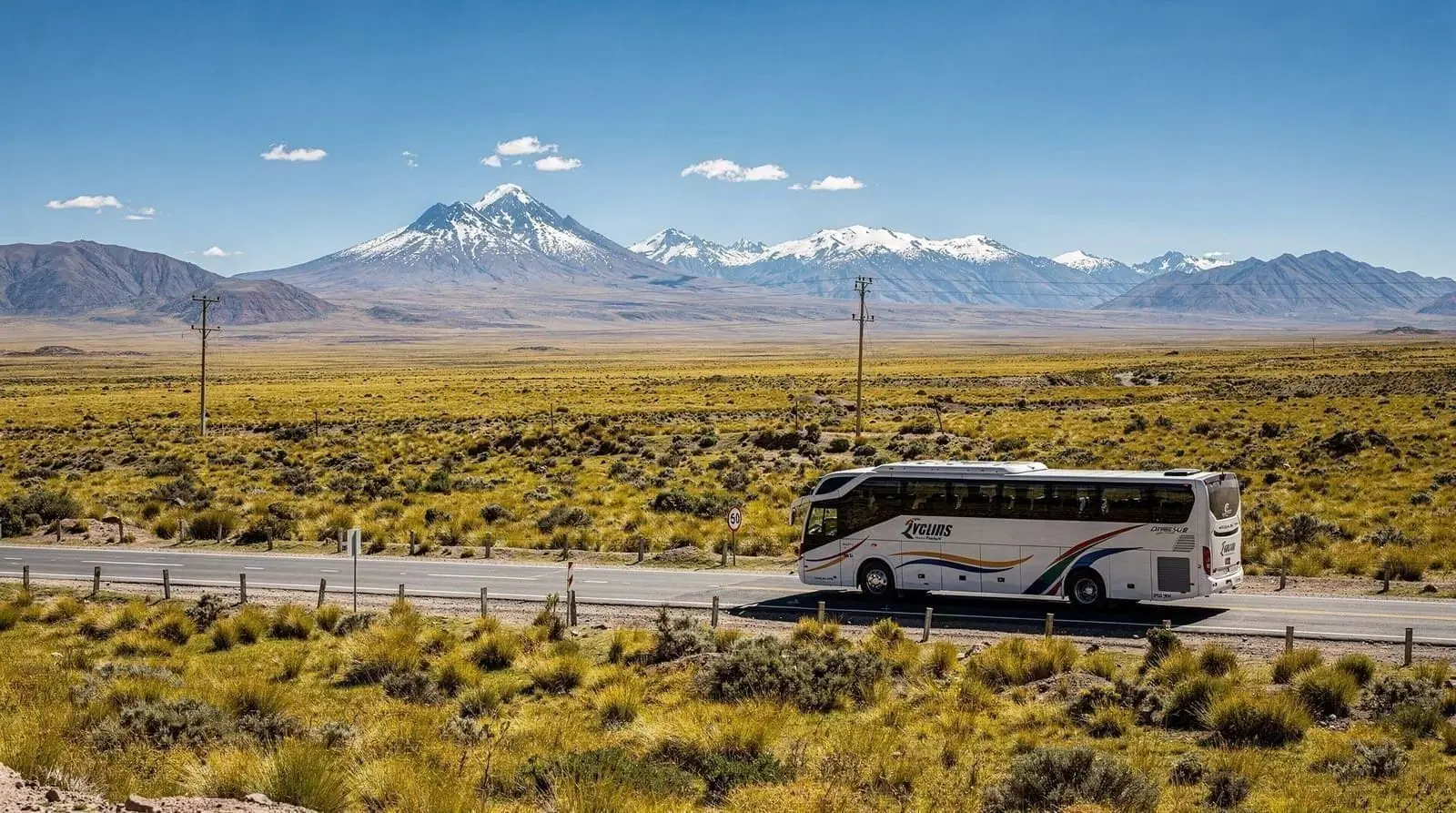
Cusco to Arequipa: bus and flight transport guide
Arequipa: 2-Day Classic Colca Canyon Tour
What is the best way to get from Cusco to Arequipa?
An overnight bus (10–11 hours, S/60–160 / about $16–43) is the most popular option and saves a hotel night. A direct flight (1 hour 20 minutes, around $50–110) is faster but rarer; many flights connect through Lima, making the bus surprisingly competitive on total time.
The honest comparison: bus or plane
Most people researching the Cusco–Arequipa leg assume flying is the obvious winner. It is not, and the reason is geography masquerading as a flight schedule. Arequipa has a busy airport, but the direct Cusco connection is thin and seasonal. On many days the cheapest or only ticket you will find routes through Lima — a 1,000-kilometre detour north to fly back south — which converts a nominal 80-minute hop into five to seven hours door to door once you add the connection, the two airport processes, and the transfers at both ends.
The overnight bus, by contrast, covers the 520 kilometres of paved highway in 10 to 11 hours while you sleep, saves you a hotel night, and deposits you in central Arequipa by morning. That combination is why a large share of independent travellers still take the bus even though they could, in theory, fly.
This guide lays out both options with real 2026 prices in soles and US dollars, the companies actually running the route, departure windows, and the practical trade-offs nobody mentions when they tell you to “just fly.”
| Distance | 520 km, fully paved |
| Bus | 10–11 hrs overnight, S/60–160 ($16–43) |
| Flight (direct) | 1 hr 20 min, $50–110, but rare |
| Flight (via Lima) | 5–7 hrs total, often pricier than the bus |
| Best pick | Overnight bus, unless a genuine direct flight appears |
The overnight bus: how it actually works
The Cusco–Arequipa corridor is one of the better-served intercity bus routes in southern Peru. Buses leave from the Terminal Terrestre on the southern edge of Cusco (a S/10–15 taxi from the Plaza de Armas) and arrive at Arequipa’s Terrapuerto terminal, about 15 minutes from the historic centre.
Companies and seat classes
The route is run by a handful of established operators. The names you will see most often:
- Cruz del Sur — the premium benchmark. GPS-tracked, on-board attendant, recorded passenger boarding, and the most consistent comfort. Most expensive.
- Oltursa — close second on quality, often slightly cheaper.
- Tepsa and Civa / Excluciva — solid mid-tier options with cama and semi-cama seating.
- Julsa, Power, and smaller lines — the cheaper end; fine for budget travellers but more roadside stops and less consistent.
Seat classes follow the standard Peruvian hierarchy:
- Semi-cama — reclines around 140°, two-by-two seating. The economy choice.
- Cama — reclines around 160°, more legroom, usually on the lower deck of premium buses. Worth the upgrade for an overnight.
- Suite / 180° cama — fully flat or near-flat, the most expensive, available on Cruz del Sur and a few others.
Prices in soles and dollars
As of 2026, one-way fares run roughly:
- Budget lines, semi-cama: S/40–60 (about $11–16)
- Mid-tier, cama: S/70–110 (about $19–30)
- Cruz del Sur / Oltursa cama or suite: S/120–160 (about $32–43)
Prices climb during Peruvian holidays, the late-July Fiestas Patrias, and the August peak. Booking two to four days ahead is usually enough outside those windows; for premium suite seats on a Friday or Sunday, book a week out.
Schedules
The route is overwhelmingly an overnight one. The main departure window is roughly 19:00 to 22:00 from Cusco, arriving Arequipa between 05:30 and 08:30. A few daytime services leave mid-morning, but they are slower (more stops) and you lose a full day, so most travellers take the night bus deliberately.
The road and the comfort reality
The highway is fully paved and in good condition, but it is not a flat motorway. Out of Cusco the bus climbs onto the high altiplano, crossing passes above 4,000 m before descending toward Arequipa’s volcano-ringed valley at 2,335 m. The ride is smooth on the premium lines; the cheaper buses feel every curve. Pack a layer — the heating is inconsistent and the high country gets genuinely cold at night. Bring your own snacks and water; on-board catering is minimal to non-existent on most services.
The flight: faster on paper
A direct Cusco (CUZ) to Arequipa (AQP) flight is scheduled at about 1 hour 20 minutes in the air. When a direct flight exists and you book it ahead, it is comfortably the fastest option — you can leave Cusco mid-morning and be in Arequipa for lunch.
The carriers operating in this market are LATAM, Sky Airline, and (where it serves the route) JetSMART. Fares for a genuine direct flight booked a few weeks ahead typically land at $50–110 one way; last-minute or peak-season fares climb well above that. The budget carriers advertise low base fares but charge separately for checked and sometimes carry-on baggage, so read the fare conditions before assuming it is cheaper than the bus.
The catch, again, is availability. On many dates the only flight pairing routes you through Lima (LIM), adding a long northbound leg and a connection. That itinerary can total five to seven hours and frequently costs more than the direct bus. Before you decide, search the specific date and confirm the word “direct” — not “1 stop.”
For a wider picture of how Peru’s domestic air network and budget carriers actually behave, see the Peru domestic flights guide.
Which option suits which traveller
Take the overnight bus if you:
- Want to save a hotel night and arrive rested-ish at dawn
- Are travelling on a budget (the bus undercuts the flight on most dates)
- Cannot find a genuine direct flight
- Like the idea of crossing the altiplano, even in the dark
Fly if you:
- Find a real direct flight at a fair price
- Are short on days and value the daylight hours
- Do not sleep on buses and would arrive wrecked
- Are connecting onward from Arequipa’s airport anyway
A common hybrid that works well: bus one direction (usually Cusco to Arequipa, overnight, to bank a hotel night) and fly the other if a direct flight appears.
Beyond the direct trip: the scenic detour through Colca
One option that gets overlooked: instead of going straight to Arequipa, many travellers reverse the usual flow and arrive in Arequipa via the Colca Canyon, or use Arequipa as the base for a Colca trip afterwards. The canyon is one of the deepest in the world and the headline attraction of the Colca Canyon region, famous for Andean condors riding the morning thermals at the Cruz del Cóndor viewpoint.
If you are building Arequipa and Colca into one stretch, an organised multi-day trip removes the awkward early-morning transfers and the canyon’s own altitude logistics. The 2-day classic Colca Canyon tour from Arequipa covers the condor viewpoint, the colonial villages of the canyon rim, and the thermal baths over two days, which is the realistic minimum to see it properly. There is also a route that ends in Puno on Lake Titicaca rather than returning to Arequipa, useful if Titicaca is your next stop — the 2-day Colca Canyon trek ending in Puno joins the two legs into one journey.
Practical tips for the journey
- Book bus tickets in person or through a reputable agency. The official company websites (Cruz del Sur, Oltursa) sell online; third-party aggregators add fees. Many hostels and agencies in Cusco book seats for a small markup, which is worth it if your Spanish is limited.
- Arrive at the terminal 45 minutes early. Premium lines film passenger boarding and check ID against the ticket; this takes time.
- Carry small soles. The terminal departure tax (a couple of soles) and taxis at both ends want cash.
- Keep valuables on your body overnight. Stow your big bag in the hold, but keep passport, phone, and money in a pouch you sleep with. Petty theft on overnight buses is rare on premium lines but not unheard of on the cheap ones.
- Set a dawn alarm. Arrivals are early. The Terrapuerto in Arequipa has taxis waiting; agree the fare to your hotel before getting in (roughly S/15–25 to the centre).
A timeline comparison: door to door
It helps to compare the two options not by their headline number but by realistic door-to-door time, because that is what you actually experience.
Overnight bus, door to door:
- Taxi to Cusco’s Terminal Terrestre and check-in: ~1 hour
- The journey itself: 10–11 hours (asleep for most of it)
- Taxi from Arequipa’s Terrapuerto to your hotel: ~20 minutes
- Total: ~12 hours, of which most is sleep, with a hotel night saved
Direct flight (when available), door to door:
- Taxi to Cusco airport and check-in, security: ~2 hours
- Flight: 1 hour 20 minutes
- Deplaning, bags, taxi into central Arequipa: ~1.5 hours
- Total: ~5 hours, all in daylight, but a hotel night still needed
Flight via Lima, door to door:
- Cusco airport process: ~2 hours
- Cusco–Lima flight, connection wait, Lima–Arequipa flight: 5–7 hours combined
- Arequipa arrival to hotel: ~1.5 hours
- Total: 8.5–10.5 hours and often more expensive than the bus
The takeaway the numbers make obvious: a genuine direct flight is the clear time winner, but the far more common Lima-routed flight is barely faster than the bus while costing more and burning a daylight day. That is precisely why so many travellers default to the overnight bus on this leg — it is the dependable middle option that the flight schedule fails to beat on most dates.
When the flight genuinely wins
To be fair to flying, there are clear cases where it is the right call regardless of the Lima detour risk:
- You are connecting onward from Arequipa’s airport to another Peruvian city or internationally, in which case ending at the airport is convenient.
- Your trip is genuinely short — a week or less in southern Peru — and a saved daylight day is worth the premium.
- You physically cannot sleep on buses and would arrive in Arequipa too wrecked to enjoy your first day.
- You found a real direct flight on sale, which does happen, especially booked several weeks ahead with the budget carriers.
In all other cases, the overnight bus is the rational default, which is why this guide leads with it.
How this leg fits a southern Peru loop
Cusco and Arequipa are the two anchors of the southern circuit, and the leg between them is one most travellers do once. For most itineraries the sequence runs Cusco first (for Machu Picchu and acclimatisation), then south to Arequipa and Colca, often with Lake Titicaca slotted in between via Puno. If Puno is on your route, the parallel Cusco to Puno transport guide covers the Route of the Sun tourist bus and the train. To weigh whether the two cities are worth equal time, the Cusco vs Arequipa comparison breaks down what each one offers. For the wider road network and bus-class glossary, the Peru bus travel guide is the companion reference.
A note on booking direction and timing
One small planning decision saves both money and hassle: think about which direction you do this leg and when. Most southern Peru routes hit Cusco first (for Machu Picchu and to acclimatise) and Arequipa later, so the natural flow is Cusco → Arequipa. Doing that leg as the overnight bus banks a hotel night exactly when you are tired of Cusco’s altitude and ready for Arequipa’s milder air.
Avoid scheduling the overnight bus the same night you return from Machu Picchu — that is a punishing back-to-back of a long day-trip followed by a night on a bus. Give yourself a buffer night in Cusco. Similarly, if you are doing the Colca Canyon, the cleaner sequence is to arrive in Arequipa, rest a night, then do Colca, rather than rolling straight off an overnight bus into a 4 a.m. canyon departure. Tired travellers handle the canyon’s high viewpoints far worse than rested ones.
For the broader question of how many days to give each city before you even decide on transport, the Cusco vs Arequipa comparison is the place to start.
Booking timeline: how far ahead to buy tickets
Outside Peruvian holidays, booking two to four days ahead is comfortably enough for a mid-tier or budget bus seat, and even premium cama seats are usually available with a week’s notice on weekdays. The pinch points are Friday and Sunday departures, when locals traveling for the weekend compete with tourists, and the late-July Fiestas Patrias and August peak season, when demand across all seat classes spikes and prices climb. Flights follow a different rhythm: genuine direct Cusco–Arequipa flights are announced seasonally and sell out fast when they do appear, so if you spot one on sale, book it immediately rather than waiting — it may not reappear at that fare or schedule slot.
What to pack for the overnight leg
The bus climbs above 4,000 m in the dark, and heating on even the premium lines can be inconsistent, so pack as if you might be cold for a few hours regardless of season. Bring a warm layer or light blanket, an eye mask and earplugs (cabin lights and stops happen through the night), your own snacks and water since on-board catering is minimal, and keep your phone charger accessible — most premium buses have outlets but they’re not always reliable. Keep your passport, phone and valuables in a small pouch you sleep with rather than in the overhead rack, and stow the big pack in the hold with a lock if you have one.