Getting to Cusco: flights, buses, and the honest logistics
Route of the Sun: Bus Trip from Cusco to Puno with Stops
What is the easiest way to get to Cusco?
Almost everyone flies. Direct flights from Lima take about 1 hour 25 minutes and run roughly $50–150 one way. There are no long-haul international flights to Cusco, so you connect through Lima (or sometimes Bogotá or La Paz). Overland buses exist but take 20–24 hours from Lima.
The one fact that decides your route
There is no comfortable way to arrive in Cusco that skips the altitude. The city sits at 3,400 m (11,150 ft), and however you get there — a 90-minute flight or a full day on a bus — you end up gaining a lot of elevation fast. That single fact shapes both how you choose to travel and what you do on your first day. Read this guide as much for the arrival-day plan as for the route itself.
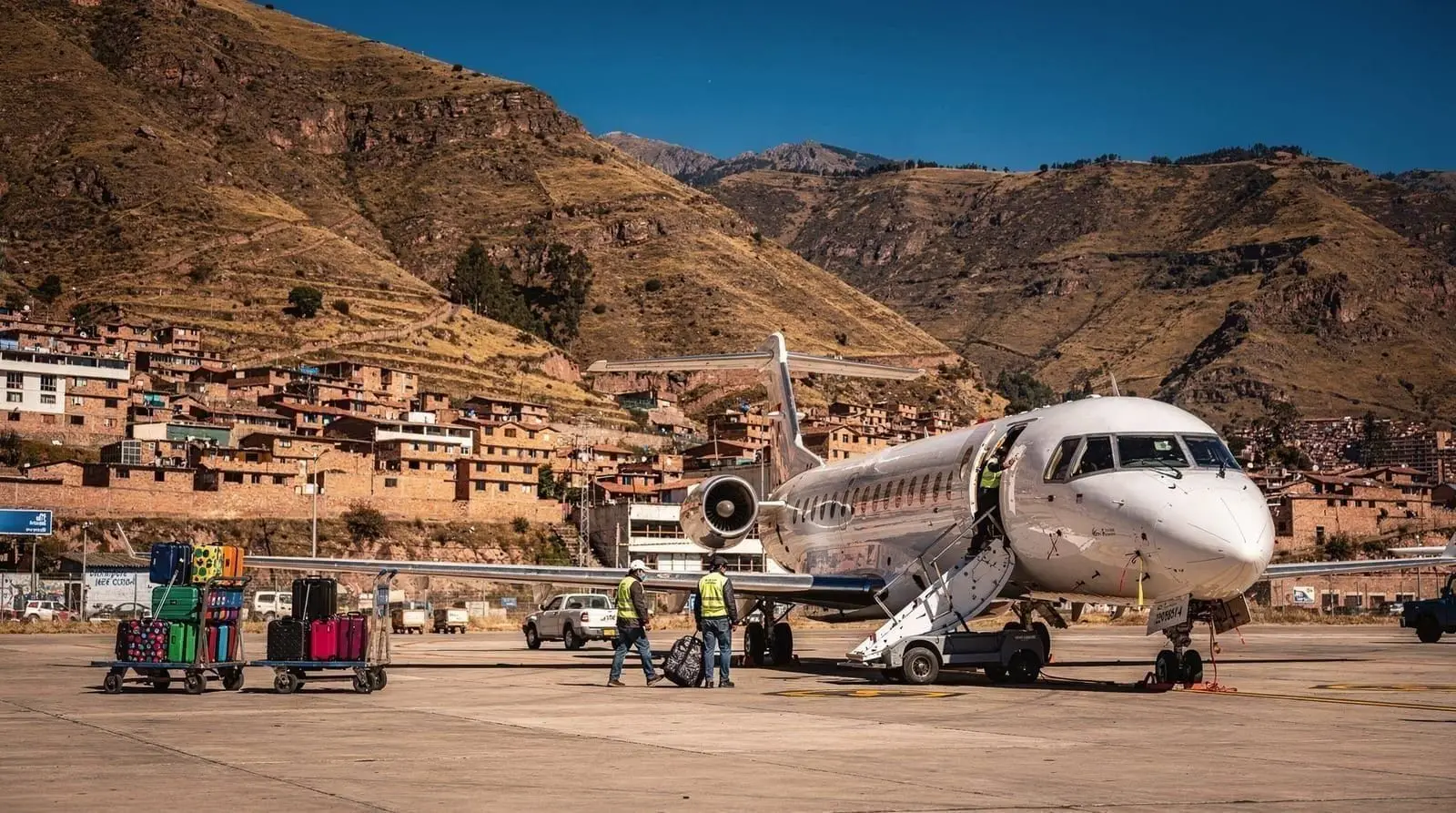
For almost everyone, the answer to “how do I get to Cusco” is: fly from Lima. Cusco’s Alejandro Velasco Astete airport (code CUZ) is the second-busiest in Peru, but it handles barely any long-haul international traffic. The runway is short, the city is hemmed in by mountains, and weather closes the field regularly. So the realistic mental model is two legs: get yourself to Lima, then take a domestic hop up to the Andes.
This guide covers the flight options and real fares, the overland alternatives, the arrival logistics on the ground, and the acclimatisation trap that catches people who treat the journey as the hard part and the landing as the finish line.
| Flight from Lima | ~1 hr 25 min, $50–150 one way |
| Bus from Lima | 20–24 hrs, S/120–250 |
| Airport to centre | 10 minutes, S/20–30 taxi |
| Book flights by | 2–3 months ahead for May–Sept peak |
| Arrival-day rule | Rest, hydrate, skip alcohol — altitude starts now |
Flying to Cusco: the default, and why
There is no direct flight from most of the world
If you are coming from North America, Europe, Australia, or anywhere outside the immediate region, you will not find a non-stop flight to Cusco. The international gateway is Lima’s Jorge Chávez airport (LIM), which reopened a vastly expanded new terminal in 2025. From Lima, four carriers fly the Lima–Cusco route: LATAM, Sky Airline, JetSMART, and Star Perú. The flight is roughly 1 hour 25 minutes.
A small number of regional international routes do touch Cusco — most reliably La Paz, Bolivia, and intermittently Bogotá, Colombia — but schedules change season to season and they serve a niche of overland South America travellers. Do not plan a trip around them.
Real fares and the morning-departure rule
A one-way Lima–Cusco ticket typically runs $50–150 depending on season, how far ahead you book, and whether you add baggage. The budget carriers (Sky, JetSMART) advertise the lowest base fares, but the headline price excludes checked bags and seat selection — by the time you add a 23 kg bag, the gap with LATAM narrows. In soles, expect a base fare somewhere around S/180–550 one way.
Two practical patterns matter:
- Fly in the morning. Cusco’s weather deteriorates through the day, and afternoon flights are far more prone to delay and cancellation, especially in the November–March wet season. Early departures also give you the rest of the day to rest at altitude. Book the first or second wave of the morning where you can.
- Build a buffer on the connection. If you arrive from overseas and connect the same day, leave at least three hours in Lima. International-to-domestic transfers mean clearing immigration, collecting and re-checking bags, and crossing the terminal. A tight connection that fails leaves you stuck in Lima overnight.
When to book
For the May–September dry season and the clusters of dates around Inti Raymi (late June), Fiestas Patrias (late July), and Christmas–New Year, book two to three months ahead. Morning slots sell first and fares rise steeply close to departure. Outside peak, two to four weeks is usually enough, and you will see the lowest prices.
For a fuller breakdown of domestic carriers, baggage rules, and the quirks of flying within Peru, see the Peru domestic flights guide.
The overland alternatives
Bus from Lima: long, scenic, and a real commitment
A direct bus from Lima to Cusco covers around 1,100 km and takes 20–24 hours. Quality operators — Cruz del Sur, Oltursa, and Civa’s Excluciva service — run modern double-deckers with reclining “cama” or “semi-cama” seats, onboard meals, and toilets. A one-way fare in the better seats runs roughly S/120–250 ($32–67), which is competitive with a cheap flight but costs you a day and a night.
The honest case for the bus is narrow: you are on a tight budget with time to spare, you dislike flying, or you want to break the journey. Many travellers do the latter — riding the coast to Nazca or Arequipa first, then turning inland to Cusco. That staged approach also helps with altitude, because you climb gradually rather than landing cold at 3,400 m.
One under-appreciated bonus: a bus that climbs over the Andes from Nazca or Abancay introduces the elevation gently, over hours, which is gentler on the body than the abrupt cabin-to-cobblestones jump of a flight. For the full picture on intercity coaches, comfort tiers, and safety, see the Peru bus travel guide.
Bus from Arequipa, Puno, and the southern circuit
If you are already in southern Peru, the overland links are short and worthwhile. Arequipa to Cusco is a roughly 9–10 hour overnight bus. Puno (Lake Titicaca) to Cusco is around 6–7 hours, and the daytime “Route of the Sun” tourist bus turns the transfer into a sightseeing day with stops at Andahuaylillas, Raqchi, and the La Raya pass. The Route of the Sun bus between Cusco and Puno with stops runs the reverse of this leg with a guide and lunch, which is a sensible way to combine transfer and sightseeing if Lake Titicaca is on your route.
Train and trek arrivals
You cannot take a train all the way into Cusco from elsewhere in Peru — the long-distance rail network does not reach that far. The trains you will hear about (PeruRail, IncaRail) run between the Sacred Valley and Machu Picchu, not to Cusco itself, and most depart from Ollantaytambo, not the city. A handful of multi-day treks (the Inca Trail, Salkantay) end at Machu Picchu and then return you to Cusco by train and road, but those are part of a Machu Picchu trip rather than a way of arriving in the first place.
Arrival logistics on the ground
From the airport to your hotel
Cusco’s airport is barely 10 minutes from the historic centre, which makes the arrival mercifully short. An official taxi to the Plaza de Armas costs S/20–30 ($5–8). The catch is the airport’s pricing culture: drivers loitering at the exit often quote double, and unofficial touts work the arrivals hall. Two clean options:
- Pre-book a hotel transfer. Most mid-range and upper hotels will send a driver for S/30–50 with a name board, which removes all friction on a day when you are already tired and breathing thin air.
- Use a ride app. InDriver and Cabify operate in Cusco and let you set or see the fare in advance, avoiding the haggle.
If you book nothing, walk past the first ring of drivers to the official taxi desk inside the terminal and agree the fare before getting in.
Should you even stay in Cusco first?
Here is the counter-intuitive move that seasoned planners make: do not necessarily sleep in Cusco on arrival. The towns of the Sacred Valley — Urubamba (2,870 m) and Ollantaytambo (2,790 m) — sit several hundred metres lower than the city. Transferring straight from the airport down to the valley for a night or two before coming up to Cusco is genuinely easier on your body. Drivers wait at the airport for exactly this run; budget S/120–180 for the roughly 90-minute transfer to Urubamba.
If you do stay in the city first, the centre is compact but steep, so choose accommodation by how much uphill walking you can stand on a still-adjusting body.
The arrival-day altitude trap
The mistake that turns a smooth journey into a miserable first 36 hours is treating the flight as the effort and the landing as the reward. Your body does not agree. Flying from sea level to 3,400 m in 90 minutes is exactly the kind of rapid ascent that triggers soroche (altitude sickness), and no amount of fitness reliably prevents it.
The arrival-day rules are simple and worth following to the letter:
- Do nothing strenuous. No Sacsayhuamán, no uphill sightseeing, no carrying heavy bags up stairs. Drop everything and rest for a few hours.
- Hydrate hard — three or more litres of water through the day. Dehydration mimics and worsens the symptoms.
- Skip alcohol for the first day or two. The arrival-night pisco sour is the classic error.
- Eat light. Heavy meals pull oxygen-rich blood toward digestion.
- Accept the mate de coca offered in hotel lobbies — it helps mildly, though note it can trigger a positive drug test for cocaine metabolites for a few days.
Symptoms like a headache, breathlessness at rest, and broken sleep are normal and usually fade within a day or two. Confusion, loss of coordination, or a wet cough are red flags that call for descent and medical attention. For the full medical picture, the altitude sickness in Cusco guide goes deeper.
Baggage, weather delays, and other realities
Two practical hazards trip up first-timers on the Lima–Cusco leg. The first is baggage. The budget carriers (Sky, JetSMART) sell bare-bones fares that exclude checked bags, and their cabin-bag allowances are strict and actively enforced at the gate, where buying allowance on the spot is expensive. If you are carrying trekking gear or a large bag for a longer Peru trip, price the fare with the bag included before assuming the cheap carrier is cheaper — once you add a 23 kg bag, LATAM often comes out level or ahead, with a more forgiving cabin policy.
The second is weather. Cusco’s airport sits in a bowl ringed by mountains, and low cloud, especially in the wet season and especially in the afternoon, closes the field with little warning. Delays and same-day cancellations are more common here than on most domestic routes. The defences are simple: fly early, never book an international onward connection for the same day as your Cusco departure, and keep your plans loose for the first hours after a Cusco flight. If a flight is cancelled, the airlines rebook onto later services, but a cascade of weather can back things up for hours.
A final note on motion and altitude: if you choose the overland route over the high Andes, the winding mountain roads provoke motion sickness in some travellers, so carry remedies. And whichever way you arrive, remember that the journey ends at 3,400 m — the real work, your body’s adjustment, only begins when you stop moving.
How the journey fits a wider trip
Most southern Peru itineraries open in Lima for the food and the international connection, then run up to Cusco for acclimatisation and the city, then out to the Sacred Valley and on to Machu Picchu. Getting the arrival sequence right — fly in the morning, build a Lima buffer, take the first day slow — sets the tone for everything that follows. For a full two-week routing that strings these legs together sensibly, see the Peru 2-week itinerary guide. For the logistics of leaving Lima itself, the Lima airport to city guide covers the other end of the connection.
Insurance, SIM cards, and other arrival practicalities
A few small preparations pay off before you land. Travel insurance with medical evacuation cover is genuinely worth having for a Cusco trip, given the altitude and the likelihood of at least a mild bout of soroche; check the policy explicitly covers altitude-related treatment, since some standard policies exclude it.
A local SIM (Claro or Movistar, bought at Lima or Cusco airport) is cheap and gives you maps and messaging the moment you land, useful for coordinating a transfer or hotel pickup without relying on airport wifi. Currency: withdraw soles from an airport or city ATM rather than arriving with only dollars — most Cusco taxis, transfers, and small vendors expect local currency, and airport currency exchange counters offer weak rates.
What if your flight is cancelled
Given how often Cusco’s weather closes the airport, it is worth planning for a cancelled or delayed flight rather than treating it as a remote possibility. Airlines typically rebook you onto the next available flight at no extra charge if the cancellation is weather-related, but seats on later services fill fast during a weather backlog, so speak to the airline desk immediately rather than waiting in a queue.
Build slack into your itinerary for the day you fly to Cusco — avoid booking a tour, train, or non-refundable activity for the same afternoon you land, since a delayed flight can eat the whole day. Travel insurance that covers delay-related costs (an unplanned hotel night in Lima, for instance) is worth having specifically because of this weather pattern.