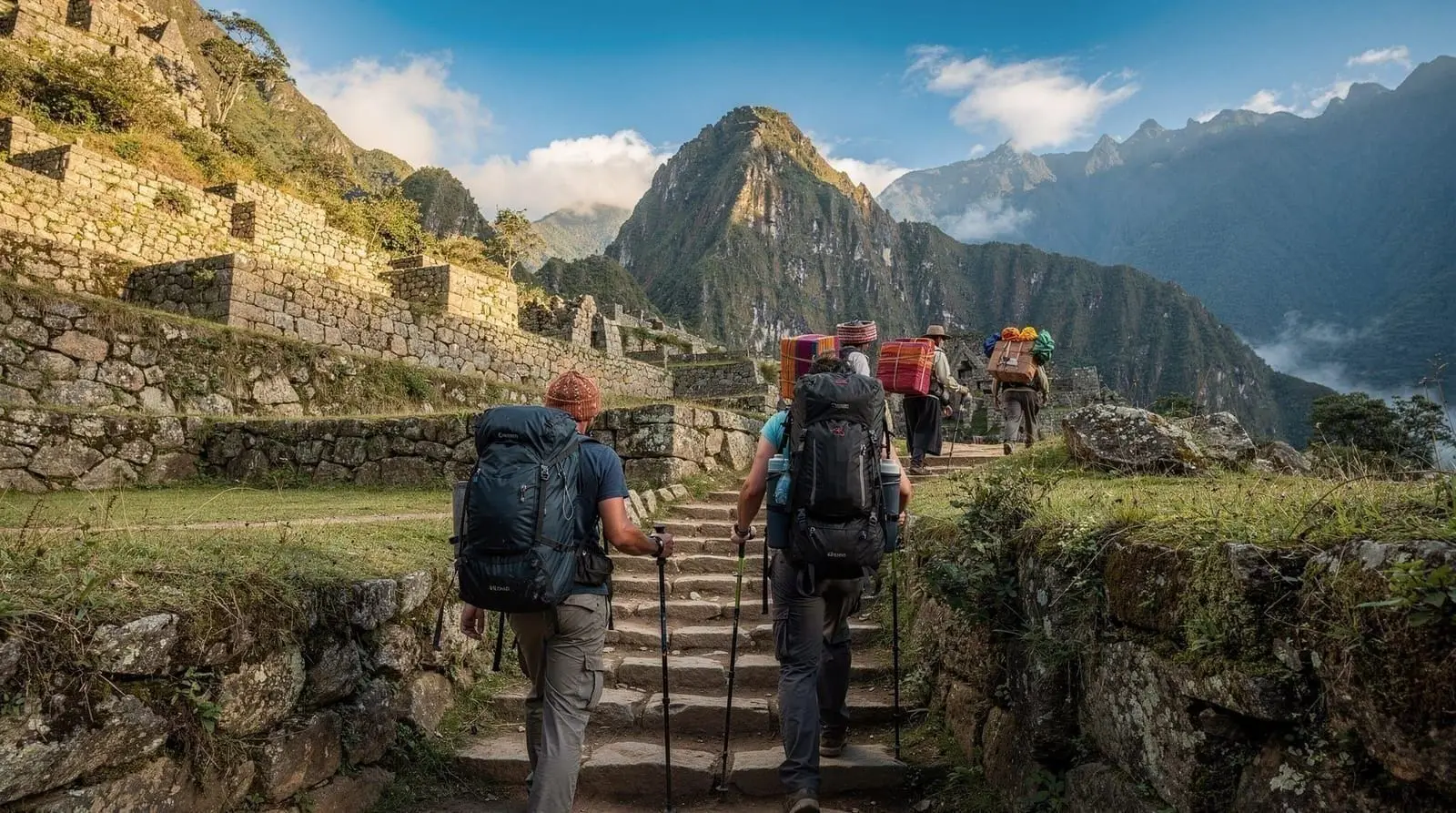
Inca Trail complete guide
From Cusco: 4-Day Inca Trail Guided Trek to Machu Picchu
What do I most need to know before booking the Inca Trail?
Permits are capped at roughly 500 people per day, sell out four to six months ahead, and the trail closes for all of February. You cannot hike it independently — a government-licensed operator must book your permit in your name. Lock the permit date first, then build the rest of the trip around it.
Why the booking date matters more than anything else
Most guides open with scenery. This one opens with a calendar, because the single decision that shapes your entire Inca Trail trip is when you book. The Peruvian Ministry of Culture caps the classic trail at roughly 500 people per day, and once porters, cooks and guides are counted, only about 200 of those slots go to actual trekkers. Permits go on sale months ahead and disappear in a predictable rhythm: peak-season dates in May, June, July and August can sell out within days of release, while shoulder dates last a few weeks. Booking four to six months in advance is the realistic minimum; for the busiest weeks, treat the release date as a hard deadline.
There is no functioning waiting list, no broker who can conjure a permit that has already sold, and no last-minute desk in Cusco that will get you onto the classic route tomorrow. If a company tells you otherwise in high season, that is your first sign to walk away. Everything else on this page — the day-by-day plan, the packing list, the cost breakdown — only matters once you hold a permit, so the honest planner’s order of operations is: pick your dates, secure a permit through a licensed operator, then arrange flights, hotels and the rest of the Cusco trip around that fixed point.
| Distance / duration | 43 km, 4 days / 3 nights camping |
| Permit | Capped ~500/day (~200 trekkers), book 4–6 months ahead |
| Cost | Around $700–950 (S/2,600–3,550), all-inclusive |
| High point | Dead Woman’s Pass, 4,215 m, day 2 |
| Closed | All of February, every year |
Two more non-negotiable rules
Beyond permits, two rules trip up first-timers every season. First, the Inca Trail closes for the entire month of February — not a long weekend, the whole month — for maintenance and to let the rain-battered path recover. If your travel window lands in February, the classic trail is simply unavailable and you pivot to the Salkantay trek or reach Machu Picchu by train. Second, you cannot legally hike the Inca Trail alone. Independent trekking was banned years ago; you must go with a government-licensed company that books your permit against your passport. These are not preferences or seasonal quirks — they are fixed conditions you plan around from day one.
What the Inca Trail actually is
The Camino Inca is a 43-kilometre section of the much larger Inca road network, the Qhapaq Ñan, that once linked the empire from Colombia to Chile. The classic trekking route climbs out of the Sacred Valley, crosses three high passes, and descends through cloud forest to the Sun Gate (Inti Punku) above Machu Picchu.
What sets it apart from every other trek to the citadel is the archaeology underfoot: you walk on original Inca paving and pass a chain of ruins — Llactapata, Runkuraqay, Sayacmarca, Phuyupatamarca and the spectacular Wiñay Wayna — that have no road and no other access. The payoff is arriving at Machu Picchu on foot, through the same gateway the Incas used, looking down on the citadel before the day-trippers’ trains have even left Aguas Calientes.
The walk begins at “Km 82” on the railway below Ollantaytambo and ends at the citadel. Most groups spend the last night down in Aguas Calientes and tour Machu Picchu properly on the morning of day four.
The classic 4-day trek, day by day
The standard route is four days and three nights of camping. Here is what each day really feels like.
- Day 1 — the warm-up. From Km 82 (about 2,600 m) you follow the Urubamba river on a gentle, undulating path past the ruins of Llactapata, with your first proper views of the valley. Roughly six hours of easy walking, camping near 3,000 m. This is the day to test your boots and pace.
- Day 2 — the hardest day, by a distance. A long, grinding climb of stone steps to Dead Woman’s Pass (Warmiwañusca) at 4,215 m, the high point of the whole trek and where thin air bites hardest. The descent that follows is steep and punishing on the knees. Plan for seven to eight hours and camp around 3,600 m.
- Day 3 — the most beautiful and the longest. Two more passes, then a long, dreamlike traverse through cloud forest past Sayacmarca, Phuyupatamarca and finally Wiñay Wayna, the finest ruin on the route. Expect eight to ten hours on your feet, much of it on steep Inca stairways, ending at the last campsite.
- Day 4 — the Sun Gate. A pre-dawn start, often by headtorch, to reach Inti Punku for sunrise and your first sight of Machu Picchu from above. A short descent brings you to the citadel for a guided tour, then the train back toward Cusco.
The 4-day Inca Trail guided trek to Machu Picchu bundles the permit, a licensed guide, porters for the camping kit, all meals, the citadel entry and the train return — which, given that independent hiking is banned, is the only legal way to walk the classic route. The 4-day Inca Trail itinerary breaks this down into an hour-by-hour schedule if you want more detail than the summary above, and the Inca Trail trip report gives an honest first-person account of what each day actually felt like for one trekker.
| Day | Distance | Key climb | Camp altitude |
|---|---|---|---|
| 1 | ~14 km, ~6 hrs | Gentle, undulating | ~3,000 m |
| 2 | ~11 km, ~7–8 hrs | Dead Woman’s Pass, 4,215 m | ~3,600 m |
| 3 | ~16 km, ~8–10 hrs | Two more passes, mostly downhill | ~2,700 m |
| 4 | ~6 km, ~2–3 hrs | Sun Gate at dawn | Machu Picchu |
What it costs, honestly
A reputable 4-day Inca Trail runs roughly USD 700 to 950 per person (about S/ 2,600 to 3,550), all-inclusive of permit, guide, porters, three days of meals, camping gear, Machu Picchu entry and the train back to Ollantaytambo. Higher-end operators charge more for smaller groups, better food and lighter personal porter loads. Be wary of anything priced dramatically below this band: the savings almost always come out of porter wages, food quality or “extras” you discover later, such as the train ticket or the entry fee.
Budget for what the package does not include: tips for porters, cook and guide (a fair pooled tip is roughly S/ 250 to 350 per trekker for the group), a bus from the citadel down to Aguas Calientes if you do not want to walk, drinks and snacks, and personal gear or sleeping-bag rental. For a fuller picture of trip spending, the Peru trip cost guide for 2026 sets the trek against your other Cusco costs.
Difficulty, altitude and acclimatisation
The Inca Trail is moderately to seriously demanding. No ropes or technical skill, but four consecutive days of hard walking, with day two’s climb to 4,215 m and day three’s thousands of stone steps being the real tests. The biggest variable is altitude, which has nothing to do with fitness — a marathon runner can still suffer.
- Acclimatise before you start. Spend at least two or three nights at Cusco or Sacred Valley altitude first. The Sacred Valley (around 2,800 m) is gentler than Cusco (3,400 m) for the nights immediately before the trek. The Cusco acclimatization plan lays out a sensible schedule.
- Walk the pass slowly. On day two, short steps and constant hydration beat pushing hard. Tell your guide at the first sign of more than a mild headache; the altitude sickness in Cusco guide covers the warning signs worth knowing.
- Pack for three climates in one trip. Cold camp nights near 3,600 m, warm humid cloud-forest afternoons, and fierce high-altitude sun.
- Coca tea and leaves are the traditional aid; acetazolamide is a prescription option to discuss with a doctor at home.
Packing list that actually earns its weight
Porters carry the tents, kitchen and shared gear, but you carry a daypack with everything you need between camps. Pack deliberately:
- Broken-in waterproof hiking boots and two or three pairs of proper hiking socks.
- Layers: a base layer, a warm mid-layer or fleece, a windproof and waterproof shell, plus a warm hat and gloves for the passes and camp.
- Sun hat, high-SPF sunscreen and sunglasses — the UV at altitude is brutal.
- A two-litre water capacity (bottles or bladder) and a reusable bottle for refills.
- Headtorch with spare batteries for the pre-dawn day-four start.
- Personal first aid, blister plasters, insect repellent for the cloud forest, and any altitude medication.
- Cash in small soles notes for tips, snacks and the optional citadel bus.
- A dry bag or liners — afternoon rain is common even in the dry season.
If you cannot get a classic permit
Plenty of travellers miss out, either on dates or because their trip falls in February. The legitimate alternatives:
- The 2-day short Inca Trail. This walks the final, most scenic stretch from Km 104 up past Wiñay Wayna to the Sun Gate in one long day, then sleeps in a hotel in Aguas Calientes. It still needs a permit (also capped, though usually easier to land than the 4-day) and still delivers the Sun Gate arrival. The Machu Picchu short Inca Trail 2-day tour is the standard version, while the 2-day Inca Trail with panoramic train pairs the short hike with a scenic rail leg for those who want a softer trip.
- The Salkantay trek. No permit, bookable far later, often cheaper, with arguably grander raw mountain scenery — but no Inca ruins en route and a standard citadel entry rather than the Sun Gate. The 4-day Salkantay route to Machu Picchu is the usual fallback. The Inca Trail vs Salkantay comparison weighs the two in detail.
To see how the Inca Trail sits among every route to the citadel, the best treks to Machu Picchu compares all the main options side by side. If your dates fall in February specifically, the Inca Trail closed in February guide covers exactly why and what to do instead, and the Inca Jungle trek guide covers a lower-altitude, permit-free adventure alternative for travellers who want variety over Inca ruins.
Where to stay before the early train back
However your Machu Picchu day ends, most groups descend to Aguas Calientes for a tour of the citadel before the train home; the Aguas Calientes guide covers the town’s practicalities if you want a slower, less rushed final day rather than an immediate train connection out.
How the trek fits a wider Peru trip
The classic trail needs four dedicated days plus acclimatisation time, and its permit date anchors everything else. Most travellers build their Cusco week around the permit they secured: a few days in Cusco, Pisac, Ollantaytambo and the Sacred Valley to acclimatise and sightsee, then the trek, finishing at Machu Picchu. The Cusco trip planning guide for 2026 and the itineraries hub help you slot it into a realistic schedule, and the tools page covers seasonal timing.
Frequently asked questions about Inca Trail complete
How far ahead do I have to book the Inca Trail?
How much does the Inca Trail cost in 2026?
Is the Inca Trail closed in February?
How fit do I need to be?
Can I do the Inca Trail without camping?
What happens to my permit if I cancel?
Which day of the Inca Trail is hardest?
Can I combine the Inca Trail with the Inca Jungle or Salkantay?
Top experiences
Bookable activities with verified prices and instant confirmation on GetYourGuide.

