Inca Trail trip report: four days, two hard mornings, one Sun Gate
Booked six months out, because that’s the only way
The first thing to understand about the classic four-day Inca Trail is that the decision to do it happens long before the trek itself. Permits are capped, they sell out months ahead — for peak season I booked roughly six months before — and you cannot do it independently; it’s licensed operators only, no exceptions. I sorted my permit and operator in the dead of winter back home and then mostly forgot about it until it crept up on me. The Inca Trail permits guide explains the booking window properly; the short version is do it embarrassingly early.
This is a report of how the four days actually went, written so you know what you’re signing up for rather than the glossy version.
| Length | 4 days / 3 nights, ~42km, licensed operator only |
| High point | Dead Woman’s Pass, 4,215m (day 2) |
| Book by | 5–6 months ahead for peak season (permits are capped) |
| Fitness | Moderate-hard; altitude matters more than raw fitness |
| Bring | Broken-in boots, trekking poles, layers, cash to tip porters |
Day 1 — gentle, deceptively
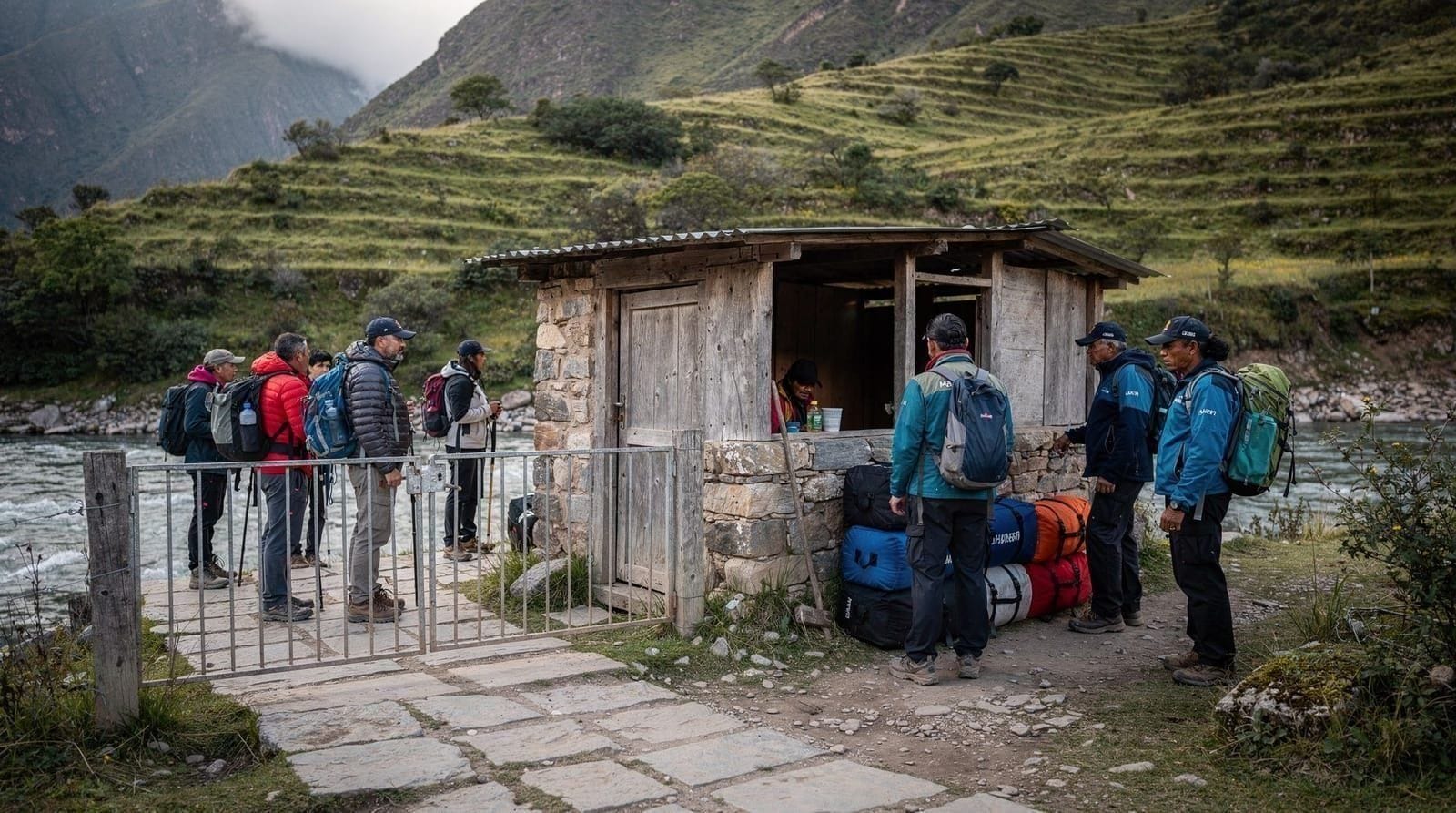
We started at Km 82 near Ollantaytambo, the trailhead, after a briefing the night before and an early-morning bus from Cusco. Day one is the easy one — rolling, mostly along the Urubamba river, a few climbs but nothing cruel. We passed our first ruins, Llactapata, spread across a hillside, and the group did the usual first-day thing of chatting too much and walking too fast.
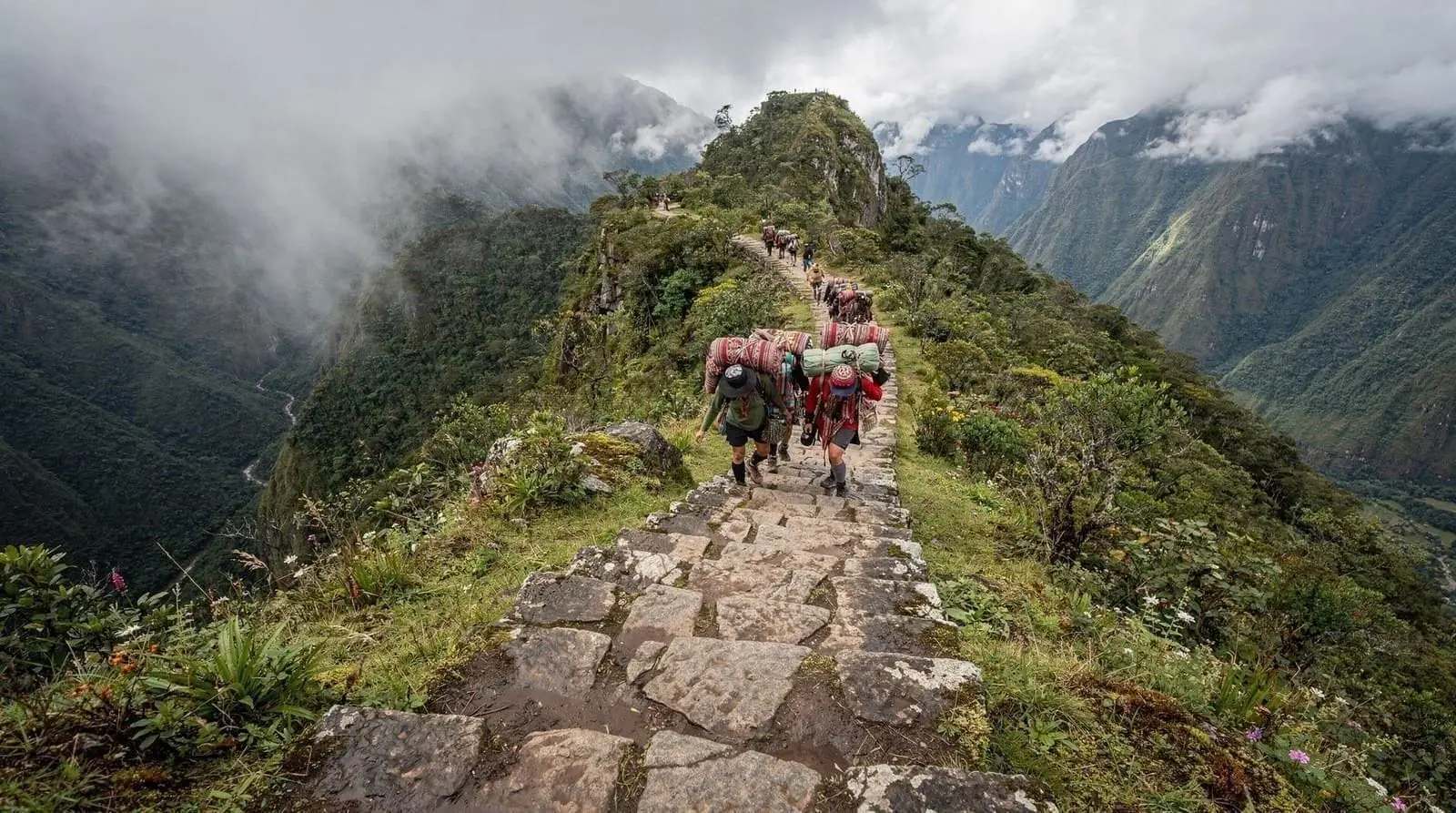
The thing that hit me on day one wasn’t the scenery, it was the porters. These men — many of them not young, many in sandals — carried the tents, the food, the cooking gear, everything, at a pace that left our unburdened group looking ridiculous. They’d pass us on a climb carrying triple our weight, set up the entire camp, and have hot drinks waiting when we shuffled in. I’ll come back to them, because they deserve it.
We camped the first night well-fed and naive, because everyone knew what day two was.
Day 2 — Dead Woman’s Pass, the day everyone fears
Day two is the hard one and it earns its reputation. You climb from around 3,000 metres up to the top of Warmiwañusca — Dead Woman’s Pass — at 4,215 metres (13,830 feet). It is hours of relentless uphill, much of it on steep stone steps, at an altitude where your body is already arguing with you.
I won’t dress it up: it was the hardest sustained physical thing I’d done in years. The last hour to the pass I was counting steps between rests, lungs burning, while the porters again strolled past like it was a Sunday walk. The coca leaves helped a bit, the slow-and-steady approach helped more, and being properly acclimatised in Cusco beforehand helped most of all. Anyone who skips the Cusco acclimatisation and tries to power through day two has a miserable time; I’d built in four days in the city first and I still suffered. The Inca Trail complete guide is honest about the difficulty.
Cresting the pass is one of those genuinely earned moments. Then you go straight back down a brutal staircase to camp, knees complaining the whole way, and collapse into your tent feeling like you’d done something real. Which you had.
Day 3 — the beautiful one
Day three is the longest but the most rewarding, and after day two it feels almost manageable. This is the day the trail turns from “hike” into “Inca road through the cloud forest,” winding past site after site — Runkurakay, Sayacmarca, Phuyupatamarca perched on its ridge — with the vegetation getting lusher and the views opening up over deep green valleys.
It’s also the day the engineering of the trail itself becomes the point. You’re walking on original Inca stonework, through original Inca tunnels, past terraces still clinging to impossible slopes. We reached Wiñay Wayna late in the day, an extraordinary terraced site that almost nobody who takes the train ever sees, and camped near it knowing the next morning was the one we’d come for.
The camp food, by the way, was absurdly good — soups, fresh-cooked mains, even a cake produced somehow on the last night — all conjured by the cook team in a tent in the mountains. I’d genuinely eaten worse in restaurants.
Day 4 — the Sun Gate at dawn
Day four starts in the dark. You’re up well before light to reach the checkpoint and walk the final stretch to Inti Punku, the Sun Gate, ideally as the sun comes up over Machu Picchu below. We walked the last section in head-torch light, half-asleep, then climbed the short brutal stretch they call the “monkey steps” up to the gate.
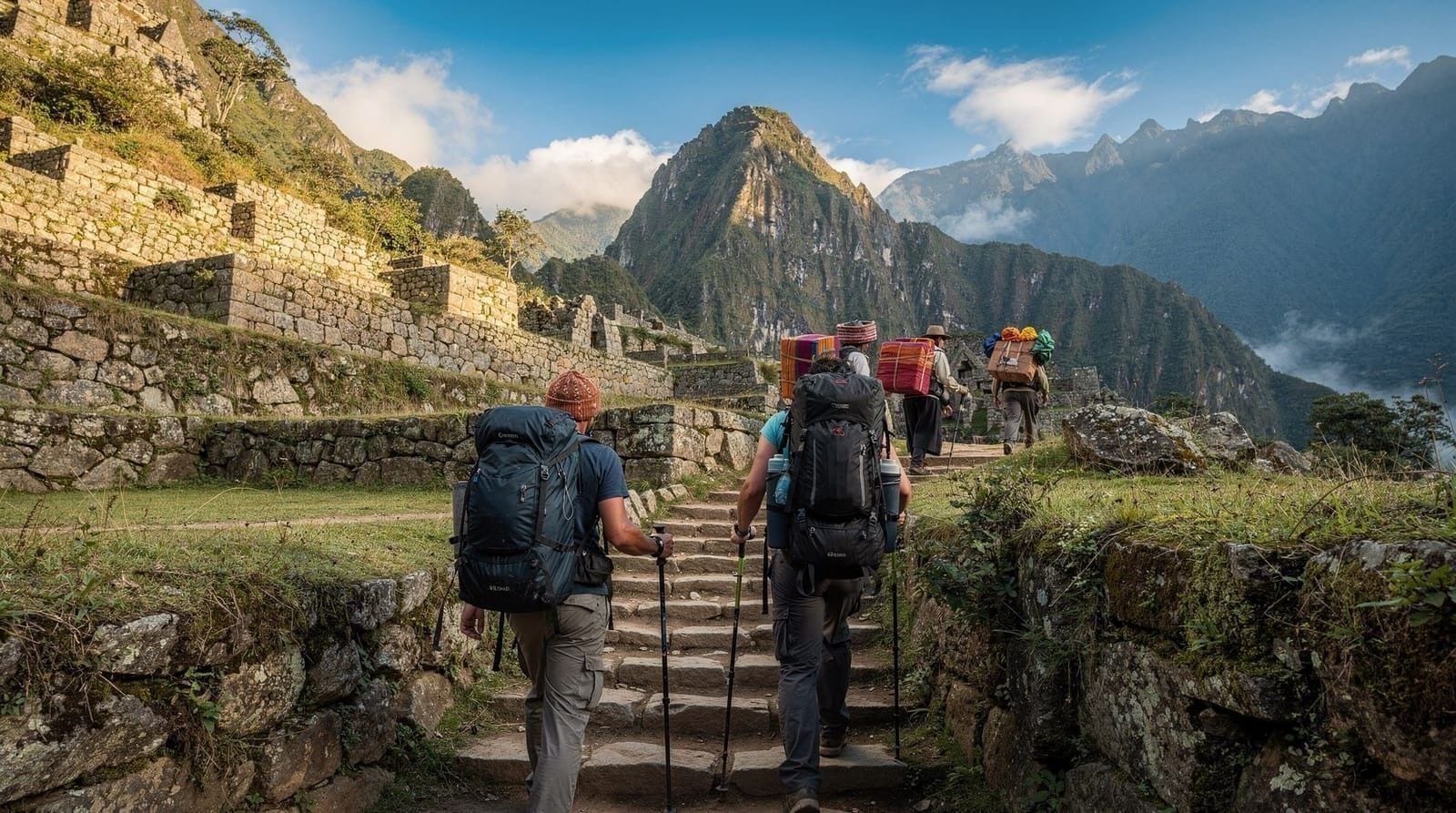
And there it was. From the Sun Gate, Machu Picchu sits below you in the saddle of the mountains, exactly as the Incas intended you to first see it — arriving on foot, from above, after four days of effort. I’d seen a thousand photos. None of them prepared me for the feeling of having walked there, of the city revealing itself because I’d earned the angle. People in my group cried. I came close.
We walked down into the site proper for the guided tour, exhausted and elated, while the day-trippers arrived fresh off the train looking confused at the filthy, beaming trekkers wandering around. There’s a smugness to arriving on foot that I make no apology for.
On the porters, and tipping properly
I have to dwell on this because it’s the part the trip reports often skim. The trek runs on the backs of the porters, literally, and they are paid modestly for genuinely punishing work. Tip them well — pool a generous group tip and hand it over directly at the final-night ceremony, on top of choosing an operator that treats them decently in the first place. Cheap operators often cut corners on porter welfare. Paying a bit more for an ethical company isn’t a luxury, it’s the right call. The Inca Trail complete guide covers which operators are reputable.
Choosing an operator, which matters more than people think
Not all Inca Trail operators are equal, and the difference shows up in two places: how they treat the porters, and how much time you actually spend at the sites rather than being rushed through them. Cheaper operators tend to cut corners on porter loads and rest breaks, which is both an ethical issue and, frankly, a quality one — a company that treats its staff well tends to run a better trek generally. I’d choose a mid-to-upper-range licensed operator over the cheapest option every time, and check reviews specifically for how they mention the porter team, not just the scenery.
What I’d pack and what I overpacked
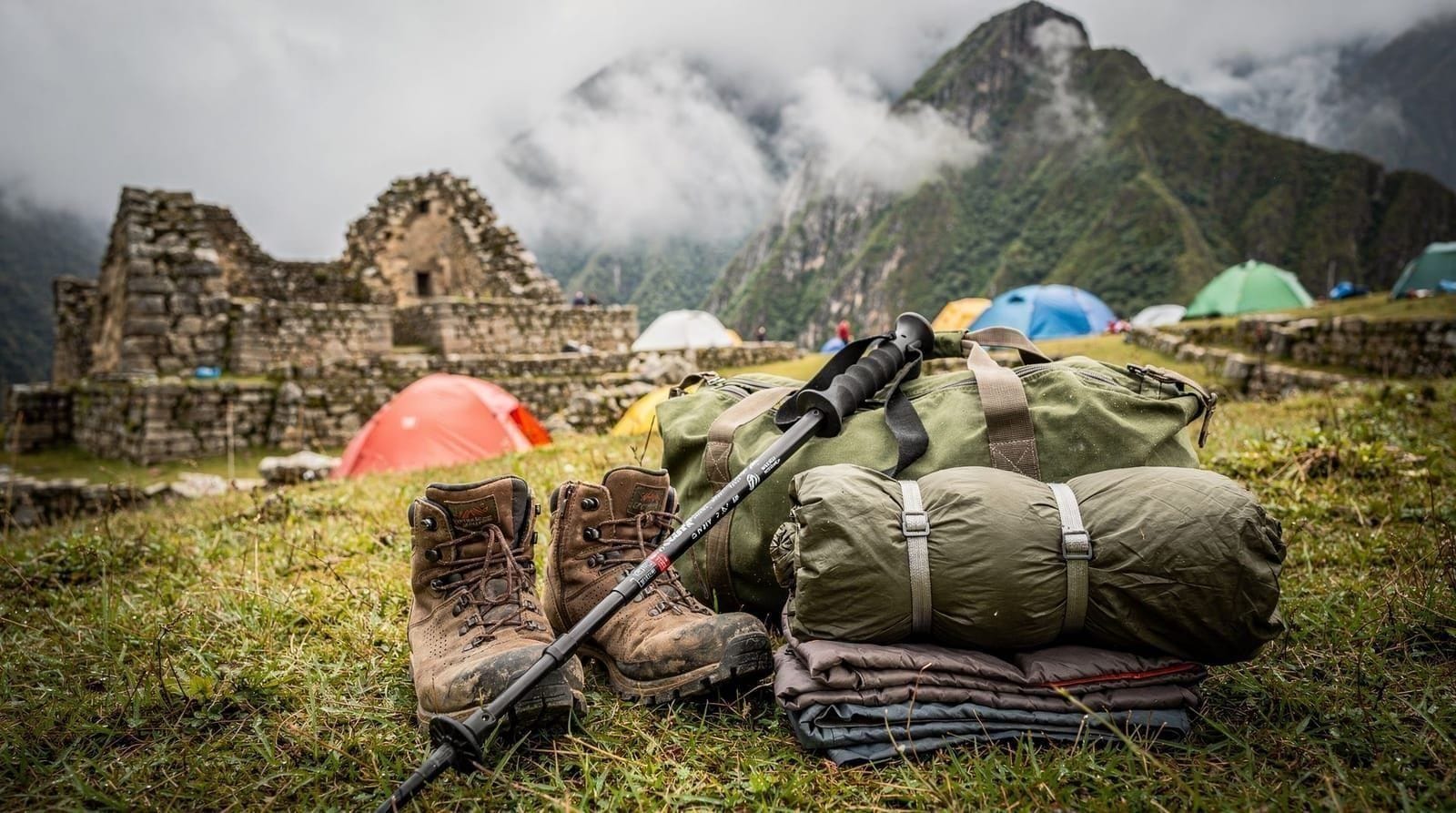
I overpacked, as everyone does. You really need: broken-in boots (do not bring new ones), proper rain gear, layers for genuine cold at the high camps, a warm sleeping setup, blister kit, and far fewer clothes than you think. The porters carry a weight allowance of your kit, so pack ruthlessly. The what to pack for the Inca Trail guide is the one I should have read more carefully.
The training I did, and whether it helped
I’m not an athlete, and I worried in the months before about whether I’d cope. What I actually did: a fair bit of hill walking with a loaded daypack, some stair work, and a general effort to be doing cardio a few times a week. Did it help? Yes — but less than I’d hoped, because the real killer on the Inca Trail isn’t fitness, it’s altitude, and you cannot train for that at sea level.
The fittest person in my group, a marathon runner, had the worst time on day two because he’d flown in late and hadn’t acclimatised; meanwhile a couple in their sixties who’d spent a week getting used to the altitude in Cusco and the Sacred Valley cruised it. The lesson: do some training, sure, but prioritise spending real time at altitude beforehand over getting marginally fitter. A few days based around Cusco doing day trips is worth more than weeks at the gym.
What the days actually feel like, physically
For anyone nervously wondering what they’re in for: day one is a warm-up your body barely notices. Day two is genuine, prolonged hard effort — expect to be slow, to stop often, and to feel every one of those 4,215 metres. Day three is long on the legs and hard on the knees with all the descending, but the constant ruins and views carry you through. Day four is short but you’re tired and emotional and walking in the dark to start.
Trekking poles helped my knees enormously on the descents, and I’d genuinely call them essential rather than optional. The camps are basic but the operator handles the tents and food, so your job is just to walk and recover. The Inca Trail permits guide and the broader best treks to Machu Picchu comparison will help you sanity-check whether this is the right trek for your fitness and timeline.
Inca Trail vs the alternatives, honestly
The classic Inca Trail isn’t the only way to reach Machu Picchu on foot, and it’s worth knowing what you’re choosing over.
| Route | Length | Permits | What you get |
|---|---|---|---|
| Classic Inca Trail | 4 days | Capped, book 5–6 months out | Sun Gate arrival, original Inca stonework the whole way |
| Salkantay Trek | 4–5 days | No cap, book weeks ahead | Higher pass (4,600m), more scenic diversity, arrives by train/bus |
| Short Inca Trail | 2 days | Capped, easier to get | Same Sun Gate finish, less trekking, good for tight schedules |
If permits for the classic route are sold out for your dates, the Inca Trail vs Salkantay comparison and the short Inca Trail 2-day guide are the two honest alternatives, and the inca trail closed in February guide is essential if you’re anywhere near that month — the whole trail shuts for annual maintenance.
Worth it? Without hesitation
The Inca Trail is hard, expensive, booked months ahead, and physically demanding in a way that surprised someone who thought they were reasonably fit. It is also, without question, the best four days of any trip I’ve taken. The combination of the landscape, the ruins only trekkers see, the camaraderie of a suffering group, and that final arrival through the Sun Gate adds up to something the train simply cannot give you.
If you can get a permit, if you’ll acclimatise properly, and if you’re willing to embrace day two as a rite of passage, do it. This is roughly the trek I booked.
4-day Inca Trail guided trek to Machu PicchuI arrived at the Sun Gate filthy, exhausted and grinning like an idiot. Best possible way to meet Machu Picchu.