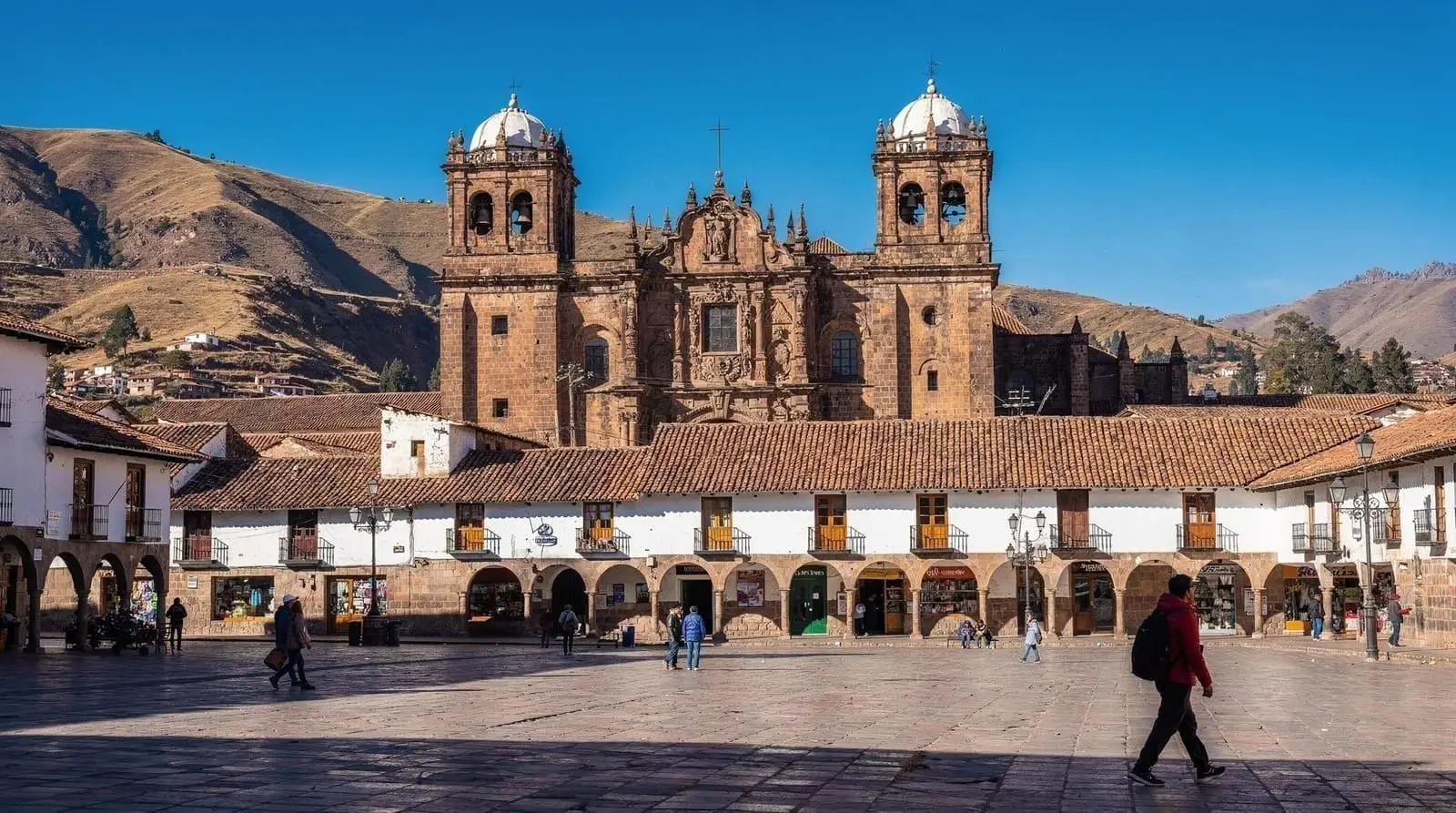
Cusco in the dry season: April to October, month by month
From Cusco: Vinicunca Rainbow Mountain Day Trip
When is the dry season in Cusco?
Cusco's dry season runs roughly from April to October, peaking in clarity from May to September. You get reliably sunny days and very cold nights that can drop below freezing in June and July. It's the best weather for trekking and Machu Picchu, but also the busiest and priciest stretch — June to August is the high-season squeeze.
The deal you make with the dry season
The Cusco dry season is the postcard version of the Andes — deep blue skies, sharp light on the stonework, trails that hold their footing — and that is exactly why everyone comes between April and October. But the bargain you strike for that clear weather is twofold: bitterly cold nights and the biggest crowds and prices of the year. Understanding both halves of that trade is what separates a smooth dry-season trip from a cold, overbooked one.
This guide breaks the season down month by month so you can pick the window that matches your priorities — the bone-dry, high-season heart of June to August, or the quieter, cheaper, almost-as-dry shoulders of April–May and September–October. It is written for the realities of Cusco at 3,400 m, where “dry season” means sunny afternoons and frosty dawns, not warmth.
| When | Roughly April–October, driest May–September |
| Days / nights | 18–20°C in the sun / near or below freezing June–July |
| Best for | Trekking, Machu Picchu, Rainbow Mountain, clear photos |
| Busiest | June–August (Inti Raymi, school holidays) |
| Best value | May and September (same weather, thinner crowds) |
Dry-season months at a glance
| Month | Rain risk | Crowds | Prices | Nights |
|---|---|---|---|---|
| April | Low-moderate | Low | Low | Cool |
| May | Very low | Low-moderate | Low-moderate | Cold |
| June | Very low | High (Inti Raymi) | High | Coldest |
| July | Very low | Highest | Highest | Coldest |
| August | Low | High | High | Very cold |
| September | Very low | Moderate | Moderate | Cold |
| October | Low-moderate | Low | Low-moderate | Cool |
What “dry season” actually feels like
At 3,400 m the air is thin and the days are deceptive. Step into direct sun at midday and it feels like spring — 18 to 20°C, T-shirt weather if you’re moving. Step into shade, or wait for the sun to drop behind the surrounding peaks around 5 pm, and the temperature falls fast. By night the thermometer routinely sits near freezing in the core dry months, and in June and July it can drop a couple of degrees below.
The practical upshot: dress in layers you can shed and pile back on within the same hour. A sun hat and sunscreen for the daytime UV (which is fierce at altitude), and a properly warm jacket, beanie and gloves for the evening. Many budget guesthouses have no heating, so a good sleeping setup matters more than travellers expect. The rain layer you’d obsess over in the wet season is almost an afterthought here — bring a light one, but the real enemy is cold, not wet.
Month by month through the dry season
April: the tail end of the rains
April is a transition month and an underrated one. The heavy rains of the wet season are tapering off, the landscape is still green from months of water, and the crowds haven’t arrived. You can still catch a late-afternoon shower, especially early in the month, so it’s a gamble rather than a guarantee — but by late April most days are clear. Prices are still low. If you’re flexible and don’t mind a small weather risk, late April offers green hills, dry-ish days and pre-peak pricing.
May: the shoulder sweet spot
May is, for many, the best month of the year in the Cusco region. The rains have stopped, the countryside is still lush rather than dust-dry, nights are cold but not yet at their harshest, and the high-season crush hasn’t begun. Trails are firm, skies are clear, and you can still find availability and reasonable prices. If you want dry-season weather without high-season pain, target May.
June: high season opens, Inti Raymi peaks
June brings the driest, clearest skies — and the start of the crowds. The 24th is Inti Raymi, the Festival of the Sun, the single biggest event on Cusco’s calendar, when the city fills and prices spike around the date. The reenactment at Sacsayhuamán draws huge crowds. Nights are at their coldest. June is spectacular and packed in equal measure; if you come for Inti Raymi, book everything months ahead. For the festival calendar, see the Cusco festivals calendar.
July: peak of the peak
July is the busiest month, overlapping with northern-summer and Peruvian-school holidays. Weather is reliably superb — cold nights, brilliant days — and so is demand. Machu Picchu entry slots, train seats and Inca Trail permits are at their tightest. Expect to plan and book well ahead, and to share every viewpoint. If your dates are fixed in July, lock logistics early.
August: still high, slightly easing
August stays dry and busy, but the very tail of the month begins to soften as the school-holiday wave recedes. The landscape is at its driest and dustiest by now after months without rain. It remains a premium-price, high-crowd month — treat it like July for booking purposes.
September: the second shoulder gem
September mirrors May at the other end of the season: dry, clear, with the crowds thinning and prices easing off the summer peak. Nights start to moderate slightly. For travellers who can’t make May, September is the next-best window for dry-season weather without high-season pressure. Many experienced Peru hands quietly consider May and September the smartest months of all.
October: the first clouds return
October is the closing transition. Most days are still dry, but afternoon clouds and the occasional early shower start creeping in toward month’s end as the wet season approaches. Crowds are low, prices are good, and the weather is usually still cooperative. It’s a fine month to visit if you accept a rising (but still small) chance of rain. For what comes next, see the Cusco rainy season guide.
The altitude angle nobody mentions about the dry season
There’s a quirk of the dry season that catches travellers off guard: the cold, dry air makes acclimatisation feel slightly harder in the first day or two, not easier. Dry air dehydrates you faster, and dehydration mimics and worsens altitude symptoms — the headache, the breathlessness, the poor sleep. In the wet season the air is more humid; in the bone-dry months of June and July, you need to drink even more water than the standard three-plus litres a day to stay ahead of it.
This matters for how you structure your first dry-season days in Cusco. The clear skies tempt you to charge straight up to Sacsayhuamán or book a high-altitude day trip on arrival, but the cold dry air rewards patience just as much as the wet season does. Hydrate aggressively, go easy the first 24–36 hours, and save the strenuous trips for once your body has settled. The dry season’s reliable weather means you rarely lose a planned activity to rain, so there’s no penalty for pacing yourself early.
Sun and UV: the underrated dry-season hazard
The flip side of those gorgeous clear skies is fierce ultraviolet radiation. At 3,400 m there’s far less atmosphere to filter the sun, and the dry season’s cloudless days expose you to UV levels that burn fair skin in well under an hour — even though the air feels cool. Travellers routinely underestimate this because the temperature doesn’t signal danger the way tropical heat does; you can get a serious sunburn while feeling perfectly comfortable in a fleece.
The defences are simple and easy to forget: high-SPF sunscreen reapplied through the day, a brimmed hat, sunglasses (snow blindness is a real risk on high treks and Rainbow Mountain), and lip balm with SPF for the dry, cracking air. The combination of intense sun by day and near-freezing nights is the dry season’s signature, and dressing for one while ignoring the other is the classic first-timer mistake.
Booking strategy for the dry season
The dry season rewards early planning more than any other time of year. The bottlenecks, roughly in order of how far ahead they sell out:
- The classic Inca Trail. Daily permits are capped and June–August dates go four to six months ahead. If a dry-season trek is the reason for your trip, book the permit and operator first and build everything else around it.
- Machu Picchu entry tickets. Timed-entry slots for the dry season, especially July and August, sell out weeks ahead. Secure these before booking trains.
- Trains to Machu Picchu. PeruRail and IncaRail seats on popular departure times fill in high season; book once your entry date is set.
- Hotels around Inti Raymi (late June). The 22–26 June window in Cusco is the single hardest accommodation squeeze of the year.
If your dates are flexible, the cheat code is simple: aim for May or September. You get essentially the same dry weather as the June–August core, with materially lower prices and far fewer people. For a fuller decision framework across all seasons, the best time to visit Cusco guide weighs weather against crowds in detail.
What the dry season is best for
The clear skies and firm trails make this the prime window for the activities that depend on weather. High-altitude day trips like Rainbow Mountain are at their most reliable now — the colours show under blue sky and the approach trail isn’t a mudslide. Multi-day treks (Inca Trail, Salkantay) run at their safest and most scenic. The Sacred Valley and Machu Picchu reward the visibility. Even the city itself photographs better in the low, sharp light.
Rainbow Mountain day trip from CuscoWhat the dry season is not best for is solitude or savings — for those, the wet season’s quieter trails and lower prices have their own honest appeal, covered in the Cusco rainy season guide.
Packing for cold nights and bright days
Whatever month you choose, pack for the daily swing rather than an average. The essentials that travellers most often skimp on and regret: a genuinely warm insulated jacket for evenings, a hat and gloves for June–July nights, high-SPF sunscreen and a brimmed hat for the daytime UV, lip balm for the dry air, and a reusable water bottle (hydration eases altitude). Layering tops you can add and remove through the day beat any single heavy garment. If you’re trekking, broken-in boots with grip handle the firm but dusty dry-season trails.
How the dry season changes a Sacred Valley trip
The dry season reshapes the Sacred Valley experience in ways worth planning around. The valley sits several hundred metres lower than Cusco — Urubamba at 2,870 m, Ollantaytambo at 2,790 m — so it’s milder than the city both day and night, which makes it the most comfortable base in the region during the cold dry months. Many seasoned travellers deliberately sleep in the valley first to acclimatise gently before coming up to Cusco, and the dry season’s reliable roads make the transfers painless.
The valley’s terraced ruins, salt pans at Maras and circular agricultural terraces at Moray all photograph at their best under the dry-season’s hard blue light, and the firm trails make the walking comfortable. The trade-off, again, is crowds: the valley’s day-tour circuit fills up in June–August just as the city does. The shoulder months of May and September give you the same clear weather on the terraces with fewer tour buses sharing them.
Choosing your exact dry-season week
Once you’ve settled on “dry season,” the next decision is which slice of it to book, and the honest answer depends on what you’re optimising for. If Inti Raymi itself is the draw, only late June works — accept the crowds and book six months out. If you want the best weather-to-crowd ratio, aim for the first half of May or the first half of September, when the rains have fully stopped (or not yet started) but the peak hasn’t arrived.
If you’re building a multi-day trek into the trip, June through early September gives the most consistent trail conditions, with July and August the safest bet if your dates must be fixed months ahead due to permit lead times. And if photography is the priority, the low, raking light of early morning and late afternoon in any dry-season month beats the harsh midday sun — plan your Sacsayhuamán or Sacred Valley visits for those windows regardless of which month you land in.
How the dry season compares to the shoulder edges
It’s worth being precise about what “dry season” hides: April and October are genuinely transitional, not fully dry, and travellers expecting June-level certainty in those months are sometimes caught out by a stray shower. The core dry months — May through September — are where the season’s promise actually holds. If your trip falls in April or October, pack as if you might see rain (because you might), and treat any dry days as a bonus rather than a guarantee. This is the honest nuance that a simple “dry season = April to October” label glosses over, and it’s why the month-by-month breakdown above matters more than the season’s broad label.