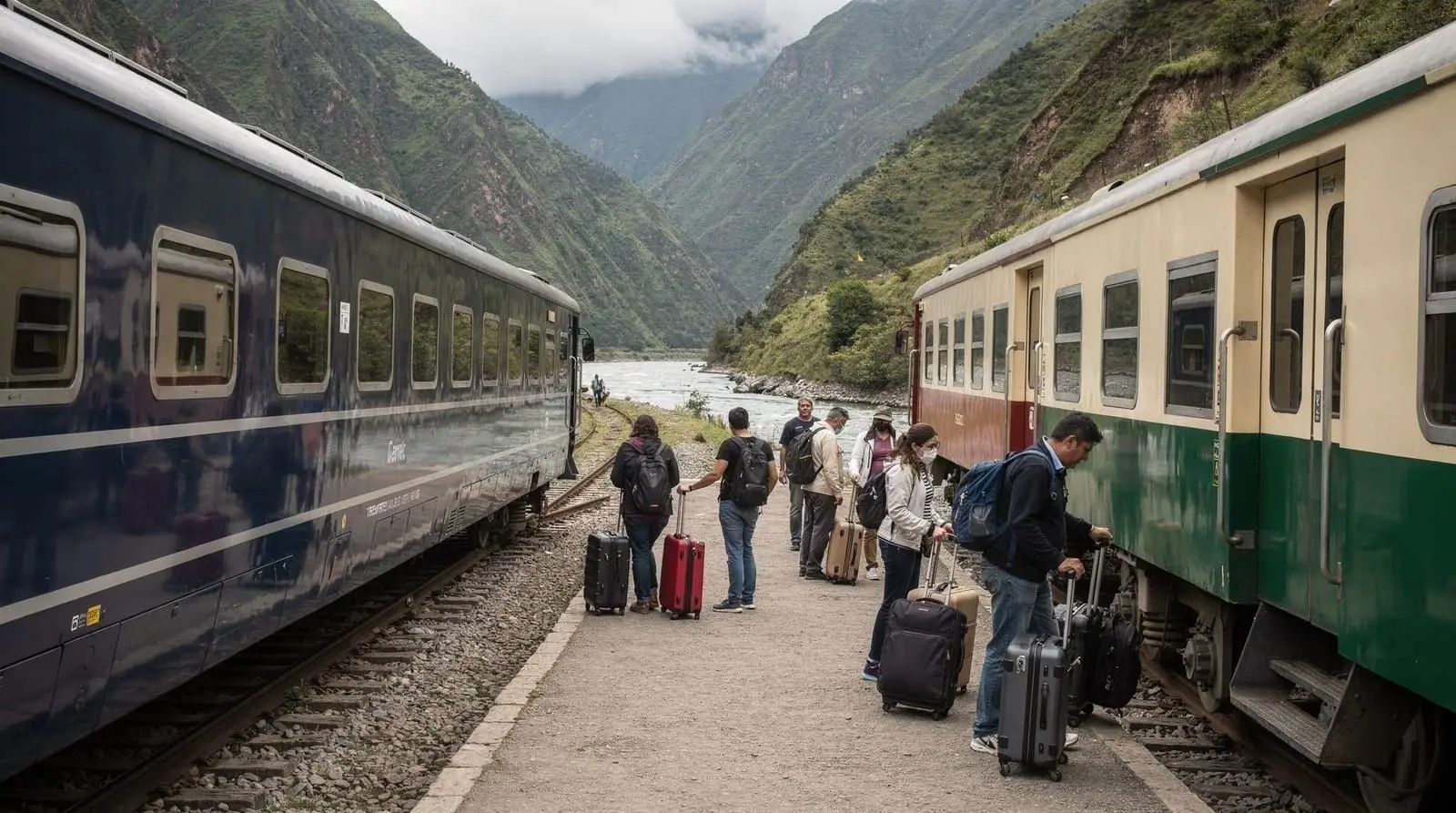
PeruRail vs Inca Rail
Which is better, PeruRail or Inca Rail?
Both are safe and comfortable, and the journey is similar on either. PeruRail has more departures and the budget Expedition class plus the luxury Hiram Bingham; Inca Rail tends to be slightly cheaper mid-range and offers a private-car option. Choose by schedule, price and class, not brand.
Two companies, one famous line
There is no road to Machu Picchu. Unless you walk in on a multi-day trek, the only way to reach the foot of the citadel is by train along the Urubamba gorge to Aguas Calientes, the town below the ruins. Two private companies run that line: PeruRail and Inca Rail. They share the same tracks, the same scenery, and roughly the same journey time, which means the choice between them comes down to schedule, price and class rather than any dramatic difference in experience.
That does not stop travellers agonising over it, partly because the operators’ websites bury the differences under layers of branded class names. This guide cuts through it: what each company offers, what the classes actually mean, realistic prices, where you board, and an honest take on which upgrades are worth paying for. The short version is that both are safe, clean and comfortable, and you will have a good ride on either — so book whichever has the departure time and fare that suits you.
For where the train fits into your wider plan, see the Machu Picchu destination guide and the Sacred Valley overview, since most people board in the valley.
| Where | Ollantaytambo (Sacred Valley) to Aguas Calientes |
| Cost | Around $110–450 round trip depending on class |
| Time needed | About 1 hr 45 min each way |
| Getting there | Board at Ollantaytambo, Poroy, or via Bimodal bus-train |
| Best time | Book weeks ahead in dry season (May–Sept) |
Where the trains run
Both operators run the core route between Ollantaytambo and Aguas Calientes, a journey of about 1 hour 45 minutes through a tightening gorge that is genuinely beautiful — snow peaks giving way to cloud forest as you descend. Most travellers board at Ollantaytambo, which is why staying overnight in the valley is so convenient.
Other boarding options:
- Poroy (near Cusco): PeruRail runs some services from here in dry season, saving the road transfer to the valley but adding rail time. Availability varies by year, so check current schedules.
- Bimodal service: a combined bus-from-Cusco plus train, useful when direct Cusco departures are limited.
- Hydroelectric (Hidroeléctrica): a budget back route where travellers take a long road journey to the Hidroeléctrica station and a short final train (or walk) into Aguas Calientes. Cheaper, much longer, and a different experience entirely. The full cost and logistics breakdown is in the Machu Picchu budget Hidroeléctrica guide.
The standard, sensible choice for most visitors is an Ollantaytambo departure. The logistics of getting to the station are covered in the getting around the Sacred Valley guide, and the wider question of train versus trekking in is answered in the train vs trek to Machu Picchu guide.
Luggage and what to bring on board
Both operators cap carry-on luggage at around 5 kg per person on the standard tourist classes — this is a real restriction, not a formality, and oversized backpacks may need to be checked or left at your hotel in Cusco or the Sacred Valley. Practically, pack a small day bag for the Machu Picchu visit itself (water, sun protection, a light layer, snacks, passport and your entry ticket) and leave the rest of your luggage at your accommodation if you are doing Machu Picchu as a day trip rather than staying over in Aguas Calientes. Bring your passport, not a photocopy — it is checked against the ticket at boarding on both operators, and mismatched names (common with abbreviated online bookings) can cause delays at the gate.
PeruRail: the classes
PeruRail is the larger operator with the most departures, which matters when you need a specific time. Its main tourist classes, cheapest to most expensive:
- Expedition — the entry-level tourist class. Comfortable assigned seats, large windows, a light snack and drink. This is the best-value option and perfectly pleasant.
- Vistadome — adds panoramic windows extending into the roof for more sky and gorge views, plus a snack and, on some services, onboard entertainment (music and a dance show on the return leg).
- Vistadome Observatory — a step up with an open-air observation deck and bar service.
- Hiram Bingham — a genuine luxury train: a multi-course meal, bar car, live music, and a premium price several times the tourist fare. A special-occasion choice, not a way to get from A to B.
PeruRail also runs the trains used by trekkers returning from the Inca Trail and the local tren local (not generally sold to foreign tourists for the main route).
Inca Rail: the classes
Inca Rail is the newer, slightly smaller operator. Its classes, cheapest to most expensive:
- Voyager — the entry-level tourist class, equivalent to PeruRail’s Expedition: comfortable seats, panoramic windows, a snack and drink. Good value.
- The 360° — panoramic glass roof and walls plus an open-air observation lounge at the rear, comparable to PeruRail’s Vistadome tier.
- First Class — premium service with a gourmet meal, open-air balcony car, bar and a more exclusive feel, sitting below the Hiram Bingham but above the standard classes.
- Private Train / The Masterpiece — fully private charter options for groups or special occasions.
Inca Rail is frequently a touch cheaper than PeruRail in the comparable mid-range classes, and some travellers prefer its slightly more modern carriages. Departure frequency is lower than PeruRail’s, so it can be the limiting factor if you need a precise time.
Prices, honestly
Fares move with season, demand and how far ahead you book, but realistic 2026 round-trip ranges from Ollantaytambo:
- Tourist class (Expedition / Voyager): roughly $110-160 round trip.
- Panoramic class (Vistadome / 360°): roughly $150-220 round trip.
- Premium (Vistadome Observatory / Inca Rail First Class): roughly $250-450 round trip.
- Hiram Bingham: roughly $900+ round trip, meals and a guided experience included.
Two pricing realities worth knowing. First, departure time drives the fare more than the brand — the early-morning and late-afternoon trains are noticeably cheaper than the convenient mid-morning ones. Second, the train is only part of the cost: you also need the Machu Picchu entry ticket and, usually, a bus up from Aguas Calientes. Budget the whole chain together. The cost picture for the full visit is in the best time to visit Machu Picchu guide.
Which class is actually worth it
The honest answer for most travellers: the basic tourist class is enough. Expedition and Voyager have comfortable assigned seats, big windows, and the same view of the same gorge as everyone else on the train. The journey is under two hours, so you are not living on board.
The panoramic upgrade (Vistadome / 360°) buys you a glass roof and a snack-and-show. It is nice, but the gorge is narrow and the most dramatic scenery is at eye level anyway, so the extra glass adds less than the price suggests. Worth it if the budget is comfortable, skippable if it is not.
The premium and luxury tiers are about the onboard experience — meals, bars, observation decks — rather than getting there faster. The Hiram Bingham is the one that is genuinely different in kind: a curated luxury day, not just a better seat. If that is your splurge, it delivers; if not, you lose nothing by riding tourist class.
Booking and timing
- Book ahead in dry season (May to September). The cheap departure slots sell out first, and the train pairs with capacity-limited Machu Picchu entry tickets, so coordinate both.
- Match your train to your entry time. Machu Picchu now uses timed entry; your arrival train and your ticket slot need to line up, with time for the bus up from Aguas Calientes.
- Bring your passport. It is checked at the station against your ticket.
- Consider the trek alternative. If you would rather walk in than ride, the best treks to Machu Picchu guide covers the Inca Trail and its alternatives; trekkers still usually take a train back.
For where the Machu Picchu day sits in a full trip, see the itineraries hub.
Tourist traps and honest warnings
Paying for “brand” over schedule. Neither company is meaningfully better. Pick the departure time and fare you need; do not pay a premium chasing a name.
The mid-morning convenience tax. The popular late-morning departures cost more. If you can take an early or late train, you save real money for the same ride.
Assuming the upgrade transforms the trip. It does not. The view is the view. Upgrades add comfort and snacks, not a different journey.
Same-day or last-minute booking in high season. You may be left with only the inconvenient or expensive trains, or none at all. Book the cheaper slots early.
Forgetting the bus up. Many first-timers budget the train and entry but forget the round-trip bus from Aguas Calientes up to the citadel (about $24 round trip), or the steep 90-minute walk if you skip it.
Buying tickets from unofficial resellers. Third-party sites and street agents in Cusco sometimes mark up train tickets significantly or sell tickets that turn out to be invalid. Book directly on the PeruRail or Inca Rail website, or through a registered tour operator. The Machu Picchu train ticket scams guide covers the specific tricks to watch for, and the train tickets guide and ticket types compared walk through the official booking process and entry-circuit combinations in full.
For a side-by-side of every operator and route option, including the Bimodal and Hidroeléctrica alternatives, see the trains to Machu Picchu compared guide.