Best time to visit Machu Picchu
Cusco: Machu Picchu + Tourist Train + Entrance Ticket
When is the best time to visit Machu Picchu?
The dry season, May to September, gives the clearest views and firm trails, but the most crowds and highest prices, peaking June to August. April, May, September, and October are the sweet-spot shoulder months. The wet season (November to March) is green and cheap but cloudy, and the Inca Trail closes in February.
The view depends on the month
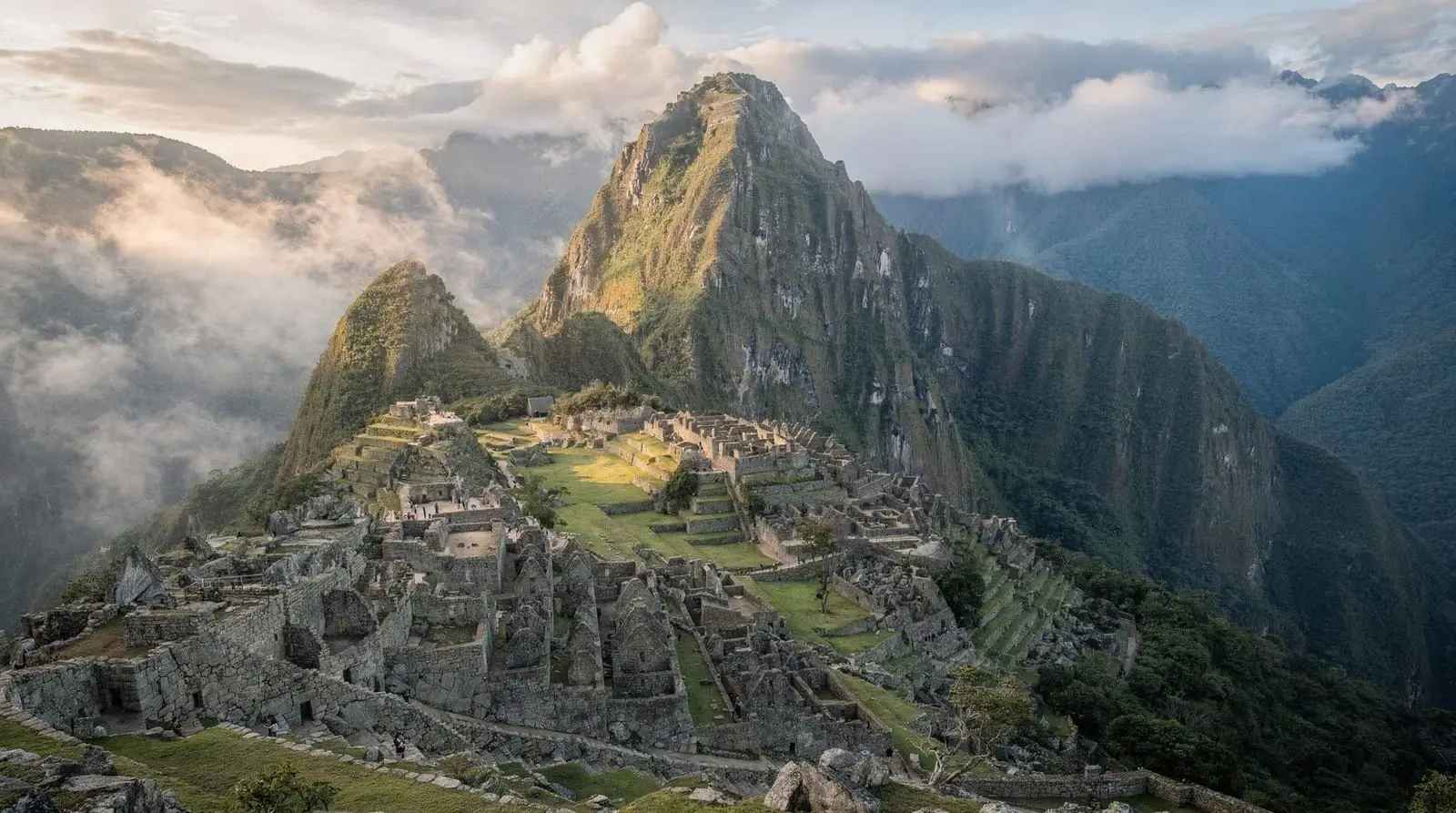
Machu Picchu draws its crowds from a single image: the green terraces falling away beneath Huayna Picchu under a clear blue sky. Whether you get that image, or a wall of grey mist, depends largely on when you come. The citadel sits at 2,430 m on the eastern slope of the Andes, where the high mountains meet the edge of the Amazon basin, and that position gives it two sharply different seasons and a year-round habit of morning fog.
The good news is that the site is open every single day of the year, so there is no wrong time exactly — only a set of trade-offs between clear views, crowds, prices, and which routes are running. This guide lays them out month by month, explains the one closure that catches people out (the February Inca Trail shutdown), and gives concrete advice on which entry slot to book for the best odds of that postcard view. It follows the same dry-and-wet rhythm as Cusco itself, with its own twists.
| Best overall | May, September (dry clarity, thinner crowds) |
| Best value | April, October (shoulder months) |
| Avoid for the Inca Trail | February (trail closed; site still open) |
| Best entry slot | Mid-morning (9–11am) in dry season for burnt-off fog |
| Hedge against fog | Stay overnight in Aguas Calientes for a second-morning try |
The dry season (May–September): clearest views, biggest crowds
For the best chance of clear skies and firm trails, come in the dry season. From May to September, rain is infrequent, the surrounding peaks are visible, and the classic photographs come easily. This is also the only sensible window for the Inca Trail and the high-altitude Salkantay route, which arrive at Machu Picchu on foot.
The price of that reliability is people and pesos. June, July, and August are the absolute peak — the most visitors, the highest prices for trains and hotels in Aguas Calientes, and the fastest sell-outs for Inca Trail permits and the popular Huayna Picchu circuit. If you want a dry-season visit without the worst of the crush, aim for May or September, the quieter, cheaper edges of the season with nearly identical weather.
Even in the dry season, expect mist on arrival. Machu Picchu’s mornings are often foggy; the fog frequently burns off by mid-to-late morning, sometimes lifting to reveal the citadel in a single dramatic sweep. That timing shapes which entry slot you should book (see below).
The wet season (November–March): green, empty, and cloudier
The wet season turns Machu Picchu into a different, greener, quieter place. Rain is frequent and peaks in January and February, low cloud is common, and the famous clear view is far from guaranteed. But the terraces are at their most vivid, the crowds shrink dramatically, and prices fall across trains and accommodation.
The crucial planning fact: the classic 4-day Inca Trail closes for the entire month of February for maintenance and erosion control. Machu Picchu, the train, and alternative treks like Salkantay stay open. The other wet-season risk is the rail line itself — heavy rain occasionally triggers landslides that disrupt or suspend train service, so build a buffer day into a wet-season trip.
If you can accept that the view is a gamble and you value solitude and savings, the wet season — especially November, December, and March, on either side of the rainiest weeks — is a genuinely rewarding and underrated time to come.
The shoulder months: April, May, September, October
As with Cusco, the smartest dates for many travellers sit on the edges of the dry season. April brings lush, post-rain landscapes with drying trails and light crowds. May opens the reliable dry weather before peak season fills up. September offers peak-quality conditions with thinning crowds. October stays mostly dry with lower prices before the rains return. All four give you most of the dry season’s clarity with a fraction of the June-to-August crush and cost. These are the windows I would recommend to a flexible traveller above all others.
Time of day matters as much as time of year
When you arrive within a day can matter as much as which month you choose. Machu Picchu uses timed entry slots, and the experience varies sharply across them:
- First slot (around 6:00 am): the quietest entry and a chance to watch the fog shift, though the view may still be misted. Atmospheric and uncrowded.
- Mid-morning (around 9:00–11:00 am): the dry-season sweet spot, when morning fog has often burned off but the heaviest day-tripper and Inca Trail crowds are thinning. Best odds of the clear postcard shot.
- Late afternoon: quieter again as the day-trippers leave, with soft light, though weather is less predictable.
If you want to climb Huayna Picchu or Machu Picchu Mountain, those are separate timed circuits that sell out earliest — book the specific ticket well in advance. The full ticketing and circuit system is covered in our Machu Picchu complete guide.
How to hedge against a fogged-out visit
The single best insurance against bad luck with the weather is to stay overnight in Aguas Calientes rather than day-tripping from Cusco. An overnight gives you flexibility — a second morning if the first is socked in — and a far less rushed visit. For how the logistics work, see how to get to Machu Picchu.
If you are coming up from Cusco by rail, the Machu Picchu with tourist train and entrance ticket from Cusco bundles the train, entry, and timing into one package, which removes the risk of mismatching your train and your timed slot. For a guided visit that adds context to the ruins themselves, the Machu Picchu entry and guided experience pairs the ticket with an on-site guide.
How the seasons affect the journey, not just the site
It is easy to focus on the weather at the citadel and forget that the weather shapes the journey there too — and in the wet season, the journey is the bigger variable.
Most visitors reach Machu Picchu by train to Aguas Calientes, the town in the valley below, often after a road transfer from Cusco or the Sacred Valley to the rail head at Ollantaytambo. In the dry season this runs like clockwork. In the wet season — particularly January and February — heavy rain occasionally triggers landslides on the rail corridor along the Urubamba river, which can delay or suspend trains for hours or days. It is uncommon, but it happens, and it is the single best reason to build a buffer day into a wet-season trip rather than scheduling your visit for the morning before an international flight.
The trekking routes are even more season-bound. The classic Inca Trail closes for all of February, and the wet-season trails on it and on Salkantay turn muddy, slick, and cloud-bound. If your plan is to arrive at Machu Picchu on foot, you are effectively committed to the dry season. How all the approach options compare is covered in how to get to Machu Picchu.
The crowd calendar in detail
Crowds at Machu Picchu follow the same curve as the rest of the Cusco region, but the site’s daily entry caps make the peaks feel sharper.
The busiest stretch is June to August, peaking around Inti Raymi in late June and Peru’s Fiestas Patrias in late July, when domestic tourism layers on top of the international high season. In these months the popular mid-morning slots and the Huayna Picchu and Machu Picchu Mountain circuits sell out months ahead, and the citadel’s terraces can feel genuinely congested at peak hours.
April, May, September, and October see noticeably lighter footfall while keeping good weather — the reason they are the recommended sweet spot. The wet-season months of November, December, and March are the quietest of all, with the green, near-empty terraces that wet-season visitors come for. The Christmas–New Year holiday is the one wet-season exception, when Peruvian travellers fill the trains and town.
Within any given day, the crowd shifts too: the early 6:00 am entries and the late-afternoon slots are calmer than the mid-morning convergence of day-trippers, train arrivals, and Inca Trail finishers. The full ticketing and circuit mechanics are in our Machu Picchu complete guide.
Combining Machu Picchu with the rest of your trip
Because Machu Picchu and Cusco share a season, your choice of month usually settles the timing for the whole southern Peru loop — Cusco for acclimatisation, the Sacred Valley, Machu Picchu, and any add-ons like Rainbow Mountain or Lake Titicaca. The dry season suits the full trekking-and-hiking version of that loop; the wet season suits a gentler, train-based, budget-conscious version. For how the pieces fit across a fortnight, see our Peru 2-week itinerary guide, and for the national picture across coast, mountains, and jungle, best time to visit Peru.
What to pack for the season
Machu Picchu sits lower and warmer than Cusco, so days are mild — but the season dictates the rest. Dry-season visitors want sun protection (the high-altitude UV is strong even under cloud), layers for cool mornings, and sturdy footwear for the uneven stone paths. Wet-season visitors need all of that plus a packable rain jacket and quick-dry layers, since downpours arrive fast. A wide-brimmed hat and reusable water bottle serve in every season. Note that large backpacks, tripods, and drones are not permitted inside the site.
Putting it together
If clear views and ideal trekking top your list and you can book early and pay peak prices, come in the dry season, ideally at the May or September shoulders. If budget, green scenery, and small crowds matter more — and you can accept some grey mornings and skip the February Inca Trail — the wet season rewards you. Whichever you choose, time your entry slot for mid-morning in the dry months, build a buffer day in the wet, and consider an overnight in Aguas Calientes to give the weather a second chance. For the wider trip, pair this with the best time to visit Cusco, best time to visit Peru, and the Machu Picchu destination page.
Sunrise, fog, and the photographer’s calculation
A specific question worth its own answer: when do you get the clearest photographs? The honest answer is that fog is a near-constant at Machu Picchu, present in some form most mornings of the year, and it is part of the place rather than a flaw to be engineered away.
In the dry season, the typical pattern is thick early mist that thins and lifts through the morning, often clearing fully by 9 or 10 am. That makes a mid-morning entry the photographer’s percentage play: late enough that the fog has usually burned off, early enough to beat the worst midday crowds. The very early 6 am entry rewards a different kind of shot — the citadel emerging from shifting cloud, atmospheric rather than crisp — and the gamble that it may stay socked in.
In the wet season, the fog is heavier and less predictable; it may lift, return, or never fully clear, and rain can roll in at any hour. The compensation is that on the mornings it does clear, you get vivid green terraces with almost nobody in the frame.
The single best way to improve your odds is time, not technique: stay overnight in Aguas Calientes so you can try a second morning if the first disappoints. Day-trippers from Cusco get one roll of the dice; an overnight gets two.
Quick season summary
| Season | Months | Views | Crowds/prices | Trekking |
|---|---|---|---|---|
| Dry | May–Sep | Clearest, firm trails | Peak Jun–Aug | Only window for Inca Trail/Salkantay on foot |
| Shoulder | Apr, May, Sep, Oct | Most of dry-season clarity | Lighter, cheaper | Good, some rain risk |
| Wet | Nov–Mar | Cloudier, gamble | Quietest, cheapest | Inca Trail closed all February |
- Dry season (May–Sep): clearest views, firm trails, peak crowds and prices (worst Jun–Aug). The only window for foot approaches.
- Shoulder (Apr, May, Sep, Oct): most of the dry-season clarity, lighter crowds, lower prices — the recommended sweet spot.
- Wet season (Nov–Mar): green, quiet, cheap; cloudier views, possible rail disruption, Inca Trail closed all February.
Whatever month you land on, time your entry for mid-morning in the dry season, build a buffer day in the wet, and give yourself a second chance with an overnight. Pair this with the Machu Picchu complete guide for tickets and circuits, how to get to Machu Picchu for the journey, and the Machu Picchu destination page for the site itself.
Choosing your ticket and circuit around the season
The season also affects which circuit makes sense. In the dry season, the Huayna Picchu ticket and Machu Picchu Mountain circuits sell out fastest, so decide early which one you want and book months ahead. If you are torn between the classic trek and the train, the train vs trek comparison is season-dependent too — the trek options are dry-season-only, while the train runs year-round. For families, Machu Picchu with kids has specific notes on which season and which entry slot work best with children in tow.
Budget travel and the shoulder-season sweet spot
Travellers building a tight budget around Machu Picchu should pay particular attention to the shoulder months. Train fares and Aguas Calientes hotel rates follow the same demand curve as everything else — cheapest in the wet season, moderate in the shoulders, and priced at a premium from June through August. Booking a shoulder-month date (April, May, September, or October) rather than the peak typically saves a meaningful percentage on both train tickets and accommodation, while sacrificing only a modest amount of weather reliability.
For the budget hidroelectrica route, which skips the train for a cheaper road-and-walk approach, the wet season is riskier because of the same rain-driven access disruptions described above, so budget travellers doing that route specifically should still lean toward the dry season or shoulder months despite the cost incentive to travel in the rains.
Second visits and repeat travellers
For travellers who have already seen Machu Picchu once and are coming back — whether to try Huayna Picchu after skipping it the first time, or simply to experience the site in a different season — the wet season offers something genuinely different rather than a lesser version of the dry-season experience. A green, cloud-wreathed Machu Picchu with a fraction of the crowds is, for many repeat visitors, more atmospheric than the postcard-clear version, even if it is less reliably photogenic. If your first visit was in the dry-season crush, a wet-season return trip is a legitimately different way to experience the same site.
Ticket types and how season affects availability
Machu Picchu sells several distinct ticket types — general entry, entry plus Huayna Picchu, and entry plus Machu Picchu Mountain — and season changes how much lead time each realistically needs. The ticket types compared guide explains the differences in full, but the seasonal rule of thumb is straightforward: for any dry-season date, especially June through August, book the specific ticket you want at least two to three months ahead, and earlier still for Huayna Picchu.
For a wet-season date, even the popular add-on circuits usually have availability just weeks out, though it is still worth booking rather than assuming a walk-up will work, since availability can vary unpredictably around holidays.
Frequently asked questions about the best time to visit Machu Picchu
Frequently asked questions about Best time to visit Machu Picchu
What is the rainy season at Machu Picchu?
Is Machu Picchu open all year?
When is Machu Picchu least crowded?
Will fog ruin my Machu Picchu visit?
Which Machu Picchu entry slot should I book?
Is it worth visiting Machu Picchu in the rainy season?
Top experiences
Bookable activities with verified prices and instant confirmation on GetYourGuide.
