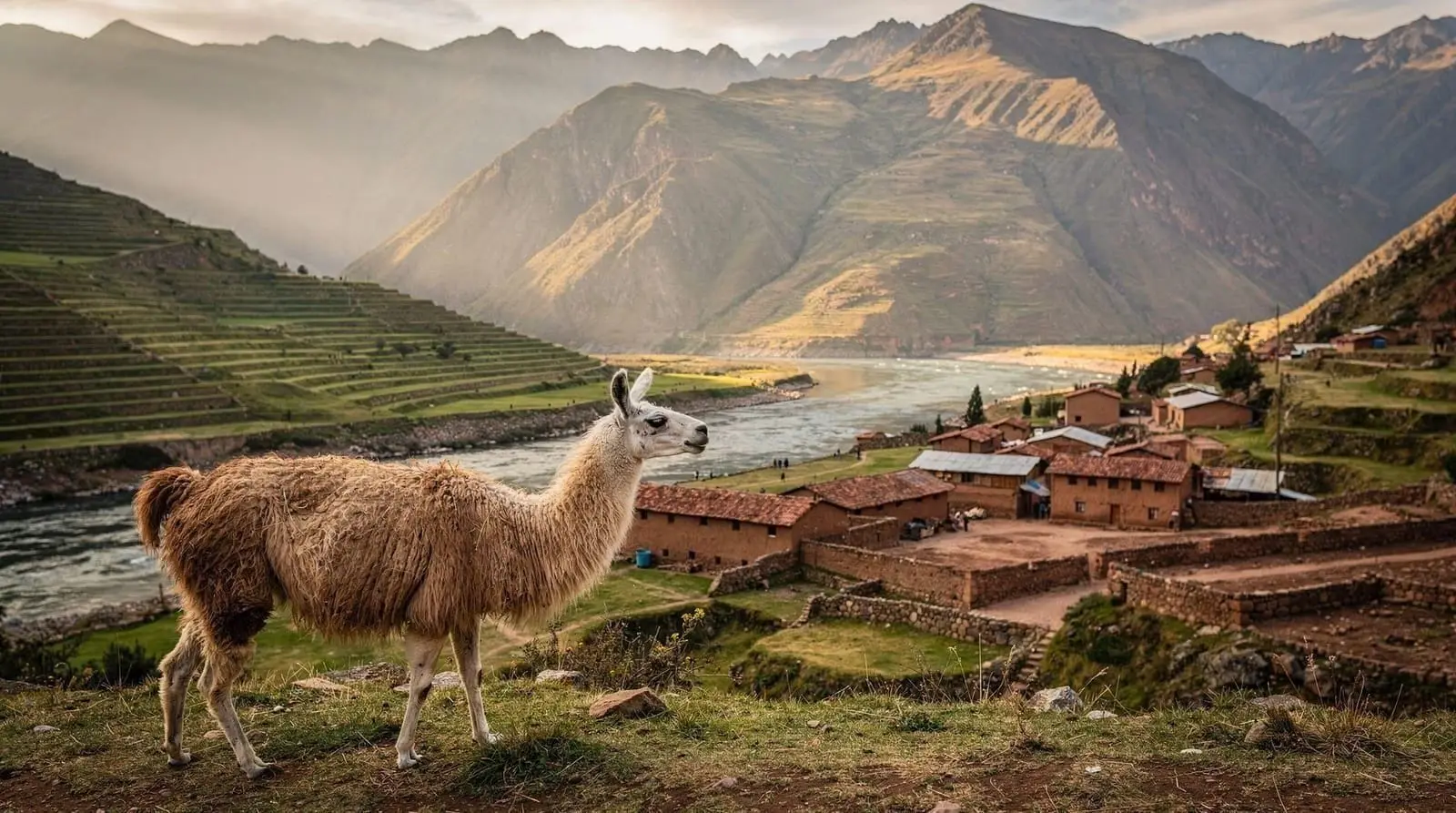
Two weeks in Peru: an honest trip report
I had two weeks, a moderate budget, and the standard list of things you are supposed to do in Peru. Fourteen days later I had done most of them, made a couple of mistakes I would happily warn you off, and come home with a much clearer sense of how to spend that time well. This is the unvarnished version: where the days went, what it cost, and what I would change if I had a do-over.
| Route | Lima → Cusco & Sacred Valley → Machu Picchu → Lake Titicaca |
| Cost | Around USD 1,400-1,600, mid-range, excl. international flight |
| Time needed | 14 days, as booked and as recommended |
| Best time | May-September, dry season |
| Domestic flights | 3, plus one train (Ollantaytambo-Aguas Calientes) |
The route, day by day
Here’s the shape of the fourteen days, roughly, for anyone planning the same route:
| Days | Where | Focus |
|---|---|---|
| 1-2 | Lima | Acclimatise mentally, eat well, Miraflores/Barranco |
| 3-4 | Cusco | Slow days, altitude adjustment, city sights |
| 5-6 | Sacred Valley | Ollantaytambo base, Pisac, Maras/Moray |
| 7-8 | Machu Picchu | Train from Ollantaytambo, early entry |
| 9-11 | Lake Titicaca | Puno base, Uros islands, Amantaní homestay |
| 12-14 | Buffer / travel | Flights home, slack for delays |
The route, in brief
I flew into Lima, gave the capital two days, flew to Cusco, spent the bulk of the trip in the Cusco region and the Sacred Valley, did Machu Picchu, then went south to Lake Titicaca before flying home out of Juliaca. Roughly: two days Lima, six days Cusco and the Sacred Valley including Machu Picchu, three days Titicaca, with the remainder lost to travel and one day I will tell you about that I should have spent differently.
If you take one thing from this report, take the shape of it: do not try to add the Amazon, the north coast, and Huaraz onto a fourteen-day trip. I see people attempt it and they spend the whole holiday on buses and planes. Two weeks is the southern highlights done properly, or it is a frantic blur. I chose properly and I am glad.
Lima: do not skip it, do not over-stay it
Lima gets dismissed as a place to fly through. That is a mistake, but so is giving it four days. Two was right. I based myself in Miraflores, walked the clifftop Malecón above the Pacific, ate my first real ceviche at a no-frills cevichería where a generous plate ran S/35 (about USD 9), and spent an afternoon in neighbouring Barranco among the murals and the old mansions.
The food is the reason to stop in Lima. This is one of the great eating cities and even a modest budget eats extraordinarily well. I splurged once on a tasting menu that cost more than two nights of my accommodation and have no regrets. The rest of the time I ate menús del día for S/15–20 and was perfectly happy.
The mistake I nearly made was arriving in Lima and flying straight to Cusco the next morning. Lima is at sea level. Cusco is at 3,400 metres. Those Lima days are not wasted if you treat them as the start of your trip rather than a delay before it. The Lima in 2 days guide has the fuller version of how to spend that time.
Cusco and the altitude reckoning
Cusco hit me harder than I expected. I had read about altitude and breezily assumed I would be fine. The first night I had a dull headache, slept badly, and felt vaguely seasick walking up the gentle hill to my guesthouse in San Blas. This is normal. I drank the coca tea, took it slow, and by the second day I was acclimatising.
Here is the mistake worth flagging loudly: I had originally planned to do a high-altitude day trip (Rainbow Mountain, which tops out over 5,000 metres) on my second day in Cusco. A guesthouse owner gently talked me out of it, pointing out that throwing myself at 5,000 metres while still struggling at 3,400 was asking for a miserable day or worse. I rescheduled it for later in the trip when I was acclimatised, and it was the right call. Plan your hardest, highest activities for the back half of your time at altitude, not the front. The Cusco acclimatisation plan lays out a sensible sequence if you’re building your own itinerary.
Cusco itself rewarded slow days. The Plaza de Armas, the Qorikancha temple with its Inca stonework wrapped inside a colonial church, the San Pedro market, the steep cobbled lanes of San Blas. I gave it two relaxed days bookending the Sacred Valley and that felt generous and right.
The Sacred Valley, the part people rush
Most fourteen-day itineraries treat the Sacred Valley as a corridor to Machu Picchu. I gave it proper time and it became a quiet highlight. The valley sits lower than Cusco, around 2,800 metres, which also makes it a smart place to sleep while you acclimatise.
I stayed two nights in Ollantaytambo, a living Inca town where the street plan is original and the terraced fortress rises straight out of the village. From there I did Pisac’s terraces and market, the salt pans and circular terraces at Maras and Moray, and a great deal of unhurried wandering. The Boleto Turístico, the tourist ticket that bundles many of these sites, cost S/130 and paid for itself quickly - the Boleto Turístico explained guide covers exactly what it includes.
Ollantaytambo is also where the train to Aguas Calientes leaves, which makes it the logical launchpad for Machu Picchu rather than backtracking to Cusco.
Machu Picchu, managing the machine
Machu Picchu is the most organised tourist operation in Peru and you cannot wing it. Tickets are timed, capped, sold by circuit, and they sell out, especially in the May–September dry season. I booked everything well ahead.
I took the train from Ollantaytambo to Aguas Calientes, stayed one night in the town below (it is overpriced and exists only to serve the site, but staying there lets you be on an early bus up), and went through the gate on the first buses. There are several ways to package the logistics; I went with a tour bundling the train and entrance ticket to take the booking stress off my plate, which for the train segment is honestly worth it given how fiddly the separate reservations are.
The site lived up to itself, even with the crowds, even with the circuit system herding everyone along set routes. Going early meant an hour before the tour groups thickened, the mist still lifting off the ridges, the classic view emerging slowly. It is touristic to the bone and it is still extraordinary. Both things are true.
Lake Titicaca, the calm ending
After the intensity of the Machu Picchu logistics, three days at Lake Titicaca were the right way to end. I based in Puno, did the floating Uros islands (touristy but genuinely strange and worth a morning), and an overnight homestay on Amantaní island that was the human highlight of the trip: a family who fed me trout and quinoa soup, a football match against the locals at 3,800 metres that I lost badly and breathlessly, and a night sky over the lake with no light pollution at all. I booked the homestay portion in advance rather than trying to arrange it on arrival:
Lake Titicaca 2-day tour with Amantaní homestayTiticaca is high, around 3,800 metres, and cold at night in a way the daytime sun disguises. Pack layers. The homestays are basic and the warmth of them has nothing to do with the temperature.
What it cost, roughly
For two weeks, travelling mid-range (private rooms in guesthouses, a mix of buses and three domestic flights, eating mostly local with a couple of splurges, all the major site tickets and a few tours), I spent in the region of USD 1,400–1,600 excluding the international flight. The big line items were the domestic flights, the Machu Picchu train and tickets, and the one extravagant Lima dinner. You could do it for considerably less on a backpacker budget, or a great deal more if you fly everywhere and stay in the boutique places.
What I would change
Three things. First, I would have booked Machu Picchu even earlier; I got my preferred slot only because I planned months out, and I watched others scramble. Second, I would not have planned anything strenuous for my first forty-eight hours at altitude, and I am grateful I was talked out of it. Third, I would have resisted the temptation, which I felt constantly, to cram in a fourth region. Two weeks is enough for Lima, Cusco, the Sacred Valley, Machu Picchu, and Titicaca done at a human pace. It is not enough to also bolt on the Amazon or the north. Save those for a return trip. Peru is very good at making you want to come back.
If you are planning your own two weeks, build the route around the altitude rather than the map, book the fixed-ticket items first, and leave yourself the slow days. The unhurried afternoons in Ollantaytambo and the football match on Amantaní are what I remember most, and neither was on my original list.
Who this itinerary actually suits
This route is built for first-time visitors who want the genuine highlights without pretending they can do everything. It suits people comfortable with a moderate pace of movement - a new bed every two to three nights - but who also want at least a couple of stretches (the Sacred Valley, Titicaca) where they’re not packing a bag every morning.
If you want a slower trip, drop Titicaca and give those days to the Sacred Valley instead; if you want to add the Amazon or the north coast, you need three weeks, not two - the 3-week Peru itinerary guide shows how that extra week gets spent. For a ready-made version of this exact route with day-by-day logistics, the 2-week Peru grand tour itinerary is the structured companion to this trip report.