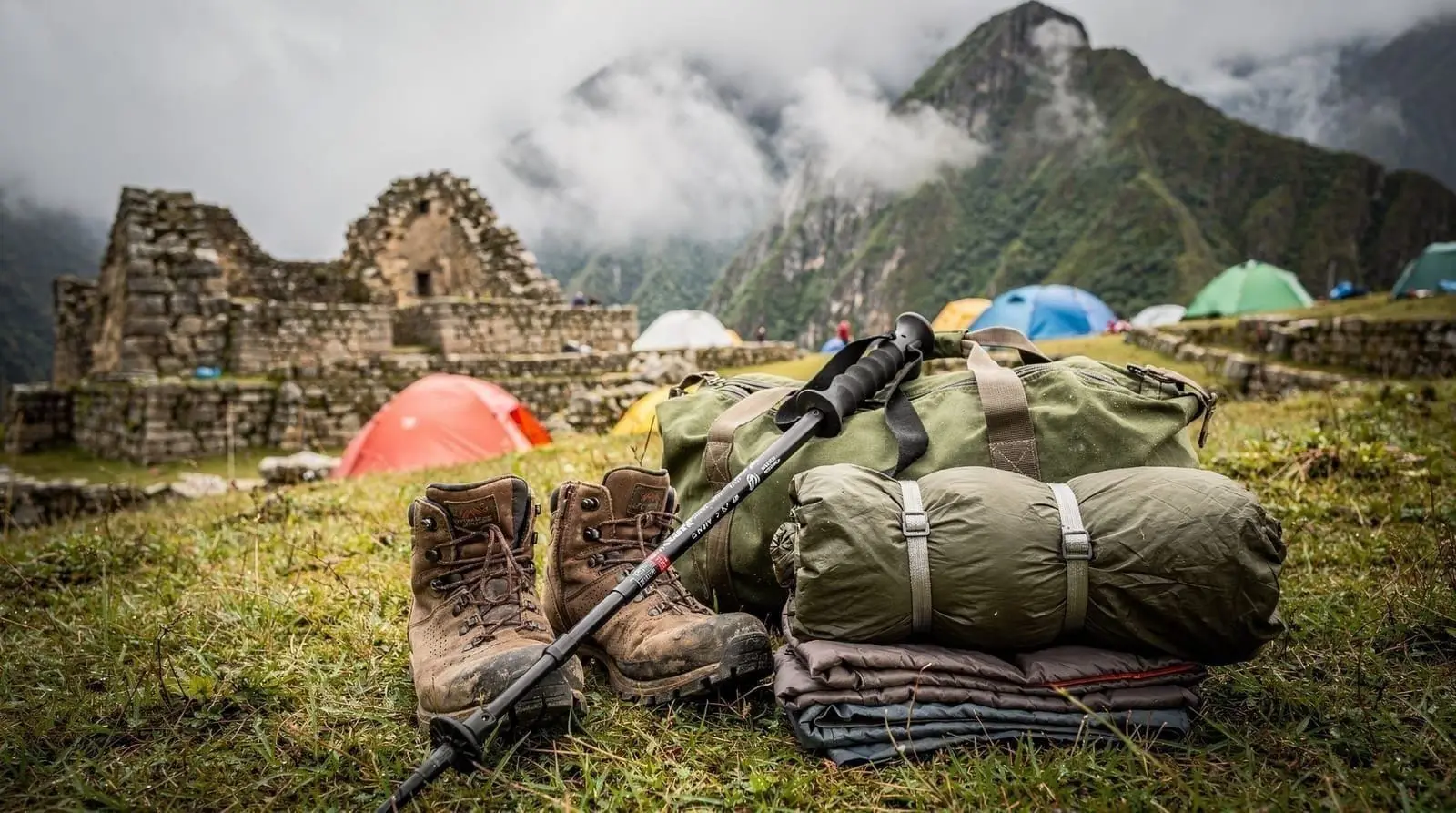
What to pack for the Inca Trail: the complete kit list
What do I need to pack for the Inca Trail?
Pack a layering system for everything from sub-zero passes to humid cloud forest: thermal base layers, a warm mid-layer, a waterproof shell, broken-in boots, and a sleeping bag rated to around minus 10°C. Keep your porter duffel under the operator's weight limit (usually 6 to 7 kg including bag and mat), carry essentials in a daypack, and bring your own water treatment and headtorch.
Packing for four climates in four days
The Inca Trail is not one environment but several stacked into a single short trek. Over four days and roughly 43 km you climb from warm river valley to the bitter, wind-scoured 4,215 m of Dead Woman’s Pass, then drop through dripping cloud forest toward Machu Picchu. You can be sunburnt and soaked in the same afternoon. Pack for an average and you will be wrong at both ends; pack for extremes with a layering system and you stay comfortable across all of it.
| Duffel limit | Around 6–7kg, usually incl. sleeping bag |
| Daypack | 20–30 litres, carried by you every day |
| Sleeping bag | Rated to around minus 10°C comfort |
| Boots | Waterproof, ankle support, thoroughly broken in |
| Trekking poles | Rubber tips only (metal tips banned) |
The second constraint shaping every decision is weight. Porters carry the camp, the food, and a strict, limited share of your personal kit — typically a duffel capped around 6 to 7 kg that must usually include your sleeping bag. Everything else rides on your own back in a daypack all day, every day, at altitude. The discipline of this list is therefore not just “what is useful” but “what is worth its grams.” This guide separates the porter duffel from the daypack, names what the operator supplies, and is blunt about what people carry across the Andes and never open.
Before anything, read the Inca Trail complete guide for the route and the permits guide for booking, since you cannot walk it without securing a permit months ahead. This list assumes that is sorted.
Understand who carries what
Three categories govern your packing:
The porter duffel (the limit). Your operator gives you a duffel and a weight cap — commonly 6 to 7 kg total, frequently including your sleeping bag and sometimes your sleeping mat. This bag travels ahead to camp; you do not see it during the day. Pack your night kit, spare clothes, and washbag here.
The daypack (what you carry). Everything you might need while walking: water, rain shell, a warm layer, snacks, sun protection, camera, documents, and your own personal first-aid. Aim to keep this manageable — 20 to 30 litres is plenty, and lighter is kinder at 4,000 m.
What the operator supplies. Tents, sleeping mats (often), all meals, boiled drinking water at stops, and usually a duffel and sometimes a rentable sleeping bag and poles. Confirm exactly what is included before you pack so you do not duplicate heavy items. The single most common over-packing error is bringing gear the crew already provides.
The clothing system
Layers, again, but with a wider temperature range than Cusco itself.
Base layers: Two thermal tops and a pair of thermal leggings (merino or synthetic). One set is worn, one stays clean and dry for sleeping — keeping a dedicated dry sleep set is the trick to surviving cold nights comfortably.
Mid layers: A fleece and a packable down or synthetic jacket. The down jacket is non-negotiable for the freezing camps and the dawn start on summit day.
Outer layer: A genuinely waterproof, breathable jacket plus waterproof over-trousers. Cloud-forest rain on days three and four is heavy and persistent; a “water-resistant” jacket is not enough.
Trekking clothes: Two or three quick-dry hiking shirts (mix short and long sleeve), one or two pairs of quick-dry hiking trousers (convertibles are popular), and plenty of hiking socks — bring more socks than you think, as dry feet prevent blisters. A sun hat for the day and a warm beanie and gloves for the cold.
Camp and sleep: A clean dry base set for sleeping, plus camp sandals or light shoes to free your feet from boots in the evening.
Footwear, sleep, and the heavy essentials
Boots: Waterproof hiking boots with ankle support and aggressive grip, thoroughly broken in before you fly. The stone staircases — relentless up on day two, relentless down on day three — are where new boots cripple people. This is the one item you must never compromise on.
Sleeping bag: Rated to around minus 10°C comfort. Carry your own or rent your operator’s; given the weight cap and infrequent future use, renting is a defensible choice for most travellers.
Sleeping mat: Usually supplied — check, and only bring your own if it is not, or if you want extra comfort within the weight limit.
Trekking poles: Strongly recommended for the descents, but they must have rubber tips, which are mandatory to protect the original stonework; metal tips can be confiscated. Buy or rent rubber-tipped poles cheaply in Cusco.
Headtorch: Essential. The pre-dawn start on the final morning to reach the Sun Gate, and any after-dark camp movement, both need a hands-free light. Bring spare batteries.
Sun, water, health, and the small stuff
The altitude and the thin air make sun and hydration as important as warmth.
- Sunscreen SPF 50 and SPF lip balm — the UV is intense on exposed passes.
- Sunglasses with real UV protection.
- Water capacity of at least two litres (bottles or a bladder) plus purification tablets or a filter as backup; crews refill with boiled water at stops, and buying bottled water on the trail is discouraged and restricted.
- Personal first-aid: blister plasters (the most-used item on the trek), painkillers, any altitude medication brought from home, rehydration salts, and any personal prescriptions. The altitude sickness guide covers the medical detail.
- Toiletries, light and minimal: biodegradable soap, a quick-dry travel towel, toilet paper and a sealable bag to pack out waste, hand sanitiser, and wet wipes (there are no showers).
- Cash in small soles for tips to the porters, cook, and guide — a customary and meaningful part of crew income — and for the occasional trailside stall.
- Dry bags or zip-lock bags to keep electronics, documents, and your sleep clothes dry inside the duffel and daypack.
- Snacks beyond the generous meals: energy bars, nuts, and electrolyte sachets for the long climbs.
- Documents: original passport (checked at trail control points and at Machu Picchu — and it must match your permit exactly), permit, and printed bookings in a waterproof sleeve.
Day by day: when each item earns its place
It helps to picture where on the trail each piece of kit matters, because that is what justifies carrying it.
Day one (the easy day): A gentle warm-up along the Urubamba from the trailhead, mostly in warm valley air. This is sun-protection day above all — hat, sunscreen, sunglasses, and light, breathable shirts. Your boots get their first proper test, which is exactly why they must already be broken in. Keep the rain shell accessible; valley weather turns fast.
Day two (the hard day): The relentless climb to Dead Woman’s Pass at 4,215 m, the single toughest stretch. This is where acclimatisation, not fitness, decides your day, and where the down jacket and warm hat come out at the cold, windy summit before the long descent to camp. Trekking poles save your knees on the drop. Snacks and electrolytes keep you moving on the climb. Most people who under-pack warmth regret it at the top of this pass.
Day three (the long day): The longest day, crossing two more passes and dropping through increasingly humid cloud forest past hanging ruins. The waterproofs come into their own here — the cloud forest is wet even in the dry season — and the endless stone staircases are brutal on the descent, making rubber-tipped poles and well-cushioned socks invaluable.
Day four (the summit): A pre-dawn start by headtorch to reach the Sun Gate for sunrise over Machu Picchu. Cold and dark at the outset, then warming fast. Your passport is checked at the final control and at the site itself. After the gate, the bulk of your gear has gone ahead with the porters, and you carry only the daypack into the ruins.
Mapping kit to days this way is the quickest sanity check on whether something is worth its weight: if you cannot say which day you would use it, leave it behind.
What to leave behind
The weight cap forces honesty. Leave these out:
- Jeans and cotton-heavy clothing — heavy, useless once wet.
- A full towel, hairdryer, or bulky toiletries — pointless without showers and over the limit.
- Excess gadgets — there is no charging on the trail, so a single power bank beats multiple devices and chargers.
- Anything the operator supplies — re-check the inclusions list before adding tents, mats, or a second sleeping bag.
- Hardback books and luxuries — every gram rides on your back or eats into the porter limit.
Stash your non-trek luggage at your Cusco hotel; nearly all hold bags for trekkers free.
Coordinating with your wider trip
Much of this builds on your general Cusco packing list — the same layering logic, scaled up with technical and overnight gear. Acclimatise properly in Cusco or the lower Sacred Valley before the trek; arriving unacclimatised turns the second-day pass into a genuine ordeal. And remember the trail closes every February for maintenance, so confirm your dates against the Inca Trail guide before locking in flights.
Renting versus buying: what actually makes sense
Not everything on this list needs to be bought new, and getting this decision right saves both money and luggage weight for a trek you may only do once.
Rent in Cusco: sleeping bag (given the weight cap and single use, renting a good-quality bag from your operator is the sensible default), trekking poles (rubber-tipped poles are cheap to rent and you will not need them again immediately after), and sometimes a sleeping mat if your operator does not include one.
Buy or bring from home: hiking boots (never gamble a four-day trek on a rental fit — broken-in boots are non-negotiable), rain gear (fit and reliability matter too much to rent), and your base and mid-layers (personal fit and existing ownership usually make this the cheaper option anyway).
Confirm with your operator before packing either way: tents, sleeping mats, and meals are near-universally included, but the exact duffel weight limit, whether it includes your sleeping bag, and whether trekking poles are available to rent on-site vary by company. A five-minute email before you pack avoids duplicating weight on gear that is already provided.
Weighing your kit before you leave home
A genuinely useful final step: lay out everything destined for the porter duffel and weigh it on a bathroom scale before you fly. Most travellers who exceed the 6–7 kg limit do so because they underestimate how quickly a sleeping bag, spare clothes and a washbag add up. If you are over, the sleeping bag is the first thing to consider renting instead of carrying, since it is usually the single heaviest item and the one most operators offer at a fair rental price. Doing this weigh-in at home, rather than discovering the problem at the trailhead, gives you time to swap items rather than abandon them under pressure.