Trujillo complete guide
Trujillo: Huacas de Moche, Chan Chan & Huanchaco Beach
Is Trujillo worth visiting?
Yes, if you care about archaeology. Trujillo gives you Chan Chan and the Huacas de Moche — two world-class pre-Inca sites — with a fraction of the crowds you find in Cusco. Two days is the sweet spot; one full day works if you start early.
Why most Peru itineraries skip the best archaeology in the country
Walk through any Cusco hostel and you will hear the same loop: Lima, Cusco, Sacred Valley, Machu Picchu, home. It is a fine trip. It is also a trip that bypasses two of the most important pre-Columbian sites in the Americas, both within 9 km of a comfortable colonial city on the north coast. Trujillo holds the Moche Huacas de Moche and the Chimú capital of Chan Chan, and you can usually walk both with a handful of other people rather than a permit-controlled crowd.
This is the honest-planner case for going north: you trade altitude headaches and Inca queues for desert wind, adobe friezes carved before the Inca existed, and reed-boat fishermen who still launch the same craft painted on 2,000-year-old pottery. Trujillo is not a polished tourist machine. That is exactly why it works.
| Where | North coast, ~560 km / 8.5–10hrs bus (or ~55min flight) from Lima |
| Cost | Around S/15 per major site; S/80–180/night hotel |
| Time needed | 1 full day minimum, 2 days recommended |
| Getting there | Overnight cama bus or LATAM/Sky Airline flight to TRU |
| Best time | May–November for coolest, driest weather |
How to get to Trujillo
Trujillo sits about 560 km north of Lima on the Panamericana Norte. Your two realistic options are the overnight bus or a short flight.
By bus. This is the backpacker default and genuinely comfortable in the better seat classes. Cruz del Sur, Oltursa, and Ittsa run semi-cama and full-cama (lie-flat) services from Lima’s terminals, typically departing late evening and arriving in Trujillo at dawn. Expect S/80–150 (roughly USD 21–40) depending on seat class and booking date. Journey time is 8.5–10 hours. Book the cama deck for a flat-ish seat if you actually want to sleep — the semi-cama lower deck is fine but noisier.
By air. LATAM and Sky Airline connect Jorge Chávez International (LIM) with Capitán FAP Carlos Martínez de Pinillos Airport (TRU) in about 55 minutes. Advance fares start around S/150–280 (USD 40–75); last-minute prices climb fast. A taxi from the airport to the historic centre runs S/20–30 (USD 5–8) and takes 15 minutes. The flight makes sense if your trip is short and a wasted night hurts.
From Trujillo, you can continue north to Chiclayo in 3.5–4 hours by bus, or climb inland to Cajamarca on a scenic 6-hour mountain road. See the northern Peru route guide for sensible pacing.
How long to stay
Be honest with yourself about your appetite for ruins.
- One full day: Huacas de Moche in the morning, Chan Chan and Huanchaco in the afternoon. Doable, but rushed, and you skip the colonial centre.
- Two days (recommended): Day one for the two big sites plus Huanchaco; day two for the city museums, a relaxed Huanchaco lunch, and a Marinera-and-Paso-horse show in the evening.
- Three days: Add El Brujo and the Lady of Cao, or use Trujillo as the launch point for the wider north-coast circuit.
The two unmissable sites
Huacas de Moche
About 8 km south of the centre at the foot of Cerro Blanco, the Huaca de la Luna preserves polychrome friezes of Ai Apaec, the fanged Moche deity, in red, white, yellow, and black pigment that has survived over a thousand years of desert. The neighbouring Huaca del Sol — one of the largest adobe structures ever built — is still closed for stabilisation. Entry is roughly S/15 (USD 4) including a guided circuit; allow 2–2.5 hours with the excellent on-site Museo Huacas de Moche. Full detail is in the dedicated Huacas de Moche guide.
Chan Chan
Nine kilometres west toward the coast, Chan Chan is the largest adobe city on earth and the former Chimú capital, holding an estimated 30,000–40,000 people at its 15th-century peak. The restored Tschudi (Nik An) palace is the visitable section, with carved fish, sea otters, and pelican friezes lining ceremonial corridors. UNESCO lists it as World Heritage in Danger because El Niño rains dissolve unbaked adobe — a genuine reason not to keep postponing the trip. Tickets are about S/15. The Chan Chan guide covers timing, the combined ticket, and guides.
Trujillo: Huacas de Moche, Chan Chan & Huanchaco BeachHuanchaco and the caballitos de totora
Five kilometres north of Chan Chan, the fishing village of Huanchaco is where you exhale after the ruins. The draw is not the brown-sand beach (pleasant, not spectacular) but the caballitos de totora — narrow reed boats fishermen still paddle out at dawn, essentially unchanged from the craft on Moche ceramics. Watch the launch from the northern end of the beach in the early morning, eat ceviche at a pier-side cevichería, and you have the most atmospheric lunch on the north coast. Surfers will find a reliable left-hand break and boards to rent for S/30–50 an hour. More in the Huanchaco guide.
Colonial Trujillo
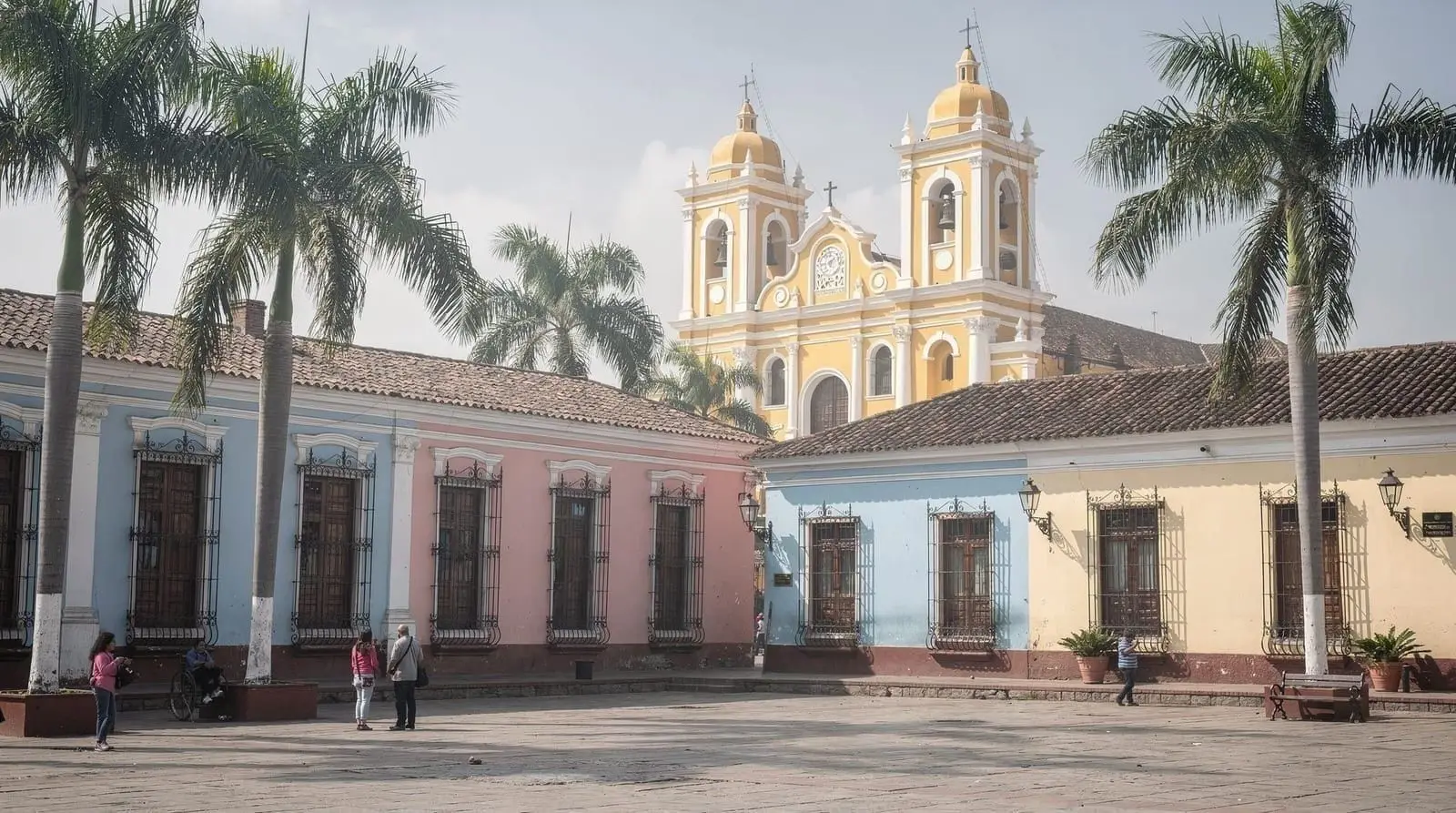
The city centre rewards an unhurried hour or two. The Plaza de Armas is among the largest in Peru, ringed by the Cathedral (begun 1666), the Regional Government building, and painted mansions with carved wooden balconies. The Casa Urquiaga, where Simón Bolívar reportedly stayed in 1820, is open to visitors. A few blocks away, the Museo de Arqueología de la Universidad Nacional de Trujillo holds a tidy collection of Moche ceramics and Chimú metalwork for about S/5 — a good primer before the sites.
Trujillo: City Tour and Archaeological MuseumMarinera and Peruvian Paso horses
Two things Trujillo does that nowhere else in Peru replicates. The Marinera is the national courtship dance — handkerchiefs, precise footwork, barefoot female dancers — and Trujillo hosts the national competition every January in the Plaza de Armas. The Peruvian Paso horse, bred over four centuries from Iberian stock, has a lateral ambling gait (the paso llano) so smooth riders claim you could carry a full glass of water. Haciendas around the city stage 90-minute shows combining both with a pisco sour welcome, usually S/80–120 (USD 21–32) including transport.
Trujillo: Marinera Show with Peruvian Paso HorsesFood and where to eat
North-coast ceviche differs from Lima’s: typically corvina or sole, marinated a touch longer, served with cancha (toasted corn), sweet potato, and choclo. The local speciality is shambar, a hearty bean-and-ham soup traditionally served only on Mondays. Budget S/15–25 for a full lunch at a neighbourhood restaurant; tourist-facing places on the plaza charge S/30–50. In Huanchaco, the cevicherías along the seafront serve the fresher catch.
A few names worth knowing: for ceviche and north-coast seafood, locals point to El Mochica and Mar Picante; for the Monday shambar tradition, the no-frills neighbourhood spots away from the plaza do it best. In Huanchaco, the cluster of cevicherías along the seafront serve the morning’s catch within hours of it landing. Wherever you eat, the menú del día — a set lunch of soup, a main, and a drink — is the budget traveller’s friend at S/12–20.
Tourist-trap watch: the restaurants directly facing the Plaza de Armas trade on location, not quality. Walk two or three blocks off the square for better food at local prices. Anyone offering a “private archaeologist guide” at the huacas entrance is unlicensed — the official guides are included in your ticket. Be wary, too, of street touts selling “discount” combined-site tickets near the plaza; buy tickets at the sites themselves or through a reputable operator.
A suggested two-day plan
This is the itinerary I would actually recommend, balancing the big sites against the colonial city and a bit of breathing room.
Day one — the archaeology. Start early with the Huacas de Moche south of the city while it is cool and the friezes catch the morning light; do the museum first, then the guided huaca circuit. Mid-morning, cross to the western side for Chan Chan and the Tschudi palace. By early afternoon you are in Huanchaco for a long ceviche lunch and a walk on the pier. Back in town by late afternoon. A combined full-day tour collapses all of this into one smooth loop if you would rather not juggle taxis and colectivos.
Day two — city and culture. A slower morning in the colonial centre: the Plaza de Armas, the Casa Urquiaga, and the university archaeology museum. Afternoon free, or a half-day out to El Brujo and the Lady of Cao if Moche history has hooked you. In the evening, a Marinera-and-Paso-horse show at one of the haciendas. This rhythm gives you the headline sites without the rushed, ruin-fatigued feeling of cramming everything into a single day.
Trujillo as a base for the north
Trujillo is the natural launch point for Peru’s north-coast and northern-highlands circuits, which most travellers never reach. North along the coast, Chiclayo (3.5–4 hours) opens up the Lord of Sipán tombs and the Túcume pyramids — the Lambayeque and later Moche counterpoint to Trujillo’s sites. Inland, Cajamarca (about 6 hours by a scenic mountain road) is where the Inca empire effectively ended with the capture of Atahualpa.
Further north still lie the surf town of Máncora and the mangroves near Tumbes. The northern Peru route guide sets out sensible pacing, and north vs south Peru helps you decide whether to commit to this region at all versus the Inca south around Cusco.
Costs at a glance
- Huacas de Moche entry: ~S/15 (USD 4)
- Chan Chan entry: ~S/15 (USD 4)
- Colectivo to Chan Chan or Huanchaco: S/2–3
- Taxi within the centre: S/8–12
- Mid-range hotel: S/80–180 (USD 21–48) per night
- Full-day combined tour: market rate via the operators above
- Local lunch: S/15–25
Where to stay
The historic centre is the most convenient base, putting you within walking distance of the plaza, restaurants, and the colectivo stands for the sites. Mid-range hotels and restored colonial guesthouses run roughly S/80–180 (USD 21–48) per night, with budget dorms from around S/35 a few blocks out. If you would rather wake up to the ocean and surf, base yourself in Huanchaco instead — it has its own strip of guesthouses and hostels and frequent colectivos into the city, at the cost of a 20-minute commute to the colonial sights. Either works; the choice is city culture versus beach mornings.
Getting around
The historic centre is walkable. For Chan Chan and Huanchaco, colectivo minibuses (S/2–3) leave constantly from around the corner of Avenida España and Industrial; a shared taxi runs S/15–20 per destination. The Huacas de Moche are not reached by public transport, so plan a taxi (negotiate a round trip with wait time) or take an organised tour.
Trujillo versus Chiclayo: which north-coast base is right for you
Travellers building a north-coast itinerary often ask whether to base in Trujillo or push straight on to Chiclayo. They are complementary, not competing, but the emphasis differs. Trujillo’s sites — Chan Chan, the Huacas de Moche, Huanchaco — sit close together around one comfortable colonial city, so logistics are simple: one hotel, short taxi hops, a walkable centre for evenings. Chiclayo’s headline draws, the Lord of Sipán tombs and the Túcume pyramids, are more spread out across the Lambayeque region, rewarding a slightly more organised two-day plan with a hired driver or guided tour.
On substance, Trujillo edges it for a single unmissable image — the carved friezes at Huaca de la Luna and the Tschudi palace reliefs at Chan Chan are the more visually striking sites of the two cities. Chiclayo edges it for sheer historical weight: the Sipán royal tomb is one of the richest unlooted burials found in the Americas, described in the Moche and Chimú civilisations guide. Archaeology-minded travellers with time for both should do Trujillo first, then continue north; those with only two or three spare days on the north coast should pick whichever theme — restored royal tombs (Chiclayo) or monumental adobe cities (Trujillo) — appeals more, rather than rushing both.
Honest logistics: is a full north-coast side trip worth the time?
This is the question most Cusco-and-Machu-Picchu itineraries never ask, because Trujillo simply is not on the standard route. The honest answer depends on what you actually want from Peru. If ruins and pre-Inca history are a genuine interest rather than a box to tick, the two to three extra days for Trujillo (and optionally Chiclayo) pay off handsomely: uncrowded, world-class sites at a fraction of Machu Picchu’s ticket queues and price. If your trip is short and archaeology is a secondary interest, the flight time and hotel nights are harder to justify against more time in the Sacred Valley or the Amazon.
A useful rule of thumb: if you have 12 days or fewer in Peru and archaeology is not your primary motivation, skip the north coast and spend the time on the classic Cusco-Sacred Valley-Machu Picchu core. If you have two weeks or more, or you have already done Machu Picchu on a previous trip, Trujillo is one of the best uses of extra days anywhere in the country — genuinely major sites, low cost, and a complete absence of the crowd management that shapes a Cusco visit.
Frequently asked questions about Trujillo complete
How many days do I need in Trujillo?
Is Trujillo safe for tourists?
How do I get from Lima to Trujillo?
Can I see Chan Chan and the Huacas de Moche in one day?
What is the best time of year to visit Trujillo?
Is Trujillo better than Cusco for ruins?
Is Huanchaco worth staying in instead of Trujillo city?
Does Trujillo get cold or rainy?
Top experiences
Bookable activities with verified prices and instant confirmation on GetYourGuide.

