Huanchaco guide
Trujillo: Chan Chan and Huanchaco Beach Tour
Is Huanchaco worth visiting?
Yes, as a relaxed counterpoint to Trujillo's ruins. The reed-boat fishermen, the seafront cevicherías, and a reliable surf break make Huanchaco an easy half-day or an overnight base. The beach itself is pleasant brown sand rather than postcard-perfect — come for the culture, not the swimming.
Where Trujillo goes to breathe
After a morning among the adobe corridors of Chan Chan and the painted friezes of the Huacas de Moche, Huanchaco is the exhale. This small fishing village, about 12 km northwest of Trujillo, is where locals and travellers come for fresh ceviche, a long sweep of brown-sand beach, and the most photographed working tradition on the north coast — the caballitos de totora.
Set expectations honestly. The beach is pleasant but not a tropical postcard; the water is cold all year thanks to the Humboldt Current, and the sand is grey-brown rather than golden. You come to Huanchaco for atmosphere, food, surf, and a living link to a 2,000-year-old fishing culture — not for sunbathing perfection. On those terms, it delivers.
| Where | 12–13 km northwest of Trujillo |
| Getting there | Colectivo 20 min (S/2–3) or taxi 25 min (S/15–20) |
| Cost | Ceviche plate S/20–35; dorm bed from S/35 |
| Best for | Reed-boat fishermen, surf, ceviche — not swimming |
| Best time | Dec–Apr for warmth; any month for boats and surf |
A quick orientation
Huanchaco is small and linear: a single long seafront (the malecón) runs parallel to the beach, lined with restaurants, surf shops, and guesthouses, with the wooden pier roughly at its centre and the totora reed beds at the northern end. The hill with the old church rises behind the southern part of town. You can walk the whole front in twenty minutes, which is part of the appeal — there is no real navigation involved, just a beach to wander, boats to watch, and somewhere to eat. The fishing happens at the northern (right-hand, facing the sea) end; the surf schools and the busiest restaurant stretch sit around the pier.
The caballitos de totora
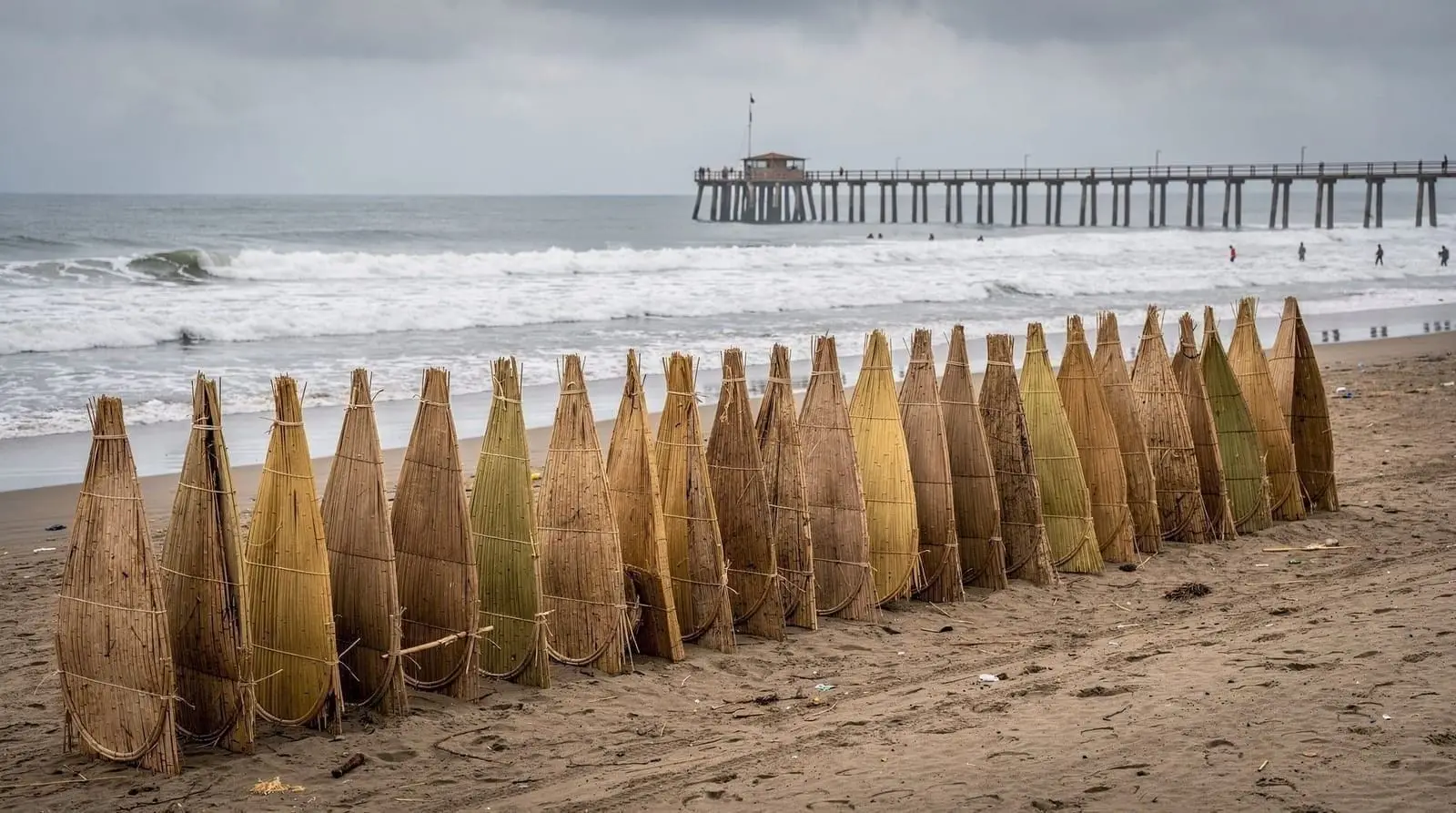
The signature sight is the row of caballitos de totora propped vertically along the beach, drying in the sun like a line of pale spears. These narrow, upturned boats are woven from bundles of totora reed harvested in nearby wetlands, and Huanchaco’s fishermen still paddle them out at dawn to set nets for sea bass and corvina. The design — straddle the stern, paddle with a split-cane oar, surf the boat back through the breakers — is essentially identical to the craft depicted on Moche ceramics two millennia ago. It is one of the oldest continuously used watercraft anywhere on earth.
To see them in action, walk to the northern end of the beach in the early morning as the fishermen return through the surf. Some will offer short paddles or photo experiences for a small fee — agree the price first (typically S/10–20). It is touristy, but the boats are genuinely still working craft, not a staged prop.
Trujillo: Chan Chan and Huanchaco Beach TourSurfing in Huanchaco
Huanchaco is a recognised surf town with a consistent left-hand point break that works for beginners and intermediates. Several small surf schools along the seafront rent boards for S/30–50 an hour and offer lessons; the gentler inside section is forgiving for first-timers. Because of the cold Humboldt water, a wetsuit is standard year-round and is usually included in rentals. Weekends and the December–April high season bring Lima surfers up for the swell, so weekday mornings are calmest in the water.
Eating ceviche on the seafront
This is reason enough to come at lunchtime. The cevicherías lining the malecón and the pier serve north-coast ceviche made from the morning’s catch — typically corvina or sole, marinated in lime with red onion, aji, cancha (toasted corn), sweet potato, and choclo. Pair it with chicha de jora, the lightly fermented maize drink, or a cold Cusqueña. Budget S/20–35 for a generous ceviche plate at a seafront restaurant; the smaller, less polished places set back from the malecón often serve the freshest fish at lower prices.
Tourist-trap watch: the most aggressively touted restaurants on the pier charge a premium for the view. The food is fine but you pay for the location. A block back, the family-run cevicherías frequented by Trujillanos are better value.
The pier and the church
Two landmarks anchor the village. The Muelle de Huanchaco, a long wooden pier, is the classic sunset walk and a good vantage for watching the surf and the returning caballitos. There is usually a small entry fee of a sol or two to walk out onto the pier itself, and from the end you get the cleanest view of the surf lineup and the whole curve of the bay. On the hill above town sits the Santuario de la Virgen del Socorro, one of the oldest churches in Peru (16th century), built on a pre-Hispanic ceremonial site — a five-minute climb rewards you with a wide view over the bay and, on clear evenings, a fine sunset over the Pacific.
The other thing worth seeking out is the totorales — the reed beds at the northern edge of town where fishermen still harvest the totora for their boats. These shallow, walled water pools, called wachaques, are an ancient agricultural-aquaculture technique: groundwater is tapped to grow the reeds in the desert. They are easy to miss but they are the living root of the whole caballito tradition, and a short walk up the beach brings you to them.
A morning at the fish market
If you want to see Huanchaco as it actually works rather than as it presents to visitors, come down to the beach at first light. The fishermen launch the caballitos in the pre-dawn dark and return through the surf an hour or two later with the night’s catch — sea bass, corvina, lenguado (sole), and whatever else the nets held. The fish changes hands right on the sand, and much of it is in the seafront cevicherías’ kitchens within the hour. This is why Huanchaco ceviche tastes the way it does: the supply chain is measured in metres, not days. Watching the boats come in is free, atmospheric, and the single most authentic thing you can do in town.
A living link to the Moche and Chimú
What makes Huanchaco more than a pleasant beach stop is its continuity. The caballitos de totora are not a revival or a reconstruction — they are a craft that has been in continuous use on this coast for some two thousand years, identical in essentials to the boats painted on Moche pottery and woven by the maritime Chimú who built nearby.
When you watch a fisherman straddle the stern and surf his reed boat back through the breakers, you are watching a scene the people who carved the friezes at the Huacas de Moche would have recognised instantly. The Moche and Chimú civilizations guide explains how central the sea was to both cultures; Huanchaco is where that history is still being lived rather than excavated. It is the reason a half-day here belongs on the same itinerary as the ruins, not as filler but as the human coda to them.
Getting there from Trujillo
- Colectivo: Minibuses run constantly between central Trujillo (around Avenida España) and Huanchaco for S/2–3, taking about 20 minutes. They pass the Chan Chan access road en route, so you can chain the two.
- Taxi: S/15–20, about 25 minutes.
- Tour: Most combined Trujillo day tours finish with lunch in Huanchaco, which is the easiest way to fold it into a day of ruins.
Is Huanchaco safe and family-friendly?
Yes on both counts, with the usual caveats. The seafront and main streets are relaxed, walkable, and noticeably calmer than Trujillo’s outer districts, and solo travellers — including solo women — generally report no problems. The standard beach-town sense applies: don’t leave bags unattended on the sand, keep valuables out of sight, and take a taxi rather than walking dark back streets late at night. For families, the gentle inside surf, the boats, and the open malecón make it an easy stop, though the cold water and occasional strong currents mean small children should be supervised closely in the sea. The wider national picture is covered in the Peru travel safety guide.
Staying overnight
Huanchaco makes a relaxed alternative base to the city. The seafront strip has surf hostels, mid-range guesthouses, and a handful of small boutique places, with dorm beds from around S/35 and private rooms from S/80–150 (USD 21–40). The trade-off versus staying in Trujillo is the 20-minute commute to the colonial centre and its museums. If your priority is surf, sunsets, and slow mornings over city culture, Huanchaco wins; if you want to walk to the Plaza de Armas at night, stay in town.
Learning to surf: what a first lesson looks like
For travellers who have never surfed, Huanchaco is one of the more forgiving places in Peru to try. A typical first lesson runs one to two hours: the instructor fits you with a wetsuit (essential in the cold Humboldt water), gives a short briefing on paddling and standing up on the sand, then takes you out to the gentle inside section of the point break where the whitewater waves are small and slow.
Most beginners manage to stand up, however briefly, within the first session, which is a large part of why the town has become a minor surf-tourism hub. Book through one of the seafront schools rather than an informal beach tout, confirm the wetsuit and board are included in the quoted price, and expect to be sore in muscles you did not know you had the next day. Multi-day packages, often three or four lessons over consecutive days, see the fastest genuine progress if you have the time.
Weekday mornings are the best window for lessons, both for calmer water and for having an instructor’s full attention rather than sharing them across a busy weekend group, and the same weekday timing applies if you simply want to rent a board and practise on your own once you have the basics down. Ask about board size and fit before paying — a board matched to your height and weight makes the early standing-up attempts noticeably easier.
When to go
December to April is the warm, lively high season, when the town fills with beachgoers from Lima. Days are sunny, temperatures climb into the high 20s Celsius, and the malecón has a holiday buzz — but rooms cost more and the best cevicherías fill up at weekends. May to November is cooler and quieter, with grey garúa (coastal drizzle/fog) mornings that typically burn off by lunchtime. For the reed boats and surf, any month is fine; for sunbathing and swimming, aim for the summer window.
One date worth knowing: San Pedro, the festival of Saint Peter (patron of fishermen) at the end of June, when a wooden image of the saint is carried out to sea on a flotilla of boats. It is the village’s biggest celebration and a rare chance to see the fishing community’s traditions on full display. If your dates are flexible and you want more than a beach lunch, time your visit around it.
A practical half-day plan
If you are coming over from Trujillo for the afternoon, a simple, satisfying loop works well. Arrive late morning, walk the malecón and the pier, find the totorales and the drying caballitos at the northern end, then settle into a seafront cevichería for a long lunch as the light softens. Surfers can rent a board for an hour before or after eating. Catch a colectivo back to the city before dark. If you have a full day or are staying over, add a dawn visit to watch the boats return and a sunset climb to the hilltop church — bookending the day with the two best free experiences in town.
Honest tips
- Come for the culture, not the swim — the cold Humboldt water keeps most people out of the sea.
- Eat a block back from the pier for fresher fish at local prices.
- Agree any caballito photo or paddle fee first (S/10–20 is normal).
- Dawn and dusk are the magic hours — the boats return at first light, the sunsets are the best on this stretch of coast.
- Weekdays beat weekends for surf, restaurant tables, and quiet beaches outside the December–April peak.
Huanchaco vs staying in Trujillo
Deciding where to sleep matters more here than in most day-trip towns, since both options are genuinely viable bases:
| Huanchaco | Trujillo | |
|---|---|---|
| Vibe | Beach town, surf, slow mornings | Colonial city, museums, nightlife |
| Commute to the other | 20-min colectivo | Same |
| Best for | Surfers, sunset-chasers, quieter pace | Culture-focused travellers, walkable centre at night |
| Food | Ceviche and seafood specialists | Broader restaurant scene |
Neither is wrong — pick Trujillo if you want to walk to the Plaza de Armas after dark, pick Huanchaco if ocean air and slower mornings matter more than city convenience.
Frequently asked questions about Huanchaco
How far is Huanchaco from Trujillo?
What are the caballitos de totora?
Can you surf in Huanchaco?
Is Huanchaco a good base instead of Trujillo?
When is the best time to visit Huanchaco?
Is Huanchaco safe?
Top experiences
Bookable activities with verified prices and instant confirmation on GetYourGuide.

