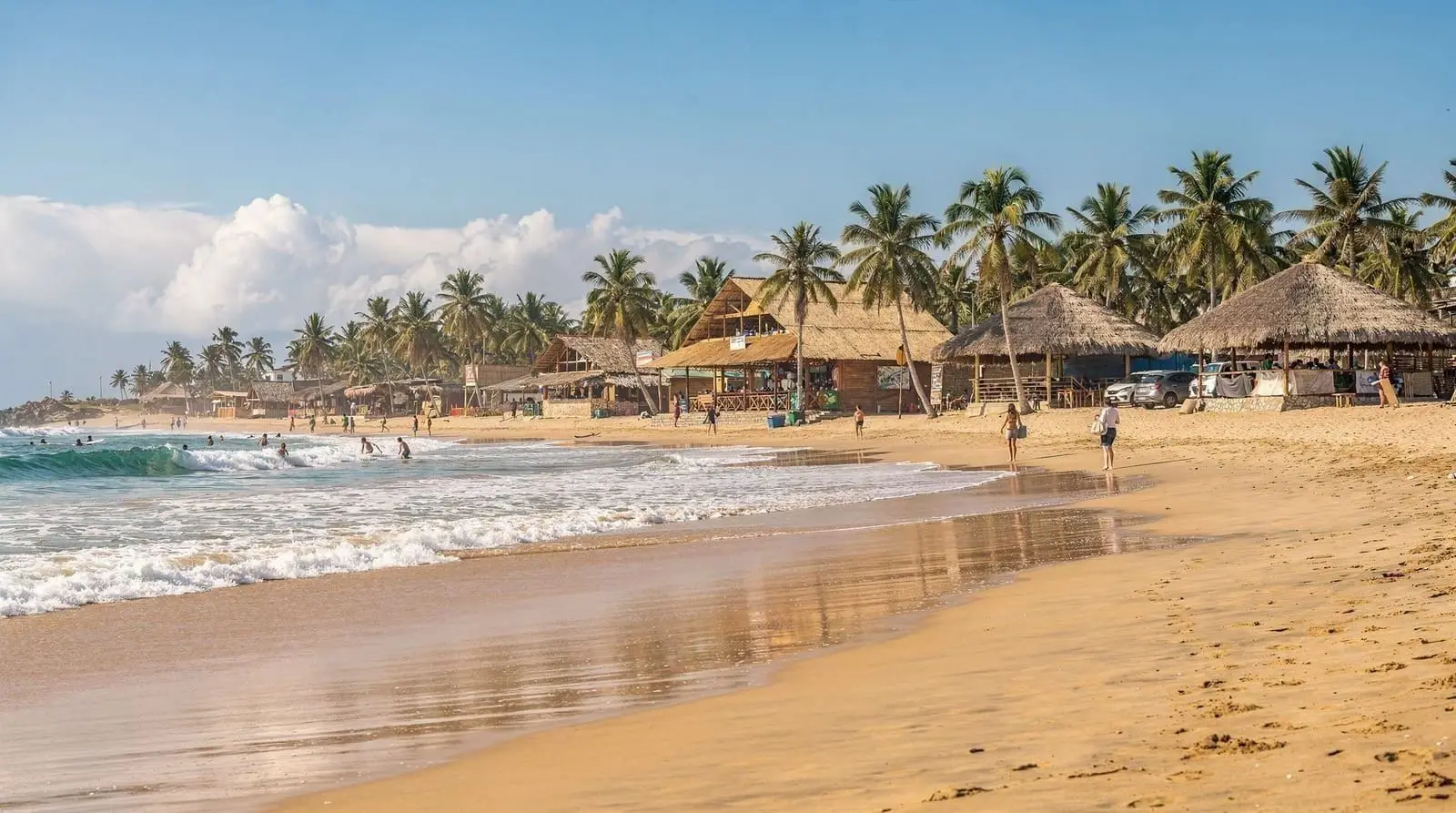
Máncora
Plan your trip to Máncora, Peru's top far-north beach resort. Surfing, whale watching July–October, swimming with turtles, and warm Pacific water year-round.
Máncora: Whale Watching Tour
Quick facts
- Country
- Peru
- Altitude
- 4 m (13 ft) — Pacific coast, near Ecuador border
- Currency
- Peruvian sol (S/) — USD widely used
- Best for
- Beach relaxation, surfing, whale watching, sea turtle encounters
Peru’s most serious beach destination
Peru is not usually sold as a beach country, and for most of its coastline that reputation is fair: Lima’s beaches are chilly and grey from June to November thanks to the Humboldt Current, and the coast from Lima north to Piura is desert all the way to the horizon. Then something changes around 600 km north of the capital. The Humboldt’s grip weakens, water temperatures rise into the mid-to-upper 20s (°C), and the sun goes from pale coastal filter to properly tropical. Máncora sits right in that transition zone, at 4° south of the equator, which makes it the only place in Peru where warm-water swimming is genuinely enjoyable for most of the year.
The town itself is small — a main commercial strip of restaurants, surf shops, hostels, and tour agencies running roughly parallel to a four-kilometre stretch of sandy beach. There is nothing grand or monumental about Máncora. The attraction is the combination of reliable surf, warm water, excellent marine wildlife just offshore, and an easy social atmosphere that has made it a fixture on the South American backpacker circuit since the early 2000s.
In high season (late December to early April, and the long Peruvian holiday weekends) the beach is busy and prices double. In the shoulder and low seasons you get the same water and half the people. For a fuller neighbourhood-by-neighbourhood breakdown, see the Máncora complete guide.
| Where | Far north Pacific coast, Piura region, near the Ecuador border |
| Cost | Around S/25–50 meals, S/30–50/hr board rental, S/80–150 boat tours |
| Time needed | 2 days minimum |
| Getting there | Fly Lima–Piura or Tumbes, then a 1–1.5 hour transfer |
| Best time | July–October for whales; Dec–April for warmest beach weather |
Getting to Máncora — the haul factor
This is the honest part of any Máncora guide: it is far. Very far from most of Peru’s classic destinations. Lima to Máncora is 1,170 km; there is no direct flight. Your options are:
Bus from Lima: Cruz del Sur and Oltursa run direct overnight services to Máncora from Lima’s Javier Prado terminal. Journey time is 16–18 hours. Cama seats cost S/120–200 (USD 32–54). This is survivable but genuinely long — you spend a full overnight and part of the following day on the bus.
Fly to Piura or Tumbes + transfer: The faster route is to fly Lima to Piura (55 minutes, from S/150–250 advance), then take a shared taxi north to Máncora (1.5 hours, S/30–45). Or fly Lima to Tumbes (1h 10min, from S/180–280 advance), then transfer south by shared taxi (1 hour, S/20–30). Both airports have onward connections throughout the day.
From Chiclayo or Trujillo: Chiclayo to Máncora is 3.5–4 hours by bus (S/30–50). Trujillo to Máncora is around 6 hours. Either works as part of a north-coast overland circuit.
The logistics are manageable but Máncora is not a casual add-on to a Cusco-Machu Picchu itinerary. If you are combining both, budget at least a full extra travel day each way and consider flying to Piura or Tumbes rather than bussing from Lima.
The beach and surf scene
Máncora’s main beach is a wide crescent of pale sand with a consistent shore break. The wave is best described as a right-hander that works well at low tide on a small-to-medium south swell — entirely appropriate for intermediate and learning surfers, less interesting for experts looking for performance waves. The consistent warm water (24–28°C year-round) means wetsuits are optional: a rash vest is enough for most of the year, though the June–September window is slightly cooler (around 22–24°C at the water surface) and some surfers prefer a 2mm spring suit.
Surf shops on the main strip rent boards by the hour (S/30–50 / USD 8–14) or by the day (S/80–120). Beginner lessons cost S/80–120 for a 90-minute session including board rental. Multiple operators cluster near the northern end of the beach. The best waves are generally in the morning before onshore winds develop. By midday the beach is swimming-friendly for all ability levels. The Máncora surfing guide breaks down the best breaks and conditions by month in more detail.
The beach road (Avenida Piura) is the social spine of town: the restaurants, bars, and shops occupy two-storey buildings facing the sea, and in the evening this strip becomes a straightforward beach town promenade. Boat trip operators work from the pier at the north end of the beach, departing for whale watching and turtle excursions in the mornings.
Whale watching — July to October only
Between July and October, humpback whales migrate through the waters off the far northern Peruvian coast to breeding grounds near the equator. Máncora is one of the few places in Peru where boat-based whale watching is practical and regularly successful. The sightings are not guaranteed — this is wildlife, not a theme park — but operators report regular encounters during the season, with surface behaviour including breaching, spy-hopping, and tail-lobbing.
Tours depart from the pier in the morning and run 3–4 hours, covering ocean areas 10–20 km offshore where the whales are typically encountered. The boats are small fibreglass speedboats or occasionally small yachts carrying 6–12 passengers. Life jackets are provided; sea conditions are usually calm but can be choppy in the afternoon. Expect to pay S/80–150 (USD 21–40) per person depending on operator and boat size.
Important: whale watching season is strict. Outside July to October, operators will tell you the whales are there but sightings will be rare to non-existent. If a whale watching tour is a priority, time your visit accordingly. The Máncora whale watching guide covers boat operators and realistic sighting odds month by month.
Máncora: Whale Watching TourSwimming with turtles at El Ñuro
Six kilometres south of Máncora, a small bay called El Ñuro has become one of the most reliable places in South America to swim with wild sea turtles in their natural habitat. Green sea turtles congregate near the rocky reef at the bay’s edge, feeding on algae and seagrass in clear, shallow (2–6 m) water. Because the beach is protected from fishing and the turtles have not been harmed, they are habituated to human presence and will swim alongside snorkellers at close range.
The experience is genuinely special and unusually accessible. Shared taxis from Máncora to El Ñuro cost S/10–15 per person (15 minutes), and the beach entrance is free. Snorkel equipment is rented locally for S/10–20. Alternatively, half-day tours from Máncora include transport, guide, and equipment for S/50–80 (USD 14–21) per person.
The turtles are present year-round but are most reliably visible in calm water conditions — morning is generally better than afternoon when any swell picks up. No touching the turtles is the only rule and it is enforced by guides. See swimming with turtles in Máncora for a fuller rundown of etiquette and operator options.
Máncora: Swimming with Turtles in Their Natural HabitatBoat parties and sunset tours
Máncora’s evening scene runs from the beach bars and restaurants on Avenida Piura through to a boat-party tradition that operates mainly in high season (December to March). Sunset boat tours depart around 5pm from the pier, circling along the coastline with drinks, music, and the kind of orange-and-pink Pacific sky that photographs well on any camera. Trips last 2–2.5 hours and cost S/50–80 (USD 14–21) per person including welcome drinks.
The boat parties attract a backpacker-heavy crowd in high season and tend to be quieter affairs in shoulder season, sometimes running only on weekends. For low-key sunset views without a party atmosphere, the beach itself is perfectly pleasant — the headland at the northern end of the strip gives an unobstructed western horizon and is free.
Máncora: Sunset Boat TourWhere to eat in Máncora
Máncora’s restaurant scene punches above its population weight. Ceviche is the anchor dish everywhere, though the northern Peruvian version differs from Lima’s: the leche de tigre marinade is less acidic, the fish is typically corvina (sea bass) or reineta, and it comes with chifles (fried plantain chips) alongside the standard sweet potato and corn. A generous ceviche portion costs S/20–35 (USD 5–9) at a local restaurant, S/40–60 at the higher-end beachfront spots.
Green eggs café and Angela’s are traveller institutions for breakfast. For dinner, the strip between the pier and the central market has the best concentration of seafood restaurants. Budget S/25–50 for a two-course lunch with a drink at a mid-range restaurant; the cheapest local places serve set lunches (menú del día) for S/12–18.
Máncora has a small bar scene concentrated near the pier — Loki Hostel’s bar is typically the liveliest, especially in high season. The town is quiet enough by midnight outside peak season.
Máncora with kids
The warm, shallow water at the south end of the main beach makes Máncora accessible for families with small children. El Ñuro is particularly good with kids old enough to snorkel (roughly 8+). The town is small enough to walk everywhere, which reduces logistics. The main issues are:
- The bus journey from Lima is too long for young children; fly to Piura instead.
- High season crowds (late December to early January) are intense; January or February midweek is quieter.
- Basic medical facilities — serious emergencies require evacuation to Piura. Pack your own first-aid kit.
Practical information
Where to stay: Accommodation options stretch from dormitory hostels (S/30–50 / USD 8–14) to mid-range bungalow hotels (S/120–300 / USD 32–80) and a handful of upmarket beach lodges north of town (S/350+ per night). DCO Suites, Punta Ballenas, and Sunset Hotel cover the mid-range well. Book at least 4–6 weeks ahead for the Christmas–New Year period and Peruvian long weekends.
Best time to visit (summarised):
- Beach and swimming: December–April (warmest, sunniest, most crowded)
- Whale watching: July–October (essential, this is the only season)
- Surfing: Year-round; best swells May–October
- Budget-conscious travel: May–October (shoulder/low season, lower prices, fewer tourists)
Getting around locally: Máncora is walkable end-to-end in 20 minutes. Mototaxis cost S/3–5 per short trip. Shared taxis to El Ñuro, Los Órganos, and Punta Sal run along the main road.
Mobile coverage: Claro and Movistar have 4G coverage in town. It drops off in the water, obviously. Most restaurants and hotels have WiFi.
Money: Bring sufficient soles from Piura, Tumbes, or Lima. The two ATMs in Máncora run out of cash on holiday weekends. USD are widely accepted in the tourist zone but change is given in soles.
Frequently asked questions about Máncora
Is Máncora worth the journey from Lima?
If you have 10 days or more in Peru and want a beach day, yes. If you are on a 7-day Cusco-Machu Picchu trip, probably not — the travel alone takes 2–3 days round-trip. Máncora rewards travellers who build the north coast into their itinerary from the start rather than tacking it on. Combine with Chiclayo and Trujillo for a complete northern Peru circuit.
Is the water warm enough to swim without a wetsuit?
Year-round water temperatures at Máncora range from 22°C (July–September) to 28°C (January–March). Most people find this warm enough without a wetsuit, though a 2mm spring suit adds comfort in the cooler months. This is genuinely warm by Peruvian standards — Lima’s beach water hits 16–18°C in winter, which is cold by any measure.
When exactly is whale watching season?
Humpback whale migration passes through from approximately early July to late October. The peak of encounters is typically August and September. Outside this window, operators will still offer tours but legitimate whale sightings are extremely rare. Do not let an operator convince you whales are present year-round — they are not.
Can I see turtles at El Ñuro year-round?
Green sea turtles are resident at El Ñuro year-round. The best visibility is in calm weather, which is more common in the dry season (May–November). The turtles are not seasonal migrants like the whales — they live and feed in the bay continuously.
How do I combine Máncora with Chiclayo and Trujillo?
The classic north-coast overland route runs Lima → Trujillo (overnight bus or flight) → Chiclayo (3.5h bus) → Máncora (3.5h bus) → Piura or Tumbes airport (flight back to Lima). Five to seven days covers this circuit comfortably. Alternatively, reverse the direction and start with Máncora (fly Lima–Tumbes) and work south. The northern Peru route guide maps out both options.
What is the vibe like — backpacker party town or relaxed beach resort?
Both, depending on season and where you stay. In high season (Christmas–January, Semana Santa) Máncora is definitively party territory with loud hostels, late nights, and a young crowd. In low season (May–October) the same town is genuinely relaxed — good restaurants, quiet evenings, half-empty beaches. The town’s geography is compact enough that you can choose your level of involvement by picking accommodation away from the main hostel strip.
Are there any other beaches near Máncora worth visiting?
Yes. Los Órganos, 10 km south, has a quieter beach and a pier where fishing boats come in — good for watching pelicans and spotting sea lion colonies. Punta Sal, 20 km north, is a more secluded cove with cleaner water and fewer people; several mid-range beach lodges here are popular with Peruvian families. Colectivos and shared taxis connect both from Máncora for S/5–15.
Top experiences
Bookable activities with verified prices and instant confirmation on GetYourGuide.
