Train vs trek to Machu Picchu: which should you choose?
Cusco: Machu Picchu + Tourist Train + Entrance Ticket
Should I take the train or trek to Machu Picchu?
Take the train if you are short on time, travelling with a mixed-fitness group, or want comfort: it is a half-day each way and needs no permit beyond your Machu Picchu ticket. Trek if the journey itself is the point and you have four to five days, decent fitness and the appetite to camp at altitude. The Inca Trail also requires a permit booked months ahead; Salkantay and other treks do not.
Two routes to the same ruins
There is no road to Machu Picchu. The last stretch to the citadel is reached only on foot or by rail, and that single fact forces every visitor into one of two camps. The first takes a train along the Urubamba river to the town of Aguas Calientes and rides a bus up the switchbacks to the gate. The second walks for days over Andean passes and arrives at the ruins as the climax of a trek. Both deliver you to exactly the same place; what differs is the journey, the cost, the fitness required, and the kind of memory you take home.
This guide compares the two honestly, without pretending the trek is morally superior or the train a cop-out. The right answer depends entirely on your time, your body and what you actually want from the trip. We cover cost, duration, difficulty, permits and experience in turn, with real numbers, and point you to the deeper guides for each path.
| Train | Trek | |
|---|---|---|
| Time | Half-day each way, 1-2 days total | 4-5 days, plus acclimatisation |
| Cost | ~$200-400 (transport + lodging) | ~$400-1,000+ (all-inclusive) |
| Fitness needed | Minimal | Significant, high-altitude passes |
| Permit | None beyond MP ticket | Required for Inca Trail only |
| Best for | Families, tight schedules, comfort | Fit travellers wanting the journey |
The fast facts, side by side
The train route is a half-day journey each way. You travel by road from Cusco or the Sacred Valley to a railhead (usually Ollantaytambo), board a tourist train for 1.5 to 3.5 hours to Aguas Calientes, and take a 25-minute shuttle bus up to the entrance. Most people stay one night in Aguas Calientes to visit the ruins early. The only ticket you must secure in advance, beyond the train, is a timed Machu Picchu entrance ticket.
The trek route is a multi-day expedition. The classic Inca Trail is four days and three nights, arriving through the Sun Gate on the final morning. Alternatives like the Salkantay trek run four to five days over higher, wilder terrain and finish with a train ride into Aguas Calientes and the same bus to the gate. You camp or stay in basic lodges, eat trail food, and need to have acclimatised in Cusco first.
For the full mechanics of simply getting there, see how to get to Machu Picchu.
Cost: closer than you’d think
People assume trekking is the cheap option. It usually is not. The two routes cost roughly the same once you add up everything, but they bundle the money differently.
The train route has visible, separable costs. Round-trip tourist rail runs broadly $120-300 depending on the service class and how far ahead you book; the shuttle bus up and down is about $24 round trip; the Machu Picchu entrance ticket is in the region of $45-75; and a night in Aguas Calientes ranges from a basic hostel to a riverside hotel. All in, the transport-and-lodging portion typically lands at $200-400 per person. A breakdown of the rail classes themselves is in trains to Machu Picchu compared.
The trek route has one bundled price. A guided trek folds the guide, porters or mules, camping gear or lodge nights, all meals, the entrance ticket and the return train into a single figure. A reputable Salkantay trek typically runs $400-800; the classic Inca Trail, constrained by permits and porter regulations, generally costs $600-1,000 or more. The cheapest street-stall trek prices should set off alarms — those savings usually come from underpaying porters, skimping on safety, or operating without proper licences, a problem covered in the unlicensed tour agencies guide.
The honest summary: budget travellers on the train can come in cheaper than any trek, but a mid-range train trip and a solid trek end up in the same ballpark. Cost should rarely be the deciding factor.
Time and fitness: the real deciders
This is where the choice actually gets made.
Time. The train turns Machu Picchu into a one- or two-day component of a larger trip. You can leave Cusco in the morning, sleep in Aguas Calientes, see the ruins at opening and be back in Cusco the same night. A trek demands four to five days on the trail, on top of the two or more days of acclimatisation you need in Cusco beforehand — effectively a full week of your itinerary. If you have ten days in Peru and also want Lima, the Sacred Valley and perhaps Lake Titicaca, the maths often makes the decision for you.
Fitness and altitude. The train asks almost nothing of your body beyond walking the site itself, which is why it is the standard choice for families, older travellers and anyone with mobility or health concerns. Trekking is genuinely demanding: consecutive days of six to nine hours’ walking, crossing passes above 4,000 m — the Salkantay pass reaches about 4,600 m — sleeping in cold tents, and carrying at least a daypack. Altitude is the great equaliser here; even fit hikers struggle if they have not acclimatised. If there is any doubt about your group’s capacity for sustained high-altitude effort, the train is the responsible call.
Experience: what each gives you
The train and the trek are not just different logistics; they are different trips.
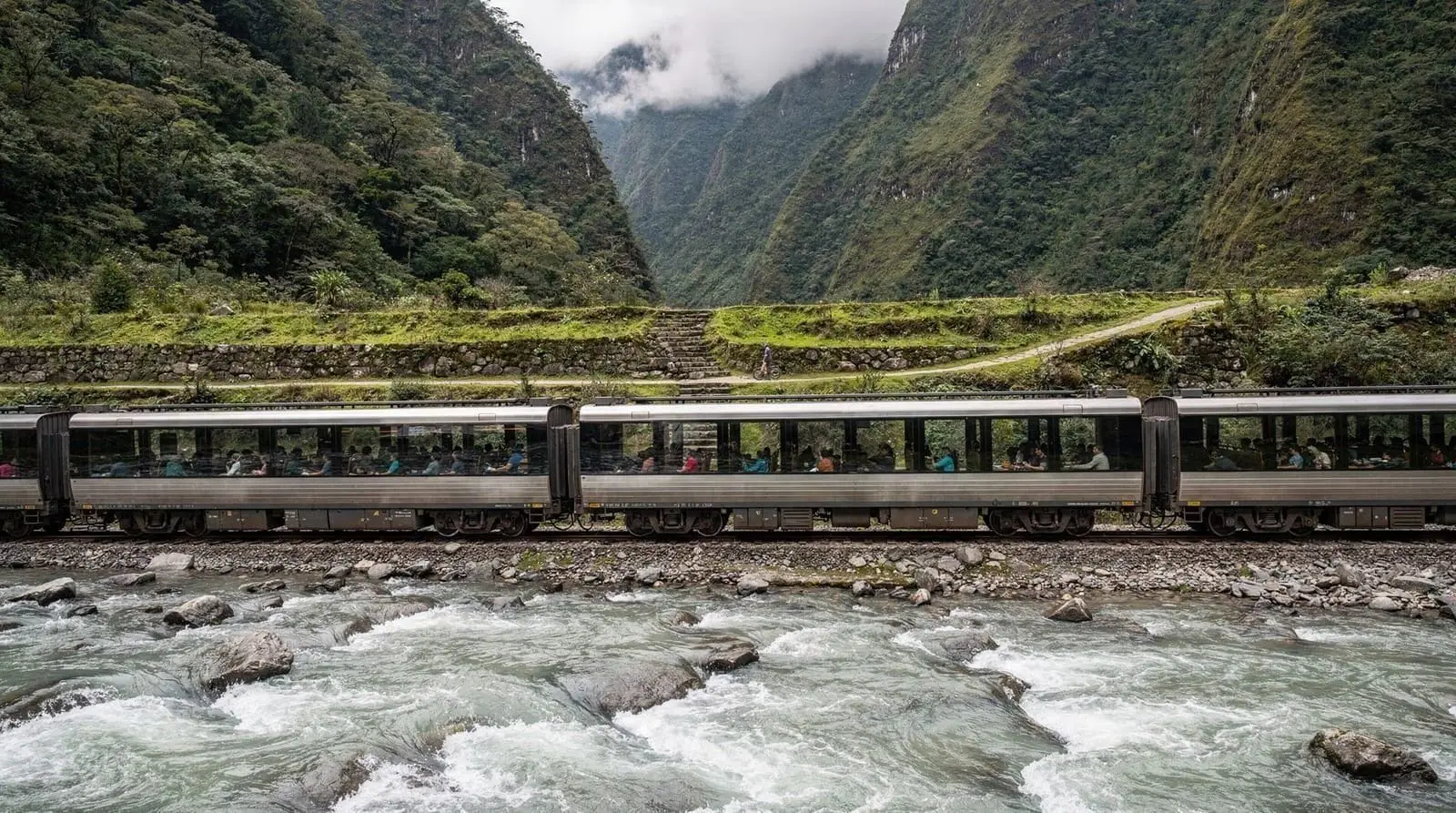
The train is about the destination. The journey is scenic and comfortable — the carriages follow the Urubamba through a narrowing gorge, panoramic windows framing the cloud forest — but it is a means to an end. The reward is arriving rested, with energy to spare for the ruins themselves, and the flexibility to add Huayna Picchu or the longer circuits. Aguas Calientes, the base town, is functional rather than charming; the Aguas Calientes guide is candid about that.
The trek is about the journey. The point is the days of walking — through cloud forest, over snow-line passes, past ruins few train passengers ever see — building to the moment of arrival. On the classic Inca Trail you walk the original Inca route and enter through Inti Punku, the Sun Gate, at dawn; that approach is something the train simply cannot replicate. The trade-off is that you reach the citadel tired, and your time at the ruins themselves is a smaller part of the whole. For trekkers, the journey is the souvenir.
Permits: the one hard constraint
There is a single non-negotiable logistical fact that can override everything above: the classic Inca Trail requires a permit, and they are strictly capped.
Roughly 500 permits are issued per day, including guides and porters, which leaves a few hundred for trekkers. They sell out months ahead, especially for the dry-season months of May to September, and can only be bought through a licensed operator — you cannot book the classic Inca Trail independently or last-minute. The trail also closes every February for maintenance. The full rules are in the Inca Trail permits guide.
The train and the non-Inca treks have no such cap. Salkantay, Lares, Inca Jungle and the rest need no government permit, which makes them the fallback when Inca Trail permits are gone. The only universal requirement is the timed Machu Picchu entrance ticket, which everyone needs and which itself sells out in peak season — book it early whichever route you choose.
The hybrid options most people overlook
The choice is not strictly binary. A cluster of shorter and softer routes sits between the comfortable train and the full four- or five-day expedition, and they suit travellers who want a taste of the trek without committing a week or their knees to it.
The two-day “Short Inca Trail” is the most popular middle path. It takes the train partway down the valley, then walks the final, scenic stretch of the original Inca route — past the ruins of Wiñay Wayna — to arrive at Machu Picchu through the Sun Gate on the same day, with a night in Aguas Calientes. It captures the iconic Inca-built approach in a single afternoon of walking, still needs a permit (a smaller pool than the four-day version), and demands far less fitness and time. It is the obvious compromise for anyone torn between the two camps.
The Inca Jungle trek goes the other way, blending downhill mountain biking, optional rafting and zip-lining with a couple of days of hiking through the lower, warmer Santa Teresa valley. It is the adventure-sport route rather than the historical one, needs no Inca Trail permit, and tends to be cheaper and younger in feel. The Inca Jungle trek guide covers it in full, and the Lares trek offers a quieter, more cultural alternative through weaving villages.
The point is that “train or trek” is a spectrum. If a four-day camping expedition feels like too much but the standard train feels like too little, one of these hybrids probably fits — you do not have to pick an extreme.
A word on what you actually see
One myth worth puncturing: the route you take does not change the ruins. Whether you stagger in through the Sun Gate after four days or step off an air-conditioned train and a bus, you enter the same citadel, walk the same circuits, and see the same masonry. The classic Inca Trail’s reward is the approach and the dawn arrival, not privileged access — train arrivals see everything trekkers do. What does change is your energy and your timing.
Trekkers often arrive mid-morning, tired, after the early train crowds have already worked through the site; train travellers who overnight in Aguas Calientes can take the first bus up and have the terraces comparatively quiet at opening. If uncrowded photographs matter to you, an early train morning can actually beat a trek arrival. The full ticketing and circuit logic is laid out on the Machu Picchu destination page.
Booking each route
For the train, you can book a fully bundled package that handles the rail, bus, ticket and a guided visit in one go. The Machu Picchu day trip with tourist train and entrance ticket is the streamlined option for travellers who want the citadel without assembling the pieces themselves, while a two-day version such as the Sacred Valley and Machu Picchu 2-day train tour builds in the overnight that most people prefer.
For the trek, book a guided departure through a licensed operator months ahead if you want the classic Inca Trail; for the flexible high-alpine alternative, the Salkantay route is the most popular. Compare the trekking options in best treks to Machu Picchu and the two front-runners head to head in Inca Trail vs Salkantay.
Salkantay route and Machu Picchu 4-day trekWho actually regrets their choice
Worth being honest about this. Train travellers rarely regret it — almost no one wishes they had spent four days camping instead of arriving rested. The regret, when it happens, runs the other way: trekkers who underestimated the altitude or the cold and spent part of the trek miserable rather than present. If you have any doubt about your fitness or altitude tolerance, that is a signal to take the train, not to power through a trek to prove a point. Conversely, travellers who take the train sometimes wonder, years later, what the trek would have been like — but that is curiosity, not regret, and it is easily resolved on a return trip.
Combining the two on different trips
Because Machu Picchu is the kind of site many travellers return to, it is common to take the train on a first visit and consider a trek later, once fitness, budget or curiosity align. There is no rule against it, and the ruins reward a second look regardless of how you arrive. If you are planning a longer Peru trip that leaves room for both a relaxed first pass and a later active one, the how many days in Peru guide and the 2-week itinerary guide help you scope how much time either approach realistically needs.