Lares trek guide: hot springs, weavers and a quieter route to Machu Picchu
From Cusco: Salkantay Route and Machu Picchu – 4D/3N Tour
What is the Lares trek?
The Lares trek is a 2- to 4-day high-Andes hike northeast of Cusco that crosses passes above 4,600 m, soaks in natural hot springs, and passes living Quechua weaving villages before joining the train to Machu Picchu. It needs no permit, draws far fewer hikers than the Inca Trail, and is the most culturally immersive of the Cusco treks.
The trek that puts people, not just ruins, on the route
Ask most first-time visitors how they want to reach Machu Picchu and they will say “the Inca Trail” — because it is the only route they have heard of. But the classic trail sells out months ahead, closes every February, and on busy days carries hundreds of hikers along the same stone path. The Lares trek is the route experienced travellers quietly switch to when they learn it exists.
| Where | Cordillera Urubamba valleys, northeast of Cusco |
| Cost | around $400-700/person, 3-day trek all-in |
| Time needed | 3-4 days trek + 1 day for Machu Picchu |
| Getting there | drive from Cusco to trailhead, train from Ollantaytambo out |
| Best time | dry season May-September, though no permit needed year-round |
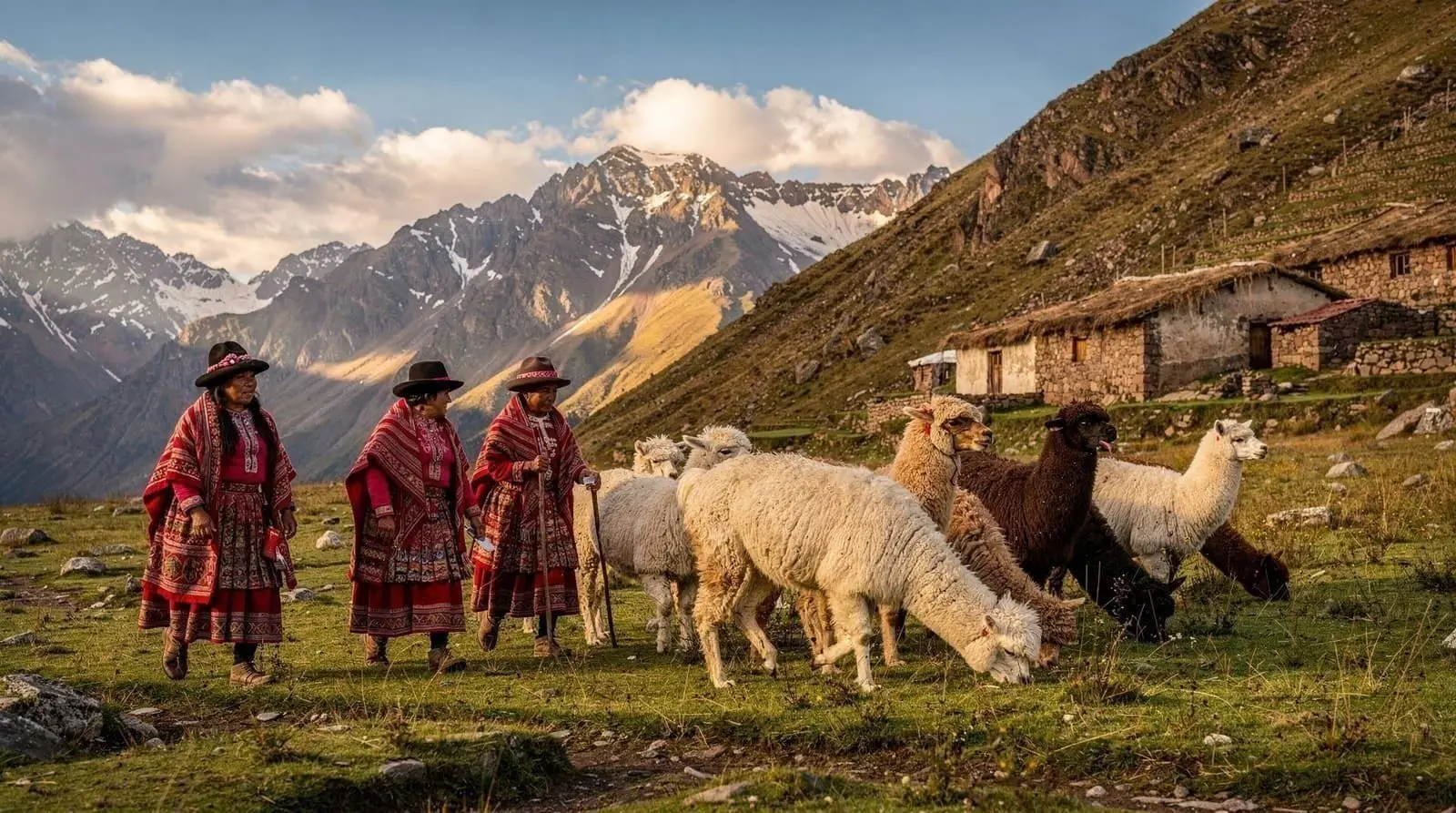
Lares is not a single path. It is a web of valleys in the Cordillera Urubamba, northeast of Cusco, that operators thread into different multi-day routes. What they share is a character the Inca Trail cannot offer: high, wild, lake-strewn mountain scenery, natural hot springs, and — the real draw — living Quechua communities where weaving, herding and farming continue much as they have for centuries. You walk past alpaca herds and women spinning wool on the trail, not just past archaeology. For travellers who want the Andes as a place people still live rather than a corridor of monuments, Lares is the better trek. This guide explains the route honestly, including where it falls short.
What makes Lares different
Three things set Lares apart from the other Machu Picchu treks:
No permit, total flexibility. The Inca Trail is capped and permit-controlled; you must book it months in advance and it shuts each February for maintenance. Lares uses no such system, so you can book it close to your travel dates and walk it year-round — including in February, when it becomes the natural alternative for anyone whose Inca Trail plans fell through.
The hot springs. The trek takes its name from the thermal baths at Lares town, a cluster of natural hot pools where most itineraries start or finish. Soaking aching legs in steaming mineral water at altitude, ringed by mountains, is a genuine luxury and something none of the other classic treks provides.
The weaving villages. This is the heart of the Lares experience. The valleys are home to Quechua-speaking communities famous for their textiles — vivid red, pink and orange weavings dyed with cochineal and plants, patterns specific to each village. Responsible operators arrange genuine, fairly paid encounters rather than staged photo stops. To understand what you are looking at, read our Andean textiles guide before you go; it makes the difference between a souvenir transaction and a real exchange.
What Lares does not do: it does not walk you into Machu Picchu. There is no Sun Gate finale and far fewer Inca ruins along the way than the classic trail. The trek ends in the Sacred Valley, and you take the train in for the citadel separately.
Routes and difficulty
Because Lares is a valley network, no two operators run identical itineraries. The common shapes:
- 3-day, 2-night trek + Machu Picchu day — the standard. Two days of hiking with high passes, a night or two camping, then transfer to Ollantaytambo for the train.
- 2-day version — a compressed taste, less time in the villages and at altitude.
- 4-day version — more remote valleys and a gentler daily pace.
Difficulty is moderate to challenging, and the challenge is altitude, not technical terrain. Expect:
- High passes of 4,600 to 4,800 m — higher than anything on the classic Inca Trail, which tops out at 4,215 m.
- 5 to 8 hours of walking a day on rough, sometimes muddy mountain paths.
- Cold nights camping at 3,800 m and above, often near or below freezing.
There is no way around the altitude requirement: you must acclimatise in Cusco (3,400 m) or, better, lower in the Sacred Valley for two to three days before you start. Hikers who skip this are the ones who suffer on the first high pass. Our Cusco acclimatisation plan lays out exactly how to use those days.
A typical 3-day itinerary
Routes vary, but a representative version runs like this:
Day 1 — Cusco to the high valley. Early drive over the Sacred Valley to a trailhead near Lares, often with a stop at the Lares hot springs. Hike up a valley past lakes and alpaca pastures to a first camp around 3,800–4,200 m. Five to six hours walking. This is the day you meet the first weaving communities.
Day 2 — the high pass. The hardest day. A long climb to the trek’s highest pass, 4,600 m or more, with glaciated peaks and turquoise lakes, then a long descent to a lower camp. Six to eight hours. The reward at the top is the kind of empty, silent high-Andes panorama the Inca Trail rarely delivers because it is so much busier.
Day 3 — descent and the train. A shorter walk down through farming country to a pickup point, then transfer to Ollantaytambo to catch the train to Aguas Calientes. Overnight there.
Day 4 — Machu Picchu. Up to the citadel for your timed entry. Most Lares packages bundle this; a tour like the Machu Picchu with tourist train and entrance ticket shows the kind of train-and-ticket arrangement that completes the trek when it is sold separately.
How Lares compares to the other treks
Choosing between the Cusco treks comes down to what you most want. Our full breakdown is in the best treks to Machu Picchu guide, but in short:
Versus the Inca Trail. The Inca Trail is the only route that walks you through the Sun Gate into Machu Picchu, lined with restored Inca ruins. It also needs permits booked months ahead, costs more, and is far busier. If the classic ruin-by-ruin approach and the iconic arrival matter most, choose the Inca Trail — and book early. The classic 4-day Inca Trail guided trek to Machu Picchu is the benchmark. Lares wins on flexibility, solitude, hot springs and living culture; the Inca Trail wins on archaeology and the finale.
Versus Salkantay. The Salkantay trek is the high-drama scenery option — a soaring snow peak, the Humantay glacial lake, and a dramatic descent into cloud forest. It is more physically demanding and more about raw landscape than people. The popular 5-day Salkantay trek to Machu Picchu is the classic version. Choose Salkantay for epic mountain scenery, Lares for cultural depth and hot springs.
In one line: Inca Trail for ruins and the arrival, Salkantay for mountain scenery, Lares for culture, hot springs and flexibility.
When to go, what it costs, and what to pack
Season. The dry season, May to September, gives the most reliable weather — clear days, hard frosts at night. Lares can be walked in the wet season (November to March) and through February, but expect mud, rain and cloud-hidden passes. See our best time to visit Peru guide.
Cost. A 3-day organised Lares trek with a reputable operator typically runs from around $400 to $700 per person depending on group size and standards, including guide, porters or pack animals, meals, camping gear, the train, and Machu Picchu entry. Suspiciously cheap quotes usually mean underpaid staff and corners cut on safety and food — a poor trade on a high-altitude trek.
Packing essentials: broken-in hiking boots, layers from thermal base to windproof shell, a warm hat and gloves for the passes and freezing nights, a good sleeping bag (often rentable), sun protection for fierce high-altitude UV, a refillable water bottle and purification, a head torch, and cash in small soles for the communities and hot-spring entry. A duffel for porters or pack horses to carry, plus a light daypack for yourself, is standard.
Ethical note. The villages are the soul of this trek. Choose operators who pay communities fairly and brief you on respectful conduct — ask permission before photographing people, buy weavings directly from the makers at fair prices, and treat encounters as exchanges rather than performances.
The hot springs in detail
The Lares thermal baths deserve more than the passing mention they usually get, because they are central to what makes this trek distinctive. The springs at Lares town (around 3,250 m) are a developed complex of several pools fed by natural geothermal water, ranging from warm to genuinely hot, set in a narrow valley ringed by mountains. They are not a wild, hidden hot spring — there is an entrance fee, changing facilities and a local crowd — but the sensation of lowering aching, altitude-tired legs into steaming mineral water with snow peaks above is exactly as good as it sounds.
Where the springs fall in your itinerary depends on the operator. Some build them into the first day as a relaxing start before the climbing begins; others save them for the descent as a reward for the high passes. Either way, pack a swimsuit and a quick-dry towel near the top of your duffel so you are not digging for them. The water is reputed locally to ease muscle soreness, and whether or not the minerals do anything, the heat genuinely helps after long days on the trail. For travellers comparing treks, the hot springs are a concrete point in Lares’ favour — neither the Inca Trail nor Salkantay offers anything like them.
Acclimatisation: the part that decides your trek
It cannot be overstated: the Lares trek’s high passes above 4,600 m are higher than anything on the classic Inca Trail, and the single biggest predictor of whether you enjoy the trek is how well you acclimatise beforehand. Fitness helps with the walking but does almost nothing for altitude — that comes only from time spent high.
The sound approach is to arrive in the Cusco region two to three days before your trek starts and spend that time adjusting. Counter-intuitively, the best place to sleep during those days is not Cusco itself but the lower Sacred Valley, several hundred metres beneath the city, where your body rests more easily while still adapting.
Use the daytime for gentle activity at altitude — a Sacred Valley ruins day, an easy walk — rather than charging up anything strenuous. Hydrate constantly, go easy on alcohol, and let your body do its work. Our Cusco acclimatisation plan lays out a day-by-day version of exactly this. Trekkers who skip these days and start Lares straight off a Lima flight are the ones who suffer on the first pass, and altitude that high is not something to gamble with.
Choosing a Lares operator
Because Lares is unregulated and routes vary, the operator you choose matters more here than on the permit-controlled Inca Trail. A good company makes the trek; a bad one undercuts safety, underpays staff and reduces the village encounters to a photo stop. When comparing operators, ask:
- What exactly is the route? Lares is a valley network, so confirm the specific passes, camps and villages, and how many hours of walking each day.
- How are the communities treated? Are visits genuine and fairly compensated, or a quick staged stop? This is the heart of the trek and a fair test of an operator’s ethics.
- What is included? Guide, cook, pack animals or porters, tents, sleeping mats, meals, the train from Ollantaytambo, and the Machu Picchu entry ticket should all be spelled out. Suspiciously cheap quotes usually mean something on this list is missing or someone is underpaid.
- What is the group size? Smaller groups mean a better experience and lighter pressure on the villages.
- What happens in an altitude emergency? Reputable operators carry oxygen and have a clear evacuation plan for the high passes.
For a structured comparison of Lares against the other routes, our best treks to Machu Picchu guide ranks them by crowd levels, difficulty, scenery and cultural depth — a useful companion before you commit.
Who Lares actually suits
Lares rewards a specific kind of traveller more than others. If your primary motivation for a Cusco trek is ticking off Inca ruins, the payoff here is thinner than the Inca Trail delivers, since Lares crosses far fewer archaeological sites.
But if you want the trek itself — the walking, the passes, the encounters — to be the highlight rather than a means to an end, Lares’ living communities and hot springs make it arguably the most memorable few days of a Sacred Valley trip. It also suits travellers whose dates are inflexible or last-minute, since the lack of a permit system means you can often book it within days rather than months ahead, unlike the Inca Trail.
Frequently asked questions about Lares trek guide: hot springs, weavers and a quieter route to Machu Picchu
Does the Lares trek require a permit?
How hard is the Lares trek?
How many days is the Lares trek?
Are there really hot springs on the Lares trek?
Lares trek or Inca Trail — which is better?
Does the Lares trek end at Machu Picchu?
Who should choose the Lares trek over the Inca Trail or Salkantay?
Top experiences
Bookable activities with verified prices and instant confirmation on GetYourGuide.


