Peruvian food guide
Lima: Ultimate Peruvian Food Tour
What food is Peru famous for?
Peru is best known for ceviche (raw fish cured in lime), lomo saltado (a stir-fry of beef, onion and chips), ají de gallina, anticuchos and causa, plus a deep larder of potatoes and chillies. Its cuisine fuses Indigenous Andean, Spanish, African, Chinese and Japanese influences.
Why Peru eats better than its neighbours
Peru did not become one of the world’s most celebrated food destinations by accident, and it is not just marketing. The country sits on an extraordinary larder — a Pacific coast with some of the richest fishing grounds on earth, an Andean highland that domesticated the potato (Peru grows thousands of native varieties), and an Amazon basin of fruits and fish found nowhere else. Layered on top of that geography is a history of migration: Spanish colonists, enslaved Africans, Chinese labourers, Japanese immigrants and Italian settlers each left their mark on the pot. The result is a cuisine that fuses Indigenous techniques with imported ingredients into something genuinely its own.
What this means for a traveller is that eating is one of the real pleasures of a Peru trip, from a $3 lunch menú at a back-street picantería to the tasting menus of Lima restaurants that regularly top the world’s best lists. You do not need to spend big to eat well — some of the finest food in the country is the cheapest. The trick is knowing what to order, where, and when.
This guide walks through the signature dishes, the regional differences between coast, mountains and jungle, street food, drinks, and honest advice on eating safely and avoiding the tourist-menu traps. Pair it with the city-specific deep dives: the Lima food scene guide, the best ceviche in Lima, and the best restaurants in Cusco.
| Where | Nationwide — coast, Andes and Amazon each distinct |
| Cost | Around S/10-18 lunch to S/350-700 tasting menu |
| Must-try | Ceviche, lomo saltado, ají de gallina, anticuchos |
| When to eat ceviche | Lunchtime, at a busy cevichería |
| Vegetarian-friendly | Yes — causa, papa a la huancaína, quinoa soups |
The dishes every visitor should know
Ceviche
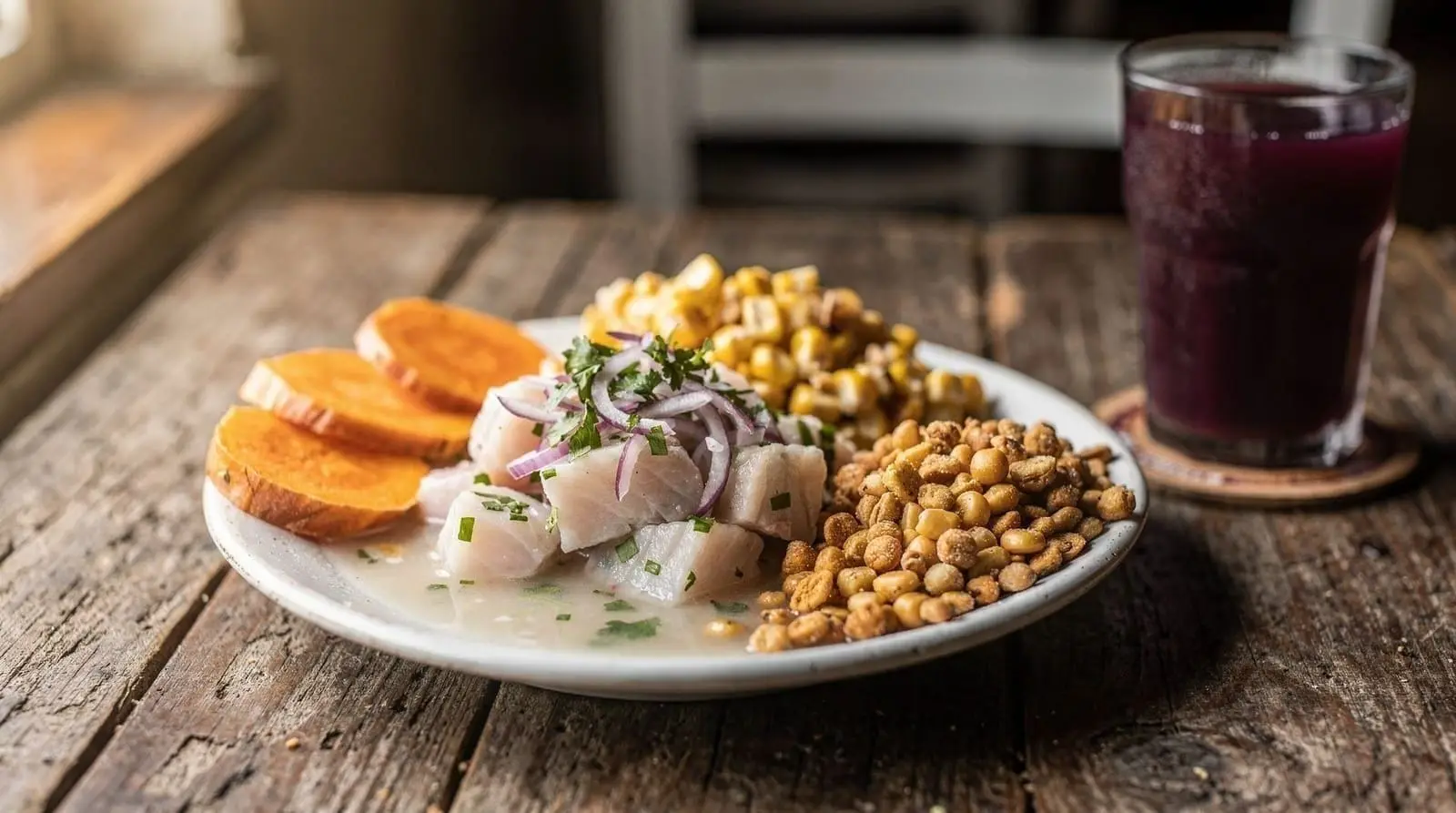
The dish Peru is most famous for, and rightly. Raw fish — typically white-fleshed like sea bass or sole — is cut into chunks and “cooked” in fresh lime juice, mixed with sliced red onion, ají chilli and coriander, and served with boiled sweet potato, choclo (large-kernel Andean corn) and sometimes cancha (toasted corn nuts). The lime-and-chilli marinade left behind, called leche de tigre (“tiger’s milk”), is drunk as a shot and reputed to cure hangovers. Eat ceviche at lunchtime, when the fish is freshest — traditionally it is a midday dish, not a dinner one.
Lomo saltado
The country’s beloved stir-fry and the clearest taste of Peru’s Chinese (chifa) heritage. Strips of beef are seared hot in a wok with red onion, tomato and ají amarillo, splashed with soy sauce and vinegar, and served with both rice and chips — the carbohydrate double-up is the point. It is the gentlest entry dish for nervous first-timers and consistently excellent even at humble restaurants.
Ají de gallina
Shredded chicken in a creamy, mildly spicy sauce of ají amarillo, bread, milk and walnuts or cheese, served over potato and rice with olives and egg. Comfort food, warming and rich, a staple of the home table.
Causa
A cold layered terrine of mashed yellow potato seasoned with lime and ají, stuffed with chicken, tuna or avocado. A great vegetarian-friendly starter and a showcase for Peru’s potatoes.
Anticuchos
Skewers of marinated beef heart grilled over coals, sold from street carts in the evening and served with potato and a fierce dipping sauce. Smoky, tender and far better than the offal description suggests — one of the best street foods in the country.
Papa a la huancaína
Boiled potato draped in a creamy, slightly spicy yellow sauce of ají amarillo and fresh cheese, served cold as a starter. Simple, ubiquitous and reliably good.
How the food changes by region
Peru is really three culinary countries stacked together, and eating your way across them is half the journey.
The coast (Lima and the Pacific)
The coast is the kingdom of seafood and the engine of Peru’s modern fine-dining reputation. Beyond ceviche, look for tiradito (a sashimi-style cousin of ceviche showing the Japanese nikkei influence), arroz con mariscos (seafood rice), and chupe de camarones (a rich prawn chowder from Arequipa’s coast). Lima is the place to splurge on a tasting menu or simply eat the best ceviche of your life at a working cevichería. The full picture is in the Lima food scene guide.
A guided tasting is the fastest way to map the city’s food. The Lima ultimate Peruvian food tour works through markets and local spots in a single afternoon, and the Lima gourmet food tour by night covers the Miraflores and Barranco dining scene after dark.
The Andes (Cusco, the highlands)
Mountain food is hearty, warming and built on potato, corn, grains and meat. The signature curiosity is cuy (roasted guinea pig), a genuine pre-Columbian tradition still served at celebrations in Cusco and Arequipa — gamey, rich, and an experience rather than an everyday meal. More approachable are alpaca steak (lean and delicious), rocoto relleno (a stuffed hot pepper from Arequipa), chairo and other thick highland soups, and chuño (freeze-dried potato, an ancient Andean preservation technique). Quinoa, now a global health-food cliché, is at home here in soups and stews. The full Andean rundown, including cuy, is in the cuy and Andean food guide.
The Amazon (Iquitos, the jungle)
The least-known and most exotic of Peru’s cuisines. In Iquitos and the rainforest, look for juane (rice and chicken steamed in a bijao leaf), tacacho con cecina (mashed plantain with smoked pork), grilled river fish like paiche and doncella, and a riot of Amazonian fruits — camu camu, aguaje, cocona — turned into juices and sauces. The flavours are completely distinct from the coast and the mountains.
A note on Arequipa, which sits between the coast and the Andes and has its own strong culinary identity: the picantería tradition here is arguably the country’s most authentic, serving dishes like rocoto relleno, chupe de camarones, and adobo arequipeño (a pork stew simmered overnight in chicha de jora) in family-run restaurants that have operated for generations. It is worth a detour from the standard Lima–Cusco food circuit if you are already passing through on the way to Colca.
Street food and the lunch menú
Some of the best eating in Peru happens away from restaurants entirely.
The menú. At lunchtime almost every neighbourhood eatery offers a fixed menú del día: a starter or soup, a main, and often a drink for as little as S/10-18 (roughly $3-5). It is how locals eat, it is fresh and filling, and it is the single best-value meal in the country. Look for a busy place with a chalkboard out front.
Street snacks. Beyond the evening anticucho carts, watch for picarones (sweet pumpkin-and-squash doughnut rings in syrup), empanadas, choclo con queso (corn with cheese) from highland vendors, and emoliente (a warm herbal drink sold from carts at night).
Markets. A market food hall is a crash course in local eating. San Pedro Market in Cusco and the markets of Lima are full of juice stalls and menú counters, and the dedicated San Pedro market food guide walks stall by stall through what to order there.
A cooking class that starts with a market tour ties it together — the Cusco Peruvian cooking class and market tour walks you through the ingredients first, then cooks with them. The various Cusco options are compared in the Cusco cooking classes guide. One traveller’s early-morning wander through the market, food stall by food stall, is captured in the San Pedro market morning diary.
Sweets and coffee
Peru’s dessert side is often overlooked next to ceviche and lomo saltado, but it is worth a detour. Suspiro a la limeña (a caramel manjar blanco topped with port-wine meringue) is the classic Lima dessert; mazamorra morada (a purple-corn pudding, often paired with rice pudding as “combinado”) is a street and home staple; and turrón de Doña Pepa, a spiced, syrup-soaked nougat cake, appears everywhere in October around the Señor de los Milagros processions.
Peruvian coffee, grown mostly in the northern and central highlands, is genuinely good but was historically exported rather than drunk at home — specialty cafés in Lima, Cusco and Arequipa have caught up fast, and it is worth seeking one out rather than settling for instant coffee at a hotel breakfast.
What to drink
Pisco sour. Peru’s signature cocktail and a point of national pride (and a friendly rivalry with Chile over pisco itself): pisco grape brandy, lime juice, sugar syrup, egg white and a few drops of bitters, shaken to a frothy head. The whole story of the spirit and its home region is in the pisco guide, and the cocktail itself — recipe, prices and where to drink a good one — has its own pisco sour guide.
Chicha morada. A sweet, spiced non-alcoholic drink made from purple corn, pineapple and cinnamon — deep violet, refreshing and everywhere. (Its fermented cousin chicha de jora, a mild corn beer, is an ancient Andean tradition still brewed in villages.)
Inca Kola. The fluorescent-yellow national soft drink, bubblegum-sweet and outselling Coca-Cola in Peru. You have to try it once.
Andean teas. Coca tea (mate de coca) and muña are sipped throughout the highlands and genuinely help with altitude. More on that in the altitude sickness guide.
Eating well and eating safely
A few honest pointers to eat brilliantly without the regrets:
- Ceviche at lunch, from a busy place. The lime cures the fish, but freshness is everything. Crowded cevicherías at midday turn over their catch fast; cheap ceviche sitting around late in the day is the one to avoid.
- Follow the crowds. A packed menú spot with locals is a better bet than an empty restaurant with a tout outside.
- Ease into the water and raw veg. Drink bottled or filtered water, and be a little cautious with salads washed in tap water early in your trip.
- Vegetarians do fine. Causa, papa a la huancaína, quinoa soups, tacu tacu and Andean cheeses are all veg-friendly — just check soups, which often use meat stock.
- The fancy menu is optional. Lima’s world-ranked restaurants are extraordinary, but the country’s soul is in the cheap menú, the market stall and the cevichería. You can eat unforgettably for very little.
For city-by-city specifics, see the Lima food scene guide, the best ceviche in Lima, and the best restaurants in Cusco.
Tourist traps and honest warnings
The tourist-menu restaurants on the main square. In Cusco’s Plaza de Armas and Lima’s tourist zones, the restaurants with picture menus and pavement touts charge double for worse food. Walk two or three blocks off the plaza for better and cheaper.
“Authentic” cuy theatre. Some places serve cuy mainly as a photo-op for tourists at inflated prices. If you want it, eat it at a proper highland picantería rather than a square-side tourist spot.
Watered-down pisco sours. Bars in heavy-traffic tourist areas sometimes skimp on the pisco. A good one is balanced and boozy, not just sweet foam.
Overpriced “novoandina” set menus. Fusion is real and often excellent, but some venues slap the label on mediocre food at fine-dining prices. Check reviews, not just the décor.
Ceviche at dinner in cheap spots. Traditionally a lunch dish for a reason. A late, cut-price ceviche is the most common cause of an upset stomach. Stick to lunchtime at reputable cevicherías.
Frequently asked questions about Peruvian food
What is the national dish of Peru?
Is Peruvian food spicy?
Is it safe to eat ceviche in Peru?
What should vegetarians eat in Peru?
What is the best Peruvian dish for first-timers?
Do I need to try cuy (guinea pig)?
What are the must-try Peruvian drinks?
How much does a meal cost in Peru?
Top experiences
Bookable activities with verified prices and instant confirmation on GetYourGuide.
